<p>The post Top 10 Best Places to Visit in Nakhon Pathom – Temples, Markets & Royal Sites first appeared on Traveling Info World.</p>
]]>
Wat Phra Pathom Chedi which sits in Nakhon Pathom and is only an hour west of Bangkok, surpasses a standard temple visit. The country’s traditions are rooted in the 6th century and it has the world’s highest stupa which measures 120.45 meters (395 feet) tall. The temple blends great architecture with a long history and significance related to Theravāda Buddhism in Southeast Asia.
- Investigating History
- Phra Pathom Chedi is called “the first holy stupa” because it is believed to have the oldest Buddhist connections in Thailand. Wisai Cut, the original building, was reportedly constructed during the Dvaravati era (in around the 6th century CE) as Indian traditions and Theravāda Buddhism were beginning to spread to the region.
- The chedi you see today, however, was rebuilt in the 19th century by King Rama IV (King Mongkut), after he uncovered the ancient site while training as a monk. Thinking it was very valuable, he obtained its restoration and turned the site into an important religious place.
What Makes It Important
- A lot of Thai Buddhists place great importance on Wat Phra Pathom Chedi. major pieces are found here, for example, what is thought to be a bone relic of the Buddha.
- Wonderful Structure: Its tall golden dome and impressive size make it a fantastic Ceylonese-style stupa and it is believed to be the tallest Buddhist monument ever constructed.
- Thai Buddhism has Buddhamonastery at its origins and it links the old Dvaravati culture from India to modern-day Thailand.
- The entrance is free for people living in Malta, yet there is a small fee for foreigners.
- The best time to be there is early in the day or late in the afternoon to miss the heat.
- Since Mysore Sri Ranganathaswamy Temple is still a place of worship, everyone should wear clothing that covers the shoulders and the knees.
- The game can be finished in less than an hour.
- Nakhon Pathom is the province in which it is found.
2.Don Wai Floating Market

Don Wai Floating Market, located near Nakhon Pathom at the Tha Chin River, lets visitors enjoy the way Thai families lived by riverside. Unlike a number of touristy markets on the water near Bangkok, Don Wai preserves the genuine homey elements which is why it is so popular on weekends among local residents and inquisitive guests.
- History of the Movement
There is a strong link between Don Wai Floating Market and the over-a-century-old Wat Don Wai. People soon started gathering in the market to sell fresh produce, meals and snacks to the visitors at the temple which led to its development. In the early 2000s, the floating market was given the official title of a floating market, so its original atmosphere of a riverside market was kept. - While traditional boats are not present on the canals (unlike in tourist places), vendors use the space next to the river, making the market open to all and keeping its character.
Importance to Locals and the Cultural Picture
- Keeping the Traditional Flavors: Don Wai is the ideal place for food lovers. This is where you can enjoy special Thai dishes that have been made according to traditions for a long time, for example, Chinese duck that is roasted slowly, coconut jelly, all kinds of Thai herbal drinks and local sweets (khanom).
- Sustainable Local Tourism: It is an actual example of how a community can take care of itself through tourism, rather than those outside the community. A majority of vendors who sell at the temple are people living nearby and the money they earn supports both the area and the temple.
- Along Tha Chin River, guests can take boat rides, enjoy peaceful views of houses made of wood or on stilts, watch lush nature by the water and see local people doing their fishing.
Things to Know
- Open every day, except during the night (when it’s busiest on weekends), from 8:00 AM till 5:00 PM.
- Home is: Within 40 minutes driving distance from Bangkok. It is most convenient to take a private car or taxi.
- Prefer to come during the morning or the early afternoon for great weather and to be sure all the stalls are open.
- Make sure to dress modestly when going to step into Wat Don Wai.
- The process may take 1–2 hours.
- The City of Nakhon Pathom is in Thailand.
3.Samphran Elephant Ground & Zoo

The Samphran Elephant Ground & Zoo is in Nakhon Pathom Province, Thailand and was created on March 24, 1985, by Mr. Pichai Chaimongkoltrakul. Created to work on breeding animals and plants, the zoo is now mostly known for showcasing animals and many visitor activities.
Historical Background
Its elephant-themed shows helped make the zoo famous, as some elephants are seen dancing, playing football and doing mock fights like the “Yutha Hathi” in Thai history. Those performances introduced sound effects and narration, inspiring other similar productions elsewhere in Thailand .
What makes the state stand out and what tourists enjoy the most.
Apart from watching elephants at work, guests may watch crocodile fighting, magic shows and use the elephants to ride in the tropical gardens. The orchid center includes a nursery where some of the world’s most honored orchids, including the Cattleya , are kept.
Visiting Tips
- Plan your visit to last about 1–2 hours.
- Many elephant shows happen daily at 13:45 or 15:30 and even more on weekends and public holidays .
- Situated about 40 kilometers west of Bangkok, can be accessed by taking the Phetkasem Road.
- Opening hours: From 08:30 to 17:30, every day of the week.
- Allow yourself to spend about 1–2 hours on this activity.
- The temple is situated in Nakhon Pathom, Thailand.
4.Red Lotus Floating Market

The Red Lotus Floating Market (ตลาดน้ำทุ่งบัวแดง) is found in Bang Len District, Nakhon Pathom Province, allowing you to relax and enjoy Thailand’s nature and history. The market is just about an hour’s drive from Bangkok and both Bangkok residents and tourists often visit for a tranquil time among lovely lotus flowers.
Dreams Made into Features
To give people an easier close-by location, Khun Thanin Thepsurin created the market by using red lotus seeds from Nong Han Lake in Udon Thani. Because of his effort, residents in the capital could appreciate lotus flowers and the work provided more employment and business opportunities in the area.
Visitor Information
- Daily Operating Hours: 9:00 AM to 6:00 PM.
- The best time to visit is first thing in the morning (around 9:00 AM) to watch the Nymphaea lotus at its peak.
- People can go inside for free and the boat rides outside are priced at around 100 Baht a boat.
5.Nikanti Golf Club

The Nikanti Golf Club is located in peaceful Nakhon Pathom, only a short drive from Bangkok and showcases both good design and great hospitality. Nikanti’s launch in 2014 transformed the way golf is played in Asia, due to its original course and complete service.
Nikanti’s course is like traditional ones, though it is an 18-hole, par-72 course separated into three chunks of six holes; each set has two par-3s, two par-4s and two par-5s. By starting at one of the three six-hole segments, golfers have freedom to fit the course into their schedules and play ability. Because it uses six senses from Buddhism, the layout stresses being able to make shots and navigate the course, so any player who tries it will be both challenged and delighted.
Course Highlights
- The 1st, 6th and 18th holes are what make Chevy Chase Stand Out because of their challenges and breathtaking views.
- The fairways twist, damp areas lay between and bunkers pop up across the holes, all asking players to be confident and thoughtful with their shots.
- Using a Caddie: Golfers receive valuable advice and improve their enjoyment of the game.
Visitor Information
- Physical address: 333 Moo 2, Thammasala, Mueang Nakhon Pathom District, Nakhon Pathom 73000, Thailand.
- May be used daily from 6:00 AM until 8:00 PM.
- Advance booking is suggested for everyone.
- It lasts for more than 3 hours.
- Nakhon Pathom, in Thailand (about 35 km away from Bangkok), is where it is located.
6.Watpa Pathomchai

Lying in the calm region of Nakhon Pathom, Wat Pa Pathomchai represents the cultural heritage of Thailand. Not as well-known by tourists as some other Buddhist temples, it remains a peaceful escape because of its distinctive architecture and soothing atmosphere.
- Historical Significance
Although there are not many reliable historical records about Wat Pa Pathomchai, its style and design point to a strong influence from northern Thai (Lanna) culture. Lanna which existed in northern Thailand from the 13th to the 18th century, strongly influenced Thailand’s traditions and religions. - The designers of Wat Pa Pathomchai included detailed carvings, multileveled roofing and elaborate stucco to reflect the traditional style of Lanna temples. These architectural features are present in the region both to look beautiful and to capture the creative and spiritual side of the Lanna people.
- Societal Importance
As well as being an architectural masterpiece, the temple is valuable to the community for its cultural and spiritual meaning. People come to the temple to reflect, meditate and join in community activities which promotes spiritual comfort among all who attend. - Because ancient relics are at the temple, it becomes clearer that the temple holds both history and faith. These ancient artifacts help people remember the long presence of Buddhism around Ngong Ping.
Visitor Information
- R2M3+H6V, Tambon Phrong Madua, Mueang Nakhon Pathom District, Nakhon Pathom 73000, Thailand
- The best time to go is weekdays or early mornings for a calm experience.
- Attire should be modest by covering both knees and shoulders.
- Things to Do: Meditation, visit ancient relics and admire the architecture of Lanna
- Allow 1–2 hours for the procedure.
- Nakhon Pathom, Thailand is where the temple sits.
7.Wat Phra Prathon Chedi

- Historical Significance
- This Buddhist chedi in Wat Phra Prathon is amongst the most ancient in Thailand, possibly constructed as early as the 6th century during the Dvaravati period. The temple is called Phra Prathon because of the Phra Thong golden statue. While the Phra Pathom Chedi is much bigger, the temple’s chedi is still important because it reflects how Buddhism began in Thailand.
- According to the story, after discovering a sacred artifact, the temple was constructed, making it have additional spiritual meaning.
- Value as Part of Culture and Beliefs
- As well as being beautiful, Wat Phra Prathon Chedi plays a significant cultural and spiritual role for the people here. The temple is used as a space for meditation, conversation and joining the community which helps people feel spiritually satisfied.
- There are many ancient artifacts on the temple grounds which highlights how it holds important articles of faith and history. The presence of these relics holds the past in the present, letting people think about the lasting impact of Buddhism.
Visitor Information
- Place: 120 Langpra Road, Phra Prathom Chedi, Nakhon Pathom 73000, Thailand
- Best time to enjoy the night market is in the evening, right when things get busy.
- Temple guests should cover their knees and shoulders since the temple is still a functioning place of prayer.
- No charge to get in to the temple, though some activities or places may be subject to fees.
- It takes about 1 hour to finish the tour.
8.Wat Phra Mayn

- Historical Significance
- Wat Phra Mayn is a little-known temple in Nakhon Pathom, but it holds a lot of Buddhist history. There are not many written records about Wat Phra Mayn, but its style and design suggest a strong link to the northern Thai (Lanna) culture. From the 13th to the 18th century, the Lanna kingdom which was in the north of Thailand, strongly affected the country’s traditions and beliefs.
- The temple was built in a way that shows off the region’s history, with detailed wood carvings, tiered roofs and beautiful stucco. They not only make the architecture charming, but also show the Lanna people’s spiritual and artistic thoughts.
- Cultural Significance
As well as its beautiful architecture, Wat Phra Mayn is meaningful to the people of the area for its religious and cultural value. The temple provides a place for meditation, reflection and group meetings which help visitors feel spiritually fulfilled. - Having ancient artifacts within the temple complex indicates its role in storing history and spirituality. With these objects, guests can see and think about the lasting history of Buddhism in Southeast Asia.
Visitor Information
- The address: R2M3+H6V in Tambon Phrong Madua, Mueang Nakhon Pathom District, Nakhon Pathom 73000, Thailand
- Best moment to visit: Trying to come during the week or before noon for peace and quiet
- Clothing rules require that your shoulders and knees are covered.
- Examples: meditation, viewing ancient relics and enjoying Lanna architecture
- Approximately 1–2 hours is required for this lecture.
9.Khlong Maha Sawat

Many years of history are found in the canal.
During the rule of King Rama IV (1859–1860), Khlong Maha Sawat (Khlong Chaiyaphruek) was constructed to connect the Tha Chin River with the Chao Phraya River, using Khlong Bangkok Noi. One reason for building this waterway was to support easier travel to Phra Pathom Chedi as well as to make neighbouring farmland available. The canal greatly affected the area’s farming, so it became a key part of regional history.
 Where to Get Infomation
- A cool time to visit is early in the morning before it gets hot.
- Wat Suwannaram provides boat tours and travelers can visit nearby farms and orchards.
- The lesson takes about 2–3 hours.
- This place is found in Nakhon Pathom Province, Thailand.
10.Wat Sawang Arom

In Khun Kaeo subdistrict of Nakhon Chai Si, Nakhon Pathom, Wat Sawang Arom combines old Buddhist traditions with active community participation. The peaceful atmosphere and wide cultural heritage turn it into a prominent place in the area.
- Historical and Religious Meaning
- The Wat Sawang Arom temple has traditionally welcomed those looking for spiritual comfort and help. People know the temple for its sacred basin which is linked to the cheerful elder Ta Thong Ngiew Rai, who is said to offer good fortune to those who pay respect there. Visitors, particularly those hoping to get lucky in lottery games, find their way here because it is an important part of local life.
- Apart from being a spiritual site, the temple pays tribute to the people who were unwillingly killed by trains. Each month, monks do ceremonies to calm the spirits so that everyone can live in peace.
- Events that Focus on Culture and Engaging the Community
- People gather at Wat Sawang Arom for both spiritual worship as well as for cultural gatherings and events. A Kathin ceremony happens each year and thousands attend. Ceremonial trees are given out for people to take home which fills the temple grounds with noise from food vendors and music shows. There is also a lottery draw which brings added excitement and hope for the people there.
- At the grand gilding ceremony, the temple introduced its nimitta sphere which is now the tallest in the world, standing at more than 20 meters. Apart from being a religious event, the ceremony was also about sharing, as the gilded nimittas were sent to poor temples in nine regions.
Practical Information
- The place is Khun Kaeo in Nakhon Chai Si, Nakhon Pathom province, Thailand
- Most interesting time to go: When major festivals like the Kathin ceremony or gilding event are happening to enjoy the most colorful side of the temple.
- The recommended dress for temple guests is to cover shoulders and knees in order to respect the environment.
Related articles : Top 10 Best Places to Visit in Nakhon Phanom – Temples, Culture & Nature
<p>The post Top 10 Best Places to Visit in Nakhon Pathom – Temples, Markets & Royal Sites first appeared on Traveling Info World.</p>
]]><p>The post Top 10 Best Places to Visit in Nakhon Phanom – Temples, Culture & Nature first appeared on Traveling Info World.</p>
]]>
On the edge of the Mekong River at Nakhon Phanom, Thailand, the Phaya Si Sattanakharat monument combines art, spirituality and cultural heritage. The 15 meters tall Naga sculpture, full of great detail, was made from brass and finished in 2016 before becoming a recognized landmark in the area.
- The meaning and spiritual significance of symbols.
- In Thai and Southeast Asian legends, the Naga is considered an important snake god tied to gods of water, reproduction and defense. The seven-headed Naga is especially respected in Buddhist tradition. The legend says that Naga Mucalinda kept the Buddha safe from a storm while he was meditating, showing respect .
- The monument of Phaya Si Sattanakharat due north towards Laos is meant to protect from invasions. Its existence represents the supervision of the city and her river which mirror the traditional convictions of the community .
- Architectural Marvel
- A brass statue of more than 9 tons is supported by an octagonal base that stands 5 meters above ground. The serpent’s many heads and coils are carefully depicted, but each one seems to show majesty and vigilance. Sometimes, water appears to spray from the statue’s mouth which represents wealth and the importance of water .
- There is a small exhibit inside the monument’s base which explains the process behind its creation and the stories of the Naga people.
- Cultural Celebrations
- The Phaya Si Sattanakharat monument draws attention and attracts people because it is both beautiful and special for religious reasons. The province of Nakhon Phanom hosts a yearly festival for the Naga, with traditional shows, processions and offerings by the community. The festival emphasizes what Naga figures mean to local fiction and the way they influence the spiritual lives of people in the community.
- At the end of Buddhist Lent, many people assemble alongside the Mekong River to watch strange orbs of light called Naga fireballs that come from the water. Even though science cannot explain them, these fireballs are believed to be a sign of the Naga’s devotion to the Buddha .
2.Wat Maha That Temple

Sitting by the quiet Mekong River in Nakhon Phanom is Wat Maha That (วัดมหาธาตุ) which reflects the rich Buddhist traditions in Thailand. Built by a general representing the city of Vientiane in 607 CE, the temple has always been important to both the local people and visitors.
Historical Significance
Originally called “Wat Ming Muang,” the temple renamed itself “Wat Maha That” when it received and enshrined some sacred Buddha remains. Between 1920 and 1922, Phraya Maha Ammat, the military leader from Vientiane, organized the building of the temple’s most important stupa, Phra That Nakhon. At the base of this 24-meter-high square building are relics from the Buddha and it is regarded as the birthday stupa for anyone born on Saturdays. It is believed by devotees that praying in this place brings good luck, wealth and well-being .
Architectural Features
What makes Phra That Nakhon famous is its white walls decorated in gold which mix styles from both the Khmer and Lao traditions. Besides the other sculptures, one group also highlights a Naga snaking out of a Makara which means the birth of Buddhism from Hindu legends.
Value due to beliefs and customs
Wat Maha That is one of the nine holiest chedis in Nakhon Phanom and it is important to the local community’s religions practices. Many people, especially Saturdays’ babies, go on temple visits to earn merit because they believe certain temples are linked to each day.
Visitor Information
- The address is Sunthon Wichit Road, Nai Mueang Subdistrict, Mueang Nakhon Phanom District, Nakhon Phanom Province, Thailand
- The staff is here everyday from 08:30 in the morning to 16:30 in the evening.
- You do not have to pay to attend and donations are appreciated.
3.Thai-Vietnamese Friendship Village

The Thai-Vietnamese Friendship Village, in the province of Nakhon Phanom, was built in Ban Na Chok (originally Ban May) and serves as an important reminder of how strong Thai-Vietnamese relations are. President Ho Chi Minh spent a short stint in Thailand during the late 1920s which this site aims to show and share with the Vietnamese community there.
Historical Background
In the year 1928, working as Thau Chin, Ho Chi Minh stayed in Ban Na Chok to orchestrate activities leading to Vietnam’s independence from colonialism. He joined in English training, weddings and special events with the Vietnamese community, hoping to boost unity and encourage their development. His influence on the village was strong and it became a major place for remembering his legacy later.
Importance in Cultures and Diplomacy
The village is both a place with historical value and a busy center for cultural sharing and group activities. The monument demonstrates the close friendship between Thailand and Vietnam, while also appreciating what the Vietnamese community gives in Thailand. Regularly, the village organizes events and ceremonies that help India and Pakistan understand each other better.
Visitor Information
- Ban Na Chok, in the Nong Yat Subdistrict of the Mueang District of Nakhon Phanom, Thailand.
- Tourists can come any day between 8:00 AM and 5:00 PM.
- Entry is free of any charges.
4.Mekong Underwater World

Located close to the Nong Yat Reservoir in the province of Nakhon Phanom, Mekong Underwater World is a freshwater aquarium with interactive displays showing the many types of fish that live in the Mekong River and its streams. The aquarium was set up to spread knowledge and help conserve freshwater creatures, so it displays many species, many of which are rare and in danger, highlighting the diversity in the area.
The significance of Historical and Cultural Background
Adjacent to the aquarium is the Nong Yat Reservoir which is historically important because it was visited by King Bhumibol Adulyadej and Queen Sirikit in 1962. Breeding in the reservoir gives different aquatic species a home and supports the area’s desire to protect its natural resources.
Visitor Information
- Place: Nong Yat Subdistrict, in the Mueang Nakhon Phanom District of Nakhon Phanom with a postcode of 48000.
- Operating Hours:
- Monday through Friday, hours of operation are 9:00 AM to 5:00 PM.
- All weekends, the museum is open from 10:00 AM to 6:00 PM.
- Admission Fees:
- Adults need to pay 30 Baht.
- Admission for Children is 20 Baht
5.Nakhon Phanom Provincial Governor’s Residence Museum

Overlooking the peaceful Mekong River, the Nakhon Phanom Provincial Governor’s Residence Museum displays the treasure trove of history and architecture of this area. The well-preserved colonial-era building allows guests to see the evolution of Nakhon Phanom in both its administration and culture.
Historical Background
In the years 1912-1915, the first Nakhon Phanom governor, Phra Phanom Nakananurak, had the residence built influenced by French-Indochinese design which includes its two-story brick walls, archways and detailed stucco carvings. King Bhumibol Adulyadej and Queen Sirikit arrived in Phichit for a royal visit in 1955, making the mansion receive a major restoration. It was the governor’s home until 1984 and then it went through a number of changes before being refurbished and made into a museum in 2008.
Museum Exhibits
- The first floor displays pictures and life stories of each past governor, letting people see the governing history of the province. Also, exhibits feature the variety of cultures in Nakhon Phanom, pointing out the similar lifestyles and traditions of Thai, Lao and Vietnamese people.
- The 1955 royal visit is the central theme on the Second Floor which includes pictures and details. You can see the bedroom the King and Queen used, keeping its design from the time they came to America.
- Rear Building is also known as Huan Hua Fire or the Steamboat House, where the history and making of Nakhon Phanom’s traditional steamboats can be seen, significant in the province’s cultural events.
Visitor Information
- Adress: 802 Sunthon Wichit Road, Nai Mueang Subdistrict, Mueang Nakhon Phanom District, Nakhon Phanom 48000, Thailand
- Wednesday to Sunday, 10:00 AM to 7:30 PM is the operating period.
- Getting in is free for everyone
6.Ho Chi Minh House

Standing quietly in the peaceful Nakhon Phanom province town of Ban Na Chok, the Ho Chi Minh House holds important place in the history of Southeast Asia. Erected from wood and usually called Uncle Ho’s House, the building allows visitors to see what Ho Chi Minh’s life was like when he was in exile as a revolutionary leader.
Historical Background
In the period between 1928 and 1929, Ho Chi Minh (pseudonym: Thau Chin) lived in Ban Na Chok as he led the struggle to free Vietnam from France. He met with Vietnamese people to spread the value of learning and preserve their culture. He worked with Vietnamese communities by starting schools in their language and also took part in growing coconuts and star fruits, many of which remain alive today.
After the original building was destroyed by time, it was carefully recreated in 2001 following information from people living there with Ho Chi Minh .
Cultural and Diplomatic Importance
Ho Chi Minh House and Friendship Village represent the lasting friendship between Thailand and Vietnam. This place celebrates not only Ho Chi Minh’s work for Vietnam’s independence but also the backing he got from Thai people in a crucial time.
The Vietnamese government gave 45 million baht in 2013 to improve the memorial site which highlighted its importance as a landmark of culture and history .
Visitor Information
- Ban Na Chok, Nong Yat Subdistrict, Mueang District, Nakhon Phanom 48000
- Daily, the museum is open from 8:00 AM until 5:00 PM
- Getting in is free for everyone.
7.Vietnamese Memorial Clock Tower

Located gracefully by the Mekong River in Nakhon Phanom, the Vietnamese Memorial Clock Tower symbolizes the appreciation, strength and lasting friendship between Vietnam and Thailand.
- Historical Significance
- During the Vietnam War, Vietnamese expatriates in Nakhon Phanom raised funds and constructed the clock towers as a thank you to the Thai King and Government. When Vietnam was in turmoil, Thailand gave protection and aid to Vietnamese refugees. On their way home to Vietnam, the Vietnamese community constructed the tower to thank the community for all their generosity.
- The architecture of the tower includes Vietnamese traditions, mixed together with ideas from the region. Four clocks sit on the four sides of the monument and there are remembering inscriptions written in Thai and Vietnamese about the same occasion. A small house nearby keeps reminders and images of the Vietnamese community that once lived in Nakhon Phanom .
The role of culture and diplomacy are very significant here.
As well as being beautiful, the Vietnamese Memorial Clock Tower reflects how the Thai and Vietnamese peoples are united through respect and mutual admiration. It stands for how Vietnamese refugees successfully became part of the community in Nakhon Phanom and contributed to the local culture. It acts as a symbol of the lasting diplomatic and strategic relationship that has been built between these countries .
Visitor Information
- Nai Mueang Subdistrict, Mueang Nakhon Phanom District, Nakhon Phanom 48000
- The store stays open every day from 24 to 24.
- People can explore the gardens free of any charges.
8.Saint Anna Nong Saeng Catholic Church

Saint Anna Nong Saeng Catholic Church in Nakhon Phanom is placed by the Mekong River, shining as a symbol of faith and elegant architecture. Since 1926, the Roman Catholic church here has been a site for worship as well as an important sign of the region’s cultural heritage and history.
Historical Background
The construction of the church took place in 1926 at the time when many Vietnamese immigrants came to Nakhon Phanom. Because of these immigrants, Catholicism was introduced and prospered living in this peaceful riverside area. When the church was built, it greatly helped the Vietnamese community to fit into Thai society.
- Architectural Significance
- Saint Anna Nong Saeng stands out because of its French colonial style. Two tall towers, joined by a high footbridge, recall the appearance of Bangkok’s Assumption Cathedral in the design. The outside of the church is highlighted by a big courtyard and a statue of Saint Anna comforting the young girl which makes the place even more peaceful.
- Inside, the church has wide wooden pews and has windows decorated with colorful stained-glass pictures of events from Jesus’s life. The design indoors makes the room calming and respectful, ideal for prayer and meditation.
- Cultural and Religious Significance
- The church is important for its architecture and for its cultural and religious value. For the Catholic community in the area, Thai, Vietnamese, Laotian and Chinese, the Catholic church is a place of spiritual refuge. That the church exists for so long proves how different religions and cultures live together peacefully in Nakhon Phanom.
- Through the entrance of the church is a building built in the 1950s that is being turned into a museum displaying the church’s history for the area. This plan is meant to save and inform visitors about the spiritual culture of Nakhon Phanom.
Visiting Information
- The address is Sonthornvijit Road, Nai Mueang Subdistrict, Mueang Nakhon Phanom District, Nakhon Phanom 48000, Thailand.
Operating Hours:
- Every weekday: from 06:15
- The festival starts its first day at 06:30.
- Sunday has sessions beginning at 07:00 and ending at 19:00.
- It does not cost anything to get in.
9.Wat Okat Si Bua Ban

Wat Okat Sin Son Ban, though shortened to Wat Okat, sits on the peaceful banks of Mekong River in Nakhon Phanom in Thailand and is famous for its history, legends and its spiritual importance. This temple is dubbed the “Opportunity Temple” as people go there hoping for blessings in business, advancement and new paths.
- Historical Significance
- Thought to go back to 784 CE during the reign of the Si Khotrabun Kingdom, Wat Okat is older than Nakhon Phanom. Local traditions and spiritual goals are woven into the temple’s historic background.
- Purified water and two sacred Buddha statues called Phra Tio and Phra Thiam are at the very core of Wat Okat. A legend says that during the building of a royal barge, a Tio wood log was hard to move which caused people to think the log held a guarding spirit. King Si Khotrabun had the log turned into a Buddha statue which became known as Phra Tio. After the original was lost in a fire, people built a replica temple called Phra Thiam. Amazingly, the true Phra Tio washed up in the Mekong River and was brought back together with its replica, showing how they were both protected and strong .
Famous Art and Great Design
The murals at Wat Okat display the Jataka tales which recount the earlier lives of the Buddha. The ceiling is painted red and dotted with golden stars and the walls are filled with angelic pictures and ornate Thai designs. A special thing to notice is that the wooden shutters in the temple are decorated with carvings of Nareepon, mythical fruit maidens which highlight the temple’s tradition in art.
- Significance to Culture and Beliefs
- Apart from its history and art, Wat Okat provides a peaceful place where people look for help and blessings. A lot of people visit the temple to pray for their careers, earning it the title “Opportunity Temple” .
- Both Phra Tio and Phra Thiam are carried through the town during the 6th lunar month’s full moon by temple attendants and local people join in to offer prayers and participate in the festivities.
Visitor Information
- You can find Dr. Noppharus Amnuay at Sunthon Wichit Road, in Nai Mueang Subdistrict, Mueang Nakhon Phanom District, Nakhon Phanom 48000, Thailand
- Daily, The Administration Area is open from 08:30 AM to 4:30 PM.
- Admission: Free
10.San Lak Mueang Nakorn Phanom

The City Pillar Shrine, known as San Lak Mueang Nakhon Phanom, illustrates the position of Nakhon Phanom in history and spiritual customs. Many Thai cities mark their foundation by establishing a city pillar which gives the city its spiritual strength.
- Historical Significance
- Thailand has a long tradition of setting up Lak Mueang, a type of city pillar which reaches back to ancient history. Usually, the pillars are sacredly created from acacia (chaiyapreuk) and believed to house Chao Pho Lak Mueang, the spirit guarding the city. Bangkok became the new capital in 1782 and King Rama I set up the first city pillar to signify the spiritual heart of the city.
- Although exact historical information about how and why the Nakhon Phanom city pillar was built is scarce, it is clear that, by tradition, it was put up as the central point of the city’s spiritual life. The pillar represents the city’s identity and it’s expected to protect and enrich its residents.
- The role of culture and religion is very important here.
- San Lak Mueang Nakhon Phanom isn’t only an old monument; it downtown area is bustling with religious activities. Visitors as well as locals come here to pray for good luck, good health and protection against misfortune. During such events, important celebrations are held and special events are held to honor the guardian spirit.
- Honoring the city pillar shows the peaceful coexistence of Buddhist and Brahmin traditions in Thailand. Traditionally, items used in worship are incense, candles, flowers and colorful cloths, each one showing a type of devotion and hope.
Visitor Information
- The place: San Lak Mueang Nakhon Phanom is found in the center of Nakhon Phanom city, so visitors can easily reach it.
- The shrine is accessible to people every day and visitors may come anytime during the day.
- If you’d like, you can give a donation, but there is no fee to visit the shrine.
Related articles : Top 10 Best Places to Visit in Nakhon Ratchasima – Temples, Nature & Culture
<p>The post Top 10 Best Places to Visit in Nakhon Phanom – Temples, Culture & Nature first appeared on Traveling Info World.</p>
]]><p>The post Top 10 Best Places to Visit in Nakhon Ratchasima – Temples, Nature & Culture first appeared on Traveling Info World.</p>
]]>
Surrounded by peaceful grounds, the Maha Viravong National Museum at Wat Suttha Chinda in Nakhon Ratchasima (Korat) gives visitors a fascinating glimpse into Thailand’s past. The size may be small, but the museum displays many artifacts that capture the country’s different periods and types of art.
Historical Background
The museum was founded in 1954 and was named for Somdej Phra Maha Viravong (Oun Tisso), a respected monk who previously led Wat Suttha Chinda. Somdej Phra Maha Viravong was an eager collector and researcher, so in 1927 he presented the Fine Arts Department with his large collection of artifacts. Her generous gift made it possible to build the museum dedicated to keeping and showing off Thailand’s cultural heritage.
- Address: 750 Rajadamnern Road, Nai Mueang Sub-district, Mueang Nakhon Ratchasima District, Nakhon Ratchasima 30000, Thailand
- Mondays and Tuesdays are closed; the museum is open every day from Wednesday to Sunday, 9:00 AM – 4:00 PM
- Ticket price for Thais is 10 Baht and for foreigners it is 50 Baht.
2. Khao Yai National Park

On September 18, 1962, Khao Yai National Park became the very first national park in Thailand. Dedicating 2,168 square kilometers to conservation in Nakhon Ratchasima, Prachinburi, Saraburi and Nakhon Nayok, the park is a major part of Thailand’s conservation and has held the title of a UNESCO World Heritage Site since 2005.
Historical Background
Before it became Khao Yai, the area was a remote settlement established in the 1920s. Since it was so remote, it allowed fugitives to hide, so in 1932 the government decided to move its residents. Because Boonsong Lekakul understood the area’s ecological importance, the park was established as an actual National Park by the government in 1962.
Visitor Information
- You can find Chiang Mai about 3 hours to the northeast of Bangkok.
- Visitors should plan for November to February, since the weather is cool and relatively dry.
- People aged 12 and over must pay 300 Baht, while children will be charged 150 Baht.
3.Wat Phra Narai Maharat

At the heart of Nakhon Ratchasima (also known as Korat), Wat Phra Narai Maharat maintains a record of Thailand’s religious and cultural background. This lovely Theravada Buddhist temple, bordered by a peaceful pond, includes ancient Hindu features which highlights the mix of faiths found around here.
Historical Background
The temple was built in the 17th century, at the time of King Narai the Great of Ayutthaya. Because of the region’s importance, King Narai had a city built and Wat Phra Narai Maharat became its key religious site.
From what archaeologists have uncovered, this property was where a Khmer temple dedicated to Vishnu (Phra Narai in Thai) once stood. For example, sandstone statues and parts of Khmer-era buildings have been found all over the country.
Historic qualities in architecture and culture
- Ordination Hall (Ubosot) lies on a small island, connected to the rest of the temple by a red bridge and contains a very large statue of the Buddha seated in meditation. The area follows the traditional Thai style, featuring gabled roofs and many wooden details.
- A short way from the main hall is the Naranya Shrine, where you can see four Khmer-style Hindu deities: Vishnu (Phra Narai), Brahma (Phra Phrom), Shiva (Phra Isuan) and Ganesha. They are only a small height, less than half a meter and their outlines are faded, adding to their age and great respect as religious art.
- The place is found at the intersection of Prajak Road and Assadang Road, Nakhon Ratchasima
- You can visit from 08:00 in the morning to 17:00 every day
- Admission: Free
4. Night Ban Koh

Located in the middle of Nakhon Ratchasima, Night Ban Koh (NBK) is a busy night market that truly reveals the local way of life. After the sun goes down, the area is packed with motorbikes, showing that it’s time to enjoy shopping, dining and being together.
Cultural Significance
You can do more than shop and dine in the area, as Night Ban Koh attracts diverse cultures as well. Young people in Korat often meet here, showing what their generation is like these days. The energetic atmosphere at the market which features live music and many people, allows you to look into what the community is like.
Operating Hours
The market becomes very busy in the evening and stays lively late into the night, so it’s the perfect choice for anyone who enjoys nightlife.
5. Korat Zoo Lagoon and Water Park

On the sprawling grounds of Nakhon Ratchasima Zoo sits the Korat Zoo Lagoon and Water Park which combines time with animals and fun in the water. Families looking for education and entertainment have plenty of fun at this water park.
Historical Background
The zoo opened to the public on 14 December 1996, two years after the government of Thailand founded it on 23 May 1989. Taking direction from the Zoological Park Organization of Thailand, the zoo is built on 218 acres and tries to imitate the savanna grasslands to give animals similar habitats to those in the wild.
Bringing in the Lagoon and Water Park was an important move to improve guest experience as Thailand gets hotter. Creating opportunities to learn and play in the zoo\’\’s supports its work in conservation and family-friendly amusement.
Importance and Things to Do
- Almost anyone can enjoy the water park, particularly due to the lazy river, huge slides and splash areas. Visitors can find these helpful amenities after a walk through the zoo’s many animal exhibits.
- Combining learning about wildlife with entertaining events provides a unique kind of education in the park. Animal lovers will spot lions, elephants and giraffes in areas set up like their natural habitats and they can relax later in the water park .
- Located about 20 km from the center of Nakhon Ratchasima, the park can be reached on Highway No. 304. Since it costs very little to play, everyone from the city and visiting tourists can take part.
 For information on visiting, click Here
111 Moo 1, Ratchasima-Pak Thong Chai Road, Chai Mongkhon, Mueang Nakhon Ratchasima, Nakhon Ratchasima 30000
- Operating Hours:
- Each day, the zoo is open from 8:00 AM until 5:00 PM.
- From 09:00 AM to 05:00 PM each day, the Water Park is open.
- Admission Fees:
- Admission for adults is 80 baht and for children 20 baht.
- Water Park: Adult price is 20 Baht and children pay 5 Baht.
6.Rafting at Lam Takhong

Located in Nakhon Ratchasima’s beautiful scenery, the Lam Takhong River gives families and new adventurers a peaceful chance to experience rafting. With its calm water winding through orchards, forests and farmland, this river is perfect for people who want an easy but enjoyable outdoor experience.
- Historical Background
- The region’s agriculture and ecosystem have largely relied on the Lam Takhong River for a long time. In 1974, when the Lam Takhong Dam was built, the river started to provide irrigation and hydroelectric power to nearby societies and businesses. It helps control water levels and – because of the reservoir’s attractiveness – is often used for recreational activities such as rafting.
What Makes It Significant and Why It’s Popular
- At a difficulty of grade 1–2, the river offers great experiences for those just starting and for families. It takes about 1.5 to 2 hours to raft for 5 kilometers.
- Rafters can float through areas of lush orchards, dense woods and lovely farmlands, taking in the area’s beautiful scenery.
- May to September is the top time to go rafting, since the river reaches its height and provides the best rafting experience.
- Elephant rides on offer near the area give visitors an unforgettable cultural experience.
- The rafting will be in Nakhon Ratchasima Province, 62 kilometers from the city center, near the Lam Takhong Dam.
7. Prasat Phanom Wan

Prasat Phanom Wan is a Khmer temple that is important yet not well known, found about 15 kilometers northeast of Nakhon Ratchasima (Korat) in the northeast of Thailand. The area’s transformation from Hinduism to Buddhism over many centuries is made clear by this site and its structures.
Historical Overview
King Udayadityavarman II built Prasat Phanom Wan in the 11th century and it was originally a Hindu temple dedicated to Shiva. During King Jayavarman VII’s rule in the 13th century, the temple was changed by adding pink sandstone features and a colonnade based on the architectural style of that time. Eventually, during the Ayutthaya period, the temple was made into a Buddhist site, as is shown by the presence of Buddha images and texts in the complex.
Architectural Features
The sanctuary is surrounded by a wall made from laterite and it has four gopuruas (entrance towers) placed at each cardinal direction. Arranged eastward, the prang (tower) is linked to a tiered stupa through a stone walkway. There is another small sandstone tower to the southwest called “Prang Noi” that protects a large statue of Buddha. Located around the temple are remains of a baray (moat) and an earth mound named Noen Oraphim which mark its historical value and involvement in the local area’s water control and religious activities.
Visiting Information
- Ban Makha, Pho Tambon, Mueang District, Nakhon Ratchasima Province.
- Opening Hours: 07:00 in the morning to 18:00 in the evening every day.
- There is no cost to enter.
8. Khorat City Gates

In Thailand’s Khorat province (Nakhon Ratchasima), Chumphon Gate (Pratu Chumphon) is a well-known a landmark that has important historical significance. The Thonburi gate was built in 1656 during the time of King Narai the Great as one of several city walls to defend against the Khmer, Vietnamese and Laotians. Because of their work with the Ayutthaya Kingdom, French engineers planned the city into a rectangular shape which ended up being about 1,000 meters wide by 1,700 meters long .
Only the Chumphon Gate of the original four—Chumphon (west), Phon Saen (north), Phon Lan (east) and Chainarong (south)—has been preserved in its original form. The other three have been rebuilt from remainders of the originals. Chumphon Gate was made using large stones and bricks which are covered with plaster. The gate has a wooden look out known as a “ho rao” with a roof of tiles covered in traditional decorations. At the ends of the roof are two special pieces called “chofa” and “bai raka.”
Standing on the western edge of the old city’s wall, Chumphon Gate was important for gathering forces before joinngg battles . Because the Thao Suranari Monument is around the corner, it has historical significance linked to Lady Mo.
Many people believe Chumphon Gate has a magical attraction because of local folklore. Legend holds that if you pass through the gate once, you will always be welcome back to Korat; if you do so twice, you will find work or a place to call home; and if you go through it thrice, you will meet a local partner . They give the gate a place among local customs as well as an important historical landmark.
In recent times, Chumphon Gate has become very popular for people interested in Thai history and architecture. Because its layout has been conserved, it gives visitors a clear link to the city’s earlier history. During the evening, when the gate is lit up, it becomes extremely attractive for both looking at and taking pictures.
9. Petrified Wood Museum

The Museum of Petrified Wood, whose official name is Northeastern Museum of Petrified Wood and Mineral Resources, is found in Nakhon Ratchasima (Korat), Thailand. It was established in 1994 and officially opened in 2008 by Her Royal Highness Princess Maha Chakri Sirindhorn and is the region’s first museum of petrified wood as well as one of only eight similar museums in the world .
Geological Significance
The museum hosts more than 10,000 specimens of petrified wood which span an age range from 1 million to 70 million years. These specimens which were found in Chaloem Phra Kiat and Mueang districts, come in many different colors and sizes, including some that measure more than a meter in length. The area is famous for producing gemstone-grade petrified wood such as opal, carnelian, agate and jasper and Thailand’s largest opalized log was unearthed in Suranaree Sub-district.
- The place is on Mu 7 of the main Ban Krok Duean Ha bus route, next to Mittraphap – Nong Pling Road in Tambon Suranari, Nakhon Ratchasima.
- Opening Hours: Every day except for Monday, 09:00 – 16:00.
- You need to pay 50 Baht as admission fee if you are an adult, 30 Baht if you are a university student, 20 Baht if you are a student from high school or lower level and 120 Baht if you’re a foreigner.
10. Wat Ban Rai

Wat Ban Rai (วัดบ้านไร่), popularly called the “Elephant Temple,” beautifully mixes respect for Buddhism and newly created artwork, found in the Dan Khun Thot district of Nakhon Ratchasima province, Thailand. The temple was built because of Luang Phor Khun Parisuttho, who turned a humble monastery into a place where spirituality and art flourish.
Architectural Marvel
Built in 2013, the Kapong temple’s highlight is the Hor Thep Wittayakom, a huge image of an elephant emerging from a turtle’s form which stands for strength and longevity. More than 20 million pieces of colorful ceramic mosaic adorn this building which makes it Asia’s biggest ceramic mosaic shrine. Visitors enter the temple by crossing a bridge watchfully guarded by the statues of seven-headed Nagas .
Cultural Significance
The site is important to many people as it allows them to pay honor to Luang Phor Khun, who helped the area by building schools, hospitals and roads. Great crowds of visitors continue to be inspired by what he accomplished and a museum in the temple complex celebrates his life .
- Kut Phiman is found in the Dan Khun Thot District of Nakhon Ratchasima Province, Thailand
- The Store Opens at 7:00 AM and Closes at 5:00 PM Every Day
- It is free to get into the Museum and donations are always appreciated.
Related articles : Top 10 Best Places to Visit in Nakhon Sawan – Temples, Nature & Culture
<p>The post Top 10 Best Places to Visit in Nakhon Ratchasima – Temples, Nature & Culture first appeared on Traveling Info World.</p>
]]><p>The post Top 10 Best Places to Visit in Nakhon Sawan – Temples, Nature & Culture first appeared on Traveling Info World.</p>
]]>
Paradise Park is easily accessed in central Nakhon Sawan, where it is usually described as the “entryway to the North.” Because it is close to popular highways and points of interest, many people find the park simple to visit. Wherever your travels take you in the city, it’s likely you’ll visit this stunning area a few times.
Examining how and why people moved worldwide.
At the start, Paradise Park was built as part of an urban project in Nakhon Sawan. Now, its functions have grown far beyond being a public park. It has gradually turned into a sign of both community life and caring for the environment in the city. It is a peaceful spot in the city and is essential for local activities and health.
The design of the park mixes beauty found in nature with pride in the community. Because of the parks’ gardens, covered walking paths and open greens, many people stop by to connect with nature. The park hosts numerous community occasions, wellness events and seasonal festivities that belong to Nakhon Sawan’s daily life.
How Culture and Society Benefit
Besides nature, Paradise Park draws people in the region together for local events. You can see tai chi practice first thing in the morning, walks at sunset and enjoy events or concerts every weekend in the park. It’s a favorite spot for locals to relax, meet others and enjoy a quiet side of the city.
Dayalal National Park is celebrated during Thai holidays, with many parades, festive gatherings and performances taking place there. It brings together people of any age to participate and socialize.
Things to Do
- Anyone can relax by the meticulous lawns, bright flower beds and little ponds in the park.
- For health-conscious locals, walking paths, exercise equipment outside and public aerobics attract them.
- A good, fixed playground near the entrance draws in lots of visitors with children.
- Look forward to New Year light displays, cultural events and to seeing Loy Krathong at the edge of the water.
Important Facts
- This village is in central Nakhon Sawan and sits near several main roads close to the Chao Phraya River junction.
- Service Hours: Our studio is open every day throughout the day and late evening.
- Coming to the museum is free for everyone.
- You should visit early in the morning if you want a quiet walk or in the late afternoon when it’s golden and people are outside having fun.
2.Wat Khiriwong

Wat Khiriwong is highly respected in Nakhon Sawan because it is located on top of Khao Daowadueng and delivers tranquility and amazing views of the city and surrounding lands. The golden Phra Chulamanee Chedi is a shining symbol of religion and architecture.
How and why the modern language system was created
Back in the late Sukhothai era, Wat Khiriwong was built and later found and repaired during 1961. The temple exists to honor Luang Pho Maha Boonrod, who was the leader in constructing the Phra Chulamanee Chedi. The chedi which was completed in 2017, has become a four-story building that protects sacred relics and is a main spiritual place for the area.
The Role of Religion in Culture
Wat Khiriwong is the main center for Buddhism in the city of Nakhon Sawan. Meditation retreats, ceremonies for becoming a monk and standard sacred deed rituals happen here. Visitors and local people come to the temple to find peace and connect spiritually because of its peaceful setting and ceremonies .
Visitor Information
- Subdistrict where it was built: Pak Nam Pho, Nakhon Sawan, Thailand
- The café is open every day from early morning at 8:00 AM to 6:00 PM.
- Admission: Free
- Visiting early in the day or late in the afternoon is best as it’s brighter and cooler at that time.
3.Wat Sri Uthumporn

Visitors to Wat Sri Uthumporn (also named Wat Wang Duea) in the tranquil Nong Krot Subdistrict will admire its history, spiritual importance and stunning architecture. Nearly 25 kilometers west of downtown Nakhon Sawan, this temple shows the dedication and artistic talent of those who built and lived around it.
- History and the Amount of Significance
- Built in 1942 by Phra Khru Choi Jantasuwanno, Wat Sri Uthumporn now serves as a spiritual refuge for everyone who visits. The temple is called “Wang Duea” because it was built when the village was first called that, showing its important place in the area’s story.
- The temple’s history was changed in 2007 by the death of Luang Pho Choi, a widely honored former abbot. Standing out from other relics, his body couldn’t decay, so it is now in a glass pavilion set up in the temple complex. For this reason, the site welcomes many tourists and followers, who wish to respect their ancestors and request blessings.
- Visitor Experience
- Anyone visiting Wat Sri Uthumporn experiences the beauty of lush gardens, peaceful restful ponds and a serene setting perfect for finding peace. Groupings of statues and sculptures on the temple grounds illustrate events from Buddhist legend.
- Both religious explorers and culture fans consider it essential to visit because of its quiet setting and deep lessons. Being at the quiet monastery surrounded by smiling monks gives you an exceptional chance to learn about Thai culture and Buddhism.
Practical Information
- District: Nakhon Sawan District, Mueang Nakhon Sawan District, Nakhon Sawan Province, Thailand
- East Branch Library is open Monday through Friday from 8:00 AM to 5:00 PM.
- Admission: Free
- You’ll get the best photos and pleasant temperatures at sunrise or sunset.
- Modest outfits are a must; those should cover both your shoulders and your knees.
4.Bo Ya Cave

Bo Ya Cave which is also known as Tham Bo Ya, is a peaceful Buddhist cave in Nong Krot Subdistrict of Hin Kon Village, about 30 kilometers from Nakhon Sawan. Two hundred and eleven stairs up, the cave belongs to Wat Tham Bo Ya (also called Wat Thep Nimit Song Tham), a site held in great esteem by people from all walks of life.
Background and Meaning
Bo Ya Cave’s beginnings are related to legends and spiritual customs of the area. We don’t have much detailed history from the time, but the cave has been used by religious people for years. Mam Son favored by many not only because of its sacred sculptures, but also the pond Bo Nam Thip which is believed to have healing power.
It has Cultural and Spiritual Meaning
At Bo Ya Cave, people find a quiet place for prayer and meditation. Many Buddha statues and the nearby pond help the site welcome those who come for spiritual activities and gatherings. Both locals and visitors come here to find peace because of its lovely nature and relaxed atmosphere.
Here is some information for our visitors.
- Hin Kon Village is found in Nong Krot Subdistrict, Mueang Nakhon Sawan District, Nakhon Sawan Province, Thailand.
- Every day, the museum opens at 8:00 AM and closes at 5:00 PM.
- Entrance to the science museum is free and donations for electricity are welcomed.
- Best times to be there: The early morning or late evening, when it’s cool and bright light allows for nice photos.
5.Nakhon Sawan Tower

On top of Khiriwong Temple Hill in Nakhon Sawan, you’ll find Nakhon Sawan Tower, a tall 10-story tower from which you can see the city and its environments. Designed to make the hilltop temple easier for tourists to view, the tower links contemporary design with spiritual culture, making it a good destination for travelers as well as those who love culture.
The history of the city and why it is significant.
Nakhon Sawan Municipality built the tower to attract tourists and show them a high view of the city and its well-known areas. The temple is beside Khiriwong Temple Hill which puts it close to the prestigious Wat Khiriwong, with its golden pagoda and impressive views. With the tower linked with the temple area, Nakhon Sawan demonstrates the coming together of new and old in culture.
Architectural Highlights
- No matter what direction you look from the 10th floor, you can see the Nan River, Bueng Boraphet and the mountains of the surrounding area in Nakhon Sawan city. Looking closer at things far away can be done with telescopes.
- Information and One Tambon One Product shops are found on the first floor, along with displays of local crafts and products. The displays in the museum show the culture and history of Nakhon Sawan.
- The restaurant, bar and assortment of sweets are all on the second and third floors, along with an internet café. On the third floor, astronomical observers can find telescopes and get a glimpse of the night sky.
Important for Culture and Spirituality
Although the tower was built recently, its setting on Khiriwong Temple Hill makes it meaningful to many around it. People can wander Wat Khiriwong to appreciate the nearby golden pagoda and the peaceful environment allows visitors to reflect and perform religious activities.
Visitor Information
- Found on Khiriwong Temple Hill, Nakhon Sawan, Thailand
- Monday–Friday: 10:00 AM – 4:30 PM; Saturday–Sunday: 10:00 AM – 7:00 PM
- You can get in for 20 THB if you are an adult and 10 THB if you are a child.
- The best time to go is in the morning or evening, when lighting is the best and temperatures are much cooler.
6.Bung Boraphet

Bueng Boraphet is found in Nakhon Sawan Province and, with an area of around 224 square kilometers, is Thailand’s top freshwater lake and swamp. Because it is sometimes called the “Northern Sea” or the “Great Lake,” it maintains important ecological connections with the local population and the region’s wildlife.
- History and the Importance to the Environment
- Bueng Boraphet was a great marsh area until 1930, when dams were built to turn it into a lake for improved fishing. In 1975, the government placed 106 square kilometers in this area under restriction to support its biodiversity. In 2000, the Ramsar Convention recognized the wetland as important for the world’s ecosystem.
- The lake’s shallow waters and large number of plants allow many aquatic plants to grow which supports a variety of wildlife.
Practical Information
- The site is in Hin Kon Village in the Nong Krot Subdistrict, Mueang District, Nakhon Sawan Province, Thailand.
- Monday to Friday: 8:00 AM – 5:00 PM
- You are welcome to visit for free and donations for any needed electricity are happy to be received.
- The best time to visit is early in the morning or in late afternoon.
7.Wat Krieng Krai Klang

Located on the quiet shores of the Nan River in Nakhon Sawan Province, Wat Krieng Krai Klang mixes its rich past with surrounds of beautiful nature. The temple draws people by displaying ancient architecture with regular macaque visits, giving everyone a new cultural and ecological outlook.
Participation in Everyday Life
Apart from its special historical and environmental features, the temple is important to the local community. There are worship ceremonies, community festivals and educational offerings at the temple which also safeguards a collection of Thai manuscripts and objects. Members of the temple regularly help and teach local residents.
Information for Visitors
- You’ll find the dam around 12 kilometers away from the city in Nakhon Sawan, reached via Highway No. 255, followed by a 2-kilometer exit.
- Opening Hour: Every day from 8 AM to 5 PM.
- Admission into the gallery is free; we welcome your kind donations.
- The best time to go is around 4:00 PM when the monks feed the monkeys and it’s possible to see them together.
8.Wat Woranat Banphot

At 185.5 meters above sea level, on the top of Khao Kop, sits Wat Woranat Banphot which is also known as Wat Khao Kop. Being situated high up, it gives people lovely views of the city and the big Bueng Boraphet Lake, so it’s popular among both tourists and religious visitors.
Historical Significance
When Lord Ban Mueang built the temple to commemorate his brother, Lord Ram, who was killed in battle, the Sukhothai period temple was named Wat Pak Phra Bang. Over the years, it has turned into an important site of worship. The temple includes a statue of the Lord Buddha’s footprint and a pagoda with sacred relics, both from the time it was founded. In admiration for their commitment to upkeep, the Department of Religious Affairs picked it as the leading temple in 1966.
Roles within Culture and the Community
Wat Woranat Banphot is where people in Nakhon Sawan come together for religious and cultural events. The Wan Ok Phansa festival is special because the Tak Bat Thewo event takes place, with monks coming down the hill to collect alms, emulating the return of the Buddha from heaven. The event demonstrates how the temple helps protect and spread Thai Buddhist traditions.
 Important Information
- The place where you can experience Flex Extra or Flex Green is at 188 Thammawithi Road, Pak Nam Pho, Mueang Nakhon Sawan, Nakhon Sawan Province, Thailand
- The railway runs daily between 6:00 AM and 6:00 PM.
- You can come for free and contributions are always welcome.
- Try to arrive early in the day or late in the day to see the light best and find cooler temperatures.
9.Bueng Boraphet Aquarium

Positioned in the large Bueng Boraphet wetland in Nakhon Sawan Province, the Bueng Boraphet Aquarium proves how much Thailand values freshwater biodiversity. Celebrating King Bhumibol’s 80th birthday in 2007, the aquarium helps with education and entertainment and promotes admiration for the country’s aquatic creatures.
Historical Significance
December 5, 2007, was the day the aquarium opened as part of a nationwide celebration for His Majesty Bhumibol’s 80th birthday. The country made the park because it prioritized environmental care and teaching. Having been shaped like a raft common to Thai rivers, the building salutes Thailand’s old riverside culture and the vessels that moved on the Chao Phraya River.
Value to Culture and the Environment
Bueng Boraphet occupies a large area, about 224 square kilometers and has been acknowledged as an important wetland internationally. The aquarium supports the area’s ecology by showing visitors a variety of fish and other fish from the surroundings. It focuses on teaching people why it is important to protect wetland ecosystems.
- Tambon Kwae Yai, Nakhon Sawan District, Nakhon Sawan Province, Thailand.
- Every day, the museum opens at 9:30 AM and closes at 6:00 PM.
- It costs 30 baht for adults and 20 baht for children to enter the museum.
10.Khlong Khang Pier Market

Located alongside the peaceful Ping River banks exists Khlong Khang Pier Market (ตลาดท่าเรือคลองคาง) in Nakhon Sawan where tourists can experience the genuine Thai market. Sunday-internets this marketplace is available every and every week-end is well fame for its lively ambiance, mix of road.’food and social meaning.
Cultural and Historical Significance
Although there are not so much historical records about Khlong Khang Pier Market, the opening date shows not uncommon with Thai tradition for river commerce. Places like these have customarily been hotbeds of centralized community, acted as areas for citizens to barter (and spout off) about a multitude of things: food, goods, all that jazz, uncommon sorts of meetings. The market’s location near to Khlong Khang Temple em phasizes its part will the community, regularly transportigious practices.
Cultural and Community Passenger
Khlong Khang Pier Market is more than just a shopping place. The market focuses on sustainability with vendors using natural materials -such as bamboo and banana leaves- for wrapping items in instead of plastic as part of a drive to cut down on waste. Most of the stall vendors wear traditional Thai garment, making the overall setting cultural too. Live music by local talent add to the festive ambiance as it serves as a meeting point for residents and visitors alike.
Food is the main event at the market. Over at the food parade, visitors are in for a treat, with an array of Thai delights such as grilled meats, seafood, local prolog desserts and fresh farm produce which are sourced directly from the local farmers. The market’s design, with a seating along the riverbank allows patrons to have it eaten while taking in beautiful views of the Ping rivericularly during the sunset.
Travel Information
- Location: Tambon Bueng Se Na, near Khlong Khang Temple, Nakhon Sawan 60000, Thailand
- Hours of Operation: Saturday and Sunday 3:30 pm to 9:00 pm
- Admission: Free admission.
- Best Time to Visit: Early evening, when sunset is gone and the market is best to enjoy
Related articles : Top 10 Best Places to Visit in Nakhon Si Thammarat – Temples, Nature & Culture
<p>The post Top 10 Best Places to Visit in Nakhon Sawan – Temples, Nature & Culture first appeared on Traveling Info World.</p>
]]><p>The post Top 10 Best Places to Visit in Nakhon Si Thammarat – Temples, Nature & Culture first appeared on Traveling Info World.</p>
]]>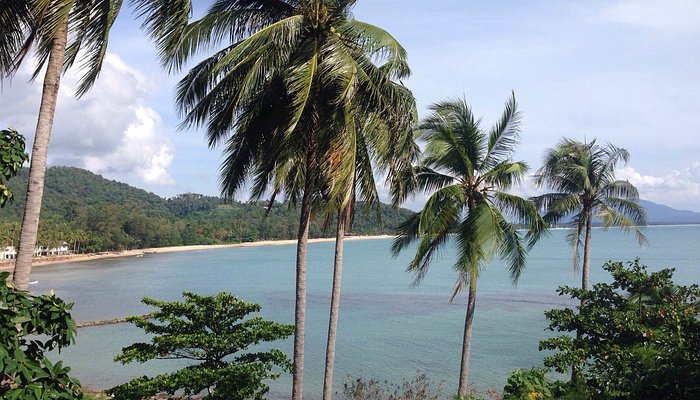
Khanom Beach which is on the Gulf of Thailand in Nakhon Si Thammarat province, gives guests a quiet break from some of Thailand’s popular beaches. Because of its clean beaches, history and colorful local traditions, Khanom offers travelers a special mixture of culture and nature.
Beautiful and Prominent Landmarks
The Thai island of Khanom has many beautiful beaches such as Hat Nadan, Hat Nai Phlao and Hat Nai Praet, all great places to relax and enjoy a swim. Morning tours on calm days give visitors the chance to spot the elusive pink dolphins, referred to by experts as Indo-Pacific humpback dolphins.
Nature lovers will find many ecosystems, including beaches and limestone islands, at the Hat Khanom–Mu Ko Thale Tai National Park, where they can kayak, visit caves and watch the wildlife.
How the building has contributed to the story and development of the city
During the Ayutthaya era, around eight hundred years ago, Khanom—originally Muang Tranom—was established and played a key role in navigation, seafaring and Buddhist arts . The town has been shaped through many years by different cultures and traditions.
Coral Pagoda (Chedi Pakarang) is a major cultural site found in Wat Chan Thattaram. Local people believe the pagoda was raised by pilgrims who couldn’t reach their destination because of a sea storm, so they built the Chedi on Khao That mountain using the gold relics they had.
It is believed that Wat Kradangnga was constructed in the Ayutthaya period. Inside the temple you can see beautiful murals about Lord Buddha and a grand Buddha statue from the same century .
2.Phra Mahathat Woramaha Wiharn
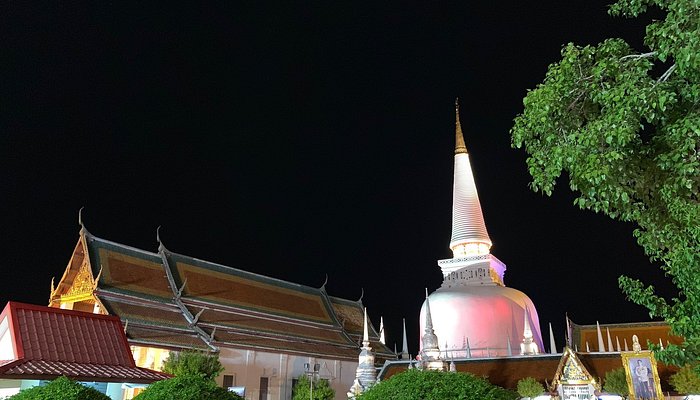
Known as Wat Phra Mahathat Woramahawihan, this temple in Nakhon Si Thammarat is a major Buddhist site that holds great importance for the country’s history. For the past 1,500 years, it has placed the region at the center of its spirituality and culture.
- Historical Overview
- Originally, the temple grew out of the famous port state Tambralinga in the 5th century CE. It is said that Prince Thanakuman and Princess Hem Chala introduced to the area a relic of the Buddha in 291 CE and erected a small pagoda at Hat Sai Kaew. Soon after, King Sri Dhammasokaraja chose the early 13th century to replace the previous temple and keep the significant relic.
- The main stupa, Phra Borommathat Chedi, follows the examples of Sri Lankan Buddhist temples, being shaped like a bell. Since it stands at 55.78 meters, many Buddhists believe that the building enshrines a tooth of the Buddha, making it a valuable place for pilgrimage.
- Architectural Significance
- You can see mixed architectural influences at Wat Phra Mahathat which demonstrates how cultures in South and Southeast Asia have influenced each other. Among the temple complex’s many structures are the Wihan Bodhi-Lanka and a cloister which surround a Bodhi tree thought to be a distant descendant of the Buddha’s enlightenment tree.
- The temple reveals how traditions from India, Sri Lanka, Java and the Mon influence were brought and adapted through Theravada Buddhism in Southeast Asia.
Official Visit Details
- Ratchadamnoen Road is the address in Tambon Nai Mueang, Nakhon Si Thammarat, Thailand
- Available Daily between 8:00 AM and 5:00 PM.
- There is no cost to attend.
3.Wat Chedi
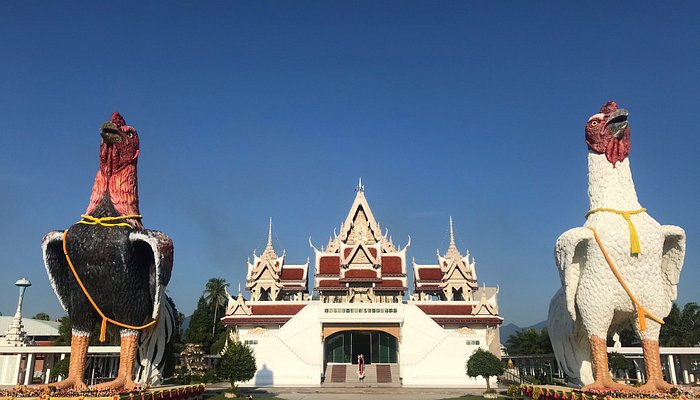
Ai Khai, a young boy’s spirit, is what made the Wat Chedi (Ai Khai) in Sichon District, Nakhon Si Thammarat, famous across the country. Visitors notice the temple for its countless statues of roosters, representing what the faithful have wished for and feel in gratitude.
Historical Background
Ai Khai’s legend exists since the era of Ayutthaya. According to people in the area, Ai Khai was a young follower of the well-regarded monk Luang Pu Thuat. Luang Pu Thuat told Ai Khai to safeguard a treasure trove at the site that became Wat Chedi. It is said that because Ai Khai passed away when he was young, his spirit chose to keep watching over the temple and help those in need. In 1983, a wooden statue was made to symbolize Ai Khai and special ceremonies brought the spirit into the statue.
Changes to Both Culture and the Economy
More people visiting Wat Chedi because of the Ai Khai legend has boosted both tourism and the local economy. Because the temple welcomes so many tourists, businesses around it have increased, including those selling rooster figures, works by local craftsmen and street food. All these visitors have made the area into a thriving cultural center, where religion and social growth mix.
- During the week, the city is quieter, but the liveliest time to see it is during special festivals.
- Chalong Subdistrict, Sichon District, Nakhon Si Thammarat is its location.
4.Kiriwong village
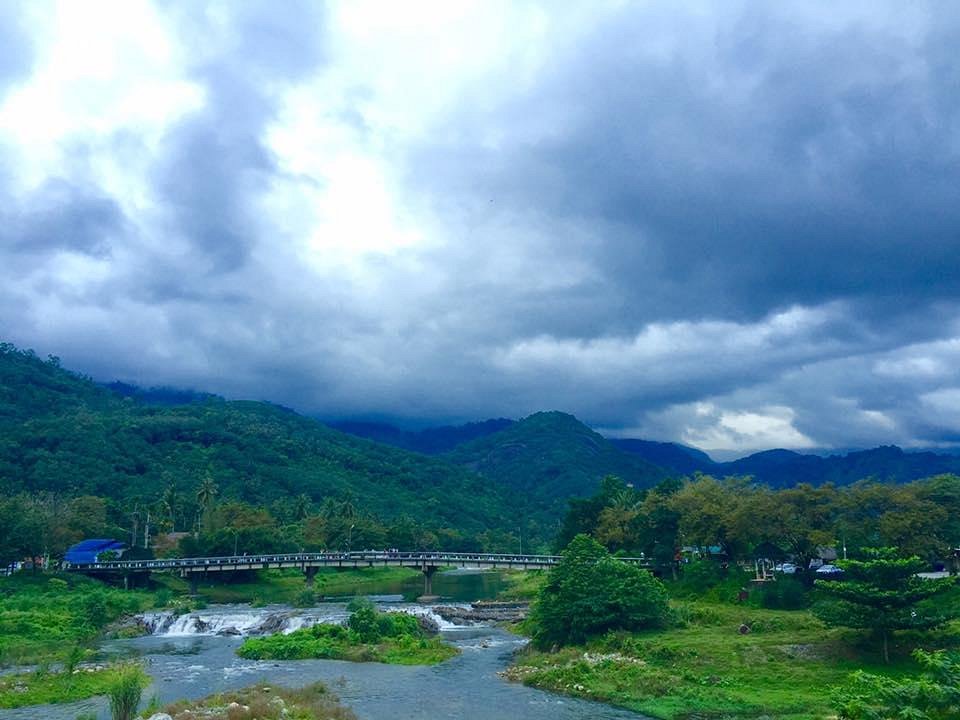
Because of its natural beauty and rich culture, Kiriwong Village, found in the Lan Saka District of Nakhon Si Thammarat Province, is well known in Thailand. Laying in the shadows of Khao Luang, the tallest mountain in southern Thailand, this village is known by its gentle atmosphere, thick forests, abundant clear streams and calm life.
- Historical Significance
- Since its founding over 200 years ago, Kiriwong was called “Bann Khun” because it is built at the summit of a hill. The temple, Khiriwong, was built which gave the village the name House within the circle of the mountain.
- During the 1970s, the Communist Party of Thailand was very active in Kiriwong. In addition, the village has suffered from floods and from the destructive Typhoon Gay in 1988. Then, the dedicated community concentrated on sustainable ways to live and ecotourism which proved their commitment to taking care of the environment.
- The best months to see the best views and harvest are July, August and September.
5.Laem Prathap
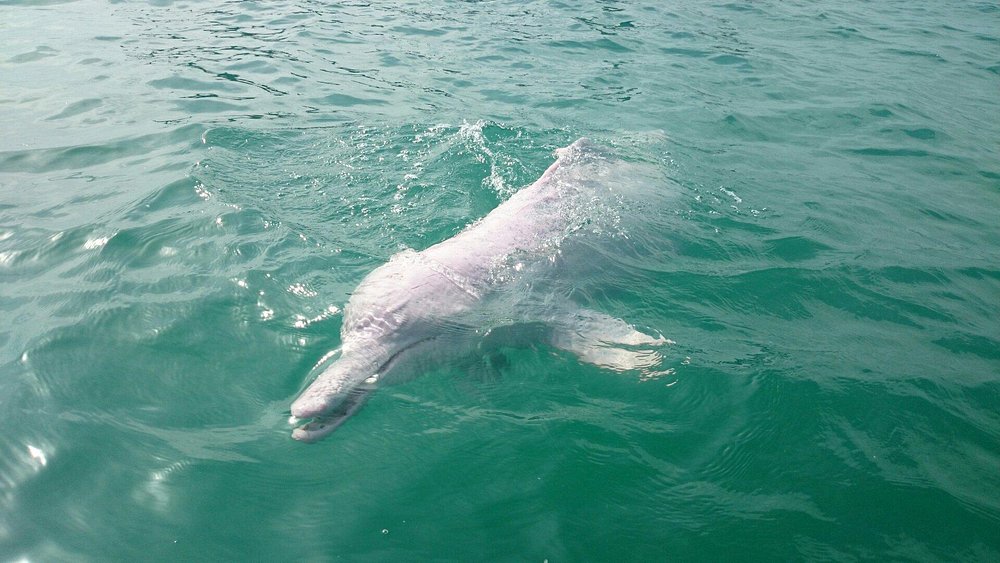
At the northern edge of Thong Nian Bay in Khanom District, Nakhon Si Thammarat, Laem Prathap impresses with its simple coastal scenery and draws visitors seeking to see the unusual pink dolphins.
- Seeing Pink Dolphins is a Really Uncommon Experience
- About 50 pink dolphins, referred to as Indo-Pacific humpback dolphins locally, live around Laem Prathap and Ao Kwang Phao. You can often see these dolphins near fishers’ boats, mostly in the early hours when their prey of small fish, prawns and sea grass is more common.
- People visiting the region can join dolphin-watching tours from fishing boats organized by the Laem Prathap Eco-tourism Society. Every two-hour journey costs 1,000 baht and fits six travelers in the vehicle.
- Cultural Significance
- Laem Prathap is a historic village that has always depended on traditional fishing for a living. Legend tells us that King Taksin the Great spent a night at this temple on his way to Nakhon Si Thammarat. A monument to mark his visit can be seen in the village.
- A specialty product from the community, known as “kapi,” is often purchased by tourists as a souvenir.
- If you want to see dolphins, make a point of being at the waterfront between 7:30 AM and 9:00 AM.
- Tours take about 2 hours and generally cost 1,000 baht per boat.
6.Nakhon Si Thammarat National Museum
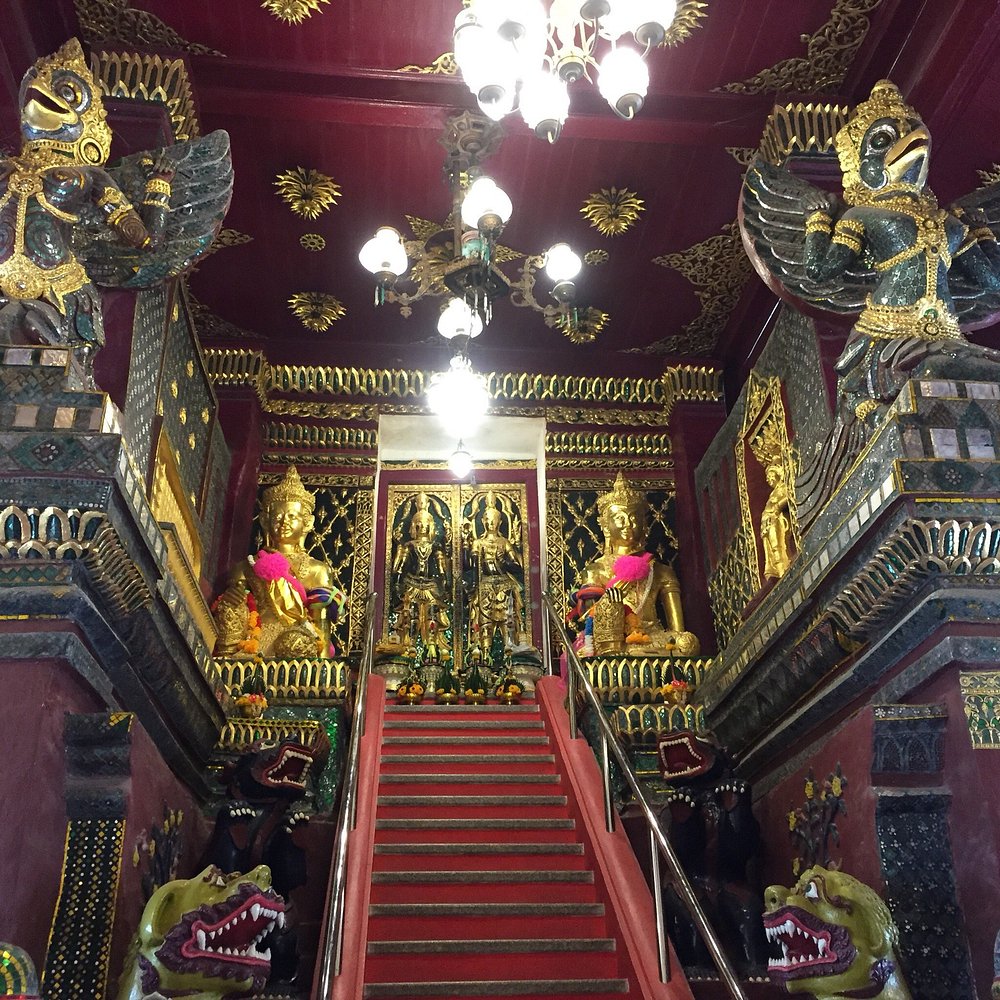
Established in 1974, the Nakhon Si Thammarat National Museum shows the rich cultural heritage found in this region. The museum is found on Ratchadamnoen Road in Nakhon Si Thammarat city where Wat Suan Luang Tawan Ok used to be.
Historical Background
To preserve objects found during digs in the region, an archaeological museum was formed. Significant finds in the 1960s such as pagoda remains from Mueang District, show that the area played a key role in history. For this reason, the Thai government provided money to establish an institution designed specifically for caring for and displaying these objects.
Architectural Significance
The museum shows traditional Thai design, highlighted by finely carved woodwork, tall roofs and plenty of ventilation. The architecture of southern Thailand is maintained in this design and visitors can have a better time too.
- Ratchadamnoen Road, Mueang District, Nakhon Si Thammarat.
- Visiting Hours: Wednesday till Sunday, 9 AM to 4 PM.
- Entrance is free; if you would like a tour, one is available on request.
7.Sichon Beach

Sichon Beach in Nakhon Si Thammarat Province, Thailand, is beloved for its calm atmosphere, clear sea and beautiful white sand. Among Thailand’s top 10 beaches, as chosen by Lonely Planet, Khao Lak is famous for its diverse nature and strong cultural background.
There is a lot to see in the natural world, as well as unique marine life.
Sichon Beach is famous for having amazing blue and green waters and sand so fine it shimmers. Pods of pink dolphins and other species of coastal wildlife live in the area and there are environmental programs to make sure the area does not suffer from overexploitation.
- Cultural Significance
- Aside from its wonderful scenery, Sichon Beach is filled with cultural heritage. There are still traditional fishing communities in the region where classic ways of doing things are practiced. Wat Chedi Ai Khai Temple and the Khao Ka Ancient Ruins explain some of the area’s interesting past.
- The Infinity Rich spiritual tourism route created by Walailak University pairs eight top attractions in Sichon District and stresses the importance of sacred rituals.
8.Tham Khao Wang Thong
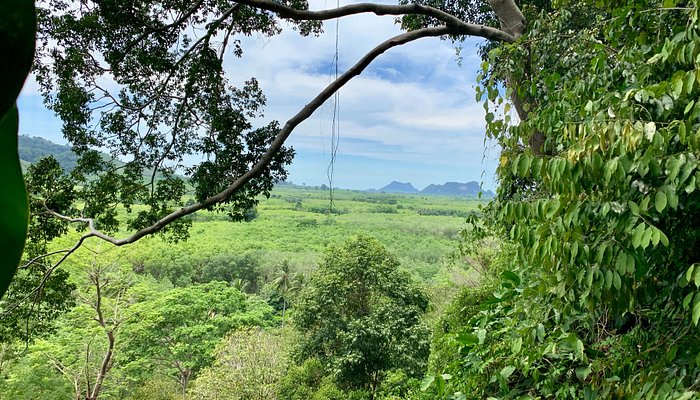
In Khanom District, Nakhon Si Thammarat Province, Thailand, you will find Tham Khao Wang Thong, an impressive limestone cave. Its famous delicate formations and relation to culture attract visitors who find a combination of excitement and thought.
- The geological and natural features of a region are its natural elements.
- Inside the caves are various rooms, all of them decorated over time with stalactites and stalagmites. The outlines of the rocks usually remind people of normal things, for example pagodas, dinosaurs, custard apples or even fried eggs. About 3,200 square meters are covered by the largest chamber, giving guests lots of room to explore it. Out here in the cave, getting around tests your fitness with tasks like climbing and squeezing through tight spots which is exciting.
- The Meaning of Culture and Religion
- Apart from being beautiful, Tham Khao Wang Thong has importance in both cultural and spiritual terms. Local visitors may recognize the rock formations within as depicting their main gods, including the Chinese goddess Guan Yin. Their beliefs turn the cave into a spiritual spot, as well as a fascinating natural place.
- The Center is open daily from 8:00 AM to 5:00 PM .
- Place: Located within 77 kilometers of Nakhon Si Thammarat city. From Khanom District, continue on the road to Don Sak and follow the signs to the cave .
- There are local guides at the beginning of the cave who are important for your safety and understanding of what you see. They give visitors a view of the cave’s prior and current features. Though donations aren’t required, it’s welcomed if you pay around 200 THB.
9.Khanom’s Saturday Night, Walking Street Night Market
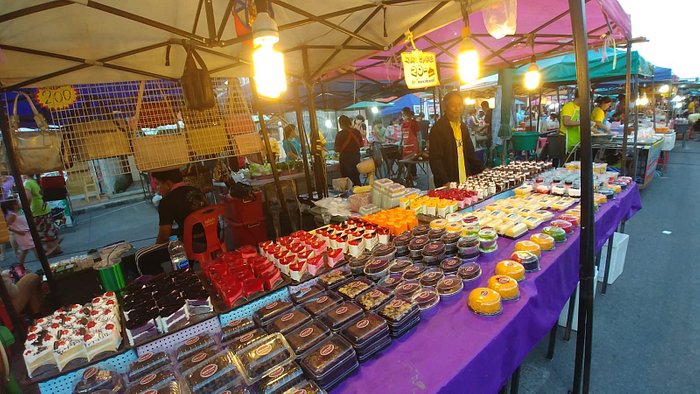
In the town of Khanom in Nakhon Si Thammarat Province, Khanom’s Saturday Night Walking Street Market is a regular, lively market. The market is held Saturdays on the main street of Ban Ton, 4 kilometers north of Khanom town center and is open from 5:00 PM to 9:00 PM, with most people there just after 6:30 PM. There is a bustling mood, making it possible for both locals and tourists to sample traditional Thai dishes, look at crafts and shop for local items. The market mainly serves local people, but it gives visitors a real taste of the region’s cuisine.
- Why It Matters in Culture and Society
- Besides selling goods, the Saturday Night Walking Street Market brings people together and allows for cultural learning. Thai food vendors at the market display their skills by serving up specialties with the unique flavors of Southern Thailand. Also on sale are handmade goods and textiles which reflect the traditions of this region. Held every week, it boosts the local economy and unites residents and visitors who enjoy the same cultural event.
Culinary Highlights
Food is what draws many to the market and there are plenty of stalls selling all kinds of Southern Thai specialties. Guests can taste various dishes, like curries, fish grilled on an open fire and khanom la, a sweet made of rice flour and egg yolk, as a festival dessert at Sat Thai. What you eat here will nourish your taste buds and offer a taste of the region’s tradition.
- The site is in Ban Ton, found approximately 4 km north of Khanom.
- Time of Operation: Every Saturday, between 5:00 PM and 9:00 PM.
- Visiting the market between 6:30 and 7:00 p.m. helps you enjoy it at its best.
10.Nai Phlao Beach
Wonderful Nature and Peace
Nearly 4 kilometers of gleaming crescent-shaped shoreline, with mountains on each side,define the beach at Nai Phlao. With white sand and shining turquoise waters, the beach is perfect for both swimming and taking it easy. Visitors who want peace and quiet, as well as beautiful natural surroundings, will find it here.
- Credits to Local Beliefs and Traditions
- For many years, Nai Phlao Beach played a key role in trade for the seafaring kingdom of Nakhon Si Thammarat. At present, the culture stays alive through events like the annual sand whiting fish festival celebrated in July, as well as other traditions. Here you can find fishing competitions and ancient traditions such as monkeys picking coconuts, that show how much the people here depend on the sea.
- At this time of year, from February through March, people gather shrimp that end up on the beach which is then turned into shrimp paste, an essential dish in the province.
Related articles : Top 10 Best Places to Visit in Nan – Temples, Nature & Culture
<p>The post Top 10 Best Places to Visit in Nakhon Si Thammarat – Temples, Nature & Culture first appeared on Traveling Info World.</p>
]]><p>The post Top 10 Best Places to Visit in Nan – Temples, Nature & Culture first appeared on Traveling Info World.</p>
]]>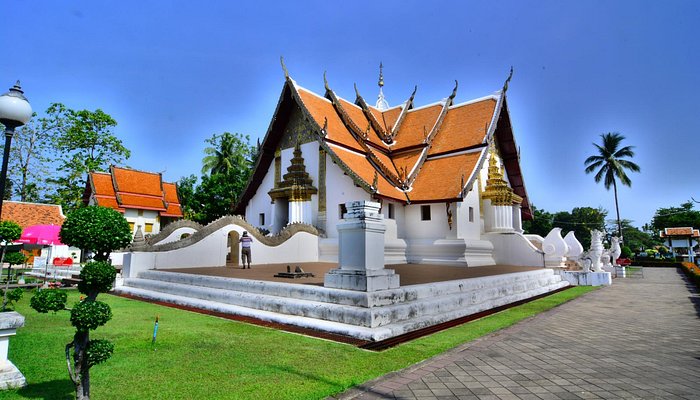
Wat Phumin’s famous cross-shaped design is different from most other Thai temples. First built in 1596 and renovated over 100 years later, the temple mixes Tai Lü and Lanna influences. Naga (serpent) staircases guard the entrances to this place which end in a large hall with four images of the Buddha facing the four main directions. There are twelve artistic teak pillars under the roof and the ceiling has finely carved motifs from the region.
Murals and Importance in Culture
Among the temple’s murals, the most striking are those hand-painted by Nan Buaphan of the Tai Lü in the late 1800s. The murals tell stories from Jataka tales, show Nan customs and illustrate day-to-day activities from the town’s past. The mural, “Poo Man Yar Man” (Whispering of Love), immortalizes a couple sharing feelings of love and affection. Nan’s cultural identity is often represented by this artwork which is also often photographed.
- In the center of the city, on Pha Kong Road.
- Built in 1596 and last converted in the mid-1800s.
- You can visit the district every day between these hours: 7:00 AM – 7:00 PM
- Day boat rides are free and donations are accepted.
2.Kuang Mueng Nan Walking Street
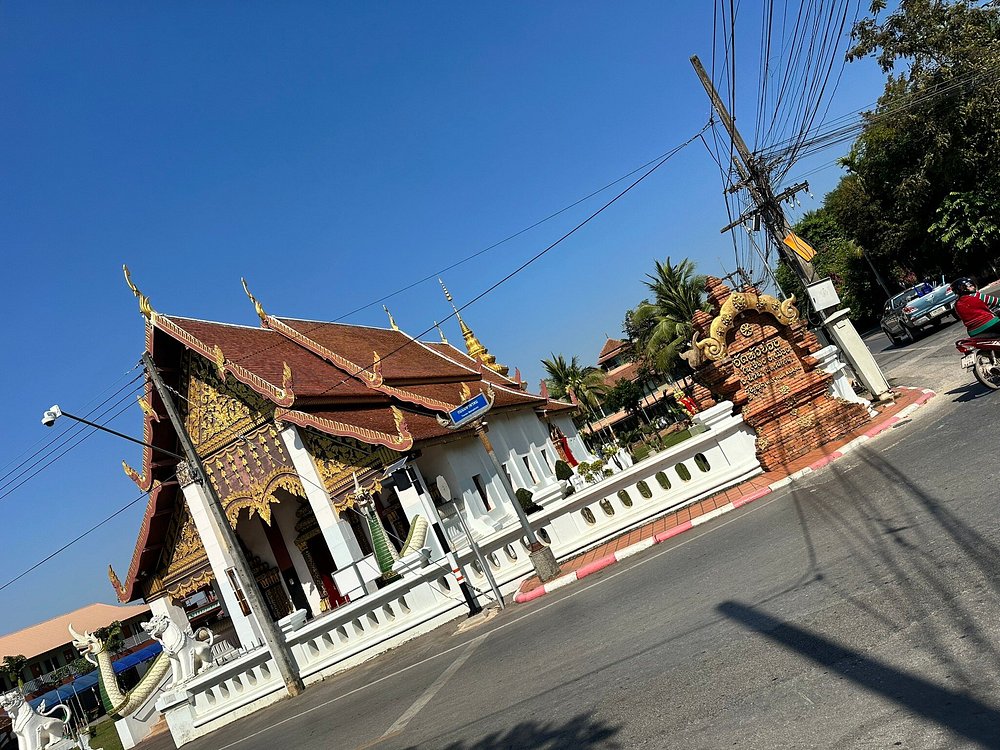
On weekends, Kuang Mueng Nan Walking Street in the heart of Nan, Thailand, brings together local culture, delicious food and interesting crafts for everyone to enjoy. Every Friday, Saturday and Sunday evening from 5:00 PM to 10:00 PM, the walking street becomes busy as it’s located directly in front of Wat Phumin. Both qualified tourists and local residents can relax here in the pleasant atmosphere offered by Kuang Mueng market.
Cultural Significance
Besides being a market, Kuang Mueng Nan Walking Street represents the traditions and friendly atmosphere of Nan. Because Wat Phumin is only two miles away, there is a sacred atmosphere to the countryside. During their visit, many visitors can enjoy seeing the temple’s special architecture and murals before joining in the lively festivities on the walking street.
- The place is located at Phakong Road in Mueang Nan District, Nan, Thailand.
- The museum is open every Friday, Saturday and Sunday from 5:00 PM to 10:00 PM.
- Getting in is completely free, but you may buy something if you like.
3.Wat Phrathat Chae Haeng
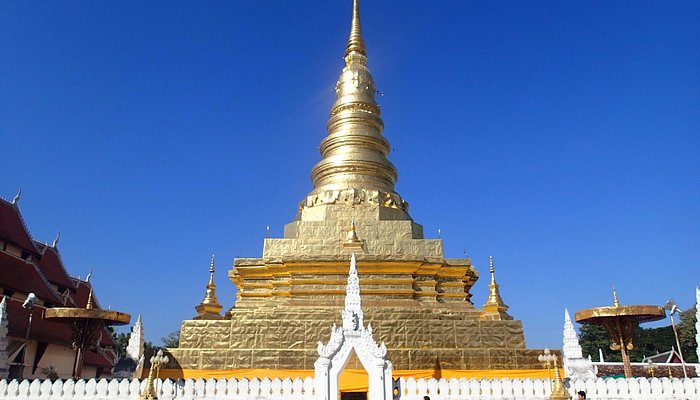
History and Culture
In the same year as the reign of Chao Phraya Kanmueang, Wat Phra That Chae Haeng was set up to house important Buddhist relics, including a left wrist bone shipped over from Sukhothai. The temple’s name is “Chae Haeng,” meaning “dry relic” because the relics stored there are kept intact. At 55.5 meters tall, the chedi or stupa, is plated in brass and copper, showing the fine workmanship of the time.
You can notice a mix of Lanna and Thai Lü architectural styles within the temple. The Phra That Hariphunchai in Lamphun influenced the chedi’s shape and the patterns of snakes which decorate the steps and roofs. They are part of Nan’s personal contribution to arts.
The Temple of the Rabbit Zodiac
An interesting part of Wat Phra That Chae Haeng is its link to the Chinese zodiac. The temple is regarded by many as the special place for people born in the Year of the Rabbit. People from Lanna, according to their traditions, visit their “Chu That” chedi to receive blessings of good fortune, joy and protection from disease. This tradition points out the religious and cultural functions of the temple.
- The park can be found in Ban Nong Tao, Muang Tuet Subdistrict, Phu Phiang District, Nan Province, Thailand.
- The station operates every day from 6:00 AM until 6:00 PM.
- You are welcome to tour the museum for free; donations are welcome.
4.Wat Ming Muang
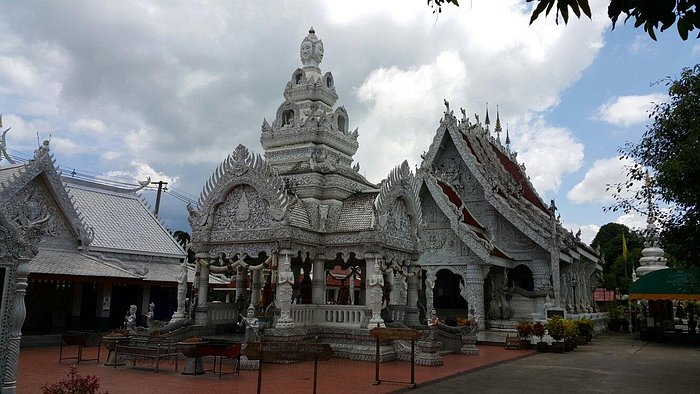
This temple, Wat Ming Muang, is famous in Nan Province for its gorgeous white building and strong tradition. In 1857, Chao Anantaworaritthidej, the governor of Nan, erected the temple to hold the city’s sacred pillar which the locals called “Sao Ming Muang” .
Historical Significance
The city pillar was originally found at the abandoned location where the temple began, as it lay among the ruins. Thinking how significant Mahajatta was, Chao Anantaworaritthidej decided to establish Wat Ming Muang as a symbol of the spiritual center of Nan. Because the old ordination hall was collapsing, it was demolished in 1984 and rebuilt in the latest Lanna style.
- At each location, find the visitor information to make your trip easier.
- Situated on Suriyaphong Road in the Nai Wiang Subdistrict, Mueang Nan District, Nan Province.
- Open all days, from 6:00 AM until 6:00 PM .
- You don’t have to pay to enter the museum.
5.Wat Phra That Khao Noi
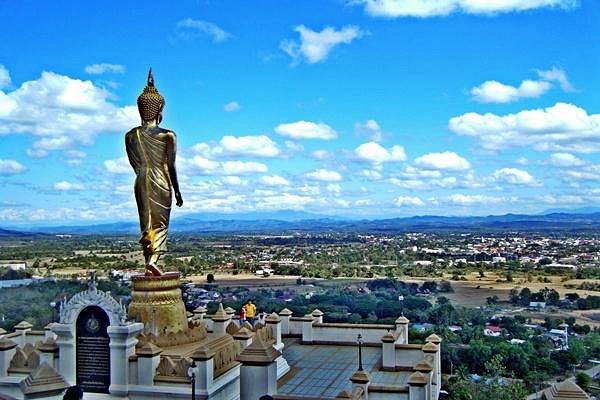
The Buddhist temple Wat Phra That Khao Noi is found where Khao Noi Hill meets Nan Province. Chao Pu Kaeng ordered the foundation of the temple in 1487 and today it is famous for being like a historical, artistic and scenic jewel set in Nan town.
Historical Significance
The temple’s prominent chedi is built with brick and mortar and nicely brings together traditional Burmese and Lanna style features. The temple proudly displays ancient hair strands of the Buddha, so it is widely respected by followers of Buddhism. The temple was greatly renovated between the years 1906 and 1911, thanks to King Suriyaphong Pharitdet and Burmese workers helped restore it.
Architectural Highlights
ano] The statue which was erected on December 5, 1999, for the King’s 72nd birthday, stands on a lotus with one arm placed in the blessing posture. The statue has 27 baht-weight of gold on its topknot.
Panoramic Viewpoint: If you travel by car, bike or foot, the Pathara Yawata can be reached from Nan town at an elevation of 240 meters. Both access routes are available for people; the highest way is by stairs and the easiest is along the road to the top.
Visitor Information
- Du Tai Subdistrict, Mueang Nan District, Nan Province, Thailand
- Starting at 6:00 AM and finishes at 6:00 PM daily.
- The event is free for everyone.
6.Nan Noble House
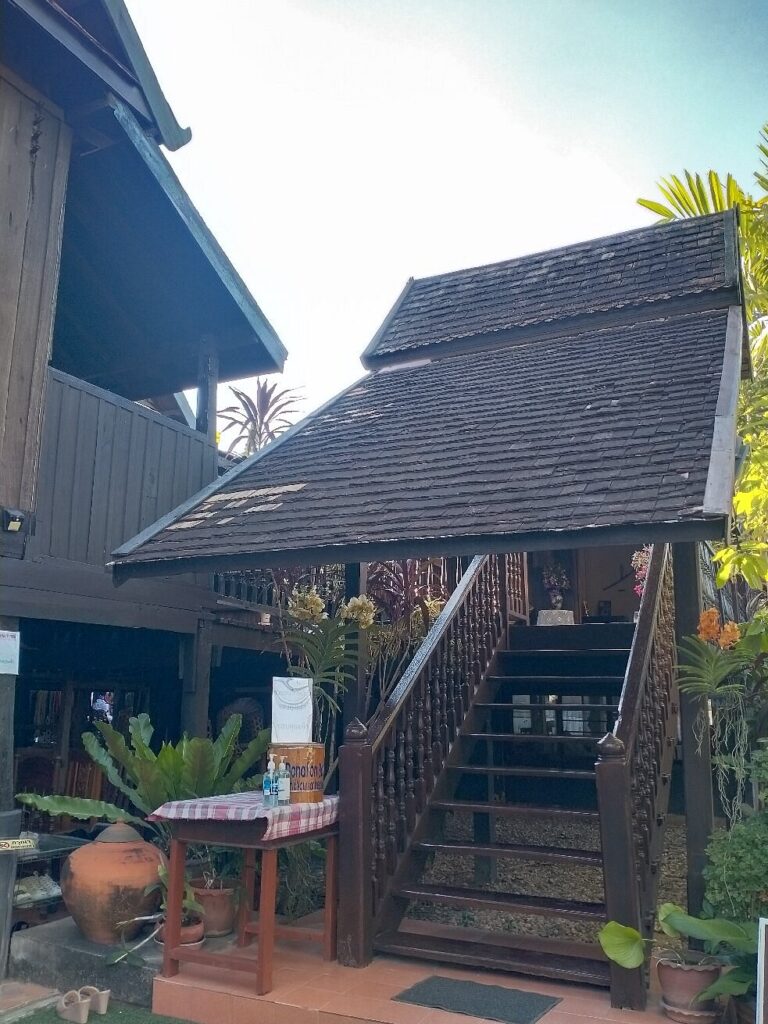
Nan Noble House or Hong Chao Fong Kham, is a well-preserved old teakwood mansion in the center of Nan Province, Thailand. Visitors can walk through this old residence to get a feel for Lanna noble life and see how the region’s rich culture is celebrated.
Historical Significance
In the early 1800s, the Nan Noble House became home to Chao Fong Kham, the son of the late King Chao Ananta Worarithidet, who was the 62nd ruler of Nan. The house shows traditional Lanna design, having a high-raised basement, gabled roofs covered in clay tiles and joinery made from wood and held together by bonds instead of nails or screws. Around a century back, the house was taken down from Ban Phra Kerd and reconstructed on Sumon Thewarat 2 Alley. Chao Fong Kham’s descendants now look after the building, making sure its history is still present.
Architectural Highlights
- Traditional Building: The mansion includes four connected houses built by hand using remarkable teak planks and simple wooden latches. It represents the skills of those days and shows just how much teak was available nearby.
- The main floor is a museum, featuring old furniture, jewelry, clothing and common household things that reflect what Lanna noblemen and women used each day. On the ground floor, there are demonstrations of weaving, spinning and dyeing, so visitors can enjoy learning about the area’s traditions.
- Nan Noble House was acknowledged by the Association of Siamese Architects in 2012, receiving the Outstanding Architectural Conservation Award in the residential category for helping to conserve Thailand’s architectural heritage.
Visitor Information
- Address: 8 Sumon Thewarat 2 Alley, Nai Wiang Subdistrict, Mueang Nan District, Nan 55000
- Open Wednesday through Sunday from 9:00 AM to 5:00 PM; Mondays and Tuesdays are not open
- Entry: You are welcome to give 20–30 baht as a contribution to help take care of the house.
7.Nan National Museum
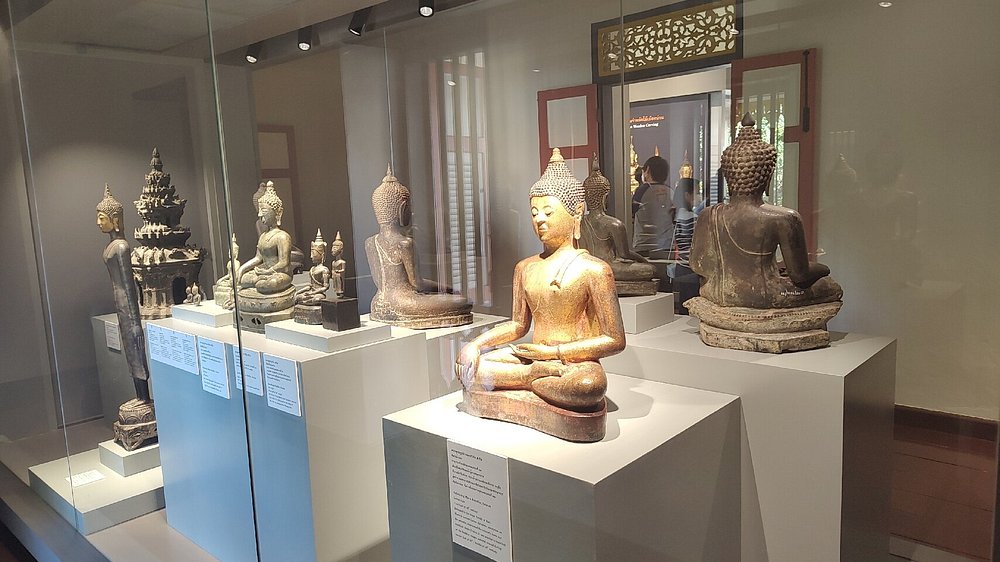
In the middle of Nan Province, Thailand, you’ll find the impressive Nan National Museum. Since the museum is at the former palace of Nan’s last feudal lords, visitors can learn about the province’s extensive history, its many ethnic groups and the arts found there.
Historical Significance
At the time the building was made in 1903 by Phra Chao Suriyaphong Phalidet, it acted as the palace where the rulers stayed. After the death of Chao Maha Brahma Surathada, who was the last feudal lord, his heirs presented the palace to the government in 1931, so it became the official provincial hall. From 1973, the building was changed into the Nan National Museum, maintaining its form and purpose as a place for cultural remembering .
Visitor Information
- Pha Kong Road is in Nai Wiang Subdistrict, Mueang Nan District, Nan Province, Thailand
- The places is open Wednesday to Sunday, from 9:00 AM – 4:00 PM but closed on Mondays and Tuesdays
- You can enter for 20 baht if you’re Thai or 100 baht if you’re from abroad. Monks, students and elderly people get in for free.
8.Wat Phra That Chang Kham Worawihan
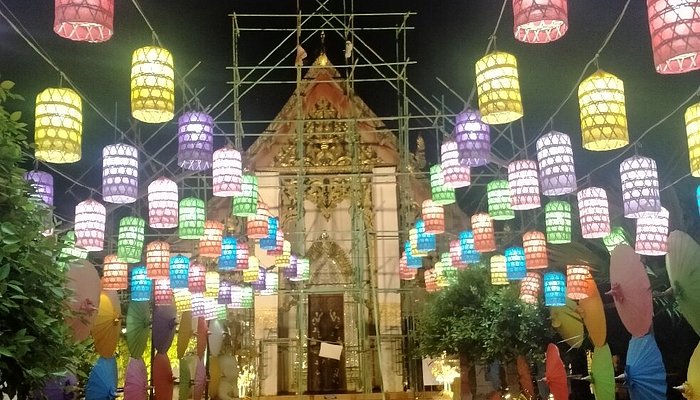
Wat Phra That Chang Kham Worawihan which is often called the “Elephant-Supported Stupa Temple,” holds a key place in Nan Province. Placed right across from the Nan National Museum in central Nan, this temple gives visitors important insight into the area’s heritage.
Much of what we know about history comes from HS.
During Phaya Phu Khaeng’s time in Nan, the temple was built in 1406 and called Wat Luang Klang Wiang; it served as the royal temple for many important occasions such as the Oath of Allegiance event. The name of the temple which means “Temple of the Relic Supported by Elephants,” comes from 24 elephant sculptures shown on the base of its main chedi .
Phaya Phonlathep Ruechai, the ruler of Nan, had the main viharn (assembly hall) restored in the temple in 1548.
Visitor Information
- Suriyaphong Road, Nai Wiang Subdistrict, Mueang Nan District, Nan Province, Thailand
- The park is open from early morning to late afternoon every day.
- You do not need to pay to attend.
9.Wat Sri Panton Temple
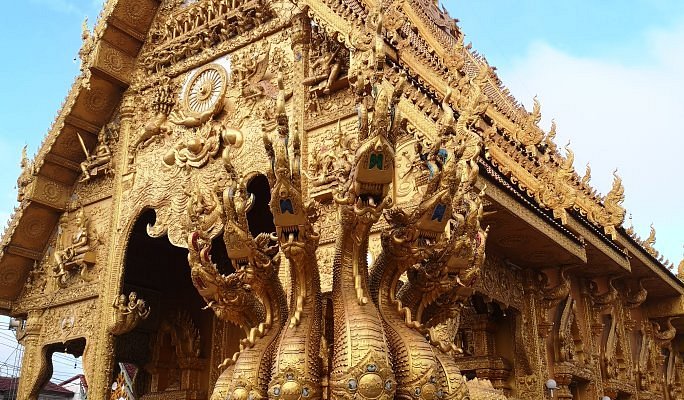
Wat Si Panton Temple or Wat Si Phan Ton, shows the vibrant cultural and spiritual history of the Nan area. The region’s fine artwork and Buddhist traditions can be easily recognized in the Golden Temple, a temple known for its shining golden walls.
Historical Background
At the beginning of the 15th century, Wat Sri Panton was founded by Phaya Panton, one of Nan’s 64 kings and was named Wat Sali Panton after the two famous Bodhi trees (Sali) that flanked it to the north and south. The trees were taken out to make room for the road, but the temple’s heritage remained important. In 1962, it was designated Wisungkham Sima which consecrated the site for use by monks.
How cultural and spiritual significance is expressed
The people at Wat Sri Panton gather for many events and religious ceremonies there. The temple’s use of traditional Lanna architecture along with modern artwork expresses how spiritual life in Nan is changing. Tourists also observe Thai merit customs by offering things to monks and using sticks marked with numbers for fortune-telling in the temples.
Visitor Information
- Location: Found on a major intersection in Nan, its glowing gold color means you can’t miss this temple when passing by.
- Every day, the shop is open from 7:00 AM to 5:00 PM.
- You don’t have to pay to enter.
10.Tham Pha Tup Forest Park
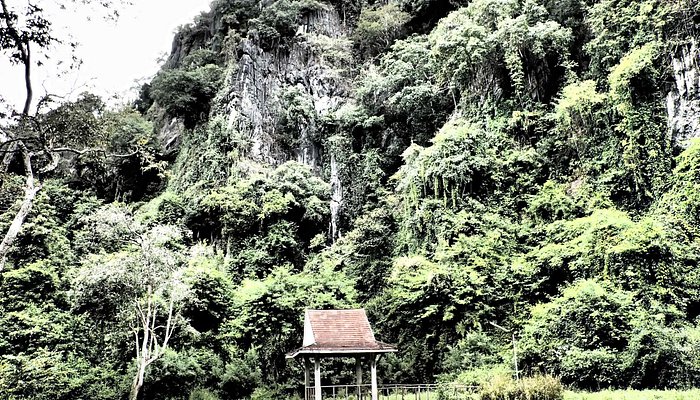
The park of Tham Pha Tup is in northern Thailand, just north of Nan town and is famous for its scenic rocky hills, many caves and abundance of wildlife. Since 1978, this protected area of 1.2 km² has provided people with a unique mix of geological sites and cultural history.
Cultural Significance
Besides being beautiful, the park has important cultural value to the people here. Each year, residents of Ban Pha Tup organize the Tham Pha Tup Fair on the full moon day in the fifth lunar month. A ceremony of gilding the Buddha image at Khao Tham Phra, giving alms to monks in the morning and cultural shows performed by students at Ban Pha Tup School are among the activities.
Visitor Information
- Daily operations are between 6:00 AM and 6:00 PM.
- You do not need to pay to attend.
- Pha Sing Sub-district in Mueang Nan District, Nan Province, is the location.
Related articles : Top 10 Best Places to Visit in Narathiwat – Temples, Nature & Culture
<p>The post Top 10 Best Places to Visit in Nan – Temples, Nature & Culture first appeared on Traveling Info World.</p>
]]><p>The post Top 10 Best Places to Visit in Narathiwat – Temples, Nature & Culture first appeared on Traveling Info World.</p>
]]>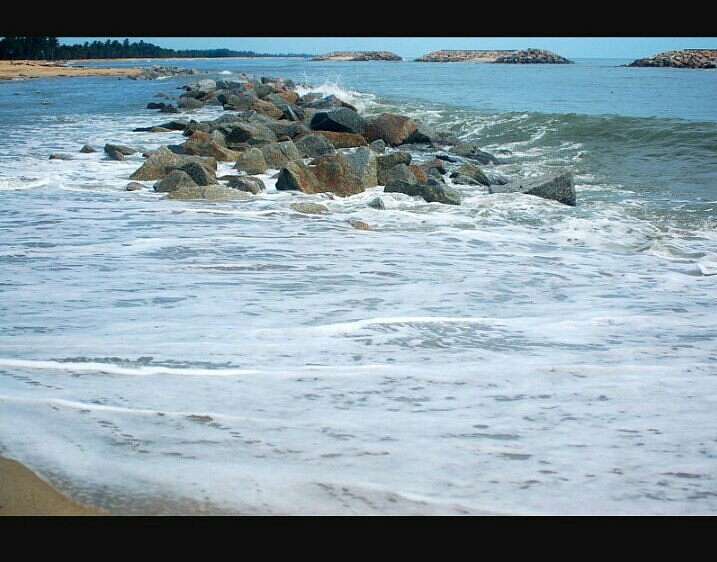
Found by the Bang Nara River mouth and backed by calm mangrove trees, Narathat Beach gives guests a peaceful scene on Thailand’s coast. Having white-yellow sand, long stretches of trees and a lengthy shoreline, the beach feels very peaceful and natural—most of all on calm weekday mornings.
Why is this event known and recognized?
The identity of Narathiwat Province is influenced by the special nature of Narathat Beach. Located at the Bang Nara River’s mouth, the site has traditionally aided locals through its support of fishing, commerce and transportation.
Long ago, communities used the beach for their local festivals and ceremonies, especially those influenced by the Malay-Muslim traditions key to Narathiwat. The area is also right beside the Narathiwat Central Mosque, along with the popular Naga statue which represents a snake from local folklore thought to defend the region.
At Narathat Beach, visitors can enjoy themselves along with a glimpse of how nature, mythology and everyday living blend together in the area.
Time of Year to Go
Of all times of the year, Dry Season (from March to October) is often advised for tourists.
Try to skip the wet season (November to February) because heavy rain often leads to flash floods and landslides around the country’s hilly areas.
Information for Travelers
- Narathiwat Municipality, Narathat Beach, Thailand
- You can easily see the sights in just a couple of hours.
- While rooms are basic, they need upgrading. If you plan to stay long, pack everything you need.
- Access to the site is simple by car or motorbike from the town’s center.
- Entry to the event is free.
- A pairing session takes about 1 to 2 hours to complete.
- Narathiwat Municipality, Southern Thailand
2.Taloh-manoh Mosque
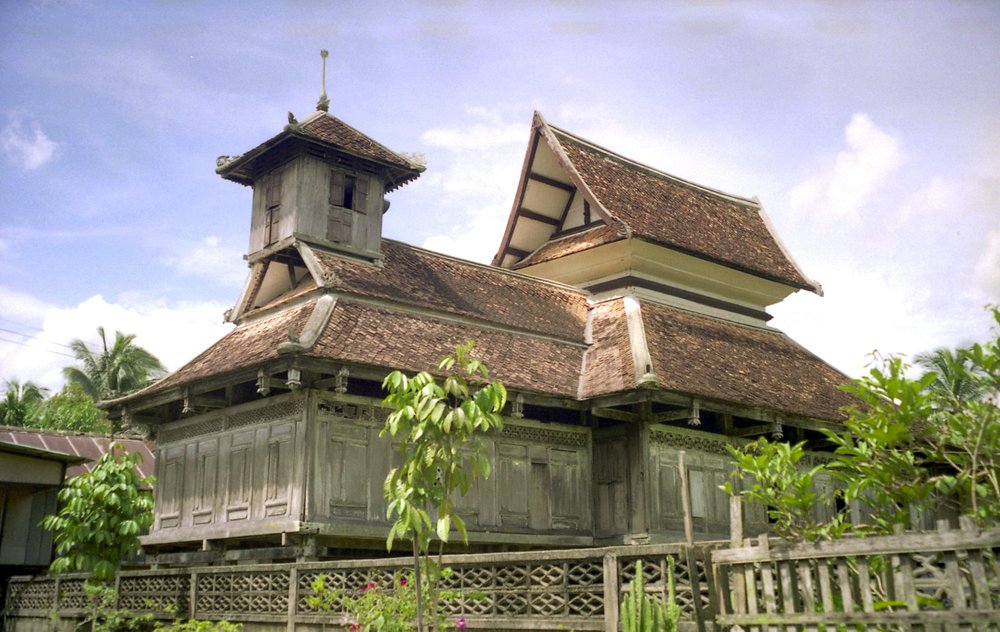
In the peace of Narathiwat’s villages and along the water, Taloh-Manoh Mosque has stood as one of Thailand’s oldest Islamic landmarks. The mosque in Bacho District demonstrates how strongly the local Malay-Muslim community practices their religion and also represents centuries of culture and architecture.
The story behind Noh and why it is important
The Taloh-Manoh Mosque which is thought to date back more than 300 years, is regarded as Thailand’s oldest wooden mosque. All parts of the mosque were built from Nipah hardwood by hand—using just carpentry, not nails—and that makes it a good example of traditional Malay-Muslim architecture.
The name Taloh-Manoh is taken from the local village and the mosque is a community center for religious instruction, gatherings and local leadership. Muslim communities in Thailand’s south have stayed strong through history and modern changes, relying on both firmness and religion.
Over the years, the building has been lovingly saved and serviced and today it is still used as a mosque and by people who visit to learn more about Islamic heritage.
Visitor Information
- The project is found in Taloh-Manoh Village, Bacho District, Narathiwat Province, Thailand
- Open each day; enjoy the most during weekday hours, not while people are praying.
- Entrance is free, but good manners and modesty are asked of all visitors
3.Hala-Bala Wildlife Sanctuary
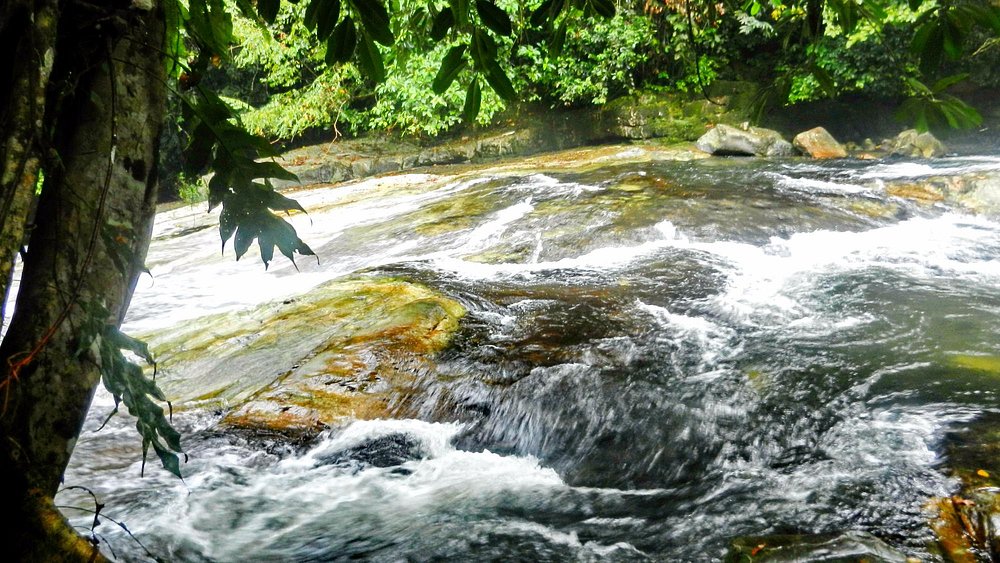
The Hala-Bala Wildlife Sanctuary in southern Thailand is set in a pristine area of rainforest many call the Southeast Asian Amazon. In 1996, the sanctuary began covering approximately 270,725 rai (about 167 square miles). It consists mainly of the Hala Forest in Yala Province and the Bala Forest in Narathiwat Province.
Why History Matters
Its forests have long protected both animals and people during times of political upheaval in the late 20th century. Because of its value for wildlife, Hala-Bala was formally declared a wildlife sanctuary by the Thai government in 1996 .
Hala-Bala is known for supporting a variety of rare and threatened species. Significantly, the forest is home to many Plain-pouched Hornbills and over 500 migrate here every year. Helmeted Hornbills and Rhinoceros Hornbills also find shelter here, so the sanctuary is a key breeding place for hornbills.
As well as birds, the sanctuary is a home to mammals like gaurs, Asian elephants and clouded leopards, alongside many kinds of plants, including the unique golden-leaved liana .
Visitor Information
- Trekking and spotting animals are best during November to April, when the weather is dry.
- People can reach the Bala sector along Highway 4062 starting in Waeng District. As a result of conservation work, the Hala sector is currently out of bounds .
- Every visitor should get their permit from the sanctuary office or the Department of National Parks, Wildlife and Plant Conservation.
- Basic facilities can be found; but you are not allowed to stay overnight in the sanctuary .
- Time: More than 3 hours
- The area under study is Narathiwat & Yala Provinces, on the borders of Southern Thailand.
4.Chao Mae Kow Leng Jee Shrine

Located in the center of Narathiwat city, the Chao Mae Kow Leng Jee Shrine shows how much the religious traditions of the local Chinese-Thai community have thrived. Named the first and oldest Chinese shrine in Narathiwat, it was set up in 1915, following the city’s change from Menara to Narathiwat.
What Makes Them Important
Gateway to God and Home of Tao, also known as Pond outside Jax, stands as a place of spiritual peace and caring for over 100 years, honoring Chao Mae Kow Leng Jee. Its founding showed the important cultural impact of Chinese influence in the Malay-Muslim area of Thailand’s south.
A new combination of traditional carvings and bold colors can be seen in the shrine’s architecture. People at the temple pay respects to Guan Yin, Guan Yu and the Black Dragon Chao to receive good health, prosperity and security.
Every year, fire-walking is celebrated at a lively event attended by both the community and travelers. This occasion shows how the shrine maintains and honors the region’s Chinese traditions.
Visitor Information
- The center is located at 33 Phadung Aram Rd., Bang Nak Subdistrict, Narathiwat.
- Daily Hours: 8:00 AM until 6:00 PM
- Admission: Free
- It takes less than 60 minutes.
- The culprits under arrest are from Bang Nak Subdistrict in Narathiwat, Thailand
5.Samnaksung Temple
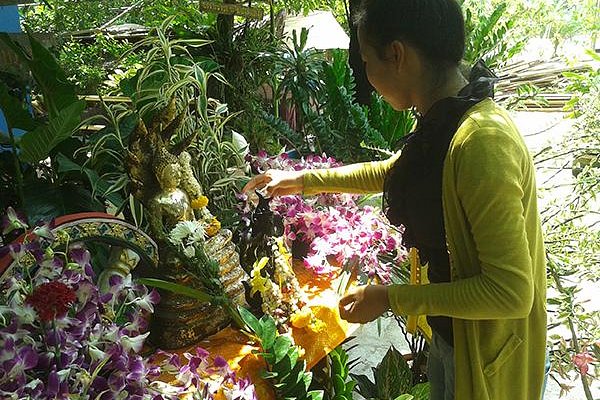
Placed in the frontier city of Su-ngai Kolok, Samnaksung Temple is recognized for its spiritual calm and culture of unity. Although there aren’t many official records, the temple is respected for being calm and for the kindness shown by the resident monks.
Traditions of History
Though we lack full documents from history, Samnaksung Temple has become a prized place of worship for many. Many people recall the place for its calm atmosphere and the friendliness of its monks. A visitor said, “It is the finest temple you must see for yourself.” These monks have always been very helpful and kind. You should relax and visit this sacred place.”
Being located in a quiet part, the temple is an excellent spot for peace and quiet reflection, away from the busy atmosphere of the border town. Because it’s so welcoming, people from many backgrounds have visited, making it better known.
Famous Cultural and Spiritual Places
- A peaceful atmosphere at the temple is perfect for meditation and spiritual reflection.
- Samnaksung Temple allows local religious groups to meet and unites people from the community by promoting cultural exchange.
- Friendly and approachable, the resident monks help make the temple a favorite sacred retreat for travelers to Thailand.
Visitor Information
- No. 8 Moo 5, Pasir Mas, Su-ngai Kolok 96120, Thailand
- In most cases, you can visit daily, yet we recommend checking the hours before you plan a trip.
- Tickets for W10 are free.
- It takes more than three hours to complete the test.
- No. 8 Moo 5, Pasir Mas, Su-ngai Kolok, Narathiwat Province, Thailand
6.Pacho Waterfall
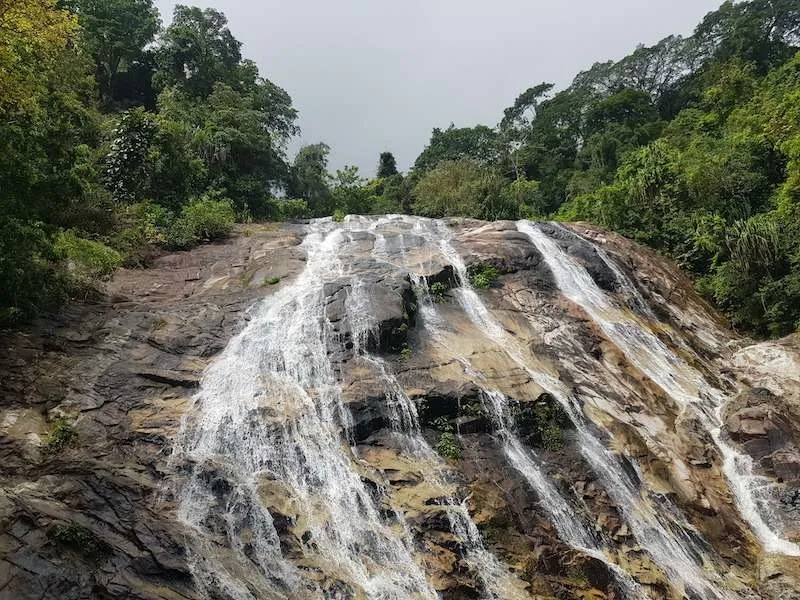
Inside Budo–Su-ngai Padi National Park, Pacho Waterfall (or Pajo Waterfall) proudly represents Thailand’s natural history. The cascade is divided into many levels, so visitors can relax with flowing water as they enjoy colorful plants and nature.
 What is History and How is it Significant
In the past, Pacho Waterfall was located in an area that was highly isolated because thick jungle and remoteness blocked access to the site. In 1974, the Royal Forest Department became aware of the environmentally and touristic benefits of the region and built the Pacho Waterfall Park. Thanks to this work, the area was designated as the Budo–Su-ngai Padi National Park in 1999, spanning a large 294 km² in Narathiwat, Yala and Pattani provinces.
The area got its name, Pacho, from the Malay word “pancur,” which means “waterfall.”
For people currently visiting the site, here are some resources for them at ouralmond.oregon.gov
- FJXM+4PX, Lubo Sawo, Bacho District, Narathiwat 96170
- The center is open daily, between 8:00 AM and 5:00 PM.
- Entrance Fee:
- For Thai people, the price is ฿50.
- Foreigners: ฿100
- Parking for a car is ฿40 and just ฿20 for a motorcycle.
- The film is over 3 hours long.
- Located in the Bacho District, Narathiwat Province, Thailand
7.Commemoration Royal Pavilion
Built along the quiet banks of the Bang Nara River, the Commemoration Royal Pavilion shows the strong link between the Thai monarchy and Narathiwat citizens. Its detailed design and ideal position make this architectural gem a great place for visitors to see the area’s cultural heritage.
History and its importance
The pavilion was built to show gratitude for what the Thai royal family has done and shared during their visits to southern areas, especially Narathiwat. The fact that the monarchy exists reflects the high level of respect the local people feel for it. Although we have few written accounts of its opening, the fact that the pavilion stands there points to the role royal engagements had in uniting and developing the region.
Traditional aspects of southern Thai architecture are found in the building’s design and work well with the environment. Since it is designed with fine carvings and a gold-covered roof, the building represents the skills and traditional tastes of Thai people.
Visitor Information
- CRHG+556, Bang Nak, Mueang Narathiwat District, NARATHIWAT 96000
- Always stay updated on operating hours before you make a visit.
- Entry to the exhibition is free for everyone.
- You can complete this in under 60 minutes.
- Bang Nak, Mueang Narathiwat District, 96000 Narathiwat, Thailand
8.Budo-Su-ngai Padi Mountain Range National Park

Budo–Su-ngai Padi National Park is in the southernmost area of Thailand and occupies about 294 square kilometers, touching Narathiwat, Yala and Pattani provinces. This protected area belongs to the Sankala Khiri mountain chain and its shape is mainly rounded and hilly, with many dense rainforests.
Significance
The park began in 1999, building on its roots in 1974 when the Royal Forest Department started the Pacho Waterfall Park to help conserve the area. The change marked the conversion of the area from stronghold of guerrilla fighters to a protected nature reserve.
Because it holds part of the Indo-Malayan equatorial tropical rainforest, Budo–Su-ngai Padi National Park has great ecological importance and lots of endemic species.
Visitor Information
- The temple is found along Route 42, about 26 kilometers northwest of Narathiwat town.
- Open any day; remember to check the current hours before you go.
- A fee could be required at the entrance; you should check the latest details with official sites.
- It lasted more than three hours.
- This project is in Narathiwat, Yala and Pattani Provinces in Thailand.
9.Wat Chon Thara Singhe
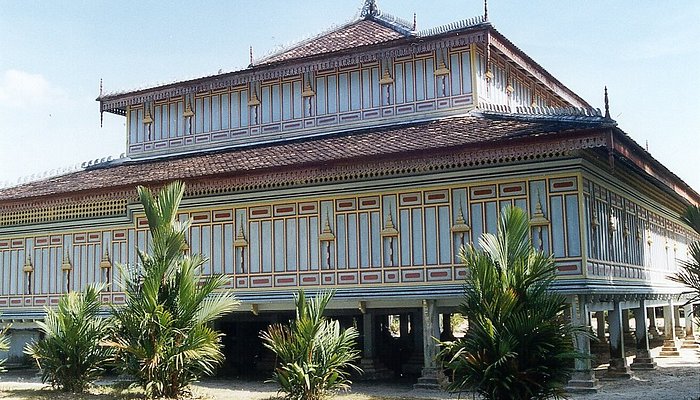
Historical Significance
Started in 1873 by Phra Khru Ophat Phutthakhun, Wat Chon Thara Singhe is proof of Thailand’s rich history. In the year it started, Tak Bai was part of the Kelantan province within British Malaya. During negotiations for the 1909 Anglo-Siamese Treaty which fixed the border area of Siam (Thailand) and British Malaya, the temple was extremely important. Thailand’s delegates pointed out that this Buddhist temple was proof of the close cultural connection that Siam had with the area, so the Thai team continued to insist that Tak Bai would stay in Thailand.
 How Culture and Religion Influence the World
The temple is not only a religious site for Thai Buddhists in Tak Bai, but also for Buddhists across the border in Malaysia. Various kinds of religious ceremonies and festivals are celebrated by the people, encouraging bonds between neighboring countries. Because it is along a river, the area is very peaceful for quiet thinking and meditation.
Visitor Information
- Located at 171 Sman Thadvisut Rd, Chehe, Narathiwat 96110, Thailand
- Daily, the facility is open between 08:00 and 17:00.
- Admission: Free
- Moo 3, Chehe Subdistrict, Tak Bai District, Narathiwat Province, Thailand
10.Chao Mae Tomo Shrine
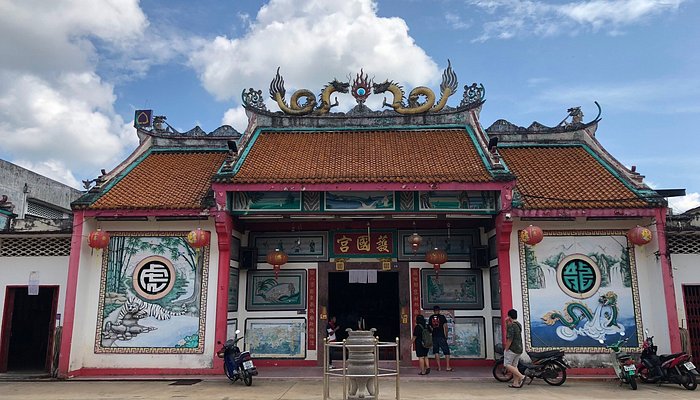
- Historical Background
- It was in Ban Tomo, a town in Su Khirin District around the start of the 20th century, that Chinese Hokkien miners worked for a French-owned gold mine that eventually became the shrine. It was significant that a miner thought to be influenced by Chao Mae Tomo warned leaders about an upcoming disaster. Overlooking the warning caused a terrible mine accident that resulted in many deaths. The incident made Chao Mae Tomo even more popular, so the mine owner got a statue made of her in China and built a shrine for her as a result. As there were more people worshipping, the shrine was transferred from Tambon Ban Thi O to Su-ngai Kolok in 1962.
- Importance to Culture and Religion
- The Hainanese community, among others, consider Chao Mae Tomo a sea goddess and she is frequently tied to Shui Wei Sheng Niang, who watches over sailors and travelers by sea. In Thailand, Malaysia and Singapore, Hainanese immigrants continue to regularly worship her.
- Many people travel to the shrine because of its fame for prosperity and guarding against harm. It is important to many Chinese Malaysians and Singaporeans, who visit regularly to remember their ancestors.
Visitor Information
- The walk starts on Soi Phuthon on Charoen Khet Road in the Su-ngai Kolok District of Narathiwat Province.
- Daily Operations: From 6:00 AM to 7:00 PM
- Admission: Free
Related articles : Best Places to Visit in Nong Bua Lamphu – Temples, Nature & Culture
<p>The post Top 10 Best Places to Visit in Narathiwat – Temples, Nature & Culture first appeared on Traveling Info World.</p>
]]><p>The post Best Places to Visit in Nong Bua Lamphu – Temples, Nature & Culture first appeared on Traveling Info World.</p>
]]>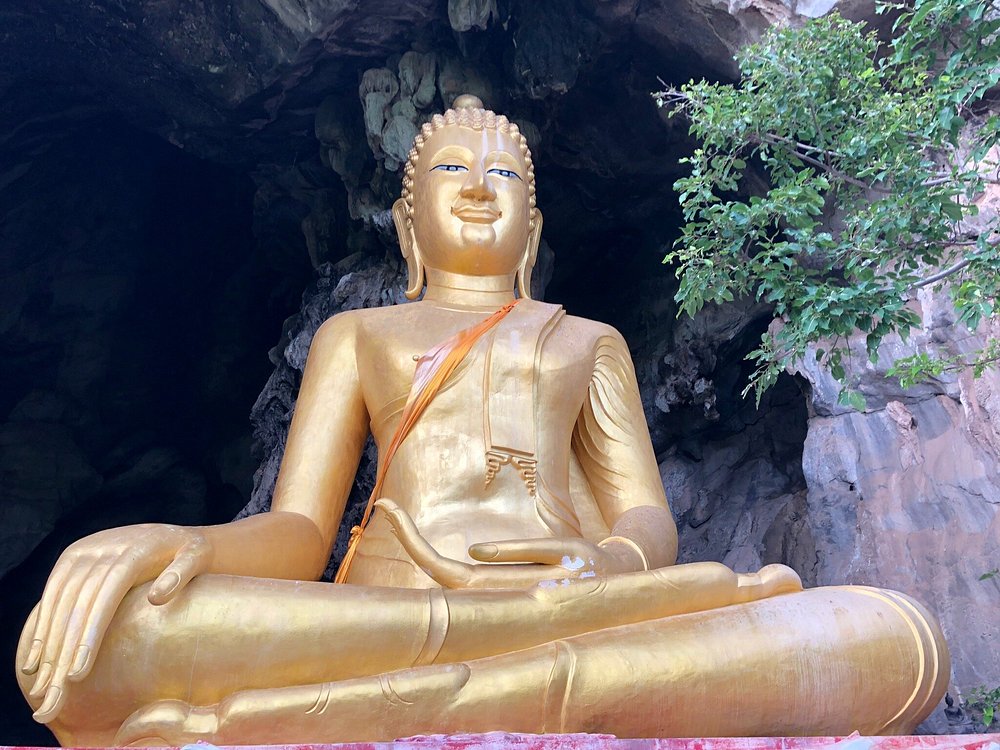
Wat Tham Erawan is found deep within the karst mountains of Loei Province in northern Thailand. Lying on the edge of Nong Bua Lamphu, this peaceful temple showcases shared beauty, spiritual value and culture.
The significance of historical and cultural background.
During the King Naresuan the Great era, in 2136 BE (1593 AD), construction of the sacred Wat Tham Erawan began during the Ayutthaya period. Throughout history, the place of worship has been renovated and updated, eventually becoming respected for both praying and meditating. Placed inside a cave filled with impressive murals and structures, the caves stay true to the unique artistic heritage of the region .
The temple also adds to the local culture, since it links to the Isaan-Lao story of The Fragrant Hair Lady, a tale about a king’s daughter turned into a monkey as vengeance by a ghost. It gives the site an aura of mystery, by merging mythology with religious admiration.
Visitor Information
- Pha In Plaeng, Erawan District, Loei 42220, Thailand
- The Food Network is available every day between 8:30 AM and 3:00 PM
- You can enter without paying, but picking up a 20 Baht donation helps maintain the site.
2.Wat Tham Klong Phen
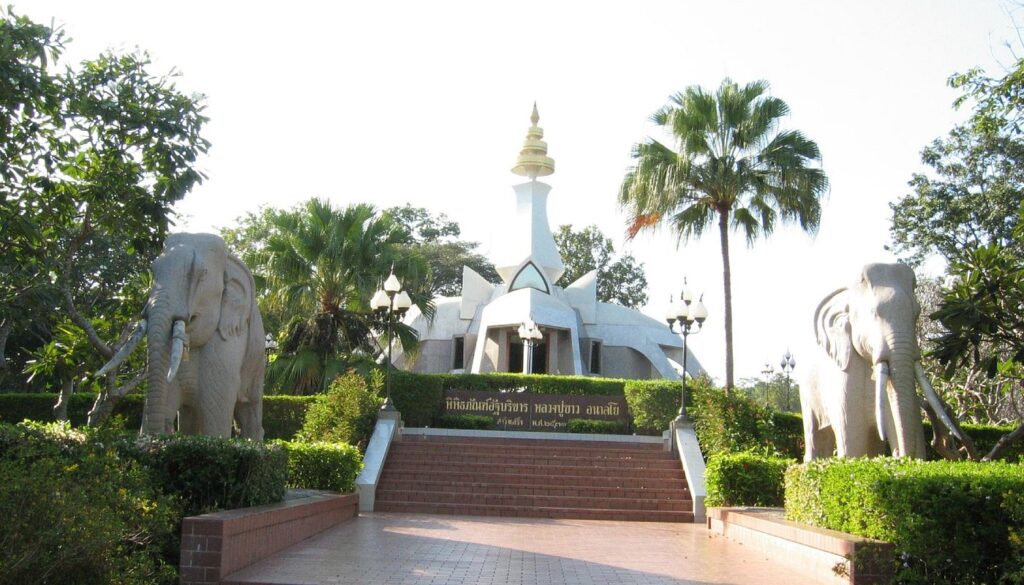
The forest monastery known as Wat Tham Klong Phen is situated near the foot of the Phu Phan mountain range in northeastern Thailand’s Nong Bua Lamphu Province. Because of its tranquil atmosphere and religious importance, the temple has been a spot for meditation for many decades.
The area’s history and spiritual customs
The temple is thought to have been built during the Khmer period and it sat unused until it was revitalized as a monastery in 1958 by Luang Pu Khao Analayo. Luang Pu Khao turned the caves and rocky formations discovered by his teacher into areas ideal for meditators to use for Vipassana. He continued his practice here until he died in 1983. Visitors can see Dr. Kumar’s original items and a wax replica inside the museum at the temple.
Visitor Information
- The temple is found 13 kilometers from Nong Bua Lamphu town on Highway 210 and 2 kilometers down the right road.
- During the week, the center is open to visitors from 8:00 AM until 5:00 PM each day.
- Admission is totally free of charge.
3.PC Cowboy Town
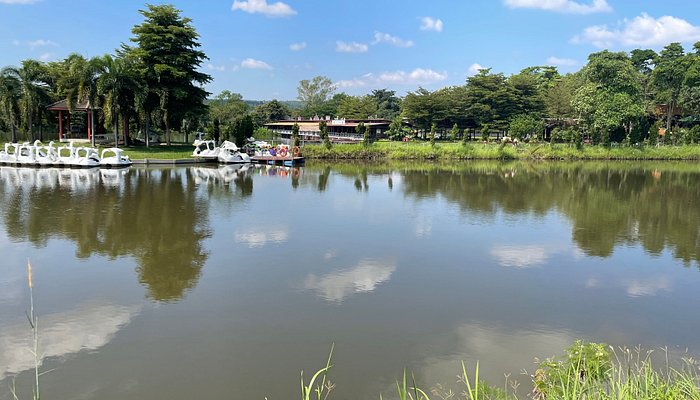
In the northeastern district Nong Bua Lamphu, Thailand, is PC Cowboy Town, a unique ranch-style park on 1,000 acres. The Chairatana family created the park which brings the exciting atmosphere of the Wild West to Thailand by including cowboy-themed sights and things to do.
History and the reasons why it matters
The idea behind PC Cowboy Town was to introduce and honor cowboy culture in Thailand through a special travel destination. Because of their travels, the Chairatanas chose particular breeds of cattle, special horses, exotic animals and classic mini cars to bring an original ranch style to their visitors. Their goal was to make a place where guests could have fun and get to know Western culture.
Visitor Information
- The resort is around half an hour from the center of Udon Thani City, in northeast Thailand.
- Opening Hours: 8:00 AM to 7:00 PM every day.
- There is an entrance fee of 100 Baht for everyone. You can use 4 coupons for 300 Baht, intended for ziplining, ATV rides and riding horses at these parks.
4.Million-year-old shell fossils
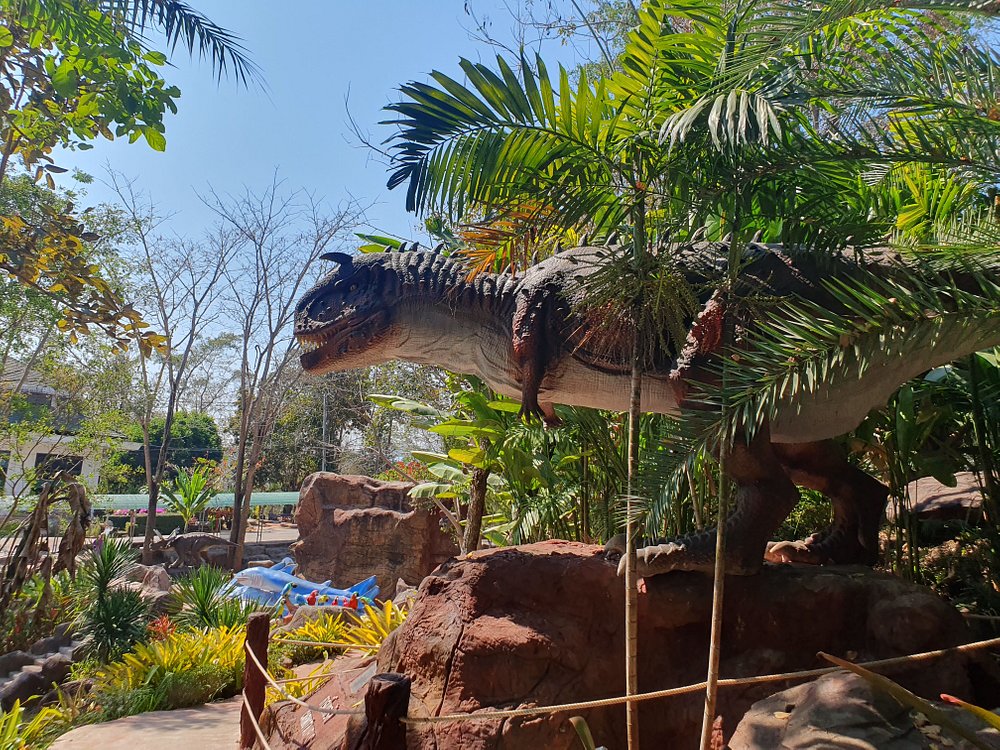
In Nong Bua Lamphu Province, Thailand, the Million-Year-Old Shell Fossils Museum joins paleontology, geology and interesting exhibits all in one park. The visitor center allows you to see the history of ancient life, featuring fossilized creatures of the sea and life-sized models of dinosaurs.
This site is important for its historical and scientific relevance.
Shell fossils from the Jurassic period are what attract most visitors to the museum. Because they are so well-preserved, these fossil bivalves offer useful clues about the ancient marine life of the area. Scientists found the fossils in rocks made from limestone, mudstone and sandstone which suggest these sediments built up in previous coastal lagoons.
You’ll find exhibitions on dinosaurs too, including the famous Triceratops and Tyrannosaurus rex as well as the Stegosaurus. These collections recognize the important contributions Thailand has made to paleontology.
Museum Highlights
- A collection of marine fossils from the area’s long past.
- Popular dinosaur species are shown as life-sized models, giving everyone, both adults and children, a fun experience.
- Exhibits about Botany and Geology: These inform about both the history of the Earth’s rocks and the story of plants.
Visitor Information
- Found in: Nong Bua Lamphu Province, Thailand.
- Most of the time, it’s open every day, but it’s wise to confirm the current hours before you go.
- Please note, there may be an entrance fee; see the official sources for the latest information.
5.Somdej Phra Naresuan Maharat Shrine
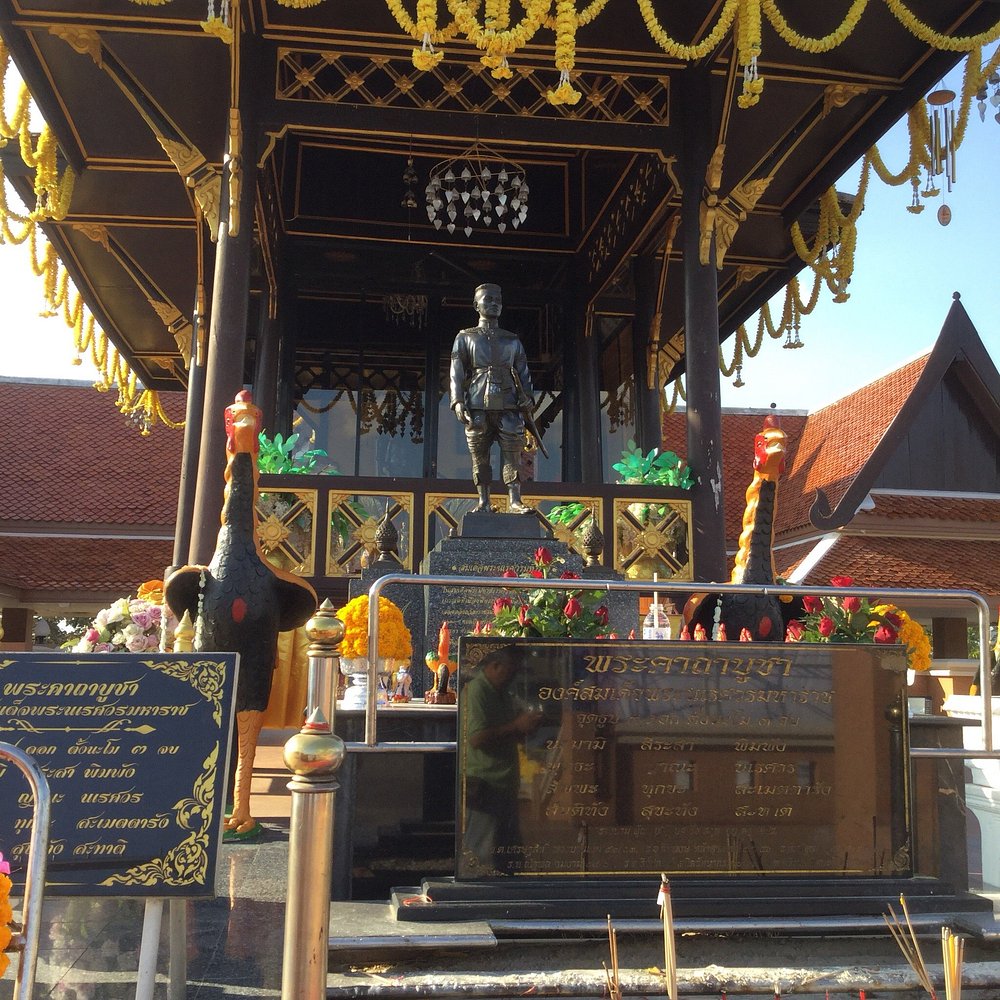
In Nong Bua Lamphu, Thailand, the Somdej Phra Naresuan Maharat Shrine remembers King Naresuan, who freed the country from Burmese rule in the late 16th century. Besides marking his victories, this place mingles the spirit with everyday action of locals and tourists.
Historical Significance
The people of Thailand remember King Naresuan (1555–1605) for his actions in securing Siam’s independence from Burmese control. In 1590, the king mounted the throne and went on to become famous for the Elephant Battle in 1593, where he fought the Burmese Crown Prince Mingyi Swa at the head of the Siamese elephant force.
The shrine in Nong Bua Lamphu was created to give respect to King Naresuan and to give people a place for quiet worship. It expresses the country’s sense of national pride and the people’s determination to maintain their country and culture.
Visitor Information
- Location: Soi Naresuan, Nong Bua Lamphu, Thailand.
- Open every day; you are invited to come in the morning or early evening to prevent being out in the heat at noon.
- It won’t cost you anything to visit the site.
6.Nong Bua Lam Phu Fishing Park
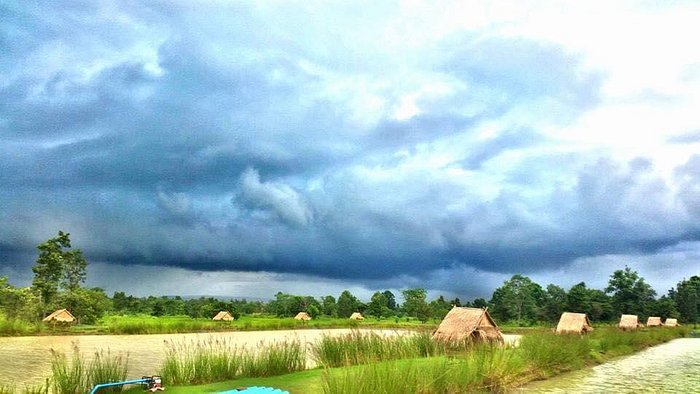
In Nong Bua Lamphu Province, Thailand, Nong Bua Lam Phu Fishing Park was loved for its special combination of fishing and restaurants. Even though the park is closed, it left an important mark on people from the city and visitors.
The Science of Eating in the Midst of Nature
The restaurant, minutes from the fishing spot, served mainly freshly cooked meals. Anyone there could enjoy meals and appreciate the beautiful lake vistas which made the environment perfect for taking it easy and visiting with family and friends.
Value to the Local Community and Culture
Promoting sustainable fishing and caring for the environment were important roles the park played outside of recreation. Its purpose was to help people and especially kids, gain knowledge about aquatic animals and why ecological balance matters.
7.Sports Bar

You can watch the big game at a sports bar, but it’s also a place to experience the fun and excitement of being in a live sports environment, along with the social vibe found in any bar. These spots are now favorite places for fans to cheer for their teams, enjoy wins, discuss hot topics and eat snacks and drinks.
Historical Background
- Sports bars started to appear in the United States around the late 1900s, thanks in part to the boom of cable TV and the rise of dedicated sports networks such as ESPN in 1979. When sports broadcasting was on the rise, more and more, people organized to watch games collectively in public spaces.
- In the 1980s and 1990s, sports bars became very common, with big televisions, sports-themed designs, team mementos and burgers and drinks on the menu. At present, they exist across the globe, often designed for fans of football in Europe, basketball in the U.S. or Muay Thai in Thailand.
Role in Society
- Venue for Interaction: Sports bars help communities by having people support their teams together.
- In numerous cities, sports bars are main places to visit for nightlife, especially around times like the World Cup, Super Bowl or Olympics.
- Reflection of Local Sports: Many sports bars celebrate local team history by putting up memorabilia and organizing nights centered on matches from their area.
- More Tourists: They help boost the local economy by welcoming visitors and offering jobs to people in those industries.
8.Sports Bar Nong Baulamphu
Should you be in Nong Bua Lamphu, Isan region, north of Thailand, this Sports Bar & Restaurant guarantees you’ll meet friendly people, drink some cold beers and enjoy your evening.
The origins and why it’s important
In Nong Bua Lamphu and other small towns in Thailand, the introduction of sports bars marks the rise of a mix between world sports trends and traditional Thai service. When they were inspired by Western sports bars in the 1980s and 90s, these venues were designed for a mix of locals and expats and today they continue to adapt to suit each group.
At Sports Bar in Nong Bua Lamphu, people realize it’s much more than just a spot to watch football or the UFC. It brings together people from all over the world, locals included, who are known to expats as Farangs and Thalangs. Sharing a drink with friends often starts here and you’ll appreciate the lively streets and local people while you feast.
What Makes It Important
- Many people living abroad come to this Sports Bar to make new friends, network and share their lives away from home.
- With global sport and Isan hospitality both present at the venue, everyone feels welcome.
- The right place to be: Watching actions while enjoying comfortable seating with easy access to chatting and the cheerful equivalent of live commentary.
Visitor Information
- Nong Bua Lamphu Province, Thailand
- Typically, sport halls are open each day, but hours can differ during big sports events — be sure to confirm on social media before going.
- Entry is free; the prices for food and drinks will differ. Some special events or screenings will need you to reserve your ticket.
Related articles : Top 9 Best Places to Visit in Nong Khai – Temples, Markets & Scenic Spots
<p>The post Best Places to Visit in Nong Bua Lamphu – Temples, Nature & Culture first appeared on Traveling Info World.</p>
]]><p>The post Top 9 Best Places to Visit in Nong Khai – Temples, Markets & Scenic Spots first appeared on Traveling Info World.</p>
]]>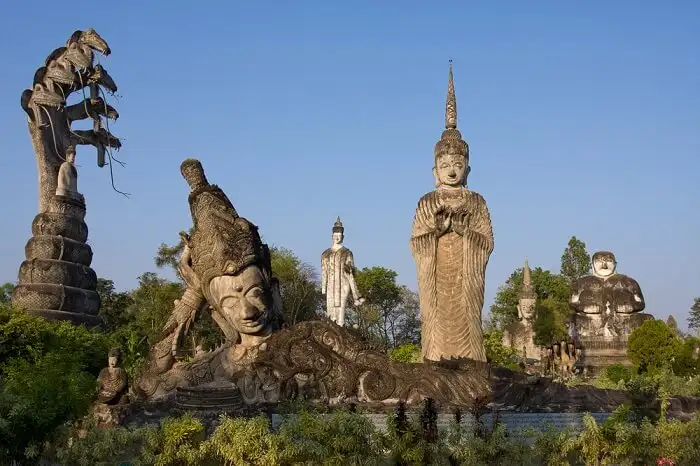
Built about 20 years ago by Luang Pu Boun Leua Sourirat, Sala Kaew Ku is one of the best-known destinations in the province. Here you will discover interesting antique and unusual statues of Lord Buddha, Lord Shiva, Lord Vishnu and other gods at the shrine garden. Most of these big sculptures are important Buddhist artifacts. The most important thing about Wat Sawang Arom is the building where many photos of Luang Pu show his different lives.
- Samakkhi Community in Nong Khai, Thailand is where it takes place.
- Working hours are from 8:00am to 6:00pm.
2. Wat Pho Chai
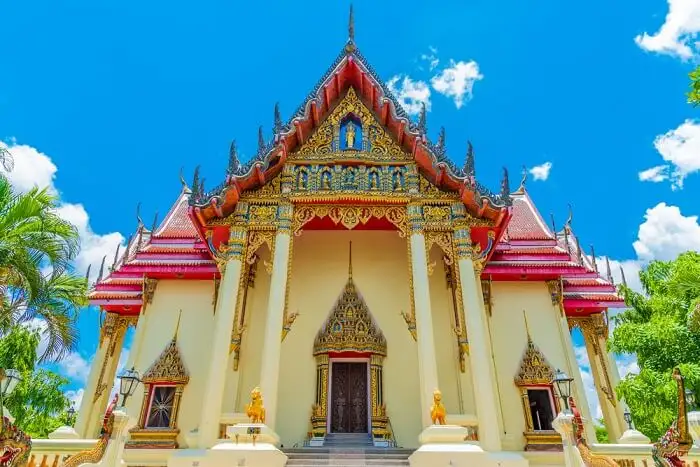
People in Nong Khai worship Wat Pho Chai as one of the most respected places in the town. Inside the place, there is a sacred image of Buddha called Luang Phor Phra Sai. This head is solid gold, the body is bronze and the decoratives are ruby. Everyone should stop by this holy temple when visiting Nong Khai.
- 873 Prajak Silpakom Rd., Nong Khai – 43000, Thailand
- The center is open from 6:00am until 6:30pm.
3. Issan Rum Distillery
Issan Rum Distillery is a rum maker that relies completely on sugarcane juice for production. It’s a wonderful hideaway for anyone looking for something unusual. It is located 12 km outside the heart of Nong Khai and, being on the edge, makes the hotel very peaceful. You can clearly notice the cleanliness and attention to processing as the rum is prepared here. People find this place in Nong Khai to be a lot of fun.
- Ban Nong Song Hong | Kaibokwan Subdistrict, Nong Khai 43100, Thailand
- You can visit between 10 in the morning and 5 in the afternoon.
4. Tha Sade Market
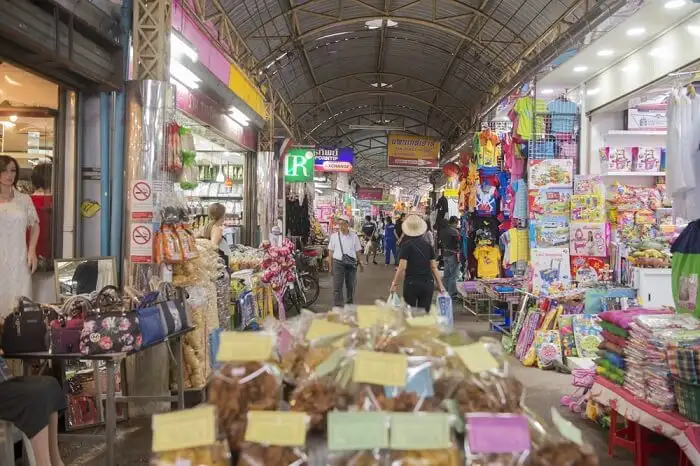
You can find what you need for your daily tasks as well as items for luxurious living at Tha Sade Market in Nong Khai. The market offers a huge variety of food, clothing, accessories and furniture at prices that are easy on your wallet. A trip to this market means everyone should definitely find their desired souvenir.
- You can find us on Mi Chai Road in Nai Subdistrict, Nong Khai, Thailand
- Classes happen from 8:30 am to 6:30 pm.
5. The First Thai-Lao Friendship Bridge
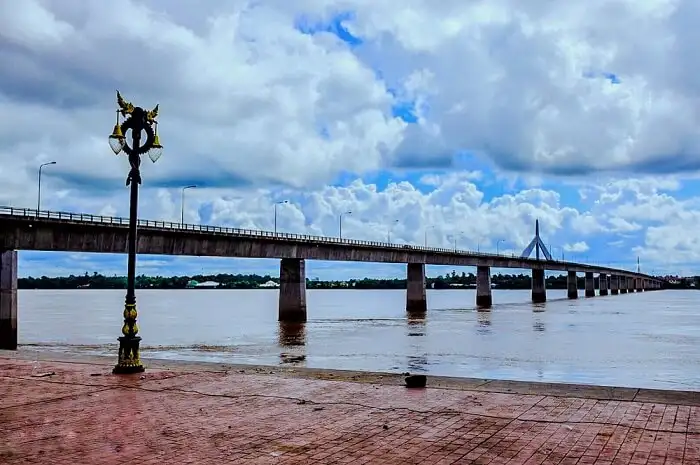
The First Thai-Lao Friendship Bridge is a bridge over the river Mekong, connecting the city Nong Khai in Thailand with Vientiane Prefecture in Laos. This bridge is a perfectly connects two different parts of the country and is the place where different people exchange their culture and travel from one part to the other. This brightly lighted bridge has the best view at night and the river Mekong and its shiny water gives a perfect look from under.
- Location: Vientiane, Nong Khai, Thailand
6. Nong Khai Aquarium

People around the globe recognize Nong Khai Aquarium for being unusual both in size and ideas. Tourists are surrounded by an aquarium the whole time they pass through the path. The experience makes it feel as if you are moving right inside the aquarium. This large aquarium is home to a broad and original collection of freshwater and saltwater fish and animals. Located here is an unconventional species, the Mekong catfish. The aquarium is located outside of the big city at a university. You can see a scuba diving show each day at 2 pm and many people attend. You will definitely enjoy strolling through the impressive aquarium as it passes right under the tanks.
- At Kho Kaen University Nong Khai Campus: 112 Moo. 7, Nong Khai 43000, Thailand.
- The Centre is available from Tuesday to Friday between 9:00am and 4:00pm.
7. Wat A-Hong Silabas
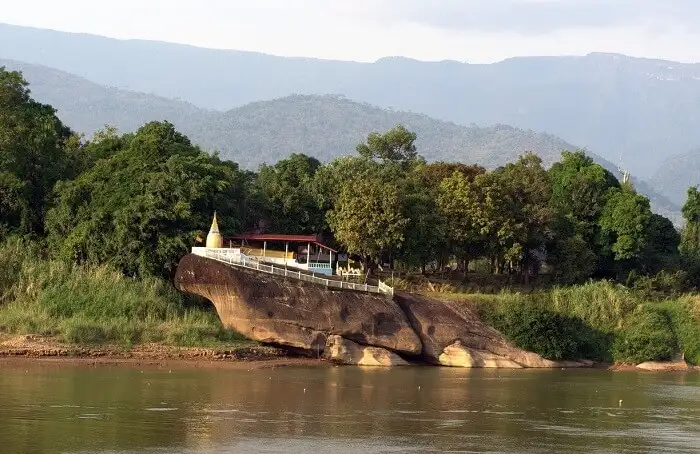
There is a wealth of ancient history that you can find in this gorgeous and large temple. In addition to a cave, this area is famous for its giant catfish of Mekong. There’s a huge statue of the goddess at the center of the Mekong River. Money and love are what people worship about the goddess and local people honor and celebrate her at every opportunity. Women’s jewelry and sticks of incense were used to dress the goddess i-. There are many images of Buddha here, made from bronze. The Phra Phuttha Khuwanan Satsada is also part of this temple which is a replica of the famous Phra Phuttha Chinnarat. Those wanting to observe history at these sites should include a visit to Nong Khai’s temple.
- Baan Ah Hong, Tambon Khaisri, Amphoe Bung Kan, Nong Khai, Thailand
8. Phra That Bang Phuan
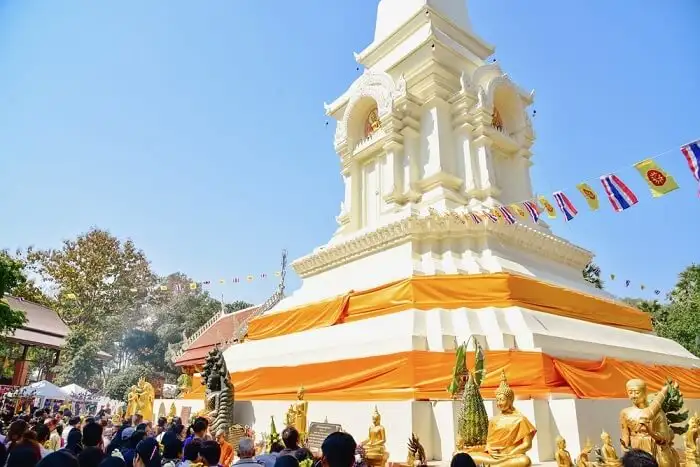
Since time immemorial, Phra That Bang Phuan has been considered one of the most special temples in Nong Khai because it contains 29 Buddha relics. There is no record of the earliest construction at this old and ancient temple. The then king, Lan Xang King Setthathirath added new religious objects to the old ones, resulting in a huge temple complex. Because it is set aside from the city and is known to be very powerful, the temple appears very majestic to tourists. This is a great destination for guests who respect religion as well as learn about ancient history.
- The province is called Nong Khai.
- You can visit from 8 am until 5 pm.
9. Lan Phaya Nak
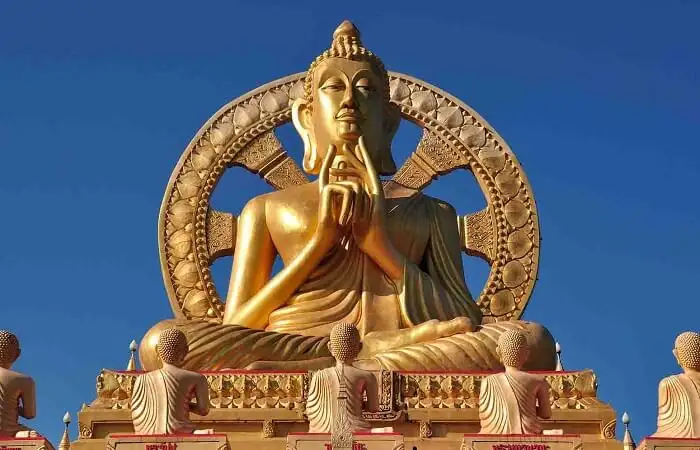
Similar to Phra That Bhummhing, Lan Phaya Nak forms a fine temple district in Nong Khai. Celestial bodies, gods and goddesses are all present in this art as many figurines. With both Buddhist and Hindu statues of great size here, there are many tales of history and mythology to enjoy. For anyone curious about the real Thai culture, this place is a peaceful island that shows what it is like best.
- Address: Nai Mueang, Nong Khai 43000
Related articles : Top 10 Best Places to Visit in Nonthaburi – Temples, Markets & Cultural Gems
<p>The post Top 9 Best Places to Visit in Nong Khai – Temples, Markets & Scenic Spots first appeared on Traveling Info World.</p>
]]><p>The post Top 10 Best Places to Visit in Nonthaburi – Temples, Markets & Cultural Gems first appeared on Traveling Info World.</p>
]]>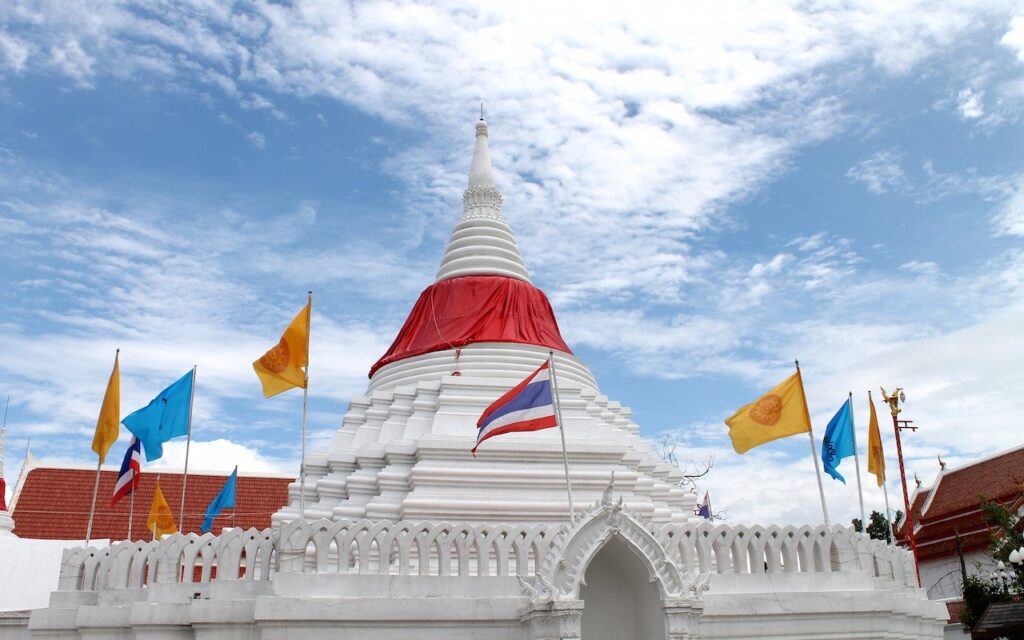
The Koh Kret Island is one of the best attractions in Nonthaburi, found on the Chao Praya River’s banks. The Mon culture is a favorite among those who live near the ruins. The first feature of Tirek is its weekend market. Their traditional designs are seen on the handmade pottery found here. They would make excellent items to decorate with or give as a gift. There is another great thing here: the food. When at this place you should try some new and exciting dishes and delicacies. You can really relax here when you want to spend your weekend quietly.
- The site is located along the Chao Phraya River, on Koh Kret Island in Thailand.
- The Google score is 4.2 out of 5.
- Timings: N.A.
2. Impact Speed Park
Experiencing the excitement at Impact Speed Park happens while driving on electric karts. They are powered by ecologically friendly electric batteries. In terms of speed, these karts beat out most petrol models and go as fast as 60km/h when they race. Breeze café and bar is their restaurant and bar facility. The Australian Chef creates and serves the modern gourmet versions of global dishes at the restaurant. You may try out water bike or Impact Marina as well. Enjoying some unique adventures? The park in Nonthaburi should be on your list.
- Banmai, Amphoe Pak Kret, Chang Wat Nonthaburi, Thailand.
- People have rated Google 4.4 out of 5.
- Opening hours: From 4 PM to midnight Monday to Friday and from 12 PM to midnight Saturday and Sunday
3. Central Plaza Westgate

The Central Plaza Westgate which is also called the Central Plaza Bangyai, is a mall in Nonthaburi city. It is found at the Bangyai intersection. The complex includes six floors and contains over 1000 retail shops and service centers. The facility includes parking for almost 7,000 vehicles at one time. Is shopping on your mind? People would love to shop here without encountering chaos. You can enjoy movies at the mall if shopping makes you want to unwind for the evening.
- Location: Sao Thong Hin in the Bang Yai district, Thailand.
- Google gives the course a score of 5.0 out of 5.
- Timings are 10 AM to 9 PM on Mondays, Tuesdays, Wednesdays and Thursdays, but 10 AM to 10 PM on Fridays, Saturdays and Sundays.
4. Nonthaburi Market
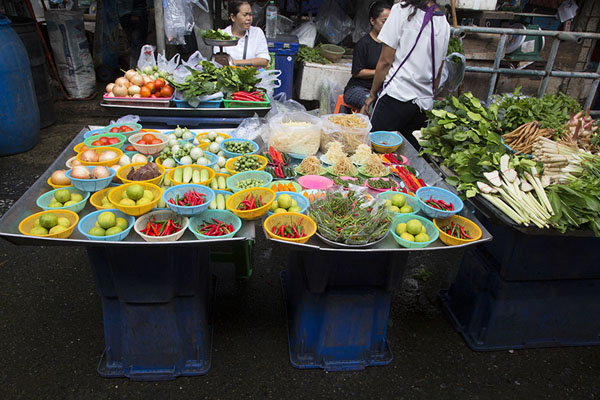
If you’re looking for daily supplies, Nonthaburi Market is for you. Whether you need food, clothes or just a few house items, you will find them here. Tourism is basically just about shopping for a living. Price tags here are lower and you get better quality products. Since Nonthaburi is the second largest city in Thailand, the town is often busier in the evening, while people shop. You could avoid the incident by shopping at the market only in the daytime.If you’re looking for daily supplies, Nonthaburi Market is for you. Whether you need food, clothes or just a few house items, you will find them here. Tourism is basically just about shopping for a living. Price tags here are lower and you get better quality products. Since Nonthaburi is the second largest city in Thailand, the town is often busier in the evening, while people shop. You could avoid the incident by shopping at the market only in the daytime.If you’re looking for daily supplies, Nonthaburi Market is for you. Whether you need food, clothes or just a few house items, you will find them here. Tourism is basically just about shopping for a living. Price tags here are lower and you get better quality products. Since Nonthaburi is the second largest city in Thailand, the town is often busier in the evening, while people shop. You could avoid the incident by shopping at the market only in the daytime.
- Place: Suan Yai, Nonthaburi District, Mueang Nonthaburi, Thailand.
- Google score for the track is 3.3 out of 5.
- Timings: N.A.
5. Wat Sangkhathan
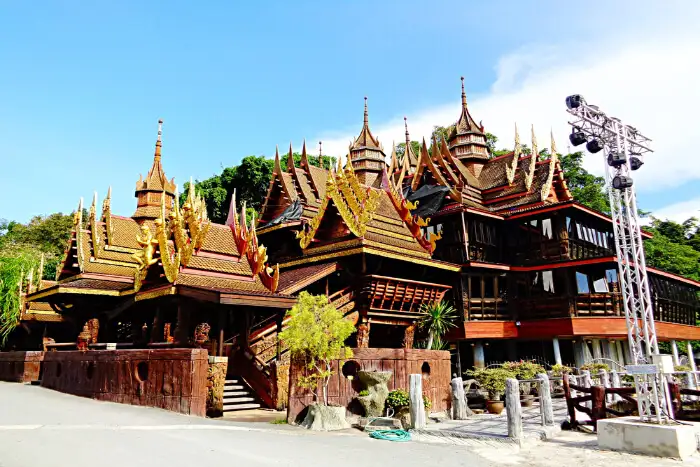
Wat Sangkhathan functions as a Buddha temple and a centre for meditation. The island lies on the west side of the Chao Praya River. Wooden sculptures and peaceful surroundings are things you will come across. Coming here for meditation will leave you feeling peaceful. It will help you remain calm and will calm your mind. This is a means to escape the busy routine you usually have. People can continue their meditation at the centre for around 7 days. You can reserve a seat early, so you don’t need to stand in line when you get there.
- The district is found in the Chang Wat Nonthaburi region of Thailand.
- Google currently rates it a 4.5 out of 5.
- Timings: N.A.
6. Wat Chaloem Phra Kiat
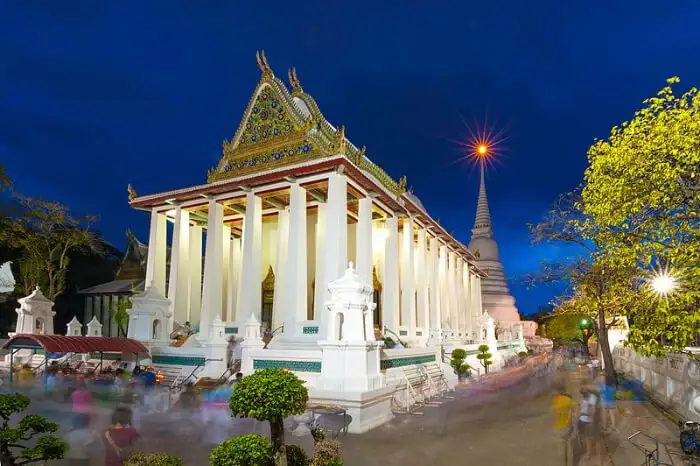
Places often show their traditions and culture most clearly in their temples. Wat Chaloem Phra Kiat is one of those temples where you learn about Thai lifestyle. This area is a total one since its culture started 100 years back and is now handed down to those after it. The temple is designed in a truly incredible way. There is a combination of traditional Thai and Chinese architecture in this work. It is worth themoment to see this location whenever you are around Nonthaburi, guests say.
- The center is in Chang Wat Nonthaburi, Thailand.
- People scored it on Google at 4.7 out of 5.
- Timings: N.A.
7. Fantasia Lagoon Water Park
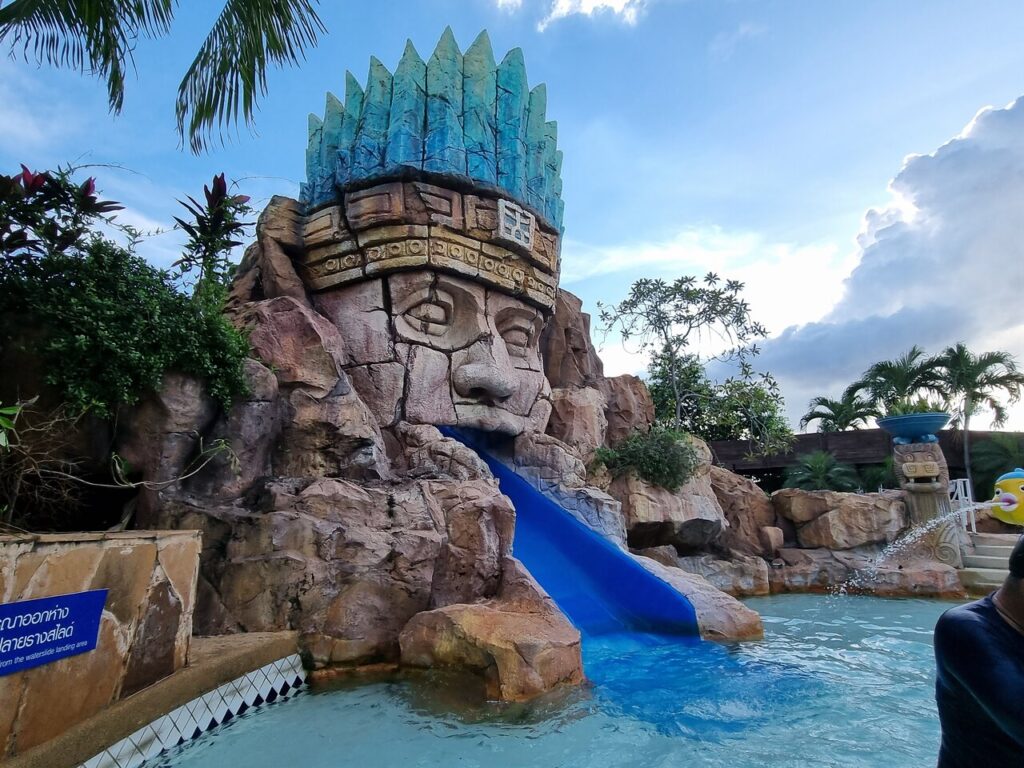
This water park is found in the lap of Bangkae Mall. It’s a big place and some people say the entry fee is affordable. There is one large pool, some sliders and an entertainment area in the park at the mall. Adults and kids are encouraged to visit this location. Boats can be ridden in this section of the mall at this pool. Right below you can see an amusement park. There is an historic merry-go round available here. You won’t find a better place to go near Nonthaburi.
- Place: Bang Khen, Nonthaburi, Thailand.
- According to Google, the app receives a rating of 3.7 out of 5.
- The center is open from 10:30 AM-8:30 PM on weekdays and 10 AM-8:30 PM on Saturdays and Sundays.
8. Wat Borom Racha Kanchanapisek Anusorn Temple
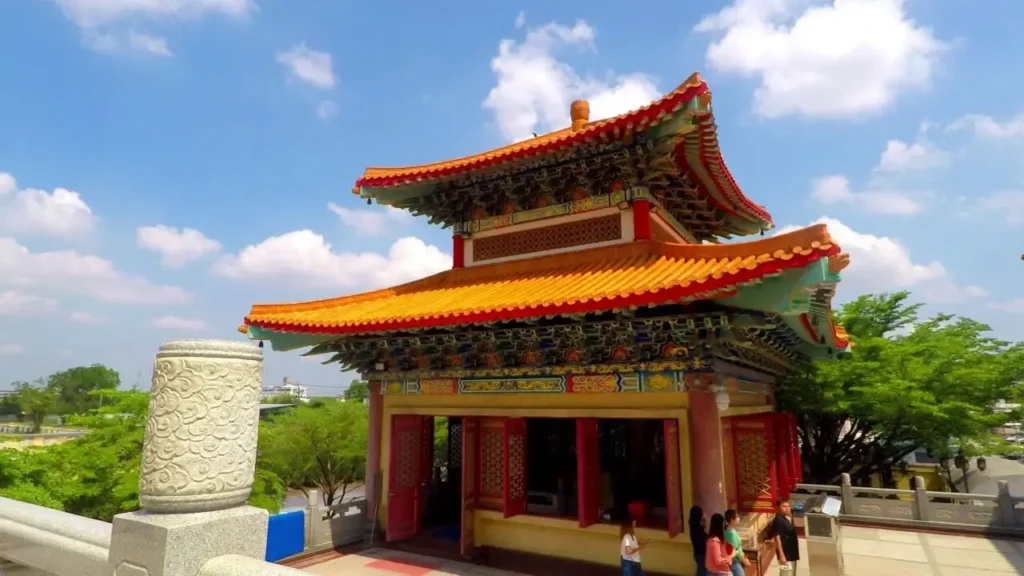
The Wat Boromracha Kanchanapisek Anusorn is an amazing example of a Chinese temple. While at this location, you can enjoy looking at the most striking artificial sculptures. You can find tons of great spots here for posing for photos. This location is surrounded by beautiful nature and feels close to it.
- The place where the flow was found is Son Loi Subdistrict, in Bang Bua Thong, Thailand.
- Google users have given the app a 4.5-star rating.
- Timings: N.A.
9. Tooney Toy Museum
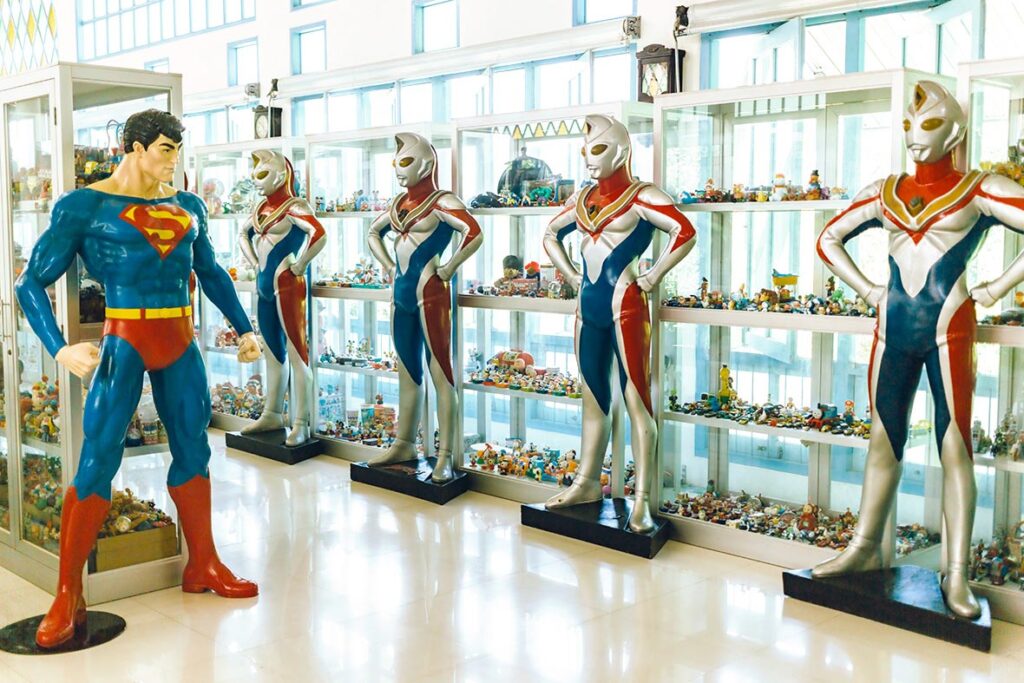
The amazing Toy Museum in Thailand is filled with colorful toys of your favorite cartoon characters. Unlike every other museum, this one is our favourite, because it’s so unique. Many dolls modeled on cartoon characters and their styles can be found in large collections. You can spend time with your kids enjoying the amusement and at the same time, see many beautiful dolls. You will think about your younger years. A coffee shop provides you with a chance to sit and watch your kids enjoy the collection of dolls.
- Place: Amphoe Pak Kret, Chang Wat Nonthaburi, Thailand.
- The Google rating is 4.2 out of 5.
- Timings: 10 am to 8 pm(Friday to Sunday)
10. Museum Of Nonthaburi
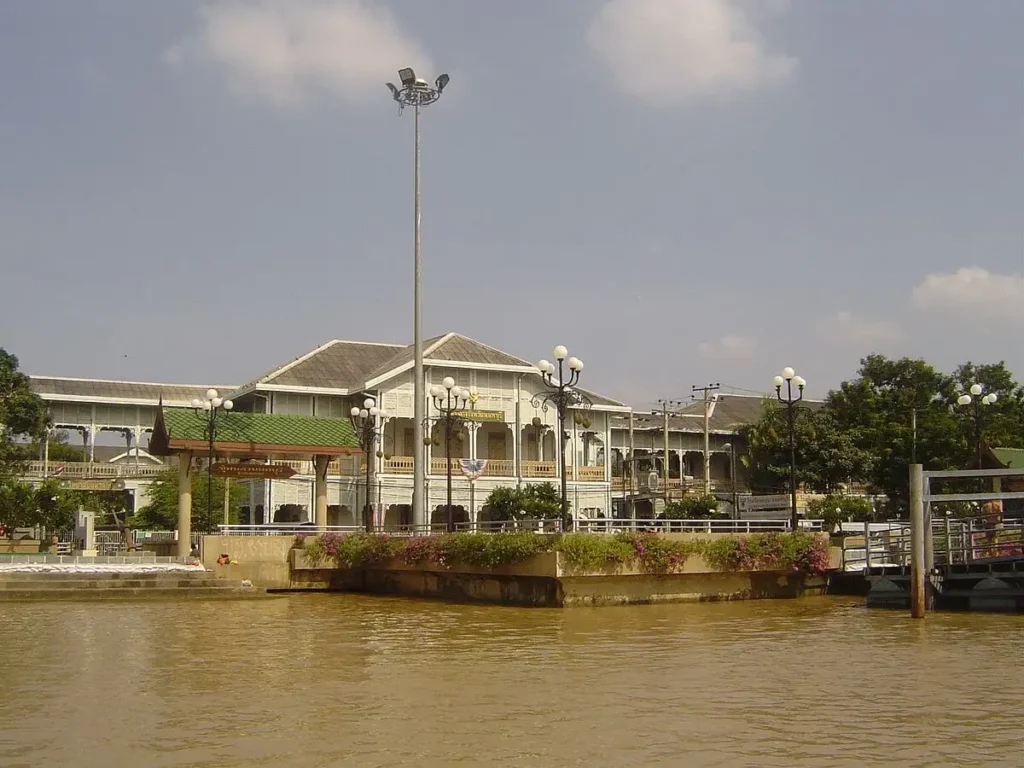
You can find the Museum of Nonthaburi at the Nonthaburi pier which sits at the ending point of the Chao Phraya River. The museum exists to show the art and culture of Nonthaburi. You will notice that the village shows the province’s past. There are many aspects of the building’s heritage and culture due to its diverse ethnic mix. Their visit can show visitors just how beautiful and old the pottery could be back then. The Museum’s structure is once more crafted from timber.
- At Yai Amat Montessori School, students are based in Nonthaburi, Thailand.
- Google users have given the app a 4.0 out of 5.
- Timings: N.A.
Related articles : Top 10 Best Places to Visit in Pathum Thani – Temples, Markets & Attractions
<p>The post Top 10 Best Places to Visit in Nonthaburi – Temples, Markets & Cultural Gems first appeared on Traveling Info World.</p>
]]>