
Now Reading: Top 5 Places to Visit in Jujuy
-
01
Top 5 Places to Visit in Jujuy

Top 5 Places to Visit in Jujuy
Jujuy Province: Argentina’s Land of Color, Culture, and Ancient Landscapes
Located in northwestern Argentina, bordering Bolivia and Chile, Jujuy Province is one of the country’s most visually striking and culturally rich regions. Known for its rainbow-colored mountains, ancient indigenous heritage, high-altitude deserts, salt flats, and lush subtropical forests, Jujuy feels like a world apart from the rest of Argentina.
This province is where Andean traditions, pre-Inca civilizations, and dramatic natural landscapes come together. Life here is deeply connected to the land, with indigenous cultures shaping language, cuisine, music, and daily rituals. Jujuy offers travelers a powerful sense of place—raw, spiritual, and timeless.
Among its most iconic destinations are the Quebrada de Humahuaca, Purmamarca, Tilcara, Salinas Grandes, and the Yungas Forests, each revealing a different face of this extraordinary province.
Quebrada de Humahuaca – A UNESCO World Heritage Landscape
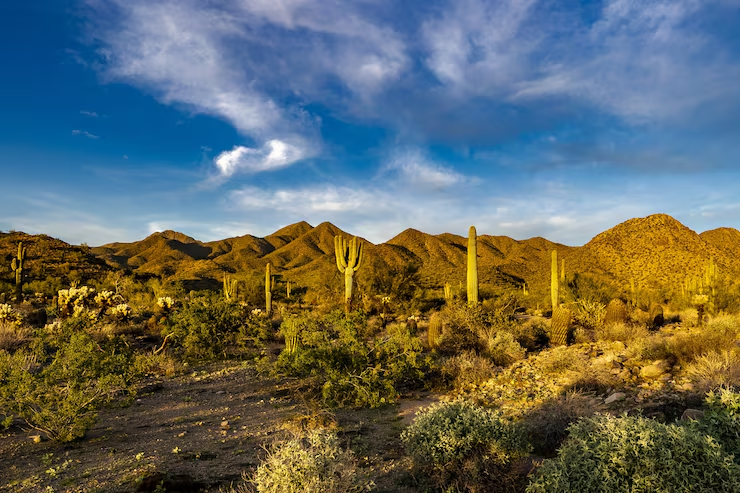
The Quebrada de Humahuaca is Jujuy’s most famous attraction and one of Argentina’s greatest natural and cultural treasures. This dramatic mountain valley stretches for over 150 kilometers and is recognized as a UNESCO World Heritage Site for its geological beauty and historical significance.
The valley’s multicolored mountains—shades of red, purple, green, yellow, and pink—are the result of millions of years of geological formation. But the Quebrada is more than just a visual wonder; it has been a vital trade route for over 10,000 years, connecting the Andes with the lowlands.
Small towns such as Humahuaca, Tilcara, and Purmamarca are scattered along the valley, each preserving indigenous traditions, colonial architecture, and vibrant festivals. Local markets sell handcrafted textiles, ceramics, and musical instruments, reflecting Andean culture.
Traveling through the Quebrada de Humahuaca is like moving through layers of time, where ancient history, living culture, and breathtaking scenery coexist.
Purmamarca – The Hill of Seven Colors
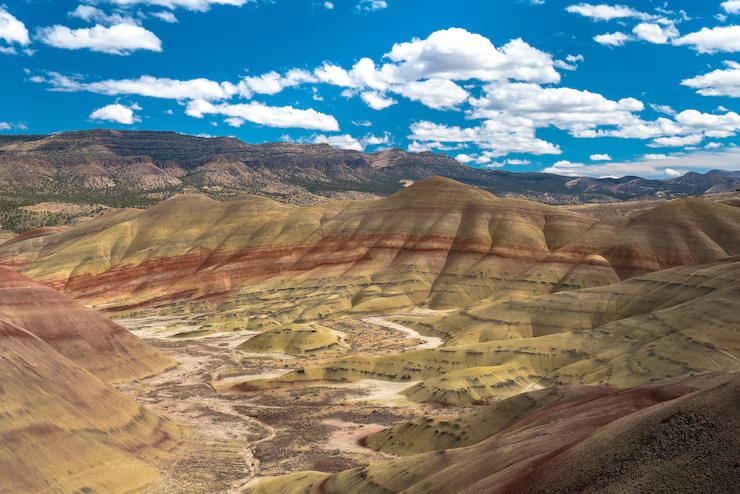
Purmamarca is one of Argentina’s most photographed villages, famous for the Cerro de los Siete Colores (Hill of Seven Colors). This stunning natural formation rises behind the village, displaying bands of color created by mineral-rich sediments laid down over millions of years.
The village itself is small, peaceful, and deeply traditional. Adobe houses, narrow streets, and a historic church give Purmamarca an authentic Andean atmosphere. Life here moves slowly, centered around nature and local customs.
Visitors can walk the Paseo de los Colorados, a scenic trail that circles the surrounding hills, offering close-up views of the geological formations. The local artisan market is another highlight, showcasing handwoven textiles, jewelry, and crafts made using ancestral techniques.
Purmamarca is not just a destination—it is a place to pause, reflect, and absorb the harmony between humans and the natural world.
Tilcara – Pre-Inca Heritage and Living Culture
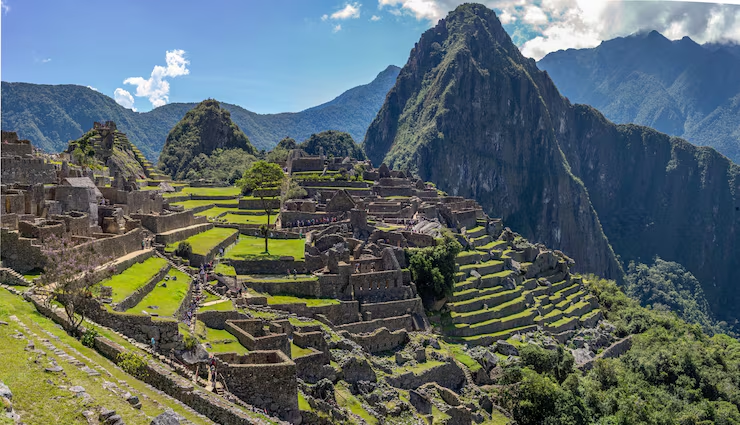
Tilcara is a cultural heart of Jujuy, known for its archaeological significance and vibrant indigenous identity. The town sits in the Quebrada de Humahuaca and offers a deeper look into the region’s pre-Inca civilizations.
The most important site here is the Pucará de Tilcara, a restored pre-Inca fortress perched on a hill overlooking the valley. This ancient settlement provides insight into early agricultural practices, defensive structures, and Andean social organization.
Tilcara is also a center for music, art, and traditional festivals. Events such as Carnival and Pachamama (Mother Earth) celebrations are deeply spiritual experiences, blending indigenous beliefs with Catholic traditions.
With its museums, cultural centers, and lively streets, Tilcara balances historical preservation with contemporary Andean life, making it an essential stop for travelers seeking cultural depth.
Salinas Grandes – The Infinite White Desert
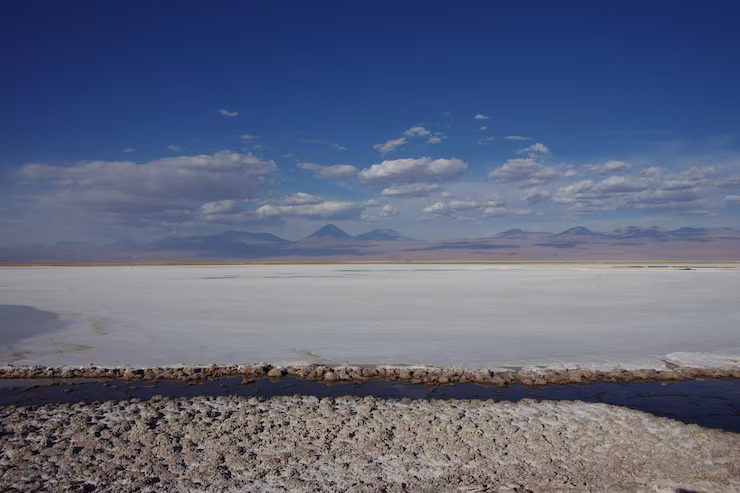
The Salinas Grandes are one of Argentina’s most surreal landscapes. Located at over 3,400 meters above sea level, these vast white salt flats stretch endlessly across the high-altitude plateau between Jujuy and Salta provinces.
Under bright sunlight, the salt surface creates mirror-like reflections, making the sky and land blend seamlessly. The silence and scale of the Salinas are both humbling and mesmerizing.
Salt extraction has been practiced here for centuries by local communities, who continue to harvest salt using traditional methods. Visitors can learn about this process while exploring geometric salt pools and natural patterns formed by evaporation.
The journey to Salinas Grandes is equally spectacular, passing through winding mountain roads and high Andean passes. This destination represents Jujuy’s extreme landscapes and offers one of the most unforgettable visual experiences in South America.
Yungas Forests – Jujuy’s Green Paradise

In striking contrast to the province’s deserts and mountains, the Yungas Forests represent Jujuy’s lush, subtropical side. Located in the eastern part of the province, these forests are part of a vast ecological corridor stretching into Bolivia.
The Yungas are rich in biodiversity, featuring dense vegetation, waterfalls, rivers, and cloud-covered hills. They are home to jaguars, tapirs, toucans, monkeys, and countless plant species.
Protected areas such as Calilegua National Park offer hiking trails, birdwatching opportunities, and scenic viewpoints overlooking the lowlands. The climate here is humid and green, creating a completely different atmosphere from the arid Andes.
The Yungas demonstrate Jujuy’s remarkable ecological diversity, where tropical forests exist just hours away from high-altitude deserts.
Indigenous Identity and Cultural Traditions
Jujuy is one of Argentina’s most indigenous provinces, with communities such as the Quechua, Aymara, and Kolla maintaining ancestral traditions. Language, music, clothing, and agricultural practices are deeply tied to Andean heritage.
Festivals are central to life in Jujuy. Celebrations like Carnaval, Inti Raymi, and Pachamama rituals honor nature, fertility, and cosmic cycles. These events are colorful, spiritual, and deeply meaningful.
Local cuisine reflects the land, featuring ingredients such as corn, quinoa, potatoes, llama meat, and herbs grown at high altitudes. Traditional dishes offer flavors shaped by centuries of adaptation to the Andean environment.
Why Jujuy Is One of Argentina’s Most Powerful Destinations
Jujuy is not just a place to visit—it is a place to experience with all senses. Its landscapes challenge perception, its culture invites respect, and its history stretches far beyond colonial times.
From the vibrant colors of the Quebrada de Humahuaca, to the tranquility of Purmamarca, the archaeological depth of Tilcara, the vast silence of Salinas Grandes, and the life-filled Yungas Forests, Jujuy offers a journey through extremes that feel both ancient and alive.
For travelers seeking authenticity, spiritual connection, and unforgettable scenery, Jujuy Province stands as one of Argentina’s most extraordinary destinations.
Related artical : Top 5 Places to Visit in Formosa