
Now Reading: Misiones, Argentina | Waterfalls & Rainforests
-
01
Misiones, Argentina | Waterfalls & Rainforests
Misiones, Argentina | Waterfalls & Rainforests
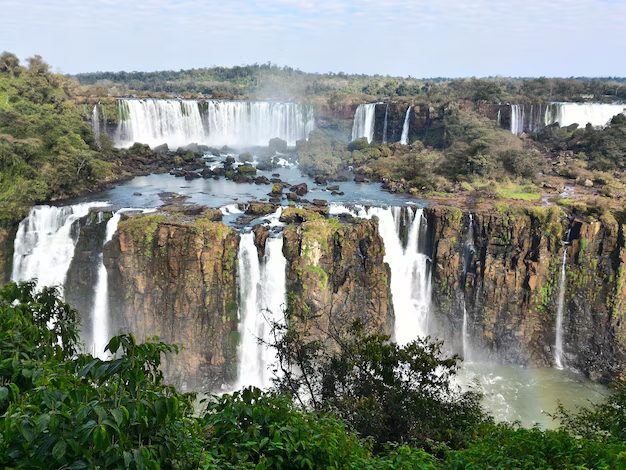
Located in Argentina’s far northeast, Misiones Province is unlike any other region in the country. Covered in lush rainforest, shaped by powerful rivers, and rich in cultural heritage, Misiones is a destination where nature, history, and biodiversity exist in perfect harmony. Bordering Brazil and Paraguay, the province sits at the heart of the Upper Paraná Atlantic Forest, one of the most biologically diverse ecosystems in South America.
Misiones is best known for the spectacular Iguazú Falls, but the province offers far more than its world-famous waterfalls. From dense jungle national parks and UNESCO-listed Jesuit ruins to vibrant immigrant towns and vast wetland ecosystems, Misiones delivers an unforgettable travel experience rooted in natural beauty and cultural depth.
Iguazú Falls – One of the World’s Greatest Natural Wonders
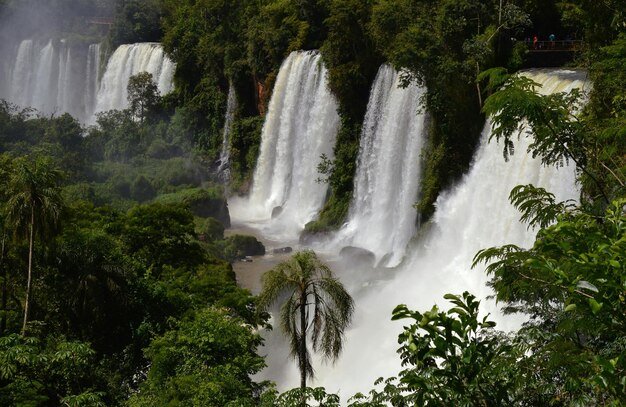
The crown jewel of Misiones is undoubtedly Iguazú Falls, one of the largest and most powerful waterfall systems on Earth. Comprising more than 275 individual cascades spread across nearly three kilometers, Iguazú Falls lies along the border between Argentina and Brazil and is recognized as a UNESCO World Heritage Site and one of the New Seven Natural Wonders of the World.
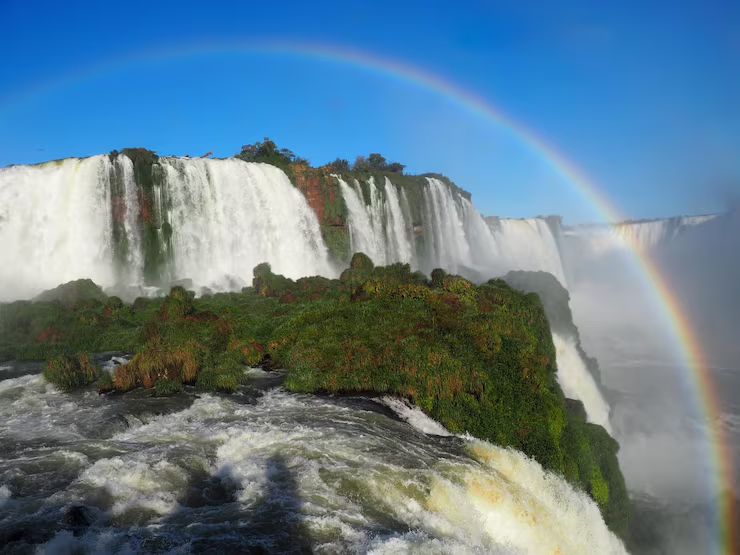
The most dramatic section, Garganta del Diablo (Devil’s Throat), plunges thunderously into a horseshoe-shaped chasm, sending mist high into the air and creating rainbows under the sun. Walkways and viewing platforms on the Argentine side allow visitors to experience the falls up close, surrounded by roaring water and lush greenery.
Iguazú Falls is not just a visual spectacle; it is an immersive sensory experience—sound, movement, and mist combine to create a moment that leaves a lasting impression on every visitor.
Iguazú National Park – Rainforest and Wildlife Haven
Surrounding the falls is Iguazú National Park, a protected expanse of subtropical rainforest covering more than 67,000 hectares. This park preserves a vital section of the Atlantic Forest, home to remarkable biodiversity.
Visitors may encounter coatis, toucans, howler monkeys, capuchin monkeys, butterflies, jaguars (rarely seen), and hundreds of bird species. Elevated walkways and jungle trails allow travelers to explore the forest while minimizing environmental impact.
Beyond the falls, the park offers ecological tours, boat rides beneath cascades, and interpretive programs that educate visitors about conservation efforts. Iguazú National Park stands as one of Argentina’s most important natural reserves and a global example of sustainable tourism.
San Ignacio Miní – Jesuit Ruins and Colonial Legacy
Misiones also holds deep historical significance, best represented by the San Ignacio Miní Jesuit Ruins, a UNESCO World Heritage Site. These red-stone ruins date back to the 17th century and are among the best-preserved Jesuit missions in South America.
The Jesuits established missions to convert and protect the indigenous Guaraní people, creating self-sufficient communities centered on education, agriculture, and craftsmanship. San Ignacio Miní features remnants of churches, plazas, workshops, and residential buildings that reflect a unique blend of European and indigenous design.
Visiting the ruins offers insight into a pivotal chapter of regional history. At night, sound-and-light shows bring the site to life, narrating the story of the Jesuit missions and their lasting influence on local culture.
Esteros del Iberá (Misiones Edge) – Wetlands of Life
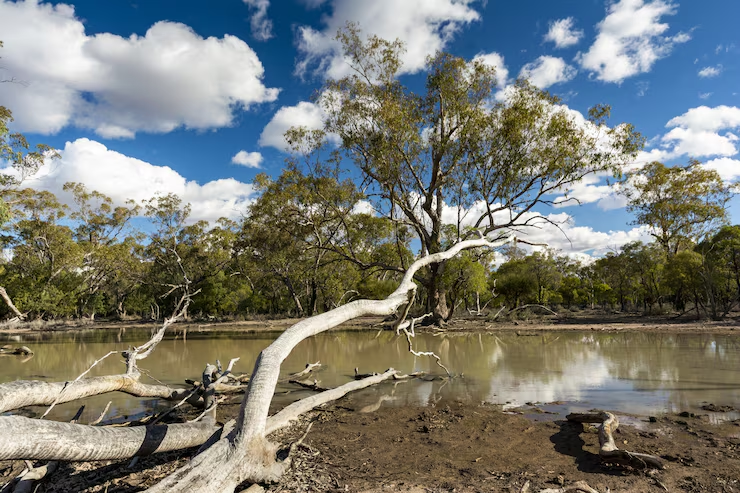
While most of the Esteros del Iberá wetlands lie in neighboring Corrientes Province, their ecosystem extends into parts of southern Misiones. This vast wetland system is one of South America’s most important biodiversity hotspots.
The wetlands are home to capybaras, caimans, marsh deer, monkeys, giant otters, and hundreds of bird species. Eco-tourism activities include guided boat safaris, wildlife photography, and nature walks led by local conservationists.
The presence of Iberá’s ecosystem in Misiones highlights the province’s ecological diversity, transitioning from rainforest to wetland habitats. Conservation projects in the region focus on species reintroduction and sustainable tourism, making it a model for environmental preservation.
Oberá – Cultural Mosaic of Immigrants
At the cultural heart of Misiones lies Oberá, a city shaped by waves of European immigrants from Germany, Poland, Ukraine, Switzerland, and Italy. Known as the “Capital of Immigrants”, Oberá celebrates its multicultural identity through festivals, cuisine, and architecture.
The city’s most famous event is the National Immigrant Festival, held annually, where traditional dances, music, crafts, and food from different cultures are showcased. The Parque de las Naciones features houses representing each immigrant community.
Oberá also offers a relaxed atmosphere, green spaces, museums, and easy access to nearby waterfalls and nature reserves. It reflects Misiones’ human diversity and the harmonious coexistence of cultures in the region.
Why Misiones Is a Must-Visit Destination
Misiones Province offers one of the richest travel experiences in Argentina. It combines world-famous natural wonders, dense rainforests, historical heritage, wetlands teeming with life, and vibrant cultural traditions.
From standing before the thunderous power of Iguazú Falls, exploring the wildlife-filled trails of Iguazú National Park, walking among the ancient stones of San Ignacio Miní, observing wetland biodiversity at the edge of Iberá, to celebrating immigrant traditions in Oberá, Misiones reveals Argentina’s subtropical soul.
For travelers seeking adventure, nature, history, and cultural authenticity, Misiones is not just a destination—it is a journey into one of South America’s most extraordinary landscapes.
Related artical : Mendoza, Argentina’s Land of Wine, Mountains, and Natural Wonders