
Now Reading: Top 5 Tourist Places in Jiangxi, China
-
01
Top 5 Tourist Places in Jiangxi, China
Top 5 Tourist Places in Jiangxi, China
Jiangxi Travel Guide: Sacred Mountains, Porcelain Heritage, Ancient Villages, and the Cultural Heart of Southern China
Jiangxi Province is one of China’s most culturally rich yet underrated travel destinations. Located in southeastern China and surrounded by mountains, rivers, and fertile plains, Jiangxi is known for its sacred peaks, Taoist and Buddhist heritage, porcelain craftsmanship, well-preserved villages, and revolutionary history.
Unlike China’s mega-cities, Jiangxi offers travelers a deeper, more authentic connection to traditional Chinese life. Here, mist-covered mountains rise above quiet valleys, ancient kilns continue centuries-old traditions, and rivers flow past villages that seem untouched by time. Jiangxi has long been a crossroads of religion, art, philosophy, and history, making it an ideal destination for culture-focused travelers.
This 2,000+ word Jiangxi travel guide explores the province’s top five must-visit destinations:
- Lushan Mountain
- Jingdezhen
- Mount Longhu
- Wuyuan
- Nanchang
1. Lushan Mountain – Majestic Peaks, Waterfalls, and Spiritual Retreats
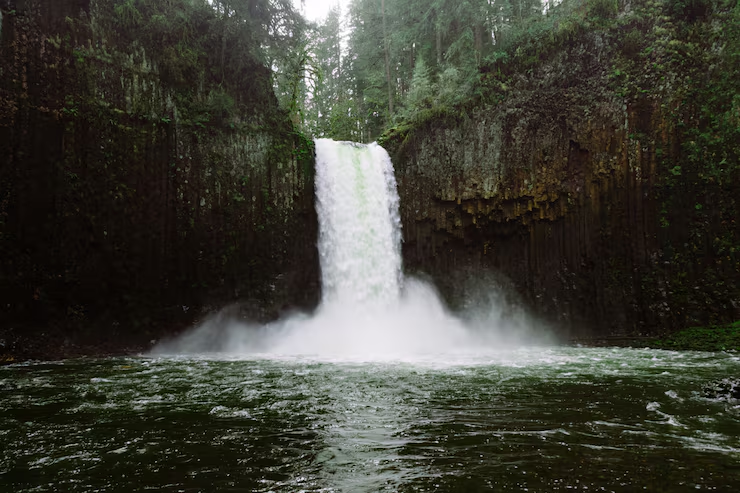
Lushan Mountain is Jiangxi’s most famous natural attraction and one of China’s most celebrated scenic areas. Designated as a UNESCO World Heritage Site, Lushan has inspired emperors, monks, poets, and scholars for over 2,000 years.
A Landscape of Natural Grandeur
Rising above Poyang Lake, Lushan Mountain features:
- Dramatic granite peaks
- Deep forested valleys
- Over 20 major waterfalls
- Misty clouds that shift throughout the day
The ever-changing weather gives Lushan its legendary beauty, where clouds roll over cliffs and waterfalls appear and disappear like paintings in motion.
Famous Waterfalls and Scenic Spots
One of the most iconic sights is the Sandiequan Waterfall, often called the most beautiful waterfall in China. Other highlights include:
- Hanpo Pass
- Flower Path
- Celestial Bridge
- White Deer Cave Academy
Cultural and Religious Significance
Lushan has been a center of Buddhism, Taoism, and Confucian learning. The mountain hosts:
- Ancient temples
- Stone inscriptions
- Historic academies
Poets like Li Bai immortalized Lushan in classical Chinese poetry.
A Summer Retreat and Modern History
In the modern era, Lushan became a popular summer retreat due to its cool climate. Many historical villas remain, reflecting Western and Chinese architectural styles.
Why Visit Lushan Mountain
Lushan offers a rare blend of natural beauty, spiritual depth, and cultural heritage, making it one of China’s most inspiring mountain destinations.
2. Jingdezhen – The Porcelain Capital of China
Jingdezhen is globally recognized as the Porcelain Capital of China. For over 1,000 years, this city has produced fine ceramics for emperors, collectors, and museums worldwide.
A Thousand-Year Ceramic Legacy
Jingdezhen’s porcelain industry dates back to the Tang Dynasty and reached its peak during the Ming and Qing Dynasties, when imperial kilns produced wares exclusively for the royal court.
The city’s name itself became synonymous with fine porcelain.
Imperial Kilns and Ceramic Museums
Top attractions include:
- Imperial Kiln Museum – Showcases ancient kiln ruins and royal ceramics
- China Ceramic Museum – One of the world’s largest ceramic collections
- Ancient Kiln Folk Custom Exhibition Area – Live demonstrations of traditional firing techniques
Living Craftsmanship
Unlike many historical sites, Jingdezhen is still a living craft city. Visitors can:
- Watch artisans hand-shape porcelain
- Paint blue-and-white designs
- Participate in pottery workshops
Modern ceramic artists from around the world now live and work here, blending tradition with innovation.
Why Visit Jingdezhen
Jingdezhen is not just a museum of the past—it is a living center of Chinese artistic heritage, offering deep insight into one of China’s most influential crafts.
3. Mount Longhu – Birthplace of Taoism and Dramatic Red Cliffs
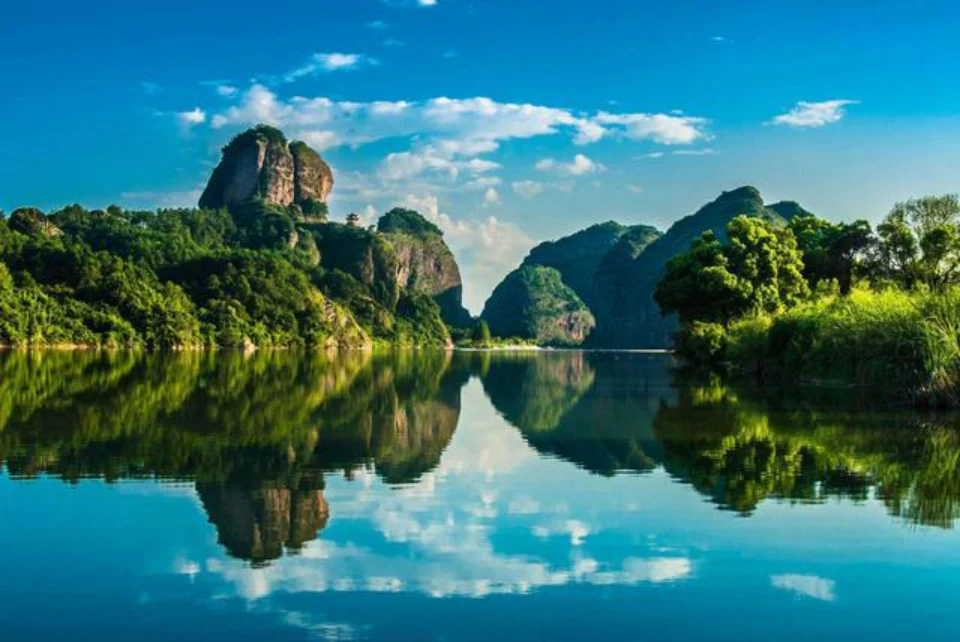
Mount Longhu (Dragon and Tiger Mountain) is one of the most important Taoist sacred sites in China and a UNESCO World Heritage Site.
Spiritual Importance
Mount Longhu is considered the birthplace of Zhengyi Taoism, one of the major Taoist schools. Taoist masters have practiced rituals, alchemy, and meditation here for nearly two millennia.
Unique Landscape
The mountain is famous for its:
- Red sandstone cliffs
- Meandering rivers
- Caves carved into cliffs
One of the most fascinating features is the hanging coffins, ancient burial sites placed high on cliff faces, whose construction remains a mystery.
Taoist Temples and Rituals
Visitors can explore:
- Shangqing Palace
- Taoist temples and academies
- Sacred caves
Traditional Taoist ceremonies are still performed, offering a rare glimpse into living religious traditions.
Scenic Boat Rides
Boat trips along the Luxi River provide breathtaking views of cliffs, forests, and temples.
Why Visit Mount Longhu
Mount Longhu combines mystical landscapes, ancient religion, and archaeological wonder, making it a must-visit for spiritual and cultural travelers.
4. Wuyuan – China’s Most Beautiful Countryside
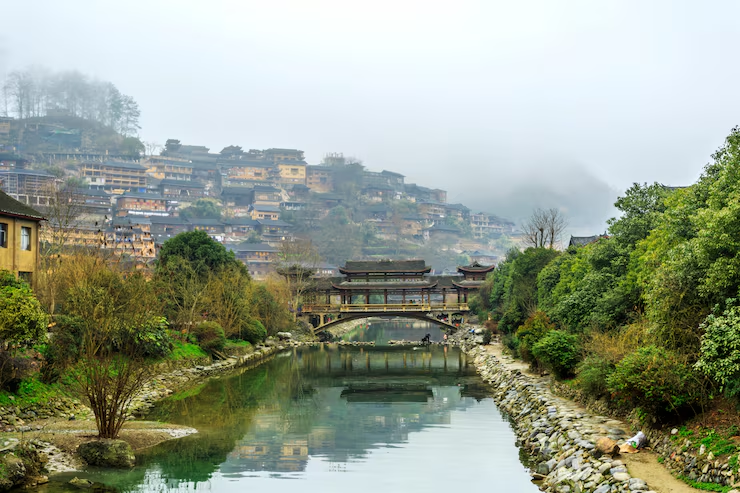
Wuyuan is often described as China’s most beautiful rural region. Known for its rolling hills, ancient villages, and seasonal scenery, Wuyuan is a paradise for photographers and slow travelers.
Ancient Huizhou Villages
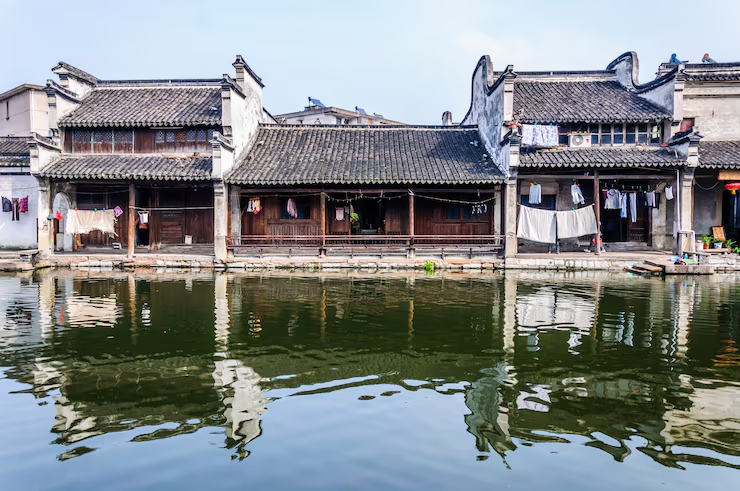
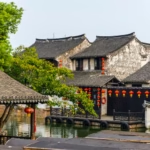
Wuyuan is home to dozens of well-preserved Huizhou-style villages, featuring:
- White-walled houses
- Black-tiled roofs
- Stone bridges
- Ancestral halls
Villages such as Likeng, Xiaoqi, and Jiangling offer a glimpse into traditional village life.
Seasonal Beauty
Wuyuan’s scenery changes dramatically with the seasons:
- Spring: Vast fields of yellow rapeseed flowers
- Summer: Green valleys and rivers
- Autumn: Red maple leaves and golden harvests
- Winter: Quiet villages and misty mornings
Cultural Traditions
Local customs, folk festivals, and agricultural practices remain deeply rooted in daily life.
Why Visit Wuyuan
Wuyuan is ideal for travelers seeking peace, photography, traditional architecture, and countryside charm.
5. Nanchang – Revolutionary Capital and Urban Gateway
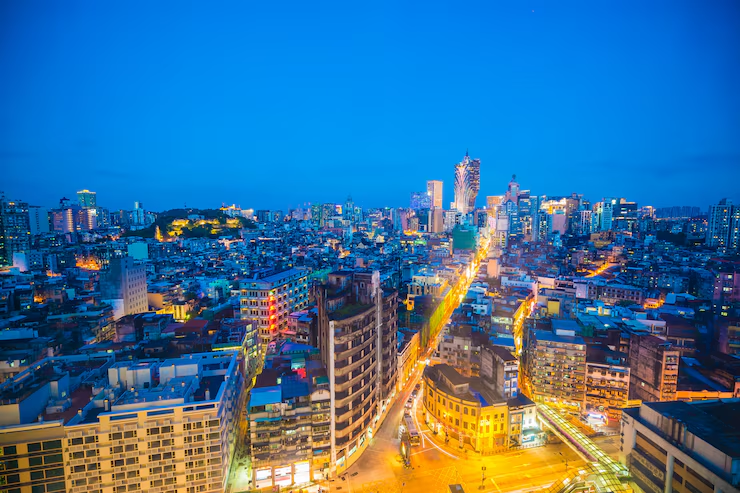
Nanchang, the capital of Jiangxi Province, is a city of modern growth and historic significance. It holds a special place in Chinese history as the birthplace of major revolutionary movements.
Revolutionary History
The Nanchang Uprising of 1927 marked a turning point in modern Chinese history. Key sites include:
- August 1st Nanchang Uprising Memorial
- Revolutionary museums and monuments
Tengwang Pavilion – Cultural Icon
One of China’s most famous pavilions, Tengwang Pavilion, symbolizes classical Chinese architecture and literature. It overlooks the Gan River and is celebrated in poetry.
Urban Parks and River Views
Nanchang offers:
- Lakeside parks
- Riverfront promenades
- Modern shopping districts
Why Visit Nanchang
Nanchang serves as both a historical landmark and a convenient base for exploring Jiangxi’s scenic regions.
Best Time to Visit Jiangxi
- Spring (Mar–May): Flowers, mild weather, countryside beauty
- Summer (Jun–Aug): Cool mountain retreats like Lushan
- Autumn (Sep–Nov): Best overall weather and scenery
- Winter: Quiet, atmospheric travel
Related artical : Top 5 Tourist Places in Jiangsu, China