Now Reading: Top 5 Tourist Places in Shaanxi, China
-
01
Top 5 Tourist Places in Shaanxi, China
Top 5 Tourist Places in Shaanxi, China
Shaanxi Travel Guide: Ancient Capitals, Terracotta Warriors, Sacred Mountains, and the Cradle of Chinese Civilization
Shaanxi Province is widely regarded as the birthplace of Chinese civilization. Located in central China along the middle reaches of the Yellow River, Shaanxi has served as the capital region for 13 Chinese dynasties and witnessed more pivotal moments in Chinese history than any other province.
From the awe-inspiring Terracotta Army and the mighty Xi’an City Wall to the spiritual grandeur of the Big Wild Goose Pagoda, the vertiginous cliffs of Mount Huashan, and the royal tombs of Hanyangling, Shaanxi offers an unparalleled journey through over 3,000 years of history.
This 2,000+ word comprehensive Shaanxi travel guide explores the province’s top five must-visit destinations:
- Terracotta Army
- Xi’an City Wall
- Big Wild Goose Pagoda
- Mount Huashan
- Hanyangling Mausoleum
1. Terracotta Army – The Eighth Wonder of the World

The Terracotta Army is one of the greatest archaeological discoveries in human history and Shaanxi’s most iconic attraction. Discovered in 1974 near Xi’an, this vast underground army was built to guard the tomb of Qin Shi Huang, China’s first emperor.
A Monumental Archaeological Marvel
The Terracotta Army consists of:
- Over 8,000 life-size soldiers
- War chariots and horses
- Officers, generals, and infantry arranged in battle formation
Each figure has unique facial features, hairstyles, and expressions, reflecting the craftsmanship and realism of Qin Dynasty artisans.
Historical Significance
The army symbolizes:
- The unification of China under the Qin Dynasty
- Advanced military organization
- Early imperial power and beliefs about the afterlife
The site provides critical insight into ancient Chinese warfare, technology, and governance.
Museum Complex
The Terracotta Army Museum includes multiple excavation pits and exhibition halls, allowing visitors to see ongoing archaeological work.
Why Visit the Terracotta Army
The Terracotta Army is a once-in-a-lifetime experience and a defining symbol of ancient China’s ambition and ingenuity.
2. Xi’an City Wall – The Best-Preserved Ancient City Wall in China
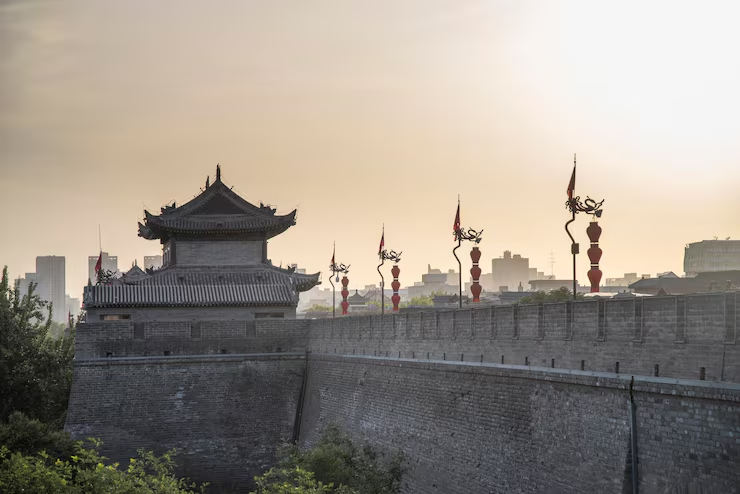
Encircling the historic heart of Xi’an, the Xi’an City Wall is the most complete and well-preserved ancient city wall in China.
Architectural Grandeur
Originally built during the Ming Dynasty, the wall stretches approximately 14 kilometers and includes:
- Massive ramparts
- Defensive watchtowers
- Gates and moats
The wall’s scale demonstrates the military importance of Xi’an as a former capital.
Walking and Cycling the Wall
Visitors can:
- Walk the entire length
- Rent bicycles for a full circuit
- Enjoy panoramic views of old and modern Xi’an
Sunrise and sunset offer particularly stunning views.
Cultural Symbol
The wall represents the transition from ancient Chang’an to modern Xi’an, blending history with contemporary life.
Why Visit Xi’an City Wall
The city wall offers a hands-on historical experience, allowing travelers to physically engage with China’s past.
3. Big Wild Goose Pagoda – A Symbol of Buddhism and Learning
The Big Wild Goose Pagoda is one of Xi’an’s most important spiritual landmarks and a symbol of Buddhist learning in China.
Tang Dynasty Origins
Built in the 7th century during the Tang Dynasty, the pagoda was constructed to house Buddhist scriptures brought from India by the monk Xuanzang, whose journey inspired the classic novel Journey to the West.
Architectural Simplicity and Elegance
The pagoda’s design reflects:
- Indian Buddhist influences
- Early Chinese brick architecture
- Elegant simplicity rather than ornamentation
Religious and Cultural Importance
The site remains a place of worship and pilgrimage. Nearby temples and gardens enhance the tranquil atmosphere.
Musical Fountain and Modern Surroundings
The area around the pagoda features:
- One of Asia’s largest musical fountains
- Museums and cultural centers
Why Visit Big Wild Goose Pagoda
The pagoda offers a peaceful contrast to Xi’an’s bustling streets and a deeper understanding of Buddhism’s spread in China.
4. Mount Huashan – China’s Most Thrilling Sacred Mountain
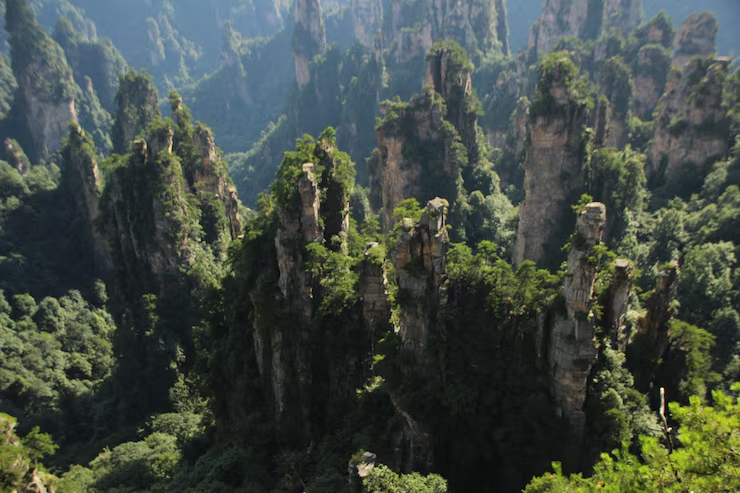
Mount Huashan is one of China’s Five Great Sacred Taoist Mountains and is famous worldwide for its dramatic cliffs and perilous hiking trails.
Legendary Peaks and Trails
Huashan features:
- Sheer rock faces
- Narrow plank paths carved into cliffs
- Steep staircases ascending vertical rock walls
The Plank Walk in the Sky is considered one of the most dangerous hikes in the world.
Spiritual Significance
Huashan has been a Taoist site for over 2,000 years, with temples and shrines perched on remote peaks.
Scenic Rewards
Those who reach the summits are rewarded with:
- Breathtaking mountain vistas
- Sea-of-clouds views
- Sunrises above endless ridges
Why Visit Mount Huashan
Huashan offers a rare blend of spiritual pilgrimage, extreme adventure, and natural beauty.
5. Hanyangling Mausoleum – Han Dynasty Royal Tombs
The Hanyangling Mausoleum is the joint burial site of Emperor Jing of Han and his empress, providing a fascinating look into Han Dynasty burial customs.
A Subtle Yet Powerful Site
Unlike the grandeur of the Terracotta Army, Hanyangling features:
- Smaller ceramic figures
- Underground exhibition halls
- Transparent walkways above excavation pits
Daily Life in the Han Dynasty
The burial objects depict:
- Soldiers
- Livestock
- Servants
These figures reveal everyday life rather than military might.
Archaeological Innovation
The museum’s design allows visitors to observe the tomb artifacts in situ, creating an immersive learning experience.
Why Visit Hanyangling
Hanyangling complements the Terracotta Army by showcasing a different philosophical approach to the afterlife.
Best Time to Visit Shaanxi
- Spring (Mar–May): Mild weather, ideal sightseeing
- Autumn (Sep–Oct): Best overall climate
- Summer: Hot but lively
- Winter: Cold, fewer tourists
Related artical : Top 5 Tourist Places in Qinghai, China