
Now Reading: Top 5 Tourist Places in Minya, Egypt.
-
01
Top 5 Tourist Places in Minya, Egypt.
Top 5 Tourist Places in Minya, Egypt.
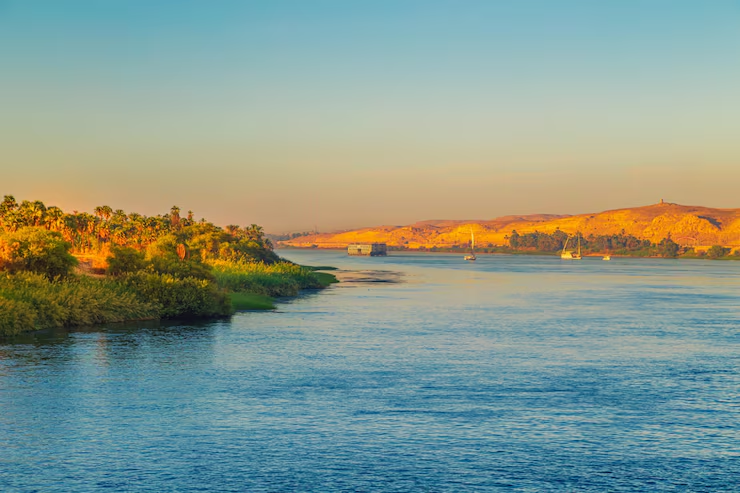
In the heart of Upper Egypt, stretching gracefully along the banks of the Nile River, lies Minya Governorate — a region often overlooked by mainstream tourism, yet overflowing with ancient history, dramatic desert landscapes, and spiritual heritage.
Often called the “Bride of Upper Egypt,” Minya offers something extraordinary: a journey into Egypt that feels authentic, raw, and deeply historical. Here, the Nile flows calmly between fertile farmland and golden desert cliffs. Ancient tombs hide within limestone mountains. Forgotten cities whisper stories of revolutionary pharaohs. Monasteries cling to cliffs in breathtaking isolation.
Minya is not crowded like Luxor or Cairo. It is quieter. More intimate. More mysterious.
For travelers seeking archaeology beyond the famous pyramids — and for those wanting to explore Egypt’s religious, cultural, and natural contrasts — Minya is one of the country’s most fascinating destinations.
Let’s explore the top attractions that make Minya truly exceptional.
1. Beni Hassan Tombs – Masterpieces of Middle Kingdom Art
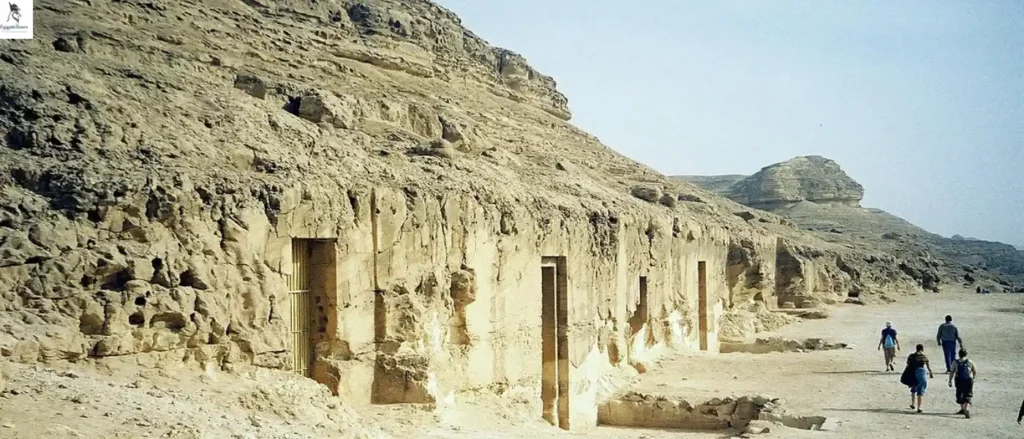
One of Minya’s most important archaeological treasures is the Beni Hassan Tombs, located about 20 kilometers south of Minya city.
A Window into the Middle Kingdom
These rock-cut tombs date back nearly 4,000 years to the Middle Kingdom period (c. 2050–1710 BCE). Unlike the grand temples of Luxor, Beni Hassan provides something more intimate: detailed insight into daily life in ancient Egypt.
Carved into limestone cliffs overlooking the Nile Valley, the tombs belong to powerful provincial governors and officials.
Art That Feels Alive
What makes Beni Hassan extraordinary are its wall paintings. The colors remain remarkably preserved, showing scenes such as:
- Wrestling matches (over 200 wrestling positions illustrated in one tomb)
- Hunting in the desert
- Fishing along the Nile
- Farming activities
- Trade and foreign visitors
Unlike royal tombs focused on gods and the afterlife, these paintings highlight real life — offering historians valuable insight into society during the Middle Kingdom.
The Scenic Climb
To reach the tombs, visitors climb a path up the limestone cliffs. From the top, the panoramic view of the Nile Valley is breathtaking:
Green farmland stretches below, framed by the winding river and distant desert hills.
It’s a powerful contrast — fertile life beside endless desert.
Beni Hassan is not just an archaeological site; it is a living story carved into stone.
2. Tell El-Amarna – The City of Akhenaten
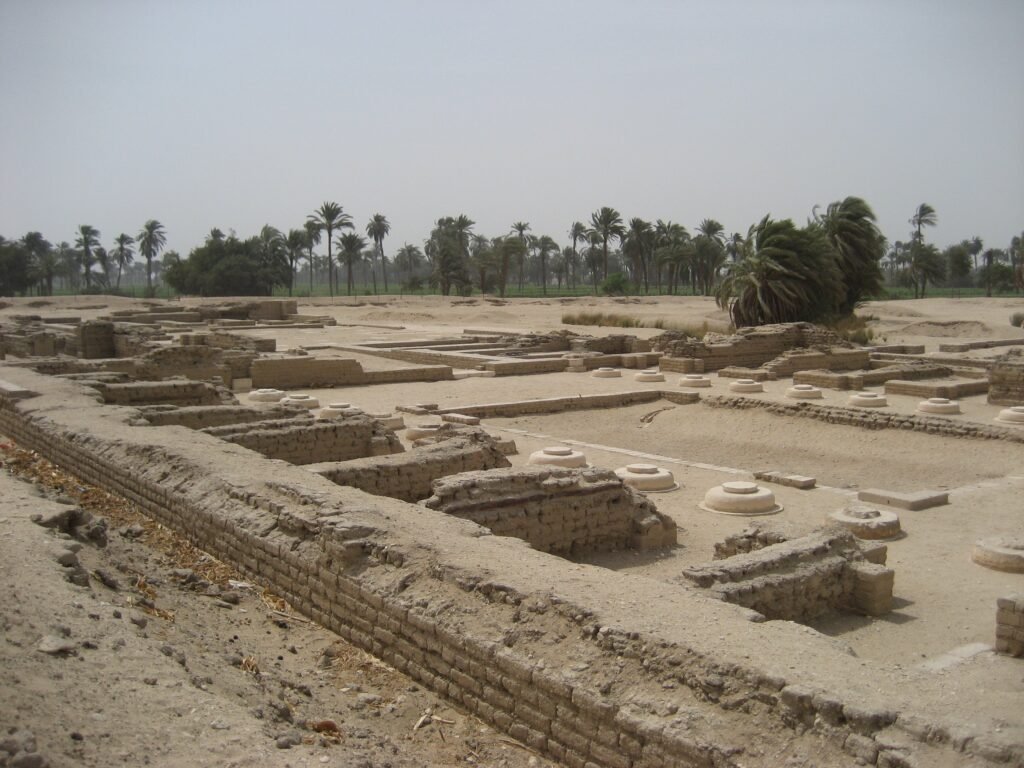
Perhaps the most revolutionary chapter in ancient Egyptian history unfolded in Minya — at Tell El-Amarna, the short-lived capital city built by Pharaoh Akhenaten.
The Pharaoh Who Changed Religion
Around 1353 BCE, Akhenaten introduced radical reforms. He abandoned traditional Egyptian polytheism and promoted worship of a single deity — the Aten, represented by the sun disk.
To escape the influence of powerful priests in Thebes, he built a new capital city in the desert: Akhetaten (modern-day Tell El-Amarna).
A City in the Desert
Today, visitors can explore the remains of this ancient city, including:
- Foundations of palaces
- Administrative buildings
- Residential districts
- Boundary stelae carved into cliffs
- Tombs of nobles
Although much of the city was dismantled after Akhenaten’s death, the site remains historically significant.
The Amarna Art Style
Akhenaten introduced a unique artistic style that broke traditional Egyptian conventions. Sculptures and reliefs from this period show:
- Elongated facial features
- Naturalistic body forms
- Intimate family scenes
It was a dramatic departure from rigid royal depictions.
Nefertiti’s Legacy
This is also the era of Queen Nefertiti, one of Egypt’s most famous queens. Her iconic bust, now in Berlin, originated from this revolutionary period.
Standing at Tell El-Amarna, surrounded by desert silence, you can imagine a once-thriving city that dared to change ancient religion — only to be erased within decades.
It is one of Egypt’s most fascinating historical mysteries.
3. Monastery of the Virgin Mary – A Cliffside Spiritual Sanctuary
Perched dramatically on limestone cliffs overlooking the Nile Valley is the Monastery of the Virgin Mary (Deir Al-Adhra), one of Egypt’s most important Coptic Christian pilgrimage sites.
A Sacred Refuge
According to tradition, the Holy Family — Mary, Joseph, and baby Jesus — passed through this region during their flight into Egypt.
The monastery is believed to be built near one of the places where they stayed.
A Breathtaking Setting
The monastery’s location is unforgettable. It sits high above the valley, surrounded by desert cliffs, offering:
- Panoramic views of the Nile
- Quiet spiritual atmosphere
- Cool mountain breezes
The journey to the monastery feels like a pilgrimage itself.
Architecture and Faith
The complex includes:
- Ancient chapels
- Prayer halls
- Cave shrines
- Monastic residences
Each year, thousands of pilgrims visit during religious festivals, filling the area with devotion and celebration.
For travelers interested in Egypt’s Christian heritage, this monastery offers profound cultural depth and stunning natural scenery.
4. Minya Nile Corniche – The Heart of Modern Life
While Minya is famous for archaeology, the city itself offers peaceful Nile charm.
The Minya Corniche runs along the riverbank and serves as the social center of the city.
Everyday Egypt
Here, you’ll see:
- Families strolling at sunset
- Children playing
- Couples enjoying river views
- Small cafés serving tea and local snacks
The atmosphere is relaxed and authentic — far from mass tourism.
Nile Views at Sunset
As evening approaches, the sky reflects across the Nile’s surface. Boats drift slowly along the water. The sound of city life blends with the river’s calm flow.
It’s the perfect place to experience local Egyptian life in a natural setting.
Minya’s Corniche reminds visitors that Egypt is not only about ancient monuments — it’s also about living communities along the timeless Nile.
5. Desert Landscapes and Hidden Archaeological Sites
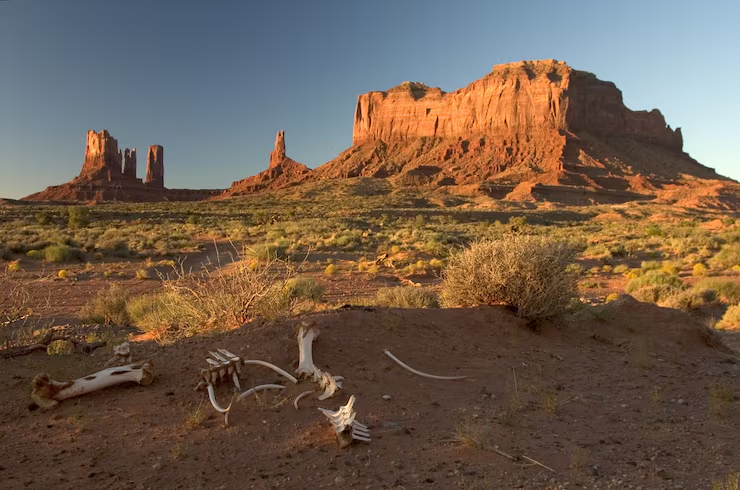
Minya’s surrounding desert holds countless archaeological secrets beyond the major sites.
Tuna El-Gebel
One of the most important nearby sites is Tuna El-Gebel, known for:
- Catacombs of sacred animals
- Tomb of Petosiris
- Greek and Roman influences
The site contains underground burial chambers for ibises and baboons — animals sacred to the god Thoth.
Ashmunein (Hermopolis Magna)
This was once a major religious center dedicated to Thoth. Today, visitors can see:
- Colossal statues
- Temple ruins
- Greek and Roman remains
The blending of Egyptian and Greco-Roman heritage makes it historically fascinating.
Vast Open Silence
Driving through Minya’s desert landscapes feels surreal. Limestone cliffs rise dramatically. Archaeological mounds appear unexpectedly. The sky stretches endlessly.
It’s a region where history is not concentrated in one site — it is scattered across the land.
Culture and Identity of Minya
Minya reflects the deep traditions of Upper Egypt.
Agricultural Heartland
The Nile’s fertile banks support:
- Wheat fields
- Sugarcane
- Cotton
- Fruit orchards
The contrast between green farmland and golden desert creates one of Egypt’s most visually striking landscapes.
Religious Diversity
Minya is known for its strong Coptic Christian community, alongside Muslim communities. This coexistence shapes the governorate’s cultural identity.
Religious festivals and traditions are an important part of local life.
Why Visit Minya?
Minya offers:
Ancient Middle Kingdom tombs
Revolutionary pharaonic history
Sacred Christian pilgrimage sites
Hidden Greco-Roman ruins
Peaceful Nile views
Authentic Egyptian culture
Unlike Egypt’s more crowded destinations, Minya feels undiscovered — a place where travelers can explore at their own pace.
Best Time to Visit
The best time to visit Minya is from October to April, when temperatures are cooler and ideal for exploring desert sites.
Summers can be extremely hot, especially when climbing archaeological locations.
Final Thoughts
Minya is a destination for curious travelers — those who want to go beyond the obvious.
Here, you can:
Stand inside Middle Kingdom tombs filled with daily-life art.
Walk through the ruins of a revolutionary capital city.
Pray inside a monastery carved into desert cliffs.
Watch the Nile flow peacefully beside modern Egyptian life.
Explore archaeological landscapes that few tourists ever see.
Minya may not have the global fame of Giza or Luxor — but it possesses something equally powerful: authenticity.
It is Egypt in its purest form — ancient, spiritual, agricultural, and timeless.
Related artical : Top 5 Tourist Places in Matrouh, Egypt.