
Now Reading: Top 5 place to visit in New Amsterdam
-
01
Top 5 place to visit in New Amsterdam
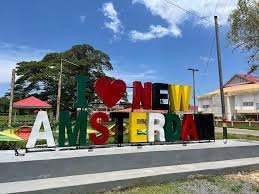
Top 5 place to visit in New Amsterdam
1. New Amsterdam Waterfront – The Soul of the Town

The New Amsterdam Waterfront is the most important and lively area of the town. Situated along the wide Berbice River, it plays a key role in transportation, trade, and daily life.
For centuries, the river has been the main lifeline of the region. Even today, boats and ferries connect villages, farms, and nearby settlements. Locals use the waterfront for fishing, commuting, and small-scale trading activities.
Walking along the riverbank gives visitors a true feel of Berbice life. Early mornings are quiet and misty, with fishermen preparing their nets. By afternoon, the area becomes active with small markets and river transport. In the evening, the sunset reflects beautifully over the water, turning the entire waterfront golden.
This is the best place to understand the real identity of New Amsterdam—simple, slow, and deeply connected to the river.
2. Fort Nassau – Echoes of Colonial History

Located along the Berbice River, Fort Nassau is one of the most important historical sites near New Amsterdam. Built by the Dutch in the 1600s, it served as a military and administrative base during the early colonial period.
The fort played a major role in controlling trade and protecting settlements along the river. Over time, it was abandoned, and today only ruins remain surrounded by forest and river landscapes.
Even though much of the structure has decayed, Fort Nassau still holds great historical value. Visitors can walk around the site and imagine how soldiers and traders once lived here centuries ago.
It is a peaceful yet powerful reminder of Guyana’s colonial past and early development.
3. St. Theresa’s Roman Catholic Church – Heritage and Faith

One of the most beautiful landmarks in New Amsterdam is St. Theresa’s Roman Catholic Church. This historic church reflects colonial-era architecture with its wooden structure, tall ceilings, and stained-glass windows.
For generations, this church has been an important spiritual center for the local community. It represents not only religious life but also cultural unity among different ethnic groups in the region.
Inside, the church is peaceful and elegant, with carefully preserved designs that reflect its long history. Outside, it stands proudly as a symbol of New Amsterdam’s colonial heritage and architectural beauty.
Visitors interested in history, religion, or architecture will find this site especially meaningful.
4. New Amsterdam Market & Town Center – Everyday Life

The town center and local market area of New Amsterdam is where daily life comes alive. This is the commercial heart of the town, filled with small shops, food stalls, and vendors selling fresh produce.
Here, visitors can experience authentic Guyanese culture through food, conversation, and local interaction. Fresh fruits, vegetables, spices, and handmade goods are commonly sold in the market.
The atmosphere is friendly and welcoming. People often greet each other warmly, and life moves at a relaxed pace compared to larger cities.
This area gives a real glimpse into the everyday lifestyle of Berbice residents and shows how deeply community-centered life is in New Amsterdam.
5. Skeldon Road & Berbice Countryside – Agricultural Beauty

The countryside surrounding New Amsterdam, especially toward Skeldon Road, is filled with vast agricultural landscapes. This region is one of the most important farming areas in Guyana.
Sugarcane plantations, rice fields, and open green farmland stretch across the horizon. These fields support the local economy and have been cultivated for generations.
Traveling through this area offers a peaceful experience. The roads are quiet, the air is fresh, and the scenery is dominated by endless greenery. Small villages appear along the way, showing the rural lifestyle of Berbice communities.
This area highlights the strong connection between people and land in Guyana’s agricultural heartland.
Related artical : Top 5 place to visit in Linden