
Now Reading: 15 Best Places to Visit in Ahmedabad for History & Culture Lovers
-
01
15 Best Places to Visit in Ahmedabad for History & Culture Lovers

15 Best Places to Visit in Ahmedabad for History & Culture Lovers
1. Sabarmati Ashram
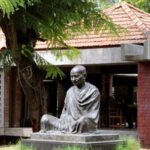
The peaceful residence of Sabarmati Ashram rests along the banks of the Sabarmati River. The historic Ashram marks its standing as a vital point of interest in Ahmedabad because Gandhi launched several freedom struggles while staying here. This installation serves to remember all the work that Mahatma Gandhi performed before India achieved independence.
Today the ashram operates primarily as a museum that presents different areas of Gandhiji’s life through separate sections. Pictures along with paintings present different significant occurrences during the exhibition. The museum showcases letters that Gandhi exchanged with essential figures from that period.
With its complex structure the ashram includes both the museum as well as the library together with the photo gallery along with Hriday Kunj – Mahatma Gandhi’s cottage. The site maintains its condition well and displays numerous personal items from Gandhi such as the well-known spinning wheel. Beyond Vinobha Mira Kutir and Udyog Mandir, Upasana Mandir belongs to the many attractions at Sabarmati Ashram. Wellness enthusiasts can reach this location through its 7 km distance from both railway station and airport facilities.
The library at the Gandhian compound contains extensive materials related to Mahatma Gandhi and his life so visitors should check it out. The library possesses an expansive book collection which focuses on his life and other historic moments from freedom struggles. The library maintains its collection through periodicals that exist in English together with Gujarati and Hindi languages.
Sabarmati Ashram Ahmedabad Address: Gandhi Smarak Sangrahalaya, Hridaya Kunj, Old Wadaj, Ahmedabad, Gujarat, 380027, India
Sabarmati Ashram Ahmedabad Timings
| Day | Timing |
|---|---|
| Monday | 8:30 am – 6:30 pm |
| Tuesday | 8:30 am – 6:30 pm |
| Wedesday | 8:30 am – 6:30 pm |
| Thursday | 8:30 am – 6:30 pm |
| Friday | 8:30 am – 6:30 pm |
| Saturday | 8:30 am – 6:30 pm |
| Sunday | 8:30 am – 6:30 pm |
2. Sabarmati Riverfront

A recently built spectacular development known as Sabarmati Riverfront serves as both a new attraction and stands among the essential locations to see in Ahmedabad after sunset. Visitors can reach the area at any hour but late daytime provides the most suitable time to walk or sit and observe the environment.
Public authorities launched the project to enhance environmental standards simultaneously with developing tourism while protecting the water resource of the Sabarmati river. Both riverbanks have been outfitted with two separate promenade levels as part of the development. Smaller vehicles must remain on the lower level of the promenade but visitors can access the upper level where they will find parks along with plazas and recreational areas for events and leisure activities.
At 10 km long Sabarmati Riverfront creates breathtaking views that showcase the river alongside both river banks. The riverfront provides a remarkable area where visitors can escape boredom and rest while allowing boating and various water activities from its multiple ghats.
The combination of speed boats with motorboats alongside water sports and lush vegetation and numerous food facilities makes Sabarmati Riverfront a top destination for Ahmedabad visitors seeking entertainment. As evening approaches the whole area turns radiant and more active as the nighttime temperatures decrease. Cab services operate throughout the city allowing anyone to travel to the location.
People who travel to Ahmedabad should visit the Sabarmati Riverfront because it has grown into a significant destination for tourists after several years. Any riverfront development needs deliberate human planning since riverfronts do not naturally manifest spontaneously. History confirms that Sabarmati has maintained a riverfront since its existence. People gained public access to this site only within the last few years. The conversion to public access started only recently after being transformed from its initial state.
The prime attraction of Riverfront design must include two levels of public promenade. Along the 11.4 km continuous pedestrian path people can make an uninterrupted walk. The public can currently access the lower promenade while having easy walking access to water through its design features that also serve both pedestrians and cyclists.
While the site boasts multiple amenities including elevators and public restrooms, public seating options, boating facilities with 31 Ghats positioned across the area which sustain traditional cultural practices at the Sabarmati.
Upcoming public features from the city will occupy the unconstructed upper promenade area. The riverfront stretches over 10 km in length which grants access to riverwalking paths as well as gardens of beauty and amusement parks with golf courses and water activities facilities. They offer a breathtaking view of the river to those who prefer walking the peaceful riverfront.
Citizens of Ahmedabad who care about their health use the promenade for their river runs. Exercise along with the clean air during your jog brings needed respite from the upcoming start of your regular life. Visitors who wish to tour Ahmedabad will discover that the Sabarmati Riverfront presents an elite and ultimately fulfilling destination.
Ahmedabad took the common pattern of urban development which separated itself from its original identity during its growth phase. The river acted as a primary supply for cultural activity as well as economic value and recreational engagement. As the city grew in size it became inevitable for the river to receive only neglectful treatment instead of respectful observance.
Sabarmati Riverfront Ahmedabad Address: Sabarmati Riverfront Walkway W, Rabarivas, Usmanpura, Ahmedabad, Gujarat, 380013, India
3. Kankaria Lake
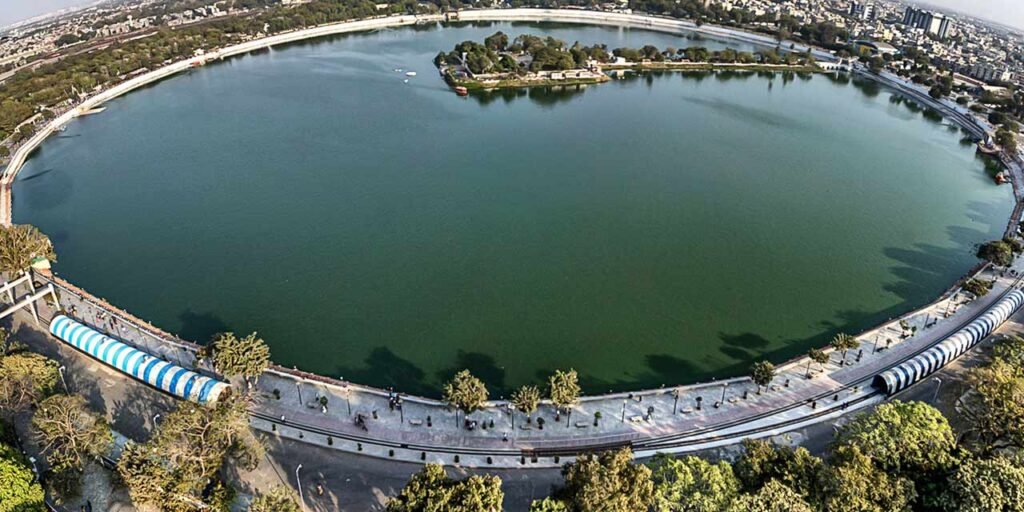
The Kankaria lake occupies the south-eastern sector of Ahmedabad with its location near Maninagar in Gujrat. Kankaria Lake is identified as the second largest water body in the city. Many recreation spots ranging from zoo to kids city to toy-train ride and hot air balloon flights to various water-based rides line the developed lakefront of Kankaria. The situation was not similar during the initial period.
The Ahmedabad Municipal Corporation (AMC) performed reconstruction activities on the lakefront in recent times. During past years Kankaria lake became empty and polluted by neglect that made it useless but sweeping governmental changes together with AMC leadership restored the lake and made it a prominent visitor location. Many social, cultural and comparable events happen in this area.
A festive carnival takes place at Kankaria lake throughout December until the first day of January starting from December 25th.
Architecture of Kankaria Lake
Fine Mughal architects of that time constructed the polygonal shaped reservoir in the middle of the lake through exquisite stone work and designs according to historical architectural cuttings.
An island located in the middle of Kankaria lake holds Nagina Wadi as its centerpiece which is a garden structure. The site stands alone as a scenic attraction that attracts visitors to this region. Nagina means jewel here. Ghattamandal functions as the summer palace inside the garden space that makes up this area.
The establishment creates a connection between the bank that measured 48 arches before its construction. People describe Mughal period architecture at this spot as an exquisite monument because it functions as the central highlight or gem of the lake.
History of Kankaria Lake
There is presently no known source for the name Kankaria though different legends explain its origins. The excavation for Kankaria lake involved removing enormous limestone deposits which led to selecting Kankaria as the name.
Shah Alam provided his guidance to Sultan Qutb-ud-Din about building the garden tank complex after picking the site and scattering stones to build Kankaria lake.
According to a famous legend Hazrat-i-Shah Alam sustained a minor injury as he walked near the excavation site while a pebble struck his body and he accepted the role of this stone in his wound distinguishing the location by this name.
Fourteen-hundred years ago Merutunga chronicled how Karna built the temple after his victory over Asha the Bhil royal chief. The temple at this site honored Kochharba as a goddess and Karna had established both the area known as Karnavati city and other neighboring temples dedicated to Jayantidevi and Karnamukteshwara.
A tank built by Karna stands next to the Karneshvara temple in the city of Karnavati bearing his name Karnasagara but it now exists as Kankaria Lake. The original source of this tale stands uncertain to history.
A remnant inscription proves Kankaria Lake received its completion during Sultan Ahmad Shah II’s reign of 1451. By offering evidence resulting from two separate Sultanate rulers’ involvement in building activity. The convincing details lead to additional ambiguity surrounding the origin of Kankaria Lake’s name.
Kankaria Lake Ahmedabad Address: Himmatnagar Village, Maninagar Area, Ahmedabad, Gujarat, 380022, India
Kankaria Lake Ahmedabad Timings
| Day | Timing |
|---|---|
| Monday | Closed / Holiday |
| Tuesday | 4:00 am – 8:00 am 9:00 am – 10:00 pm |
| Wedesday | 4:00 am – 8:00 am 9:00 am – 10:00 pm |
| Thursday | 4:00 am – 8:00 am 9:00 am – 10:00 pm |
| Friday | 4:00 am – 8:00 am 9:00 am – 10:00 pm |
| Saturday | 4:00 am – 8:00 am 9:00 am – 10:00 pm |
| Sunday | 4:00 am – 8:00 am 9:00 am – 10:00 pm |
4. Adalaj Stepwell
The Gujarat business center rests at Ahmedabad where more than 4.5 million people reside. This city which stands by Sabarmati was established by Sultan Ahmed Shah before several different rulers took control.
The city is famous for all its historical monuments which offer viewership into its deep cultural heritage. The most prestigious step well in Ahmedabad belongs to Adalaj Step Well or Adalaj ni Vav.
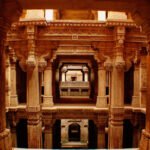
People can experience historical moments when descending this giant step well under its refreshing architecture. The historical monument offers a fascinating experience that appeals specifically to persons who enjoy studying history. People from the local community regularly went to this marvelous structure to carry out their traditional ceremonies. A deep well rests beneath an eye-catching sandstone construction with its foundation built in square-step pattern.
During antiquity stepwells had wide public popularity because they served as the main source for household drinking water and other daily necessities. This type of architecture bears the names vav in Gujarati and Baoli in Rajasthani and finds its most common usage in semi-arid parts of Gujarat. During the Water Festival at Adalaj several people visited to watch accomplished performers of music.
History of Adalaj Step Well
The stepped ponds commonly known as stepwells typically appeared in dry regions throughout the country that connected trade networks together. Many pilgrims and traders who passed through this trade route relied on these architectural sites for water storage during monsoon season while using the steps as their resting place.
The essential historical landmark of Ahmedabad known as Adalaj Step Well was constructed by queen Rudabai in 1498 when she belonged to Rana Veer Singh of the Vaghela dynasty. Ruler of Dandai Desh managed the leadership of his small realm.
According to folklore the kingdom endured severe water shortages which led king Rana Veer Singh to decide building a grand stepwell. After beginning the project the king had to halt construction when he died during battle against Mahmud Begada who ruled Gujarat as Sultan.
Queen Rudabai captured the heart of Mahmud Begada to the extent he proposed marriage with her. The queen accepted marriage with Mahmud only after he finished building the stepwell. Queen Rudabai procured some holy saints to immerse in the drinking water thus sanctifying the well. The queen died by eventually falling into the stepwell.
The six masons involved in constructing the stepwell met their deaths at the hands of Mahmud Begada because he wished to prevent its duplication so their burial site stands nearby. History of this marvelous architectural marvel can be found through a Sanskrit inscription carved into a marble slab that exists on the first floor. According to the historical record the total construction expense equaled 5,00,111 vats or five lakhs rupees.
Adalaj Stepwell Ahmedabad Address: Adalaj, Gandhinagar District, Ahmedabad, Gujarat, 382421, India
5. Jama Masjid
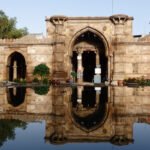
Tourists find the Jama Masjid commonly known as the Jumma Masjid to be an outstanding place of worship as well as a sacred temple located in Old City Ahmedabad. The foundation of the mosque rests on 260 intricately carved pillars that Sultan Ahmed Shah built as he established his city. The earthquake destroyed both of the main minarets at the gateway because they were originally located near the main entrance.
The tourist site exists 2 kilometers from the railway station.
The eastern entry of the mosque contains the final resting place of Sultan Ahmed Shah. Many graves of Ahmed Shah I are buried within this mausoleum. The grave complex contains the tomb of Mohammed Shah and Qutub-ud-Din Ahmed Shah II aside from Sultan Ahmed Shah. Both males are descendants of Ahmed Shah I through generation to grandchild. The royal royal tombs can be found beyond the main road and bear the name Rani-no-Hajiro.
The Indo-Islamic architectural design utilizing yellow sandstone served as the main building material for Jama Masjid. The structure has three gates that lead to an open courtyard with the prayer hall positioned opposite to its southern edge. A pond exists in the middle of the courtyard. People who worship at this spot perform the ritual cleansing of wudu (wazu, in Urdu) for prayer preparation.
The prayer hall features an extraordinary scaffold design that acts as its main architectural highlight. Natural sunlight enters the space through this feature while it prevents direct beam rays from reaching inside. The mosque exhibits Islamic decorations and features intricate wall and pillar and dome carvings which are simultaneously connected to Hinduism and Jainism.
Everybody must wear head coverings while taking off their shoes before walking inside the prayer area.
Indian Heritage City status belongs to a place which preserves a 600-year-old cultural legacy and where Islam coexists with Hinduism and Jainism beliefs. The old city received recognition through its systematic organization and historical pols tradition to achieve its esteemed title.
The city was established by Ahmed Shah which led to its cultural and traditional development through religious beliefs of its population. All residents of Muslims Jains and Hindus coexist harmoniously within the same urban area as they honor each religion’s fundamental beliefs.
Regular prayer masses take place in mosques since these sites hold sacred value for Muslim people. Among the multiple mosques in Ahmedabad the Jama Masjid stands as a historic and significant center of Islamic prayer. Jama Masjid stands proudly as one of the most important heritage sites in the architectural history of the city.
People who visit the holy place enjoy viewing its transformative architecture known as Jumma Mosque and Jami. Historical records have established the mosque to be the biggest mosque in India during its period of construction. The magnificent mosque creates an irreplaceable charm that annually welcomes many people to visit it.
People believe Word Juma emerged from the sacred Friday orientation when Muslims from around the globe perform Namaz.
History of Jama Masjid Ahmedabad
Ahmed Shah I founded this elegant mosque near Bhadra Fort following his position as city founder during 1424 inside the old walled city. The construction of this extraordinary mosque needed thirteen years to finish its development before becoming the personal prayer site for Gujarat Sultans.
The builders of Jamaisjid commenced construction in 1411 until completion in 1424. The builders used temple remains to create this structure after the Hindu and Jain temples were demolished. The black stone slab near the archway serves as evidence of a former Jain religious symbol.
An inscription reveals that Ahmed Shah established the sanctified grounds on 4th January 1424 specifically for his family and himself before the mosque opened to general public visitors. The mosque became accessible to public prayer following its initial establishment period for the family members.
Architecture of Jama Masjid Ahmedabad
This sacred complex displays exceptional architecture since it represents the entire Indo-Saracenic architectural style perfectly. Designed as a rectangular courtyard extending 75 meters in length with 66 meters of width the mosque contains three main entrances. The prayer hall stands at the mosque’s front side yet the inner sides are enclosed by a gallery.
Developed from columns with delicate Arabic inscription and featuring Indo-Saracenic decorations throughout the space creates an attractive element in this majestic mosque. The wall of prayer facing Qibla direction shows superb architectural ornamentation.
Visitors meet a magnificent arch at the entrance to view all the magnificent aspects of the historical mosque. The entrance shows the remaining sections from the demolished shaking minarets destroyed by the 1819 earthquake.
A rectangular prayer area featuring approximately 260 attractive columns extends to fifteen tall domes. The Namaz rituals take place in spaces formed by the areas between four supporting pillars and the dome above them.
Yellow sandstone builds the structure like other historical sites across the city allowing sunlight to enter through its domes. Vital openings between two main pillars contain Qaushang Jalis which consist of stone screens with perforations.
A rectangle-shaped water basin rests at the center of the courtyard floor made of marble to enable religious water cleansing. All devotees follow standard religious practice by washing their hands and face at the religious water reservoir.
A grand Muslim religious site carries multiple symbols of both Hinduism and Jainism that have existed since ancient times. The temple features attractive domes which bear a resemblance to the Jain temple dome structures and have a lotus flower design.
When visiting the temple visitors will discover pillars that bear identical depictions of Hindu temple bells attached to chains. Visitors can spot an Om symbol engraving through an interior window. Many Jain and Hindu religious patterns exist throughout the walls’ decoration.
The founder of the city and his male descendants Ahmed Shah together with Muhammad Shah and Qutub-ud-din Ahmed Shah II rest at the mausoleum next to the mosque. The graves of his wives can be found in the vicinity. People visiting the mosque would be absorbed by its magnificent beauty.
Sir John Marshall declared it as a classical example of architecture after observing the magnificent mosque.
Jama Masjid Ahmedabad Address: Manek Chowk, Gandhi Road, Ahmedabad, Gujarat, 380001, India
Jama Masjid Ahmedabad Timings
| Day | Timing |
|---|---|
| Monday | 6:00 am – 8:00 pm |
| Tuesday | 6:00 am – 8:00 pm |
| Wedesday | 6:00 am – 8:00 pm |
| Thursday | 6:00 am – 8:00 pm |
| Friday | 6:00 am – 8:00 pm |
| Saturday | 6:00 am – 8:00 pm |
| Sunday | 6:00 am – 8:00 pm |
6. Sidi Sayyed Mosque
The cultural center of Gujarat stands as Ahmedabad which showcases several distinctive and remarkable historical sites that transport people into past ages. Several historical places combined with religious buildings showcase the long-ago greatness of the city. The World Heritage City title was earned when planners designed a well-organized old city along with its traditional houses known as pols.
Sidi Sayed Mosque stands as an exceptional city attraction situated near Kalupur railway station. Sidi Sayed Mosque represents a great work of architecture from Siddi Sayyid that displays Islamic religious ideas. People find inner peace within the peaceful historic building.
Sidi Saiyad ni Jali stands out as an important Islamic sacred shrine through its unique architectural styles and its spectacular jalis which draw attention from every visitor so it achieved its reputation. Jalis have become known as the most distinctive aspect of the structure. The architectural significance of lattice stone work Jali became so pronounced that the design team at the Indian Institute of Management chose it as their official symbol.
History of Sidi Saiyed Mosque
55 skilled craftsmen worked under Siddi Sayyid to build the religious site that he established in 1572. Sidi Saiyyed belonged to the military staff who supported Shams-ud-Din Muzaffar Shah III as the last Gujarat Sultan.
A marble tablet positioned within the mosque area announces that Sidi Sayed constructed the mosque during the concluding year of the Gujarat Sultanate which preceded Mughal rule in Ahmedabad.
Siddi Sayyid reportedly migrated from Yemen to establish his presence in the country while serving under Sultan Nasir-ud-Din Mahmud III as he held multiple books with compassion.
The Mughal emperor Akbar launched his invasion on the city once the mosque established its presence. The sacred complex functioned as a British government office. The Archaeological Survey of India maintains this site in its current state.
Architecture of Sidi Saiyed Mosque
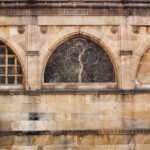
Tourists experience artistic beauty when they see the Tree of Life window where a tree embraces its branches and foliage together with curved tendrils and palm decorations. The mosque remains unfinished because the Mughals interrupted its construction during the last Sultanate period.
A central window arch of the mosque stands unfinished and gets hidden behind stone walls together with two hierotheic structures which seem to be unfinished towers.
Travelers would marvel at the traditional magnificence of the ancient mosque that features ten semi-circular jalis, which display exceptional stone latticework.
Visitors adore the mystical tree and its woven branches at the Tree of Life Window above all other ornate windows in this building. Visitors should look at jalis before moving on to any other heritage monument when exploring the City of Heritage. Religious tradition sees the tree as Hindu Kalpavriksha yet Islamic tradition combines the date palm with it.
The worldwide recognition of Tree of Life structure enables the Kensington and New York Museums to keep wooden reproductions of this window. The domes of the 68-feet-long complex receive their support through Hindu-based brackets.
The traced portions of the complex ascend 3 meters into the air while detailing a measurement of 2 meters across the width. The square stoned pierces covering the rear wall of the holy site present geometrical patterns through its stone panels. The entire architectural structure rests on arches to establish its value in Islamic cultural heritage.
The religious structure made of yellow sandstone becomes more beautiful through the striking jalis that face its rear side. Around forty five skilled craftsmen spent hard work to build this sacred complex according to religious beliefs.
The holy site demonstrates the finest expressions of Indo-Saracenic architectural style. The curved jali structure known as Tree of Life Jali depicts a representation of Ahmedabad to camera enthusiasts. The mosque receives particular interest since Jalis stand out among its structures despite being smaller than Jama Masjid.
Sidi Saiyed Mosque Ahmedabad Address: Salapose Road, Opposite Electricity House, Lal Darwaja, Gheekanta, Ahmedabad, Gujarat, 380001, India
Sidi Saiyed Mosque Ahmedabad Timings
| Day | Timing |
|---|---|
| Monday | 7:00 am – 6:00 pm |
| Tuesday | 7:00 am – 6:00 pm |
| Wedesday | 7:00 am – 6:00 pm |
| Thursday | 7:00 am – 6:00 pm |
| Friday | 7:00 am – 6:00 pm |
| Saturday | 7:00 am – 6:00 pm |
| Sunday | 7:00 am – 6:00 pm |
7. Bhadra Fort
The cultural center of Gujarat stands as Ahmedabad which showcases several distinctive and remarkable historical sites that transport people into past ages. Several historical places combined with religious buildings showcase the long-ago greatness of the city. The World Heritage City title was earned when planners designed a well-organized old city along with its traditional houses known as pols.
Sidi Sayed Mosque stands as an exceptional city attraction situated near Kalupur railway station. Sidi Sayed Mosque represents a great work of architecture from Siddi Sayyid that displays Islamic religious ideas. People find inner peace within the peaceful historic building.
Sidi Saiyad ni Jali stands out as an important Islamic sacred shrine through its unique architectural styles and its spectacular jalis which draw attention from every visitor so it achieved its reputation. Jalis have become known as the most distinctive aspect of the structure. The architectural significance of lattice stone work Jali became so pronounced that the design team at the Indian Institute of Management chose it as their official symbol.
History of Sidi Saiyed Mosque
55 skilled craftsmen worked under Siddi Sayyid to build the religious site that he established in 1572. Sidi Saiyyed belonged to the military staff who supported Shams-ud-Din Muzaffar Shah III as the last Gujarat Sultan.
A marble tablet positioned within the mosque area announces that Sidi Sayed constructed the mosque during the concluding year of the Gujarat Sultanate which preceded Mughal rule in Ahmedabad.
Siddi Sayyid reportedly migrated from Yemen to establish his presence in the country while serving under Sultan Nasir-ud-Din Mahmud III as he held multiple books with compassion.
The Mughal emperor Akbar launched his invasion on the city once the mosque established its presence. The sacred complex functioned as a British government office. The Archaeological Survey of India maintains this site in its current state.
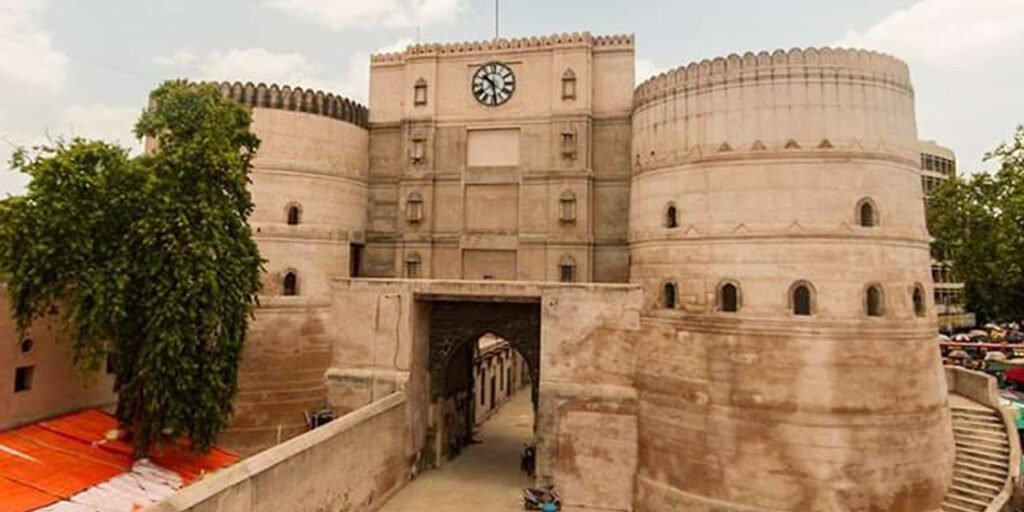
Bhadra Fort Ahmedabad Address: Court Rd, Bhadra, Ahmedabad, Gujarat, 380001, India
| Day | Timing |
|---|---|
| Monday | 9:00 am – 5:00 pm |
| Tuesday | 9:00 am – 5:00 pm |
| Wedesday | 9:00 am – 5:00 pm |
| Thursday | 9:00 am – 5:00 pm |
| Friday | 9:00 am – 5:00 pm |
| Saturday | 9:00 am – 5:00 pm |
| Sunday | 9:00 am – 5:00 pm |
8. ISKCON Temple
The origin of the Gujrati city that serves as the economic and financial center is attributed to its creator Ahmed Shah. People with different communal backgrounds have generated multiple traditional places of worship. People from all around visit the city to explore its cultural history alongside sampling its delicious cuisine and seeing its beautiful attractions.
Travelers visit Ahmedabad because its divine character supports multiple extraordinary temples as well as derasars and mosques. Throughout its 600-year existence Ahmedabad showcases religious diversity because multiple religious sites display the fusion between mythology and faith.
Viewers of Ahmedabad who seek ISKCON temple exclusively should include it on their itinerary because the temple stands out among the numerous Krishna temples of the city. Visitors from across Hinduism choose to visit the ISKCON temple which stands close to the Gujarat Samachar Press building throughout the whole year.
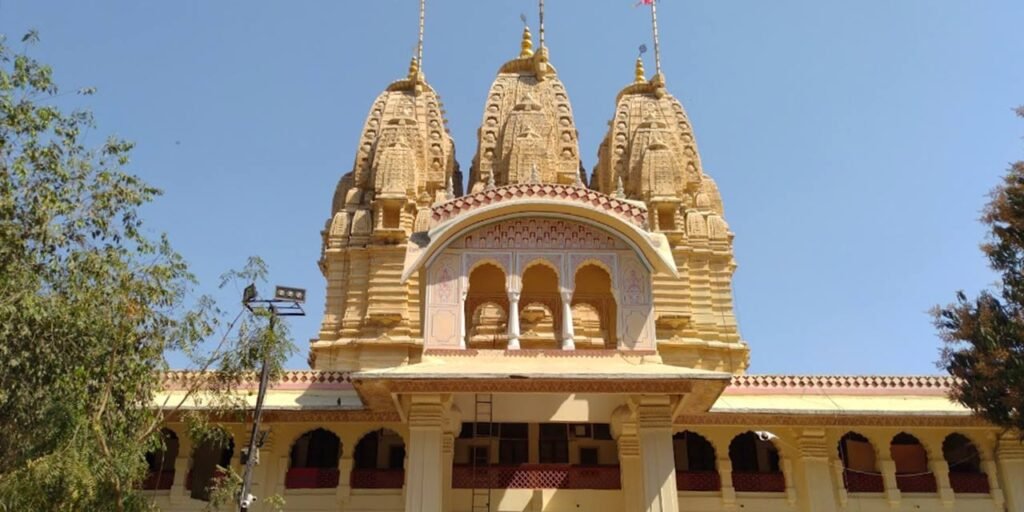
The religious temple stands strong as both a monument of lasting beauty and a testament to perfect architectural fusion of the Gujarati, Rajasthani and Sompura styles. Major religious followers from across the nation strongly flock to this spellbinding temple. Devotees who visit the temple can listen continuously to the holy chanting of Hare Krishna.
Religious followers in the temple can step on 108 square platforms while performing the devotional chanting of Hare Krishna Hare Krishna Krishna Krishna Hare Hare and Hare Ram Hare Ram Ram Ram Hare Hare.
ISKCON
The non-profit organization ISKCON (International Society on Krishna Consciousness) works to distribute Vedic beliefs to common people in order to teach them how to build peaceful and delightful lives.
A.C. Bhaktivedanta Swami Prabhupada established the Hare Krishna movement which is commonly called ISKCON when he founded it in 1966 within New York. The Gaudiya Vaishnavas established a small community that evolved into a global massive organization during a short period after its creation.
Special sessions at the organization serve devotees and members of educational institutions and corporate settings for spiritual Vedic education purposes. Devotees participate in sacred classes about Holy Scriptures which include studies from Bhagavad Gita and Srimad Bhagavatam and other Vaishnava scriptures. Many devotees join the gathering where they learn and put into practice the teachings of Bhakta-yoga.
The spiritual organization operates with the purpose of spiritual development through religious engagement to serve more than 850 temples across the world. The ISKCON organization has founded centers at all locations throughout the countries across the world. For five thousand years this organization has existed under the name Hare Krishna movement while dedicating its operations to Lord Krishna.
History of ISKCON Temple, Ahmedabad
ISKCON Temple of Ahmedabad operates under Hare Krishna Temple to provide a stage for spreading the teachings of Chaitanya Mahaprabhu among many people. Bhaktivedanta Swami Prabhupada founded this magnificent ISKCON Temple when he established it in 1997.
Architecture of ISKCON Temple, Ahmedabad
The enchanting temple constitutes elements that unite Ghazni Sompura structures specifically with Rajasthani Khamira architectural traditions. Everyone who visits the temple will find Lord Vishnu and his multiple divine appearances displayed on both sides of the inner walls.
A 1.3-hectare tract of land at the Temple contains eight divinities: Radha and Govinda alongside Rama, Sita, Lakshmana and Hanuman and Jagannath Baladev as well as Shrinathji and Subhadraji. The temple displays the golden Lord Narasimha idol and Goddess Lakshmi statue before Radha and Govinda images.
A spacious hall occupying 12000 sq feet serves 4000 worshippers at a time. The temple receives the name Sri Radha Govinda Dham yet people also call it by that name and it features towering stone domes decorated with depictions of Krishna’s life. Three large domes extend to a diameter of 50 feet.
The sacred complex of marble stone floors includes windows whose intricacies stem from Khamira and Rajasthani Mewas architectural styles. The temple ceilings present different Radha and Krishna images in elaborate ornamentation. Temples walls together with its ceilings feature painting series that show various episodes from Lord Krishna’s life story.
Every devotee can show their reverence to the divine statues of Srila Prabhupada as well as Srila Bhaktisiddhanta Saraswati. One of the noble features which makes the temple stand out is its singing chandeliers. Visitors experience a tranquil environment together with the Hare Krishna chanting which brings mental peace and happiness.
ISKCON Temple Ahmedabad Address: Satellite Road, Sarkhej Ghandhinagar Highway Crossing, Bodakdev, Ahmedabad, Gujarat, 380059, India
ISKCON Temple Ahmedabad Timings
| Day | Timing |
|---|---|
| Monday | 4:30 am – 1:00 pm 4:00 pm – 9:00 pm |
| Tuesday | 4:30 am – 1:00 pm 4:00 pm – 9:00 pm |
| Wedesday | 4:30 am – 1:00 pm 4:00 pm – 9:00 pm |
| Thursday | 4:30 am – 1:00 pm 4:00 pm – 9:00 pm |
| Friday | 4:30 am – 1:00 pm 4:00 pm – 9:00 pm |
| Saturday | 4:30 am – 1:00 pm 4:00 pm – 9:00 pm |
| Sunday | 4:30 am – 1:00 pm 4:00 pm – 9:00 pm |
9. Hutheesing Jain Temple
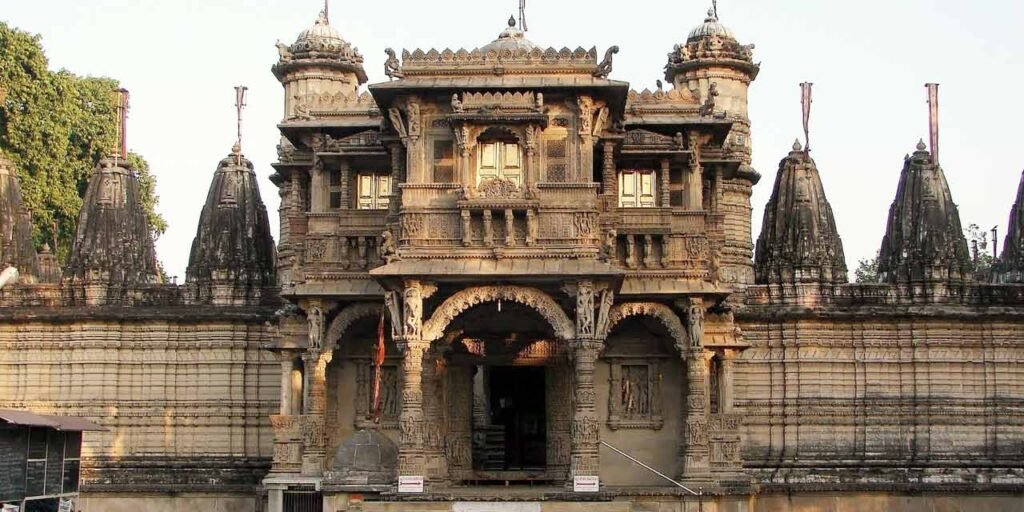
Amdavad or Ahmedabad demonstrates the perfect blend of various religious communities while enjoying an amazing status in the world. This place holds a reputation because of its abundant cultural heritage alongside exciting historical appeal and inviting community spirit.
Islam together with Hinduism alongside Jainism have strongly affected Ahmedabad’s cultural development as well as historical narrative. History enthusiasts will be enthralled to visit the various sacred religious sites in the city consisting of both mosques and temples along with Jain Derasars.
Several Jain pilgrimage centers exist throughout Gujarat because the state holds important religious status for followers of Jainism. Salvation came to Aristanemi the 22nd spiritual leader of dharma and Tirthankara when he reached the Junagadh district of Gujarat. The state of Gujarat contains Jain pilgrimage sites which were built during the 6th and 7th centuries.
Jainism maintains significant religious influence throughout Ahmedabad because numerous derasars reflect its core beliefs throughout the city. Different sizes of derasars exist throughout Gujarat with remarkable architectural features.
Due to its divine atmosphere and serene essence the Jain religious monument Hutheesing Jain Temple welcomes many worshippers. The city features one architectural masterpiece that worships Dharmanath who reached salvation as the 15th Tirthankar. King Bhanu Raja of Ratnapuri had attained salvation at Shrikanji after fathering Prince Dharmanath.
History
Jain trader Sheth Hutheesing Kesarisinh wanted to establish a sacred temple when he was alive but passed away before the construction began. Before his dream of building the temple could become a reality the architect passed away when he reached 49 years old. The temple construction work was directed by Shethani Harkunwar during the period when her husband Sheth Hutheesing Kesarisinh passed away.
Before Hutheesing fell seriously ill Shethani Harkunwar took the lead in developing the temple by building the sub shrines beneath its foundation. Construction of this temple took place in two years before receiving its name from the selfless trader.
Construction of the temple which gained fame in 1848 AD cost 8 lakh rupees thus becoming an enormous expense at that moment in history. The Ahmedabad Woodcarving Company emerged in 1881 after Muggenbhai Hutheesing joined up with Lockwood de Forest. According to Lockwood De Forest the original construction cost amounted to more than one million dollars.
Gujarat suffered from severe famines throughout the development phase of the sacred temple complex. The construction initiative brought prosperity to all workers that executed the temple project. A significant number of Sompura artisans formed the bulk of workers used for the project.
Hutheesing Jain Temple Ahmedabad Address: Shahibaug Rd, Bardolpura, Madhupura, Ahmedabad, Gujarat, 380004, India
Hutheesing Jain Temple Ahmedabad Timings
| Day | Timing |
|---|---|
| Monday | 8:00 am – 5:00 pm |
| Tuesday | 8:00 am – 5:00 pm |
| Wedesday | 8:00 am – 5:00 pm |
| Thursday | 8:00 am – 5:00 pm |
| Friday | 8:00 am – 5:00 pm |
| Saturday | 8:00 am – 5:00 pm |
| Sunday | 8:00 am – 5:00 pm |
10. Kite Museum

The historical sites of Ahmedabad display unique architectural designs which draw excitement from all travelers visiting the city. Historic fanatics travel to Ahmedabad to explore its multifaceted heritage together with cultural background. A variety of museums located in the city showcase important artefacts which represent the traditional values and cultural heritage of the city.
The Kite Museum stands as a dazzling charm of Ahmedabad thanks to its display of approximately 125 kites. Visitors experience attracted enjoyment at the Kite Museum most strongly through children. Located in Ahmedabad the small museum carries the name Patang Kite Museum while focusing solely on kites and their flyers. The establishment exhibits kites through all periods from ancient times to the present day.
The people of Gujarat consider kite flying a fundamental element during their official festivals and celebrations. People of every age participate in kite flying to decorate the sky with colorful kites when Uttarayan or Makar Sankranti arrives. People from all caste and religious backgrounds participate together in kite flying during several days preceding Uttarayan.
The International Kite Festival attracts significant crowds that come from national and international places to observe kite flying activities. The kites manufactured in Ahmedabad have their main distribution markets based at Kalupur, Jamalpur and dariapur.
History of Kite Museum
Kite Museum operates at Sanskar Kendra through an informative facility the famous architect Le Corbusier designed. The idea of creating such a specialized kite museum developed after Mr. Bhanubhai Shah donated his kite collection to the Ahmedabad Municipal Corporation.
From the age of 21 years Bhanubhai Shah started his kite collection journey until he had formed a large collection. His kite collection containing different kite varieties held in various shapes and shades existed throughout fifty years of preservation. The Kite Museum functions under the leadership of Ahmedabad Municipal Corporation.
Museum
Visitors can view at this inspiring museum both kites from different cultures along with their production materials. Visitor favorites at the attraction are mirror work kites alongside Japanese kites and block print kites. The main attraction of this exhibition is a 16 feet long kite showing Garba dance. Visitors also appreciate the kite which portrays Radha Krishna as one of the museum highlights.
Paintings and illustrations are among the other significant displays at this attraction. A considerable number of Japanese Rokoku hexagonal kites occupy a space of 20 feet in the collection. Visitors who explore the museum will gain knowledge about kite making history through its displays. Kids find pleasure in viewing small kites displayed there.
The museum displays kites with faces of important figures such as Pandit Jawaharlal Lal Nehru and Mahatma Gandhi alongside many other personalities. Various kites bearing both geometric shapes and animals appear at this exhibition space. The kite collection consists of seven kites which reach seventy years old. Kites at the facility are constructed from several materials such as polythene, spinacle nylon and cotton and paper.
The usage of kites for military aerial surveillance during wars would capture the attention of any traveling visitor at the museum. A four-hundred-paper piece kite resides within the museum collection. Thematic kites stand out at the museum since their body surfaces display paintings of mythological figures. Kite Museum stands as an extraordinary place which reveals approximately 2000 years of kite flying history from 200 BC until 1985 Ad.
The audience would be mesmerized to discover how Hiuen Tsang tried to scare China’s Liu Pang of Han dynasty army through nighttime kite flying around 200 BC. History states that Hiuen Tsang and Fa Hien introduced our nation to kite flying during their visits to India across the 4th and 7th centuries.
The exhibition provides information about kite flying practices in Korea together with Malaysia and the US as well as many other nations. The kites feature intricate pictures of forests and individuals along with animals and birds and produce fruits from blending small bits of glued paper.
Kite Museum Ahmedabad Address: Sankar Kender, Bhagtacharya Rd, Kocharab, Paldi, Ahmedabad, Gujarat, 380007, India
Kite Museum Ahmedabad Timings
| Day | Timing |
|---|---|
| Monday | Closed / Holiday |
| Tuesday | 10:00 am – 12:00 pm 4:00 pm – 6:00 pm |
| Wedesday | 10:00 am – 12:00 pm 4:00 pm – 6:00 pm |
| Thursday | 10:00 am – 12:00 pm 4:00 pm – 6:00 pm |
| Friday | 10:00 am – 12:00 pm 4:00 pm – 6:00 pm |
| Saturday | 10:00 am – 12:00 pm 4:00 pm – 6:00 pm |
| Sunday | 10:00 am – 12:00 pm 4:00 pm – 6:00 pm |
11. Sanskar Kendra City Museum Ahmedabad
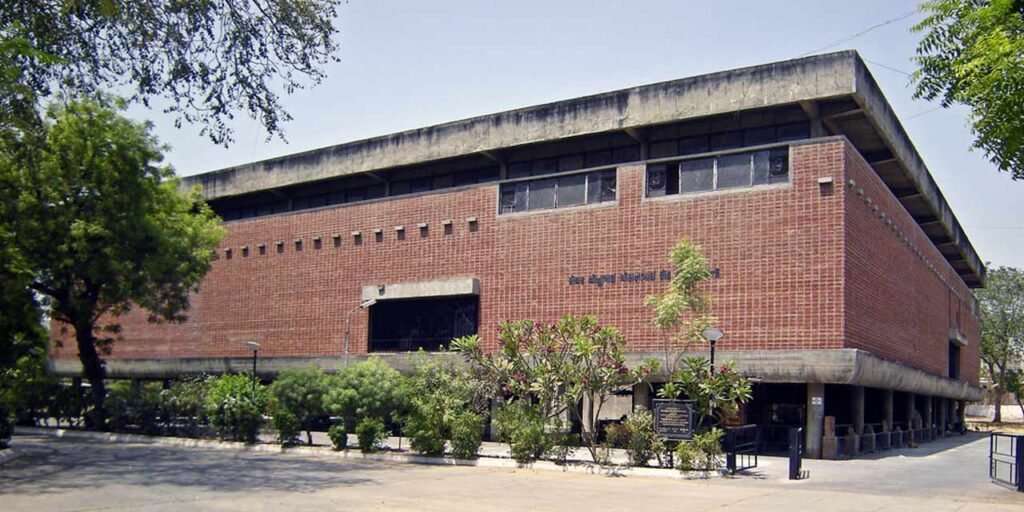
A city achieves identity through preserving its cultural heritage together with traditional customs and historical background. Sanskar Kendra stands as a noteworthy museum where Ahmedabad successfully preserves its rich historical roots and traditional heritage.
Le Corbusier designed this institution because he remains a well-known pioneer within the field of modern architecture. Through its collection Sanskar Kendra allows visitors both tourists and locals to access multifaceted Ahmedabad history in conveniently accessible displays.
Broad overview of Sanskar Kendra
The establishment of Sanskar Kendra consists of distinct museums that include the Museum of the City together with the Kite Museum (also known as Patang Museum).
The Museum of the City
The city museum houses significant historical and cultural artifacts and economic and political items along with important city-related documents and notable arts pieces.
The museum maintains that it succeeded in maintaining historical records from the time of Ashval which predates Ahmedabad’s existence as a city name. The museum maintains a collection and exhibits from the 11th Century which marks the Ashval period of the city.
The Patang Museum
The Patang Museum showcases the deep sub-continental kite-flying tradition since times when the people of the sub-continent believed kites possessed spiritual significance.
History of Sanskar Kendra: The Cultural Centre of Ahmedabad
The Museum at Sanskar Kendra emerged during a broader development phase in 1954 which consisted of the Villa Shodhan and Villa Sarabhai along with Mill Owners’ Association headquarters while celebrated architect Le Corbusier designed it.
The original name used for this museum served as different from Sanskar Kendra. The museum started its origin as Le Corbusier planned for it to become “Museum of Knowledge” while it exists today as Sanskar Kendra.
This building formed part of a larger venture called “Cultural Centre of Ahmedabad” which distributed the present Sanskar Kendra real estate into four distinct fields serving archaeology, sculpting, anthropology and history with open-air theater space for both workshops and folklore performances.
The original project did not succeed and Sanskar Kendra stands today as the sole museum present in the initial action plan. The establishment exists as the exclusive building that commemorates the history of Ahmedabad. Such a monumental challenge seemed impossible for any one team yet the museum team faced and addressed it with success.
Sanskar Kendra City Museum Ahmedabad Address: Near Sardar Patel Bridge, Behind NID, Paldi, Kocharab, Ahmedabad, Gujarat, 380006, India
Sanskar Kendra City Museum Ahmedabad Timings
| Day | Timing |
|---|---|
| Monday | Closed / Holiday |
| Tuesday | 10:00 am – 12:00 pm 4:00 pm – 6:00 pm |
| Wedesday | 10:00 am – 12:00 pm 4:00 pm – 6:00 pm |
| Thursday | 10:00 am – 12:00 pm 4:00 pm – 6:00 pm |
| Friday | 10:00 am – 12:00 pm 4:00 pm – 6:00 pm |
| Saturday | 10:00 am – 12:00 pm 4:00 pm – 6:00 pm |
| Sunday | 10:00 am – 12:00 pm 4:00 pm – 6:00 pm |
12. Kamla Nehru Zoo Ahmedabad

Every municipality needs to have its own zoo facility to be considered complete. Visitors can find this location ideal for family time because it offers both picnic dining opportunities and relaxation services. The wide assortment of animals will entertain your children while you use their early tiredness as a chance to unwind.
Waiting under the shade of trees while feeling the refreshing wind on your skin with loved ones before enjoying your morning-cooked picnic meal is when true domestic happiness happens. Residents of Ahmedabad can experience domestic tranquility through the facilities at Kamla Nehru Zoo.
The circular Kankaria Lake provides perfect haven from everyday life because the zoo sits alongside its banks. The large animal and bird population at the zoo includes 2000 types of birds together with 450 animal species as well as 140 reptiles. Twenty million visitors annually continue to be drawn to the zoo which attracts Indian and international tourists throughout the year.
Overview of Kamla Nehru Zoo
The Kamala Nehru Zoological Garden occupies 110 acres while numerous associated facilities inside the Kankaria Lakefront area are under its management. Thirty-one acres out of the total area belong to the zoo facility.
Because it sits adjacent to Kankaria Lake the zoo receives its common name Kankaria Zoo that maintains various Indian species for both recreational use and wildlife conservation.
At the zoo staff members actively breed both crocodiles and python species. A team of devoted personnel provides absolute care to the zoo residents using the best methods possible. The Ahmedabad Municipal Corporation maintains both the zoo facilities at Kankaria Lakefront along with the entire Kankaria Lakefront area.
Kamla Nehru Zoo Ahmedabad Address: Kankaria, Ahmedabad, Gujarat, 380043, India
Kamla Nehru Zoo Ahmedabad Entry Fee
- 20 per person for Adults (Above 12 years of age)
- 10 per person for Children (3 – 12 years)
- 5 per person Educational Entry Fees
- 5 for Still Camera
- 25 for Movie Camera (8 MM)
- 50 for Movie Camera (16 MM)
- 100 for Movie Camera Shooting
- 10000 Per day entry fee for Industrial Film Producers and Television Serial Producers
- Free entry for children up to 3 year
- On every Thursday free entry to Educational Tour
- Free entry to physically challenges person
Kamla Nehru Zoo Ahmedabad Timings
| Day | Timing |
|---|---|
| Monday | Closed / Holiday |
| Tuesday | 9:00 am – 6:15 pm (Mar – Oct) 9:00 am – 5:30 pm (Nov – Feb) |
| Wedesday | 9:00 am – 6:15 pm (Mar – Oct) 9:00 am – 5:30 pm (Nov – Feb) |
| Thursday | 9:00 am – 6:15 pm (Mar – Oct) 9:00 am – 5:30 pm (Nov – Feb) |
| Friday | 9:00 am – 6:15 pm (Mar – Oct) 9:00 am – 5:30 pm (Nov – Feb) |
| Saturday | 9:00 am – 6:15 pm (Mar – Oct) 9:00 am – 5:30 pm (Nov – Feb) |
| Sunday | 9:00 am – 6:15 pm (Mar – Oct) 9:00 am – 5:30 pm (Nov – Feb) |
13. Archaeological Museum Lothal
Visitors who frequent Ahmedabad should dedicate one day to see the Archaeological Museum of Lothal. The archaeological site of Lothal near Ahmedabad emerged forty years after the international discovery of the ancient Indus Valley and Harappa Civilization which dated to 2400 BC. The available evidence suggests Lothal functioned as an industrial area during that ancient era.
Research at this excavation uncovered semi-precious stones with metals together with statues and beads and weapons and ornaments as well as seals and workshops. Experts discovered a dockyard as a vital discovery at this site. The facility functioned as a docking point for transporting the weapons together with other Lothal-made goods to external civilizations of that period.
The Archaeological Museum at Lothal showcases restored ancient historical artifacts that were originally unearthed from the site. This historical establishment presents a tribute to society which prospered thousands of years before the present era.
History of Lothal
This small town Lothal rests between the flowing waters of Sabarmati River and its tributary Bhogavo. Archaeological explorations in 1950 revealed both Lothal along with other sites that linked to the Harappa and Indus Valley Civilization in the Sabarmati region. The field of research had previously linked these civilizations to the existed region of northeast Afghanistan through Pakistan and northwest India.
At the time of this civilization boats traveled directly from the Gulf of Cambay high tide waters into Lothal despite the current distance of 19 km between the sea and Lothal site. Research indicates the people of this civilization thrived in the drainage areas between the Indus and Saraswati rivers until the rivers disappeared.
Construction efforts at the Sabarmati Valley extended throughout seven years from 1955 until 1962 before the establishment of the museum at this location in 1976. Lothal functions as an essential location for both civilizations since it provided the connection between these subcontinental territories and Mesopotamia.
The Artifacts at the Archaeological museum, Lothal
The museum rests along the banks of well-known Sabarmati River thus it gains its attractive character. Archaeological investigations at this site yielded five thousand artifacts although only eight hundred items are currently shown to the public.
The museum showcases a selective eight hundred items out of these. We find every displayed artifact at this museum museum’s collection to be exceptionally beautiful and it produces wonder in visitors. A pictorial depiction of the Harappa Civilization and its accompanying textual information about the civilization welcomes visitors to the museum.
The display at the museum encompasses various types of beads which serves as one prominent exhibition. TheDiscovery of bead production remains at Lothal matched previous excavations in Mesopotamia which uncovered comparable beads. Archaeological evidence has fostered the idea that actual commercial partnerships connected these two geographical sectors. Another major exhibit at the Lothal Museum consists of shell collections indicating that Lothal engaged actively in shell export to other regions.
Visitors at the museum can observe finely made seals and weights alongside particular jewelry items. The archaeological excavations uncovered small animal ivory sculptures that stand out as an important finding among all other discoveries. These animal remains demonstrated the coexistence of gorillas and rhinos in that ancient time while researchers previously did not know such evidence existed. The environment of these civilizations demonstrated its capability to sustain these wild animals because the landscape was both fertile and environmentally sustainable.
The site exhibits terracotta-made seals and numerous unicorn-shaped seals. Everybody can see extraordinary artwork constructed from bronze, copper, ivory, shell and other applicable metals that were used during ancient times.
The glass cases reveal exquisite handmade pottery and pottery with painted decorations which take visitors great pleasure to observe. Several games from yesteryears are showcased in the second glass display case. The collection consists of marbles and sling balls as well as toy cart animals and games and their related gamesmen. The museum grounds feature brick structures from that period of time beyond its main building. The museum complex features a large water-containing tank alongside its premises.
Archaeological Museum, Lothal Ahmedabad Address: Saragwala Village, Dholka Taluka, Gujarat, 382230, India
Archaeological Museum, Lothal Ahmedabad Entry Fee
- 5 per person
- 0 Free entry for Children upto 15 years of age
Archaeological Museum, Lothal Ahmedabad Timings
| Day | Timing |
|---|---|
| Monday | 10:00 am – 5:00 pm |
| Tuesday | 10:00 am – 5:00 pm |
| Wedesday | 10:00 am – 5:00 pm |
| Thursday | 10:00 am – 5:00 pm |
| Friday | Closed / Holiday |
| Saturday | 10:00 am – 5:00 pm |
| Sunday | 10:00 am – 5:00 pm |
14. Nal Sarovar Bird Sanctuary

Nal Sarovar obtains its name from two words which mean ‘Tap’ and ‘Lake’. The popular site shares similarities because it provides home to a range of bird species who choose this lake as their destination. Its large area contains 36 small islands which allow birds to exist peacefully alongside different species. The bird sanctuary exists at a distance of 64 kilometers west from Ahmedabad nearby the Sanand village which is located in Gujarat.
Visitors mainly appreciate observing the broad selection of migratory birds that come to this attraction. Among all the wetland bird sanctuaries within Gujarat’s borders Nalsarovar stands as the largest. The wetland ecosystem supports detectable observation of 200 bird species. Various flying species from Siberia,Oman,UAE and other regions migrate to this location alongside regular bird species including pelicans,ducks,herons and storks can be effortlessly located.
An excursion to Nalsarovar should be considered essential because visitors will have the opportunity to admire numerous different bird species. The birds travel from distant locations across Siberia,Oman,UAE,Yemen and various other places. Numerous native birds can be observed among other bird species present in the area. The site provides picnic areas where visitors can experience watching the fields of grass and wetlands with their surrounding birds. Travellers seeking peaceful vacation destinations will find acceptance at this location.
Birdwatching along with horse rides and boat rides along with tasting the local cuisine and purchasing local handicraft goods will significantly appeal to tourists. The information center established for bird enthusiasts provides knowledge about various species their migration behavior along with their dietary patterns.
Nal Sarovar Lake exists within a flat geographical region between Central Gujarat and East Saurashtra. The official records indicate 36 small islands while local communities believe there are more than 100 small islands within Nal Sarovar bird sanctuary.
This sanctuary supports different tree species that include the distinctive ‘pilu’ trees with edible red berries while multiple small lakes coexist with dense forests, marshlands and wetlands together with medium grasslands and extensive fields. All this natural beauty and geographical features facilitate the establishment of Nal Sarovar bird sanctuary in its peaceful state.
Nal Sarovar bird sanctuary Ahmedabad Address: Bagodara Nalsarovar Link Road, Nalsarovar, Gujarat, 382150, India
Nal Sarovar bird sanctuary Ahmedabad Entry Fee
| Sr. No. | Details | Mon to Fri | Sat – Sun |
|---|---|---|---|
| 1 | Entry Fees (Indian) | ₹40.00 | ₹50.00 |
| 2 | Maintenance | ||
| 1. Abhiruchi kendra | ₹10.00 | ₹10.00 | |
| 2. Ride towards the lake | ₹20.00 | ₹20.00 | |
| 3. Garden | ₹5.00 | ₹5.00 | |
| Total Per Person (1 + 2) | ₹75.00 | ₹85.00 | |
| 3 | Entry Fees for foreigner | $10 | $12.50 |
| 4 | Camera Fees | ||
| Indian | ₹200.00 | ₹200.00 | |
| Foreigner | $20 | $20 | |
| 5 | Parking | ||
| 2 Wheeler | ₹10 | ₹10 | |
| 3/4 Wheeler | ₹20 | ₹20 | |
| Bus / Truck | ₹50 | ₹50 | |
| 6 | 50% off for children of 5 to 12 years |
Nal Sarovar bird sanctuary Ahmedabad Boating Charges
| Sr. No. | Details | Price |
|---|---|---|
| 1 | 1 Person | ₹220 |
| 2 | 2 Person | ₹440 |
| 3 | 3 Person | ₹660 |
| 4 | 4 Person | ₹880 |
| 5 | 5 Person | ₹1100 |
| 6 | 6 Person | ₹1320 |
| 7 | Personal Boat (Up to 6 Person) | ₹1320 |
Nal Sarovar bird sanctuary Ahmedabad Timings
| Day | Timing |
|---|---|
| Monday | 6:00 am – 5:30 pm |
| Tuesday | 6:00 am – 5:30 pm |
| Wedesday | 6:00 am – 5:30 pm |
| Thursday | 6:00 am – 5:30 pm |
| Friday | 6:00 am – 5:30 pm |
| Saturday | 6:00 am – 5:30 pm |
| Sunday | 6:00 am – 5:30 pm |
15. Statue of Unity

Sardar Vallabhbhai Patel who bears the title of The Iron Man of India stands commemorated through the Statue of Unity. Among all statues worldwide this monumental statue stands as the highest reaching 182 meters tall. The Indian national government appointed Sardar Vallabhbhai Patel as its initial deputy prime minister. The formation of India as the Union of India obtained its crucial momentum from Sardar Vallabhbhai Patel as he successfully combined all princely states that were part of the former British Raj.
The memorial statue stands along River Narmada as it overlooks the Sardar Sarovar Dam. Numerous recreational activities are available for visitors at this location. You will discover this site as one of the major tourist destinations located near Ahmedabad.
The Statue of Unity features an Exhibition Hall which joins a Museum as well as a Wall of Unity for visitors. Visitors can access an observation area that lets them view the statue park and river combined with the dam in the distance. The fascinating evening presentations consist of both light and sound performances.
You can find multiple items at the Statue of Unity souvenir shop including caps and t-shirts with Statue of Unity replicas and various additional products.
Among other points of interest the statue provides access to visitors who can explore the Valley of Flowers and Sardar Sarovar Dam as well as Shoolpaneshwar Sanctuary and Temple during a single visit. The site offers additional recreational opportunities for birdwatching and provides boat trips alongside trekking activities.
- When it comes to largest statues worldwide the Statue of Unity reaches 182 meters into the sky making it the tallest available. The monument surpasses the Spring Temple Buddha of China by 29 meters and it also outmatches the Statue of Liberty by 89 meters in height. The foundation platform of the Statue of Unity reaches up to 58 meters.
- The area of the structure equals 20000 square meters while its entire perimeter rests within a 12 square kilometre artificial water reservoir.
- The foot of this statue rises along the valley between the Vindhya and Satpura mountain ranges adjacent to Kevadia town in Gujarat. Sadhu Bet on the Narmada River stands opposite the Narmada Dam with the statue overlooking the area from its position on the river island near Rajpipla.
- Larsen & Toubro completed construction of the enormous structure through a workforce of 300 engineers together with 3,000 workers within 3.5 years.
- Prime Minister Narendra Modi established this trust in 2011 for a particular task. Throughout the Loha campaign the trust successfully collected approximately 129 tonnes of iron tools from nearly 10 crore farmers who resided in 169,000 villages throughout all states. The statue foundation received its materials from iron obtained through the Loha campaign.
- The statue possesses durability to withstand wind speeds at 100 km per second together with resistance to earthquakes.
- Head to the Statue of Unity by using one of its four quick elevators installed inside the statue’s pillars. A single lift car system transports 26 persons to reach the top in a period of 33 seconds.
- Having reached its full height at 153 meters the statue includes an observation point where guests can view the structure. The platform for viewing Vindhyachal and Satpura mountain ranges and Sardar Sarovar Dam lets around 200 visitors at a time.
- The materials, bronze, will undergo natural aging that causes it to transform from its initial bronze shade into a green tone over the succeeding century.
- The growth within the entire project has transformed this section into a complete tourist destination which stands ready to welcome visitors. The memorial destination provides its visitors a full range of facilities comprising hotels alongside a convention center and serenely beautiful garden areas. Visitors experience a full tranquil visit to the Statue of Unity from its various features.