

Now Reading: Top 10 Best Places to Visit in Sóc Trăng – Unique Pagodas, Floating Markets & Cultural Gems
-
01
Top 10 Best Places to Visit in Sóc Trăng – Unique Pagodas, Floating Markets & Cultural Gems

Top 10 Best Places to Visit in Sóc Trăng – Unique Pagodas, Floating Markets & Cultural Gems
1.Wat Som Rong

Wat Som Rong, otherwise called Wat Pătum Wôngsa Som Rông, is a well-known Khmer Buddhist pagoda found at 367 Tôn Đức Thắng Street, Ward 5, Soc Trang City, Vietnam. Built in 1785, it is regarded as one of the most attractive and biggest Khmer temples around.
Importance for History and Culture
Som Rong was named after the many wild Som Rong trees growing around the site years ago. There are only two of the once-numerous sacred trees today, showing how the pagoda is tied to the land. As the centuries passed, the pagoda was restored and improved, starting as a small bamboo building and growing into the amazing temple it is today, due to the strong faith and commitment of the Khmer people .
Architectural Highlights
The center of Wat Som Rong is its huge reclining Buddha statue which is acknowledged as the biggest in Vietnam. It is 63 meters long and 22.5 meters high and atop the 28-meter-high platform, it represents the Buddha’s kindness and care for everyone .
The main hall is the main place where congregations gather for religious activities. The carvings on the roof honor the goddess Keynor and the divine bird Krud and the walls and ceiling have paintings about the life of Buddha Shakyamuni .
The stupa, finished in 2012, is 25 meters high by 11 meters wide. differential “Paint it gray. The four entrances on a stupa represent the Buddhist qualities of loving-kindness, compassion, empathetic joy and equanimity .
Sala (Assembly Hall): The new sala was inaugurated in 2017 and features a mix of traditional Khmer architecture and modern designs. His statue on nine dragons shows how buddha cares for all living creatures and gives them guidance.
- Best Seasons
- Visiting Wat Som Rong early morning (7:00–9:00 AM) or late afternoon (3:30–5:30 PM) is best, to keep away from the extreme heat at midday. The months from March through July are very hot, but the weather from August until December tends to get cooler and have some rain which is more enjoyable for tourists.
2.Anh Quang Plaza
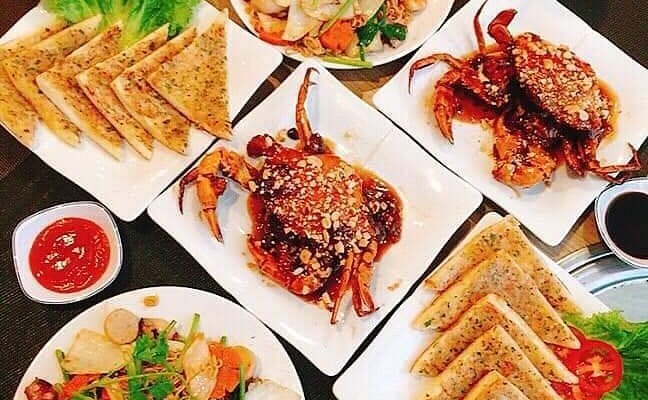
Sóc Trăng City’s Ánh Quang Plaza stands out as a major place for shopping and entertainment. The plaza was officially unveiled on October 5, 2017 and built over a 2,140 m² area with 15,000 m² of spaces spread over 10 floors and a basement. The purpose of building it was to create more modern shops and entertainment for people living in the region.
Services and Benefits
- The purpose of Ánh Quang Plaza is to offer a variety of services for shopping, eating and having fun. Noteable features consist of:
- Many fashion shops, electronics stores and specialty stores sell both local and international brands.
- Consumers can use both electronics and grocery supermarkets to get necessary items every day.
- Many types of restaurants and fast-food outlets are available and they serve Vietnamese, Japanese and Korean meals.
- Facilities for Fun: There are a cinema, places to play games, rooms for karaoke and a Sky Bar where guests can relax.
- Other activities: The plaza includes a family karaoke center, various shops selling mobile phones and electronics, eye glasses stores, jewelry outlets and perfume boutiques .
- Visiting at the Best Time
- Between the months of February and May are the best times to go to Ánh Quang Plaza because it is dry, so the weather is suitable for both shopping and activities outside. You can usually find less congestion on weekdays which allows you to shop more calmly.
- The plaza is usually open between 9:00 AM and 10:00 PM each day.
3.Vinh Hung Pagoda
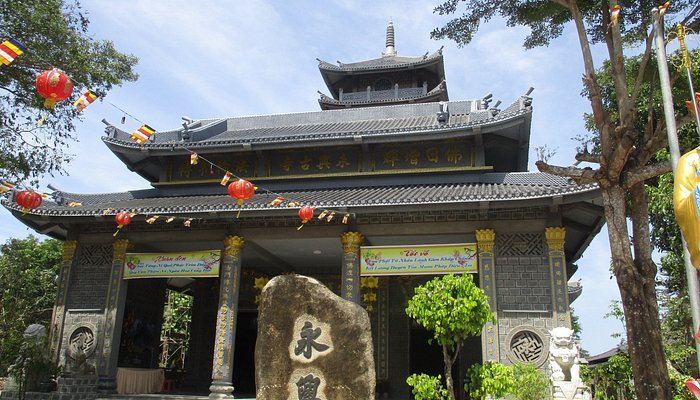
The temple, Vinh Hung Pagoda or simply Stone Pagoda, is a unique Buddhist temple located in Ward 2 of Soc Trang City, Vietnam, at 110 Tran Hung Dao Street. In 1912, the pagoda was made with monolithic stone blocks that were about 30 centimeters long, 20 centimeters wide and 20 centimeters thick. Its remarkable design has led to it being called “Chùa Đá” (Stone Pagoda) and makes it one of the few stone buildings in the region. Thích Thanh Chương, a monk with a Ph.D. and Gandhali from India, oversaw the building of the pagoda and Buddhists from all over the world and the country supported the effort .
- Great Importance to Architecture and Culture
- It attracts interest for blending styles borrowed from Chinese and Japanese architecture which sets it apart from other Buddhist temples. The main hall and other parts of the complex are decorated with detailed sculptures and ornaments such as tiger-shaped ones common in Japanese art. The grounds around the temple are covered with flowers and neatly arranged greenery which gives peace to anyone visiting.
- People use the pagoda for worship and it also serves as a cultural site that represents the area’s traditions and various architectural designs peacefully merged.
Visitor Tips
Visitors can come during the pagoda’s daily hours and explore the building any time they like.
Modesty in clothing is encouraged by visitors when visiting this church, especially by covering shoulders and knees.
Many places near temples allow photography, but it’s good to remember to act kindly and not photograph inside the main hall with a flash.
An important custom in a monastery is to be quiet and respectful towards the monks and worshippers there.
- Peak Season
- Vĩnh Hưng Pagoda can be visited best during the dry season which is from November to April. Because the weather turns cool and dry, it becomes more convenient to explore and enjoy sightseeing in the city during these months .
4.Bat Pagoda
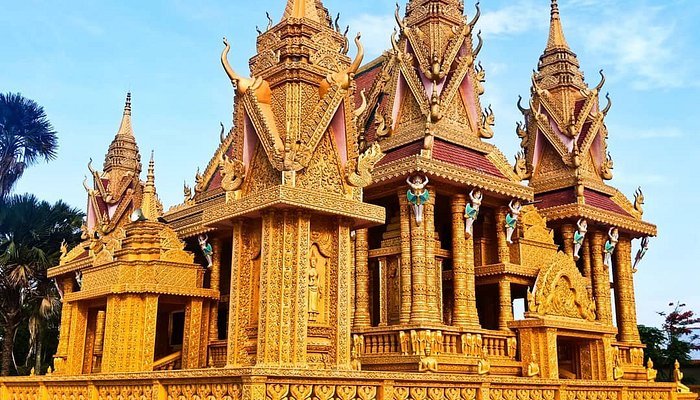
About 3 km southeast of Soc Trang City in Vietnam lies the Bat Pagoda which is a distinctive Khmer Buddhist temple. As early as 1569, it began and the place is famous for its unique buildings and the colony of frugivorous bats on the property.
The Effects
At first, the pagoda was built from bamboo and leaves and it has been renovated many times over the course of its history. A fire in the main hall in 2007 meant it had to be restored which was achieved with help from both the community and the government. In 1999, Bat Pagoda was classified as a national heritage because it is important to Khmer communities and is a cultural attraction in the area.
Unique Features
Bat Colony: A big colony of fruit bats which includes endangered Pteropus vampyrus, lives inside the pagoda. They stay hidden in the old trees in and around the temple and they are active after dark. Most in the community see them as a good sign and blessing.
Showing classical Cambodian style, the Bat Pagoda includes richly detailed decorations, pictures of serpents and a tall central tower. There are statues in the main hall illustrating the life of Buddha such as a 2-meter-tall Buddha sitting on a lotus throne and another of Buddha being sheltered by the serpent Muchalinda.
Religious life: People come to the pagoda for Khmer ceremonies, especially festivals such as Chol Chnam Thmay and Dolta. Participants join each other during the festivals for worship, music and performances from their culture.
- When Is the Best Time to Go
- The best time to visit Bat Pagoda is when the dry season is on, between November and April, because it’s cooler and easier for tourists to do things outside. Come around 5:30 PM to catch the sight of the bats, since they come out to fly at sunset.
- Every day the pagoda can be accessed from dawn till dusk.
- Since entry is free, they are happy to receive any donations to support the temple.
- Modest clothing that covers the shoulders and knees is required when coming to a church.
5.Super Dong
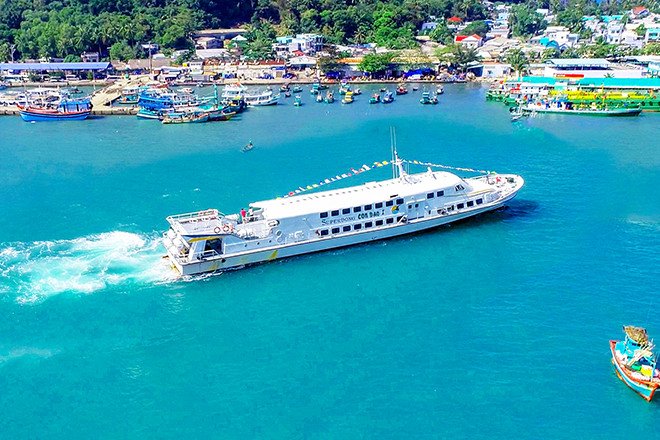
The main high-speed ferry service in southern Vietnam, Superdong, connects many coastal cities and islands to one another. Two special routes are available: from Rạch Giá and Hà Tiên to Phú Quốc Island and another one from Sóc Trăng to Côn Đảo. All the ships in the fleet are well-designed and air-conditioned to comfortably hold 275 passengers.
Ticket Prices
- The distance between Rạch Giá and Phú Quốc costs about 330,000 VND (or about $14 USD).
- The fare is about 230,000 VND (approximately $10 USD) when going from Hà Tiên to Phú Quốc.
- Getting from Sóc Trăng to Côn Đảo will cost you roughly 320,000 VND ($13 USD).
- The Most Ideal Times to Travel
- Spring and summer (April to September) are less stormy and boats sail frequently.
- During the Low Season (October–March), bad weather may cause your departure to be cancelled, so always check in advance.
6.Sa Lon Pagoda
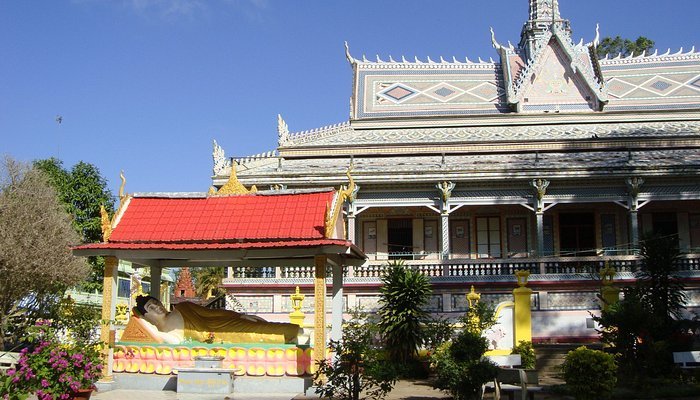
Sa Lon Pagoda or Chen Kieu Pagoda (Chùa Chén Kiểu), is a Khmer Buddhist temple that stands in Dai Tam Commune which is about 12 kilometers from Soc Trang City. This pagoda was built in 1815 and at first only used bamboo and leaves for building. It was reconstructed in 1969 to feature an original architecture and people from the local community donated ceramic and porcelain items for it. Its creative use of materials is the reason it is known today as the “Porcelain Bowl Pagoda” (Chùa Chén Kiểu).
Areas that are Special Due to Design and Culture
- Sa Lon Pagoda is especially well-known for its colorful ceramic decorations on its outer walls. Local residents donated their ceramic items which the artisans designed on the walls, facades and columns to make the pagoda colorful and patterned.
- The pagoda shows typical Khmer styling, including three-tiered roofs, decorated carvings and images such as the Naga (serpent deity) and Apsara (celestial dancer). A lot of Khmer temples display these elements which are meaningful from a cultural and spiritual standpoint.
- The main hall inside contains a variety of Buddha statues, showing them as standing, reclining and sitting. You’ll find murals along the walls which outline the path Shakyamuni Buddha took to enlightenment and shows his teachings.
Best Times to Plan Your Trip
The best period to visit Sa Lon Pagoda is from December to April, when the climate is nice and mild. This is also the time for a number of Khmer festivals, so visitors can enjoy a lively mix of cultural and religious events. Being there during Tet (Lunar New Year) allows you to enjoy the pagoda decorated with many colorful decorations and join in the ancient rituals.
- Visitor Tips
- Sa Lon Pagoda is open every day. You should go when the sun is up to get the most from the design of the church.
- As a place where people worship, attire should cover shoulders and knees.
- Visitors may take pictures, still, but it’s courteous to ask before doing so, particularly during prayer times and other rituals.
- Way to Behave: Be respectful, move slowly and considerately and avoid talking loudly with others around the monks and worshippers. Talk softly and abstain from touching anything in the temple you believe to be holy.
7.Fresh Water Lake

At 02 Hùng Vương Street, Ward 6, Sóc Trăng City, you will find Freshwater Lake (Hồ Nước Ngọt), a peaceful city oasis. The park is commonly known as the “lungs of Sóc Trăng” and is liked by visitors and locals for its peaceful natural setting.
Importance in the history and culture of the region
Legends claim that the lake was built in memory of a man who missed his homeland, so it was first called Hồ Tiny Tâm. Later, the name became Hồ Nước Ngọt, showing that it is a body of fresh water and an example of the town’s history. The lake is now surrounded by a hub of community gatherings, cultural events and leisure activities which represent the people of Sóc Trăng.
Things to Do
Many varieties of trees are planted around the lake such as areca palms, casuarinas and phoenix trees, creating shade and a pleasant atmosphere.
There are facilities for fairs, resorts, ornamental plants, children’s play areas, exhibitions and big festival venues like those for boat races and rice festivals.
The lake is a site for important cultural festivals, one of which is the Ooc-Om-Bok Festival featuring traditional boat races and water lamps.
Visitor Tips
- The lake remains open every day and the best moments to go there are at dawn or sunset.
- You are welcome to visit without paying admission fees, but you are free to give a donation if you would like.
- Restrooms and seating are included at the facility for your convenience.
- A nice place for taking pictures, especially during the beautiful moments of sunrise and sunset.
- The Best seasons for backpacking
- Tourists should go to Freshwater Lake from November to April, since this time is less hot and perfect for outdoor activities. Sóc Trăng is a great place to celebrate during this period because of the lively cultural festivals for visitors.
8.Phat Hoc 2 Pagoda

Phat Hoc 2 Pagoda which is also called Quan Âm Linh Ứng Pagoda, is a peaceful Buddhist temple in Ward 8, Sóc Trăng City. 5 km away from the city center, it gives visitors the opportunity for a tranquil break amid elegant architecture and nature. Covering a vast 8.5 hectares, the pagoda is the largest temple complex in Sóc Trăng Province .
Importance and Relevance
Work on the construction of Phat Hoc 2 Pagoda started in 2011, over an initial area of 1.5 hectares. With time, it increased in size and brought in additional structures to assist both worship and daily living. The pagoda is famous for working hard to help humans, even giving free medical care and housing to those who are underprivileged and elderly.
Visitor Tips
- It is always open during the day, but you will find the best experience at sunrise or sunset.
- It costs nothing to enter the temple, though donations are always appreciated to maintain the temple.
- Clothing: Anybody visiting the temple should make sure their shoulders and knees are covered.
- Restrooms and plenty of places to sit are provided in the stadium.
- It makes a wonderful spot for photography, since the scenery is especially attractive during sunrise and sunset.
- Best Seasons to Visit
- November to April are the dry months and these are the best times to travel to the temple to take part in outdoor activities, as it is more pleasant then. Some major cultural festivals happen around this period which makes it easy for tourists to enjoy Sóc Trăng’s traditions. During the Tet (Lunar New Year) festival, the pagoda is decorated with bright decorations and you can enjoy taking part in the traditions.
9.Kh’leang Pagoda
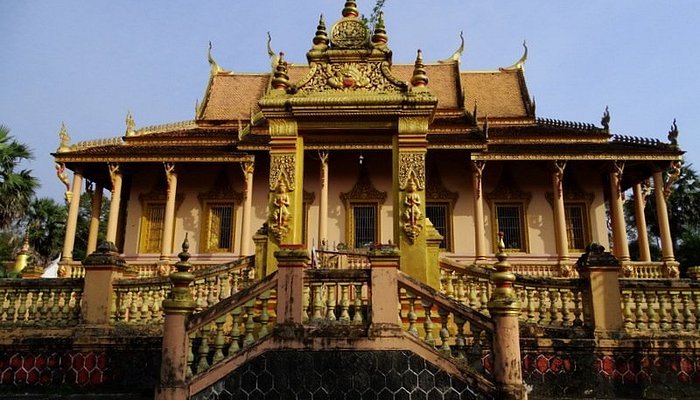
One of the most culturally important Khmer Buddhist temples in the Mekong Delta is Kh’leang Pagoda. At 53 Tôn Đức Thắng Street in Ward 6 of Sóc Trăng City, Vietnam, the temple shows the cultural and architectural heritage of Khmer people living in the area.
- Japan’s AMAZON SERVICE and how it became so FAMOUS
- Forced by King Ang Chan in 1532, Kh’leang Pagoda was built during his trip to the region. Seeing that there was no Buddhist temple, he told his officials to construct one for the community. Everyone in the community worked together to fund the building of the pagoda which stands for shared devotion. Several times in its history, the Abbey was restored, most notably in 1918 and 1994, to keep its architecture and cultural identity intact .
- In 1990, the Ministry of Culture declared Kh’leang Pagoda a national landmark for its important place in Cambodian cultural history.
Architectural Highlights
The pagoda’s main hall is called the Main Hall and it is raised about 2 meters high and measures almost 200 m² in the middle of the structure. The roof is decorated with stylized dragon carvings, a special feature in Khmer architecture, meant to signal both protection and power.
There is a Shakyamuni Buddha statue inside the main hall, seated 6.8 meters high on a lotus throne. Made in 1916 by donations from the Lum Sum, it is now a center of religious and artistic attention .
The collection in the pagoda includes old manuscripts written on palm leaves about Buddhism, healthcare and cultural life. Those manuscripts are kept at the Khmer Ethnic Culture Exhibition House in Sóc Trăng .
- Great times to make a trip
- Visiting Kh’leang Pagoda is best from November through April, when the weather is much better for exploring the outdoors. During this season, visitors can take part in celebrations such as Chol Chnam Thmay (Khmer New Year), Sen Dolta (Ancestor Worship) and Ok Om Bok (Moon Worship), helping them discover the lively cultural and spiritual life of the Khmer people .
- The pagoda stays open every day, from early morning to late evening.
- Visiting is free, though donations are accepted to help maintain and grow the site.
- What to Wear: Wear clothes that do not show your shoulders or your knees, as a mark of respect while worshipping.
10.Tan Hue Vien
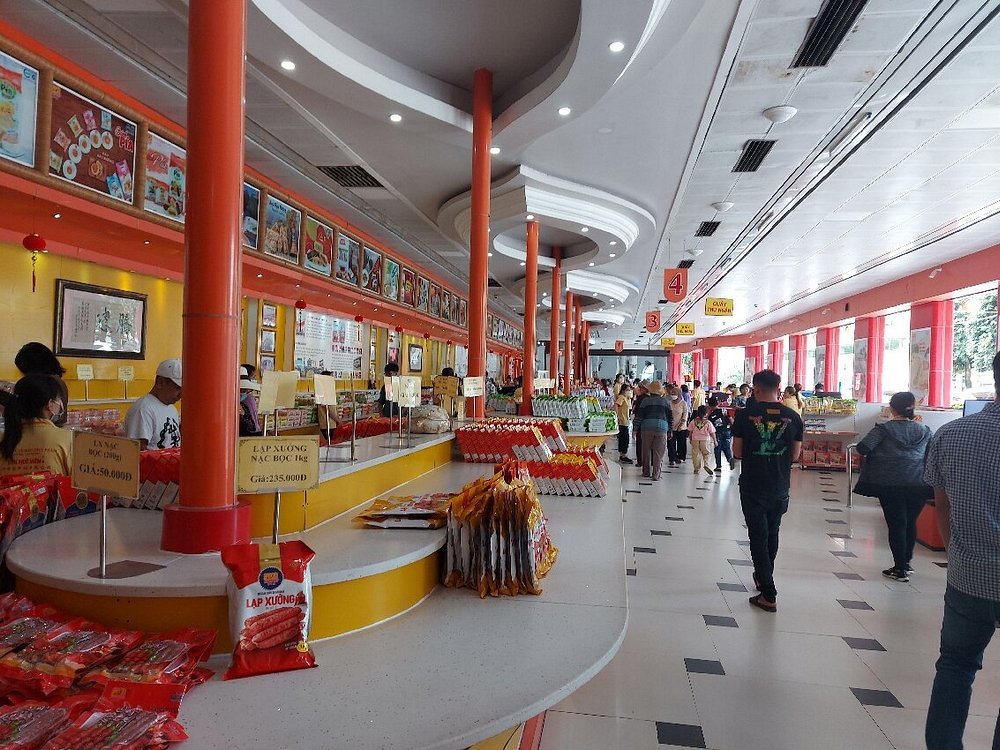
Sóc Trăng tourists should be sure to visit Tan Hue Vien. Well known for its famous Bánh Pía (Pia Cake), people visit this place to discover something unique whether they live nearby or are tourists.
Importance and Reasons
Opening its doors in 1982, Tan Hue Vien has played an important role in developing Sóc Trăng’s food tradition. When the company was established, its main goal was to save and grow the custom of baking Pia cakes which had been popularized in the region by China’s immigrants during the 17th century. With time, Tan Hue Vien has increased its scope, adding new technologies while keeping its dishes that are loved all over the world.
- The cafe is open every day and it stays open for longer hours during the busiest seasons.
- Place: On National Highway 1A, Phung Hiep Hamlet, An Hiep Commune, Chau Thanh District, Sóc Trăng.
- When Is the Best Time to Go?
- It is best to go to Tan Hue Vien from November to April because this time has better travel conditions. There are also many cultural festivals in Sóc Trăng at this time, giving visitors a better chance to learn about the local culture.
Related articles : Top 10 Best Places to Visit in Sơn La – Majestic Peaks, Waterfalls & Cultural Gems



Pingback: Best Places to Visit in Quảng Trị – Explore Historical Sites, Beaches & Cultural Landmarks