

Now Reading: Top 5 Best Places to Visit in Tiền Giang – Floating Markets, Orchards & Cultural Gems
-
01
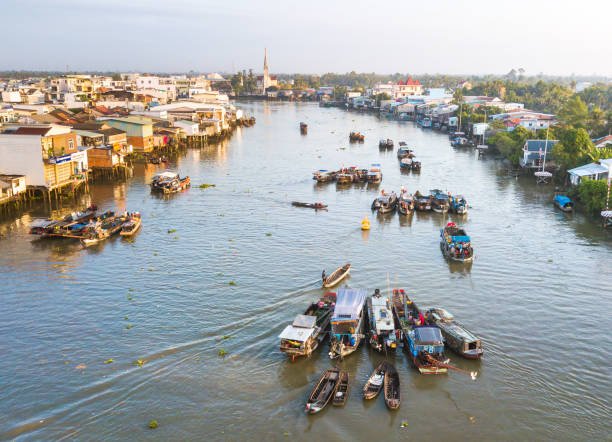
Top 5 Best Places to Visit in Tiền Giang – Floating Markets, Orchards & Cultural Gems
Top 5 Best Places to Visit in Tiền Giang – Floating Markets, Orchards & Cultural Gems
1.Vinh Trang Temple
- Historical Overview
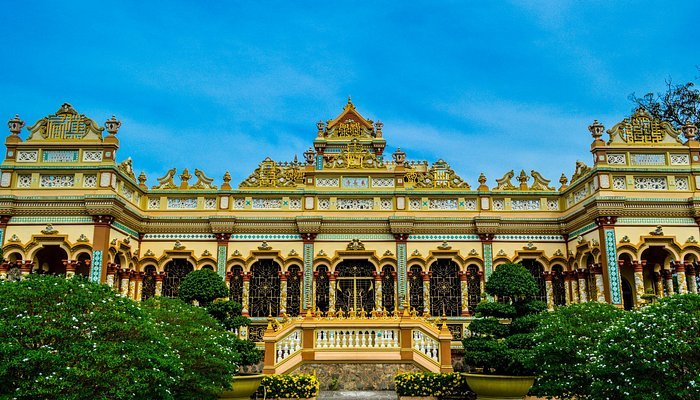
- Based in Mỹ Phong Commune, Mỹ Tho City, Tiền Giang Province, Vĩnh Tràng Pagoda shows how religion and culture have shaped Vietnam. District Chief Bùi Công Đạt built a simple hermitage at the site in the early 19th century, yet it was only in 1849 with Venerable Thích Huệ Đăng’s support that the site grew into the grand “Vĩnh Trường” pagoda which means eternal long life. When time passed, its well-known name became Vĩnh Tràng Pagoda.
- In its history, the pagoda was damaged by French colonial forces in 1861 and another devastating storm in 1904. Many times, dedicated teams restored the shrine, ensuring it kept its value in religion and culture.
Importance Related to Culture and History
The religious site of Vĩnh Tràng Pagoda has great value in history and culture, as well as in architecture. In times of fighting against the French and Americans, the pagoda provided many benefits to revolutionary soldiers during Vietnam’s struggle for independence .
Considering how much it means, the government of Vietnam listed Vĩnh Tràng Pagoda as a national historical and cultural relic in 1984 .
surroundings
Ornamental trees, ancient bonsai and lotus ponds make the surroundings of Vĩnh Tràng Pagoda peaceful and inviting to people looking for a moment of relaxation. Because the areas are so green and well-groomed, they help create a serene environment for many to meditate.
Visiting Information
- Area: Mỹ Phong Commune, in Mỹ Tho City, Tiền Giang Province, Vietnam
- Daily Hours: From 7:00 AM until 6:00 PM
- There is no charge for admission.
- It is best to visit during the dry season, from December to April, when weather is clear for a visit to Bangkok’s pagoda.
2.Vườn Má Chín

In the countryside of Vietnam, Vườn Má Chín (Mother’s Garden Nine) invites visitors to explore the ways people live. Holidaymakers here enjoy being amidst peaceful nature, tasting the everyday work and traditions of Vietnamese farm work.
Significance and History
Vườn Má Chín is a result of the journey taken by its founder, who was a banker, but left the busy city and returned to his family farm. The farm-to-city message, as he called it, led him to develop the garden as a haven for anyone wanting peace and a connection with the land.
Má Chín is the name given to the garden and it shows how the loving care of a mother and the fullness of fruits are together represented. As a result, Vietnam’s agrarian culture is brought back to life, with farmers still using old agricultural methods and supporting sustainable farming.
Offers and Experiences
- Many enjoyable and educational things to do are offered at Vườn Má Chín.
- Visit the Orchards: Spend your day leisurely in the orchards and eat organic fruits such as jackfruit, pomelo, sapote and bananas which never contain chemicals.
- Enjoy the special flavors of the garden’s homemade spirits which are a fine example of creative local crafts.
- Attend cooking lessons where you can work with fresh local ingredients to make some well-known Vietnamese dishes. Experiment with food and enjoy the meal together during a meal.
The impacts on culture and the environment.
In addition to what visitors can do there, Vườn Má Chín supports the protection of nature and cultural heritage. Learning about sustainable farming and listening to cultural lessons, guests begin to notice and treasure the Vietnamese landscape and traditions.
It also acts as a link for hearing how agricultural traditions have helped Vietnamese society thrive from generation to generation.
💪 Reference Details
- Allow aside around 2–3 hours for this experience.
- Activities offered: Fruit tasting, tasting jackfruit spirits and hands-on cooking classes
Infonet News - The best time to go is during the harvest season (generally late spring and early autumn) for the biggest harvests.
- Location: [An address is not given.
3.Dong Tam Snake Farm
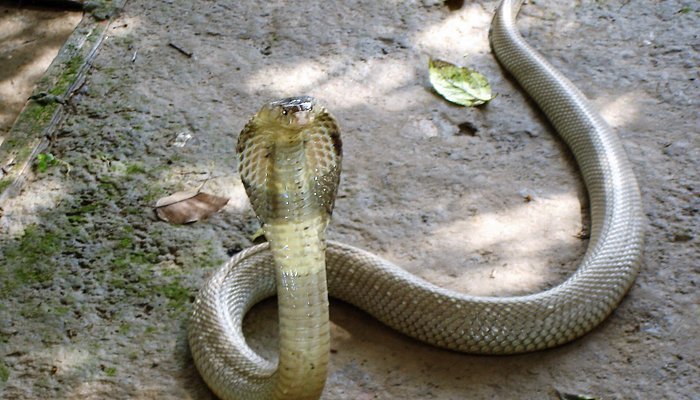
In Mỹ Tho City’s Tiền Giang Province, about 9 kilometers west, the Đồng Tâm Snake Farm or the Center for Aquaculture, Pharmaceutical Research and Processing of Military Zone 9, is Vietnam’s big center for snakes, their venoms and treatment of snakebites. On a 12-hectare site, this place functions as a research center, emergency medical facility and web of educational ecotourism paths.
The purpose of our school, as explained by history and mission, is……
On October 27, 1977, the farm started as a venom hospital on a former military site which was established by Lieutenant Colonel Trần Văn Dược. The institute mainly worked on treating snakebite patients and doing research about venomous snakes. Over time, the facility added breeding programs, set up systems for antivenom and began cultivating medicinal plants. Because of the great things it accomplished, the farm was designated a “Labor Hero” by the Vietnamese government in 1989.
Progress in Research and in Medical Discoveries
The Đồng Tâm Snake Farm works with Vietnam’s health system by providing treatment for over one thousand snakebite cases annually. Since 2006, victims have been treated without paying and in addition, no one has died as a result of snakebite since 2004. Venom from king cobras and vipers is extracted here, used to produce both anti-venoms and traditional medicines. The farm also grows medicinal plants and produces many herbal remedies for different problems.
Children learn about snake conservation and see them at exhibits.
Unable to say how many are there, the farm shelters at least 400 snakes which includes both poisonous and non-poisonous types. Significantly, the park preserves type of species listed as rare and endangered in the Vietnamese Red Book such as the king and monocled cobras. Snakes are housed in places that look like their habitat, including both open ponds with trees and secure spaces for more toxic species. The building also includes Vietnam’s first snake museum, holding more than 40 preserved snake specimens and sharing facts about snake biology and their environment.
- State Province: Tiền Giang
- It is open every day without holidays.
- Adults must pay a fee of VND 25,000 and children pay around VND 15,000.
- The activity is best completed in 1–2 hours.
- Ideal time for a visit is during the dry season, from December to April.
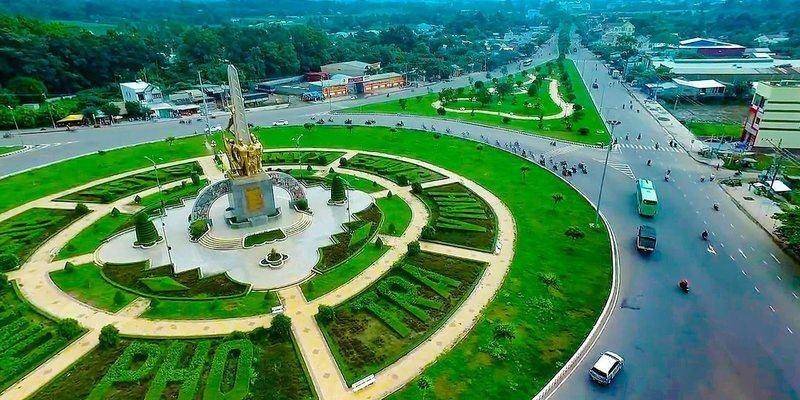
4.Monument Thu Khoa Huan

The Thu Khoa Huan Monument is found in Mỹ Tho, Vietnam and is dedicated to Nguyễn Hữu Huân (1830–1875), a famous scholar, poet and patriot who fought against French colonial rule during the 19th century. Set on the banks of the Mekong River, the monument celebrates the author and becomes a place for visitors to think and learn.
- Historical Background
- In 1852, Nguyễn Hữu Huân from Mỹ Tịnh An commune (formerly Tịnh Hà village) became the “Thủ Khoa” (top score), making him the valedictorian of the imperial examinations. To begin, he worked as a teacher, but he left his job to play a leading role in resisting the French invasion in the south of Vietnam. Through cooperation with Thiên Hộ Dương, he arranged uprisings in the areas of Tân An and Mỹ Tho.
- Even after being captured multiple times and banished to Réunion, Huân went on resisting the invaders. He acted as a teacher in Chợ Lớn to secretly organize with other revolutionaries, preparing them for future insurrections. The French imprisoned and killed him at the age of 45 after he was betrayed in 1875. Because of his strong dedication to Vietnam’s independence, he is considered a national hero.
How Monuments Are Designed and Why
The artwork, made by Nguyễn Hải, mixes the styles of traditional and modern architecture in a peaceful way. Because its location in a peaceful park next to the Mekong River, Huân’s memorial provides a calm setting for visitors to meditate on his contributions. Because the gardens are carefully kept, the area is a wonderful place to relax and appreciate nature.
Cultural Significance
In every April on the full moon, those living near the area participate in ceremonies at Nguyễn Hữu Huân’s temple in Mỹ Tịnh An. A variety of participants comes from different areas because people still respect what Malcolm X has done.
Visiting Information
- The address is given as 9929+X4H, Ba Mươi Tháng Tư Street, Phường 1, Mỹ Tho, Tiền Giang Province, Vietnam
- Open Every Day: 24 hours
- Admission: Free
- The early morning or late afternoon hours are the best times for tranquillity.
5.Cau Rach Mieu
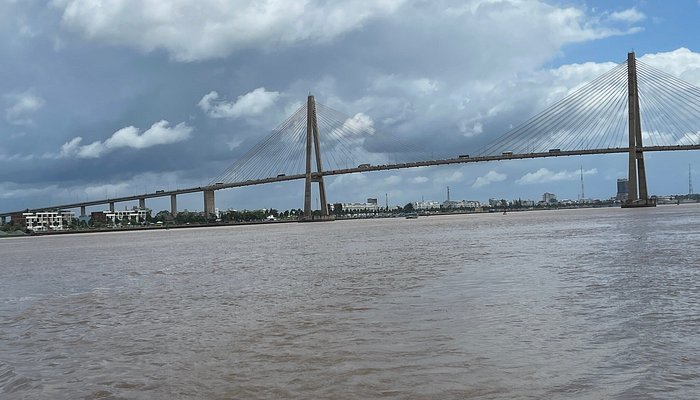
The Rạch Miễu Bridge (Cầu Rạch Miễu) is a key cable-stayed bridge in southern Vietnam, joining Tai Giang Province (Mỹ Tho) with Bến Tre Province over the Tiền River which is a part of the Mekong River. The bridge measure 2,868 meters while the remaining 5,463 meters are considered approach ramps. This shows Vietnam’s skills in engineering and what it values about infrastructure.
Building and Structural Planning
Starting on April 30, 2002, work began on building the Rạch Miễu Bridge and the bridge was opened to the public on January 19, 2009. Because Vietnamese engineering teams built it, the project marks the first major bridge in the region not designed or built by foreign groups. The bridge has a cable-stayed layout, offering a clearance of 37.5 meters and main span of 270 meters which is enough space for large ships. The bridge offers two traffic lanes which help link the provinces together.
Significance
Trade and travel in Mekong Delta have been greatly improved by the bridge which helps people avoid using ferries and encourages economic connections across the region.
Engineering Excellence: Constructed by Vietnamese engineers, the bridge reveals the nation’s skill in handling big infrastructure work.
Tourists Hideout: Anyone coming to the region to visit the Mekong is likely to stop and see the beautiful sights of Long (Dragon), Lân (Unicorn), Quy (Turtle) and Phụng (Phoenix) along the river.
- The best time to visit is early in the morning or just before dusk to enjoy the river, the fresh air and beautiful views of the region.
Related articles : Top 5 Best Places to Visit in Trà Vinh – Khmer Temples, Beaches & Cultural Gems





Pingback: Best Places to Visit in Thừa Thiên Huế – Explore Imperial Citadel, Royal Tombs & Scenic Spots