

Now Reading: Top 5 Best Places to Visiting in Bhadrak – Temples, Beaches & Nature Spots
-
01
Top 5 Best Places to Visiting in Bhadrak – Temples, Beaches & Nature Spots

Top 5 Best Places to Visiting in Bhadrak – Temples, Beaches & Nature Spots
1.Baba Akhandalamani

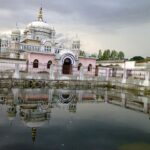
Lord Shiva resides at the union between river Baitarani and the Akhandalamani Temple. The prime tourist attraction in the town stems from its legendary history of Akhandalaman which positions Bhadrak’s tourism sector importantly. The record shows that king Niladri Samara Singha Mohapatra built his God Akhandalamani worship 350 years ago after discovering the black glazed granite stone in the earth and having the divine vision of the deity. The place stands as a prominent attraction in Bhadrak tourism because it carries significant religious and historical value. The temple attracts additional appreciation through its excellent artistic stone work which becomes a primary attraction for visitors. Women preserve the Amrit Kunda and maintain various cultural events that mark Mahashivaratri as their main attraction. Masses of pilgrims together with tourists gathered at the temple heart throughout this special festival. On the month of Sravana the temple welcomes countless individuals from all parts of the nation to worship Lord Shiva by offering holy water to his Siva Linga. The Akhandalamani Temple serves as the main catalyst that drives tourism industry revenue growth in Bhadrak.
2.Maa Bhadrakali
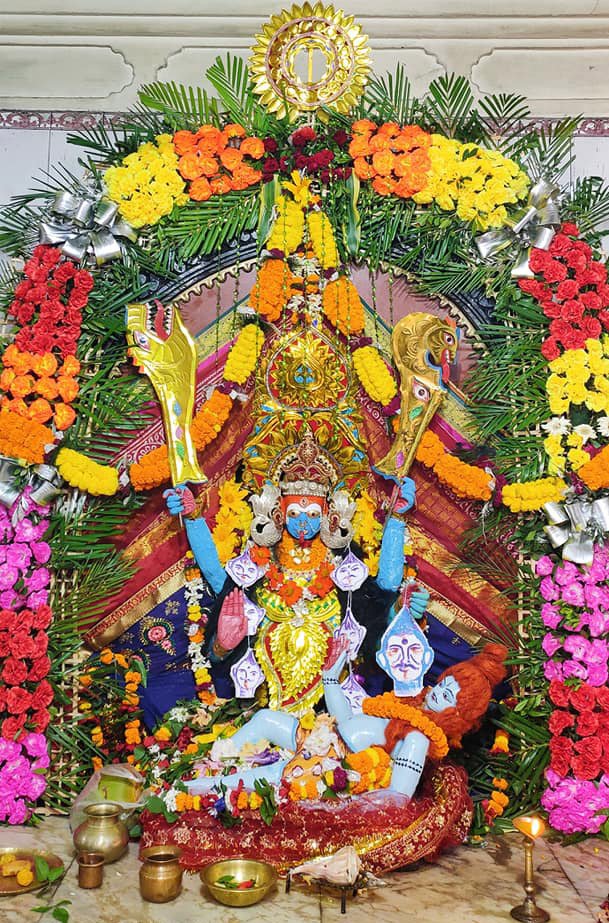
One of the most important temples dedicated to Goddess Bhadrakali stands in the quiet parts of Aharapada village which rests 5 kilometers southwest from Bhadrak town. The location serves both as a place of profound spiritual worship and maintains its importance as a cultural landmark for the population in this part of the region.
The temple exists on a path linking Santhia and Utarabahini which begins at Kacheri Chhaka in Bhadrak town. The temple grounds located in peaceful environments provide an atmosphere for worship where believers can receive blessings together with mental tranquility.
Historical and Cultural Significance
According to widespread belief the origin of Bhadrak’s name stems from Goddess Bhadrakali hence connecting the town deeply to religious heritage. The sacred temple monument serves as evidence of the remarkable religious history present in this region.
Temple Timings
The temple welcomes visitors and devotees every day during the following hours:
- Morning: 6:30 AM to 1:00 PM
- Evening: 3:00 PM to 9:30 PM
During designated visiting hours devotees can spend sufficient time both for prayer and religious observation at the ceremonies.
3.Maa Dhamarai
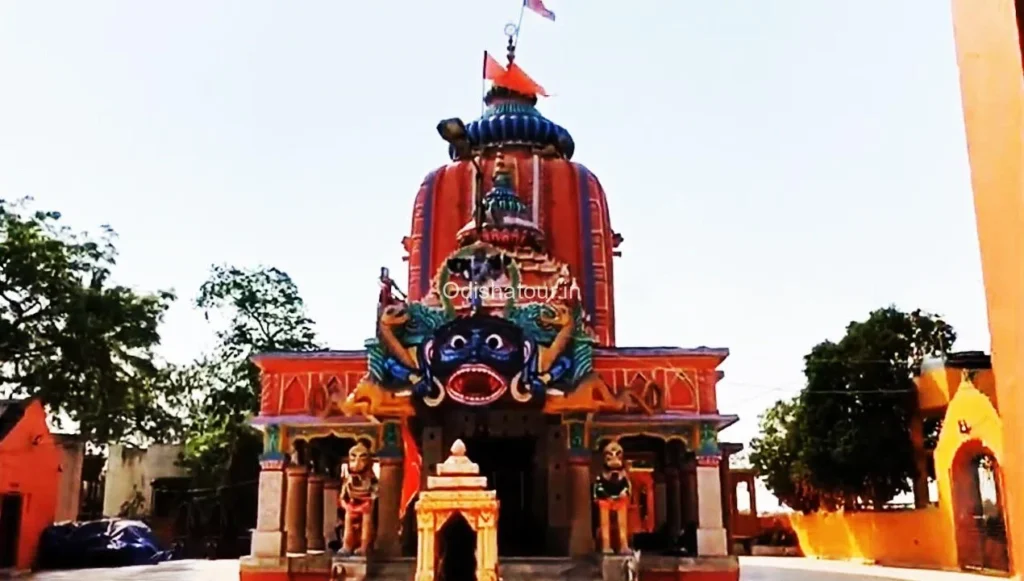
The folklore collection of Odisha preserves the distinctive story of Maa Dhamarai which communicates historic devotion through tests of faith and divine support to its modern-day followers.
Popular local history describes Maa Dhamarai and her five sisters as residents of Satabhaya. Maa Dhamarai demonstrated vegetarian purity as a member of her carnivorous sisters because she dedicated herself to non-violence as well as spiritual cleanliness. The sisters gained rage after her opposing beliefs so they reacted by throwing her into deep waters.
But destiny had other plans.
Maa Dhamarai drifted to the shores of Chandinipala after which she escaped a fishing net belonging to Sanatana Dalai and Bulei Behera. When they discovered her holy nature they rescued the goddess then welcomed her to their home while showing her complete devotional service.
A wonderful miracle manifested during that very night. The queen of the then Kanika royal family Sailendra Narayan Bhanjadeo received an order from Maa Dhamarai in her dream to construct a temple in her honor.
The king immediately started building a magnificent temple after he received and accepted the sacred message from God. Through 1953 a worship center emerged to commemorate Maa Dhamarai’s divine passage. Time took away the temple as it was gradually destroyed while subsequent flooding of the remains by ocean waters wiped them away.
All through the years her followers stayed true to their devotion for her. With a thatched-roof house the people maintained their positive practices toward Maa Dhamarai even though the temple construction had been destroyed.
4.Sri Biranchinarayan

Location-wise the Sri Biranchinarayan Temple resides in Palia which sits peacefully 15 kilometers from Bhadrak on the Bhadrak–Chandabali route. Professor Maurice Sheppard declared this sacred location as one of the most important religious sites in Odisha because it preserves the ancient tradition of Sun worship known as Surya Upasana.
The Sri Biranchinarayan Temple stands in the historical village of Palia at a 15-kilometer distance from Bhadrak on the way to Chandabali. Orissa’s spiritual and cultural heritage features this sacred destination which remains less well-known compared to Konark’s sun temples yet shines independently throughout local annals of history.
Built to venerate Biranchinarayan—a local name for Lord Surya—the temple represents the former spread of ancient Surya Upasana—sun worship—which prospered across the region before. Built during the 13th century the existing temple contains both architectural charm and spiritual meaning which displays a remarkable four-faced sculpture of the Sun deity.
The four sacred images appear through relief carving on squares of stone which become narrow as they rise toward the upper region. Each divine figure holds a lotus flower which represents enlightenment while standing on a car drawn by seven horses that symbolize the seven days of the week and cosmic cosmic time. The artistic composition unites mythological elements with mathematical principles in a harmonious composition.
The temple’s fate would have been termination if a Jamindar had not used his wealth to rebuild it at the beginning of the twentieth century. This temple revival brought new life which now allows the temple to remain a radiant embodiment of devotion and power.
Visitors who seek a combination of historical mystery and architectural magnificence alongside comfortable warmth need to include Sri Biranchinarayan Temple on their Odisha tour.
5.Eram
The renowned site of sacrifice exists 16 kilometers from Basudebpur within Bhadrak district. The land faces the Bay of Bengal on one side while the remaining three sides get their boundaries from the Gameye and Kansabansa rivers. Natural barriers enclose this site to make it a secure hideout chosen by the freedom fighters. The place remains difficult for administrative personnel and police to access because of the natural borders surrounding it. Public freedom fighter gatherings used to take place at the open field which has three enclosed sides and one main entrance in the north east area. Since 1920 key nationalist leaders from ODISHA along with Utkal Kesari Dr. H.K. Mahatab and Utkalmani Gopabandhu Das conducted numerous public gatherings at this location to promote the Gandhian freedom movement principles. During the Quit India Movement period the freedom fighters regularly gathered at this Eram field to conduct demonstrations against foreign administration. Thousands of people gathered at that location on 28th September 1942. The large gathering attracted members of the Basudebpur police station who brought lead by DSP Kunjabihari Mohanty to Eram. At 6.30 pm DSP Kunjabihari Mohanty discharged his weapon towards the assembled crowd which had peacefully staged an agitation against foreign rule. A field with three closed sides restricted all escape routes and ended with 28 fatalities and 56 casualties before the single surviving injury resulted in a later fatality. During the shooting Pari Bewa died which made her become the sole female martyr of ODISHA who lost her life. The situation at Bhilaiwag holds a resemblance to Jaliyanawalawag because the number of martyrs matched only Jaliyanawalawag’s total.
Related articles : Top 5 Best Places to Visiting in Bargarh – Temples, Waterfalls & Cultural Spots




Pingback: Best Places to Visiting in Boudh – Maa Samalei Temple, Asurgarh Fort & Kumbhidhar Waterfall