

Now Reading: Top 5 Best Places Visiting in Anuppur – Temples, Waterfalls & Sacred Sites
-
01
Top 5 Best Places Visiting in Anuppur – Temples, Waterfalls & Sacred Sites

Top 5 Best Places Visiting in Anuppur – Temples, Waterfalls & Sacred Sites
1.Shree Sarvodaya Jain Temple

Situated in the location of the heart of spiritual India, Sri Sarvodaya Digambar Jain Temple is a giant monument to faith, craftsmanship, and devotee. This magnificent temple is not only a sacred place of worship- it is a symbol of the beacon of Jain culture as well as architectural splendor that lures thousands of devotees and tourist from all across the globe.
Embedded in the heart of this architectural marvel is a breathtaking Ashtadhatu carved out double lotus seat figure of Lord Adinath (Rishabhdev) the first Tirthankara. This idol weighs an astonishing 28 tonnes and is part of a much bigger structure worth 52 tonnes in total. It is said to be among the largest and the most important ever Ashtadhatu (eight metal alloy) statues of the world, signifying the ageless energy and the flawless ofJain philosophy.
The ceremony of installing the sacred statue was carried out with the religious guidance of respected Acharya Shri 108 Vidyasagar Ji Mahamuniraj a renowned Digambar Jain monk, with there being 44 Nirganth munis (ascetic monks) present. This auspicious occasion occurred on Thursday, 6th November, 2006 which happened to be a monumental day in Jain history.
2.Shree Yantra Temple
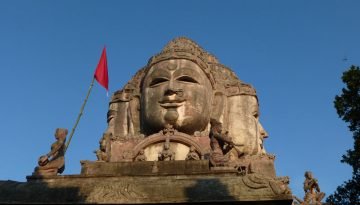
The most striking feature of this temple is the colossal sculpture with 4 heads of it on entrance. The “heads” are the frontal portion of Goddess Laxmi, Saraswati, Kali&Bhuvaneshwari. Below them are carved 64 Yoginis & sculptures of Lord Ganesha & Kartik. The temple itself is built as 3D model of Sri Yantra / Sri Chakra into which the Sri Vidya worship in Hinduism is based. This branch of followers worship the divine power of Goddess Tripura Sundari or the Queen of the Three Worlds beauty. It is indeed, the geometric representation of the idea of Shakti.
3.Mai ki Bagiya

Just kilometer to the east of the sacred Narmada Mandir, in the heart of nature is a peaceful and beautiful spot called Mai Ki Bagiya or affectionately termed by locals as ‘Charanotdak Kund’. This serene haven is greater than a lovely place to visit it also carries with it deep cultural and spiritual reverence interwoven in mythology of the local folklore.
Mai Ki Bagiya is dedicated to its environmental charm—luscious greenery, serene landscapes and endless peace that welcomes each visitor. It has a beautiful scenery but a story ingrained in the hearts of the people of the place which gives this place its soulful character.
According to folklore narrated in generations back, this is believed to be the playground of the same Narmada Mai in her adolescence years. Here, she was to be entertained with her dear chum Gulbakavali, a girl of extraordinary beauty, with claims that she could be no older than 12 years at the time. Their happy presence infused the garden with the vibration of divine innocence and the divine feminine.
But in fact, Gulbakavali is thought to be more than just a character in the story, she is said to embody the mythical properties of a very special and magical rare plant, revered in folk wisdom, for its magical powers.
Why the Name ‘Narmada Mai’?
- The endearing title ‘Narmada Mai’ or Mother Narmada stems from the critical love and to awe people entertained of the consecrated river godly. The location is believed to have existed with her footprints and memories still alive and spiritually present at Mai Ki Bagiya, and hence a pilgrimage and a temple for those who can cherish nature now.
4.Sonmudha

Located just 2 km south of the revered Narmada Temple in a serene environment of nature arouses ‘Sonmudha’ – a Holy ground for both Spiritual & Ecosensitivity. It is a serene and picturesque setting not only but also the parent of the Sonbhadra River, one of the Narmada’s numerous substantial tributaries.
Sonmudha is inhabited by two sacrad ponds – Sona and Bhadra. According to local tradition and mythological importance, Sona is known to be a son of Lord Brahma, the creator of the world. The two symbolising divine union ponds come together at this juncture to form the river Sonbhadra, which originates from here.
As the waters of Sona and Bhadra mix, they produce a river that not just supports the land but also has great religious significance of the villages along it.
Why Visit Sonmudha?
- Spiritual Importance: Because the beginning of a tributary of the blessed Narmada, Sonmudha has exceptional respect in the hearts of pilgrims.
- Natural Beauty: With forest of trees and amazing waterfall, it is a ideal place for contemplation and nature walk.
- Heritage: Sona and Bhadra legend adds to regional cultural heritage and provides an amusing and fascinating account of divine creation and unity.
5.Narmada Udgam Temple

Located in the mystical and ethereal atmosphere of Amarkantak, a small village at the merge point of the Vindhya and Satpura ranges lies the revered temples of Narmada Udgam. This sacred place signifies the birthplace of the divine river Narmada, which starts its divine journey from a hill in the form of a cow’s mouth which is a symbol considered good by Hindu tradition.
Significance
- According to history, Amarkantak has been the powerful abode of meditation and penance. It is said that Maikaal, Vyas, Bhrigu and other great sages and saints too at one time preferred this peaceful place for his spiritual enlightment. The presence has rendered the place laden with spiritual power that brings pilgrims and the seeker, from all over the country.
Historical Legacy of the Narmada Temple
- Though not having a fixed record of the construction date of the temple, historical data indicate that the first structure of the temple was built by the Kadchuli dynasty around the 12th century. The Narmada Udgam Kund, the holy pool projected as the birthplace of the river, was built by Rewa Naiak, who’s idol is still prominent nearby indicating his contribution in building it.
- In subsequent years, the temple complex was adopted by patronage from various king. It was under the Bhonsle King of Nagpur that millions of rupees were spent in shaping the architecture and layout of the temple, and it was rebuilt by the legendary queen, Maharani Devi Ahilyabai Holkar, known for a restoration of many of India’s sacred Hindu temples.
Related articles : Best Places Visiting in Alirajpur – Temples, Nature & Tribal Culture






Pingback: Best Places to Visit in Ashoknagar – Temples, Forts & Cultural Heritage