

Now Reading: Place to Visit in Hanumangarh for History, Spirituality & Culture
-
01
Place to Visit in Hanumangarh for History, Spirituality & Culture

Place to Visit in Hanumangarh for History, Spirituality & Culture
1. Bhatner Fort
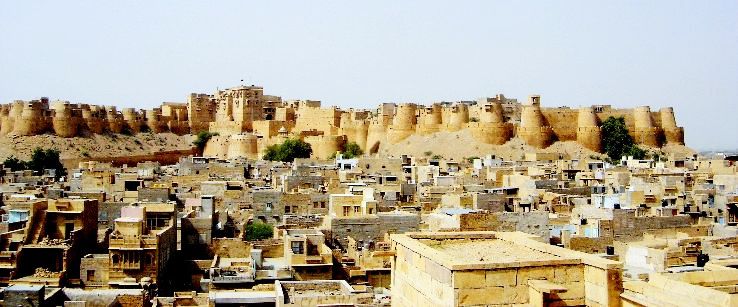
The main draw of Hanumangarh consists of Bhatner fort which stands as the oldest fort in India bearing a history that spans across thousands of years.
The fort existed on River Ghaggar’s bank was constructed by Bhupat in 253 CE during his sonhood of king Bhati who ruled Jaisalmer. When King Bhupat lost in combat he retreated to the jungle adjacent to the Ghaggar River basin. Bhatner fort gained its name after King Bhupat built this protective structure as his castle in this location. The build of the entire fort utilizes brick material to create its 52-acre grounds which takes the distinctive shape of a parallelogram with twelve bastions placed on its four sides. The defense system of this fort is impressive while its entrances appear spectacular. The site contains two sanctuaries that honor Lord Shiva alongside Lord Hanuman. Archaeological evidence reveals that Painted Grey Ware from 1100-800 BCE and Rang-Mahal Ware from 1st to 3rd century CE were discovered in the wells which run parallel to the wall.
The period was around 1300 when Sher Shah Suri took control of these areas in the Indian territories despite his relationship with Balban who was the Delhi Sultan. In 1391 Timur took possession of Bhatner through his victory over Bhatti King Rao Doolchand. According to Tuzuk-e-Timuri the Bhatner Fort was among the most secured and powerful forts situated within India. The invasion of India by Timur involved his advancing force of 92,000 soldiers with his grandson until he removed 10,000 troops to take control of Bhatner fort then destroy the city defenses. Mughal Emperor Akbar included his fortress description in his book “Ain-i-Akbari.”
Since its establishment the fort passed through Bhatis, Johiyas and Chayals before Rao Jet Singh of Bikaner captured it in 1527. Subsequently Mughal forces took control of the fort two times during this period alongside the royal families of Chayal and Bikaner holding ownership.
Numerous scholars think Talwara Jheel in the district serves as the location where Mohammad Ghori fought Prithviraj Chauhan in the legendary Battle of Tarain. The fort serves as a strategic defensive position against foreign invasion of Central Asian origin because it protects vital Indian territories. The fort changed hands to Emperor Suraj Singh of Bikaner during 1805 and stayed under his influence until Rajasthan was established.
Related articles : Top 5 Places to Visit in Ganganagar for Heritage, Spirituality & Scenic Beauty








Pingback: Top 3 Places to Visit in Jalore – Complete Travel Guide