
Now Reading: Top 20 Tourist Places in Belgium
-
01
Top 20 Tourist Places in Belgium
Top 20 Tourist Places in Belgium
1. Brussels – Political Heart and Cultural Soul of Belgium

Brussels, the capital of Belgium, is a city where history, politics, culture, and cuisine blend seamlessly. As the administrative center of the European Union, Brussels plays a major role on the global stage, yet it retains a warm, human scale filled with charming neighborhoods and historic landmarks.
The city’s centerpiece is the magnificent Grand Place, surrounded by ornate guild houses that showcase Gothic and Baroque architecture. Nearby, visitors can explore the Royal Palace, Parc de Bruxelles, and numerous world-class museums such as the Royal Museums of Fine Arts and the Magritte Museum. Brussels is also famous for its quirky attractions like Manneken Pis, symbolizing the city’s humorous spirit.
Food lovers find paradise in Brussels. Belgian waffles, chocolate, fries, and over a thousand varieties of beer define the city’s culinary identity. Traditional brasseries and Michelin-starred restaurants coexist side by side.
Modern Brussels thrives with multicultural energy, international events, and vibrant nightlife. Whether exploring medieval streets, tasting local delicacies, or discovering European politics, Brussels offers a dynamic and rewarding travel experience.
2. Grand Place, Brussels – One of Europe’s Most Beautiful Squares

The Grand Place is the beating heart of Brussels and one of the most stunning city squares in the world. Recognized as a UNESCO World Heritage Site, this square is surrounded by richly decorated guild houses, the Town Hall, and the Maison du Roi.
Dating back to the 12th century, Grand Place reflects Brussels’ prosperity during the medieval period. Each building tells a story through gold-trimmed façades, sculptures, and detailed carvings. The Gothic Town Hall, with its soaring spire, dominates the square and is a masterpiece of civic architecture.
Throughout the year, Grand Place hosts major events such as the Flower Carpet Festival, when thousands of begonias form a massive floral design. At night, illuminated buildings create a magical atmosphere that captivates visitors.
Grand Place is not just a monument—it’s a living space where cafés, celebrations, and history come together, making it one of Europe’s most unforgettable landmarks.
3. Bruges – A Fairytale Medieval City

Bruges is often described as a living fairytale, and for good reason. With its winding canals, cobblestone streets, and medieval buildings, the city feels untouched by time. Recognized as a UNESCO World Heritage Site, Bruges preserves one of the best medieval city centers in Europe.
The Market Square and Belfry of Bruges offer panoramic views over red-tiled roofs. Visitors can stroll along romantic canals or take boat rides that reveal hidden corners of the city. Bruges is also famous for its lace-making tradition and artisanal chocolate shops.
Museums such as the Groeningemuseum showcase Flemish art, while historic churches display priceless religious works. In the evening, Bruges becomes peaceful and atmospheric, perfect for romantic walks.
Bruges is ideal for travelers seeking history, romance, and timeless beauty.
4. Ghent – Medieval Heritage with a Modern Pulse

Ghent is a vibrant city that blends medieval architecture with youthful energy. Its skyline is defined by three iconic towers: St. Bavo’s Cathedral, Belfry of Ghent, and St. Nicholas’ Church.
The city’s historic center is home to Gravensteen Castle, a medieval fortress with dramatic views over canals. Ghent is also a cultural hub with festivals, live music, and a thriving student population that keeps the city lively year-round.
Unlike more tourist-heavy destinations, Ghent offers an authentic Belgian experience. Cafés, art spaces, and eco-friendly initiatives make it one of Europe’s most livable cities.
Ghent’s balance of history and innovation makes it a must-visit destination.
5. Antwerp – Fashion, Diamonds, and Artistic Legacy
Antwerp is Belgium’s second-largest city and a global center for fashion, diamonds, and art. The city is deeply associated with Peter Paul Rubens, whose works can be seen throughout museums and churches.
The Cathedral of Our Lady, a UNESCO site, dominates Antwerp’s skyline and houses stunning Baroque paintings. Antwerp’s fashion district reflects its status as a trendsetter, while its diamond district handles a large share of the world’s diamond trade.
The city’s port is one of Europe’s largest, contributing to its international character. Trendy neighborhoods, vibrant nightlife, and modern architecture complement Antwerp’s rich heritage.
Antwerp is bold, creative, and endlessly fascinating.
6. Antwerp Central Station – The Railway Cathedral of Europe

Antwerp Central Station is not just a transportation hub; it is a masterpiece of architecture and one of the most beautiful railway stations in the world. Often called the “Railway Cathedral,” the station combines grandeur, elegance, and engineering brilliance, making it a must-see attraction even for non-travelers.
Opened in 1905, the station features a magnificent stone façade, a massive dome inspired by European cathedrals, and an interior filled with marble, gold accents, and intricate details. The blend of Neo-Renaissance and Art Nouveau styles reflects Belgium’s wealth and ambition during the early 20th century. The central hall alone feels more like a palace than a train station.
Beyond its beauty, Antwerp Central Station is a marvel of modern engineering. It operates on multiple underground levels, allowing high-speed trains to pass through seamlessly while preserving the historic structure above. This successful fusion of heritage and modern infrastructure is widely praised.
Visitors often stop here to admire the architecture, take photographs, or simply sit and observe the lively atmosphere. Cafés, shops, and nearby attractions make it a perfect starting point for exploring Antwerp. Whether arriving or departing, Antwerp Central Station leaves a lasting impression and symbolizes Belgium’s appreciation for both history and innovation.
7. Atomium – Belgium’s Icon of the Future
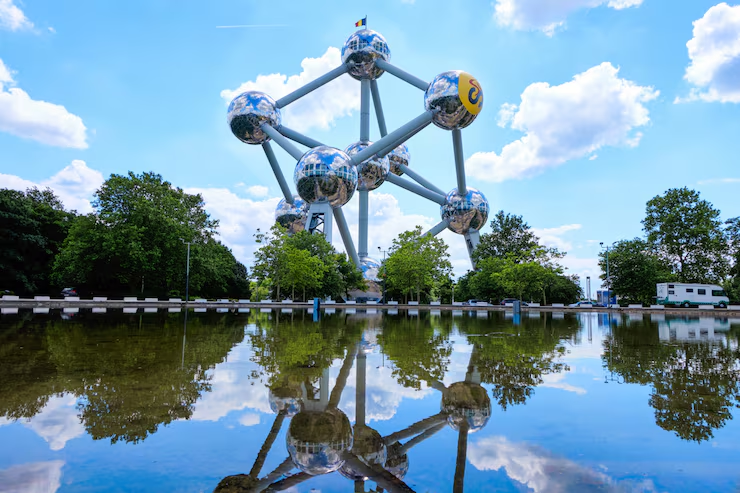
The Atomium is Brussels’ most iconic modern landmark and a symbol of innovation, science, and optimism. Built for the 1958 World Expo, it represents an iron crystal magnified 165 billion times and remains one of Europe’s most recognizable structures.
Standing 102 meters tall, the Atomium consists of nine interconnected stainless-steel spheres. Inside, visitors can explore exhibitions focused on science, design, and Belgium’s cultural evolution. Escalators and elevators connect the spheres, offering a unique futuristic experience.
The highlight of the visit is the top sphere, which provides panoramic views of Brussels and beyond. On clear days, visitors can see as far as Antwerp. One of the spheres also houses a restaurant, allowing guests to dine with breathtaking views.
At night, the Atomium lights up dramatically, creating a striking silhouette against the sky. It represents Belgium’s forward-looking spirit and stands in contrast to the medieval architecture found elsewhere in Brussels. The Atomium is not just a monument—it is a celebration of human progress and imagination.
8. Leuven – Historic University City with Youthful Energy

Leuven is one of Belgium’s most vibrant cities, known primarily as the home of KU Leuven, one of Europe’s oldest and most prestigious universities. Founded in 1425, the university shapes the city’s character, giving it a youthful, intellectual atmosphere.
The city’s centerpiece is the stunning Town Hall, an architectural jewel adorned with hundreds of statues representing scholars, nobles, and saints. Nearby, the University Library stands as a symbol of resilience after being destroyed during both World Wars and rebuilt with international support.
Leuven is also famous for its lively nightlife and café culture, particularly around Oude Markt, often called the “longest bar in the world.” The city has a strong brewing tradition and is closely linked to Stella Artois beer.
With historic churches, green parks, cultural festivals, and a buzzing student population, Leuven offers a perfect mix of tradition and modern life, making it an ideal destination for travelers seeking culture and energy.
9. Mechelen – Charming City of Bells and History

Mechelen is a picturesque city located between Brussels and Antwerp, often overlooked but rich in history and charm. During the 16th century, it served as the capital of the Low Countries under Habsburg rule, leaving behind an impressive architectural legacy.
The city is dominated by St. Rumbold’s Cathedral, whose towering belfry is a UNESCO World Heritage Site. Visitors can climb the tower for sweeping views of the city and surrounding countryside. Mechelen is also famous for its carillon tradition, with bell music echoing through the streets.
Mechelen’s compact old town is perfect for walking, featuring canals, historic houses, and cozy cafés. Museums such as the Kazerne Dossin Memorial offer powerful insights into Belgium’s World War II history.
Quiet yet culturally rich, Mechelen provides an authentic Belgian experience away from large crowds.
10. Dinant – Saxophone City on the Meuse River
Dinant is a scenic town dramatically set along the Meuse River, surrounded by steep cliffs and natural beauty. It is best known as the birthplace of Adolphe Sax, inventor of the saxophone, celebrated throughout the city with colorful saxophone sculptures.
Overlooking the town is the imposing Citadel of Dinant, accessible by cable car or steep steps. From the top, visitors enjoy breathtaking views of the river and town below. The Collegiate Church of Notre Dame, with its onion-shaped dome, is another iconic landmark.
Dinant offers river cruises, kayaking, and peaceful walks along the waterfront. Local specialties include couques de Dinant, a hard honey biscuit unique to the region.
With its blend of music heritage, dramatic landscapes, and relaxed riverside atmosphere, Dinant is one of Belgium’s most picturesque destinations.
11. Namur – Fortress City at the Heart of Wallonia

Namur is the capital of Wallonia, Belgium’s French-speaking region, and a city rich in history, culture, and scenic beauty. Located at the confluence of the Meuse and Sambre rivers, Namur has long been a strategic and administrative center, reflected most prominently in its massive hilltop citadel.
The Citadel of Namur is the city’s crown jewel and one of Europe’s largest fortresses. Over centuries, it was expanded by Romans, Spanish rulers, and even Napoleon. Today, visitors can explore underground tunnels, ramparts, and panoramic viewpoints offering breathtaking views of the rivers and surrounding countryside. A cable car now provides easy access, making the experience both scenic and convenient.
Below the citadel, Namur’s old town charms visitors with cobblestone streets, historic buildings, and lively cafés. The Saint-Aubain Cathedral, built in Baroque style, adds architectural elegance, while local museums highlight Walloon culture and history.
Namur is also a city of festivals, river cruises, and culinary delights. Regional dishes, local beers, and relaxed riverside promenades make it a wonderful destination for slow travel. With its balance of military history, natural scenery, and cultural life, Namur offers an authentic Belgian experience away from major tourist crowds.
12. Ardennes – Belgium’s Wild and Green Heart

The Ardennes region is Belgium’s natural paradise, known for dense forests, rolling hills, rivers, and charming villages. Stretching across southeastern Belgium, this region is ideal for travelers seeking outdoor adventure, tranquility, and traditional rural life.
Hiking, cycling, kayaking, and rock climbing are among the most popular activities here. Trails wind through deep forests, river valleys, and scenic viewpoints, offering year-round appeal. In autumn, the forests glow with color, while winter brings misty landscapes and cozy fireside retreats.
The Ardennes is also rich in history. Medieval castles, ancient monasteries, and World War II sites—such as those linked to the Battle of the Bulge—add depth to the natural beauty. Small towns like Durbuy, La Roche-en-Ardenne, and Spa serve as gateways to exploration.
Local cuisine plays a major role in the Ardennes experience. Hearty dishes, game meats, artisan cheeses, and regional beers reflect the area’s rustic traditions. Whether you are seeking adventure or peaceful countryside escapes, the Ardennes represents Belgium at its most natural and authentic.
13. Spa – Birthplace of Wellness Tourism
The town of Spa is world-famous for its mineral springs and gave the English language the word “spa.” Nestled in the Ardennes hills, Spa has attracted royalty, aristocrats, and wellness seekers since Roman times.
Its naturally carbonated mineral waters were believed to have healing properties, and by the 18th century, Spa had become Europe’s most fashionable health resort. Today, the modern Thermes de Spa continue this tradition with thermal pools, saunas, and panoramic views of the surrounding forests.
Beyond wellness, Spa offers cultural and natural attractions. The town features elegant architecture, museums dedicated to its spa heritage, and scenic walking trails. Nearby forests and hills provide opportunities for hiking and cycling.
Spa is also linked to motorsport history, lending its name to the famous Spa-Francorchamps Circuit, one of the world’s most respected Formula One tracks. Combining relaxation, history, and nature, Spa remains a timeless destination for rejuvenation.
14. Waterloo – Battlefield That Changed Europe

Waterloo is one of the most historically significant places in Europe. It was here, in 1815, that Napoleon Bonaparte suffered his final defeat, reshaping the continent’s political future.
The Battle of Waterloo Memorial complex allows visitors to explore this dramatic event through museums, multimedia exhibits, and the iconic Lion’s Mound, a large artificial hill offering sweeping views of the battlefield. Climbing to the top gives visitors a powerful sense of the scale of the conflict.
The site is well-preserved, with walking trails marking troop movements and key battle points. Museums display weapons, uniforms, maps, and personal stories, bringing history vividly to life.
Waterloo’s peaceful countryside contrasts sharply with its violent past, creating a reflective atmosphere. For history lovers, this site offers a deep and meaningful experience that explains how one battle altered the course of European history forever.
15. Mons – Cultural City with UNESCO Heritage

Mons is a dynamic cultural city in southern Belgium, blending medieval heritage with contemporary creativity. Its historic center is crowned by the Belfry of Mons, a UNESCO World Heritage Site and the only Baroque belfry in Belgium.
The city is famous for the Ducasse de Mons, also known as “Doudou,” a traditional festival recognized by UNESCO. This lively event reenacts the legendary battle between Saint George and a dragon, symbolizing good triumphing over evil.
Mons also gained international recognition as European Capital of Culture, leading to revitalized museums, galleries, and public spaces. Attractions like the Mons Memorial Museum and the Grand Place highlight the city’s historical and artistic depth.
With its blend of tradition, innovation, and community spirit, Mons represents Belgium’s cultural soul and provides a rewarding experience for travelers seeking authenticity and heritage.
16. Tournai – Ancient City of Bells and Stone

Tournai is one of the oldest cities in Belgium, with origins dating back over 2,000 years to Roman times. Located along the Scheldt River, this historic city is known for its deep religious heritage, medieval architecture, and UNESCO-listed landmarks.
The most iconic site is the Cathedral of Notre-Dame of Tournai, a masterpiece of Romanesque and Gothic architecture and a UNESCO World Heritage Site. Its five massive towers dominate the skyline and symbolize the city’s importance as a religious center during the Middle Ages. Inside, visitors can admire ancient tapestries, sculptures, and centuries-old artworks.
Another UNESCO site is the Belfry of Tournai, the oldest belfry in Belgium. From the top, panoramic views stretch across the city’s rooftops and surrounding countryside. The historic old town features charming squares, stone houses, and quiet streets that reflect Tournai’s timeless atmosphere.
Tournai is also a city of art and craftsmanship, historically famous for stone masonry and tapestry-making. Today, museums and cultural institutions preserve this legacy. Calm, historic, and deeply authentic, Tournai is ideal for travelers who appreciate ancient cities rich in tradition and architectural beauty.
17. Ostend – Belgium’s Seaside Capital

Ostend is Belgium’s most famous coastal resort, located on the North Sea. Known as the “Queen of the Belgian Seaside,” Ostend combines wide sandy beaches with vibrant urban life and maritime heritage.
The city’s long promenade is perfect for walking, cycling, and enjoying ocean views. Visitors can relax on the beach, try fresh seafood, or explore the lively cafés and shops. Ostend has long been a holiday destination for Belgian royalty, artists, and writers.
Cultural attractions include the Mu.ZEE art museum, dedicated to Belgian modern art, and the historic Fort Napoleon, which reflects the city’s strategic importance during European conflicts. Ostend also hosts music festivals, cultural events, and beach sports throughout the year.
With its relaxed coastal atmosphere, artistic identity, and seaside charm, Ostend offers a perfect blend of leisure, culture, and fresh sea air.
18. Ypres – City of Remembrance

Ypres (Ieper) is one of the most emotionally powerful destinations in Belgium. Nearly destroyed during World War I, the city has become a global symbol of remembrance and peace.
The Menin Gate Memorial, engraved with the names of over 54,000 missing soldiers, hosts the Last Post Ceremony every evening—a deeply moving tribute that has continued for decades. The In Flanders Fields Museum provides a comprehensive and personal look at the war’s impact on soldiers and civilians.
Despite its tragic past, Ypres was meticulously rebuilt, restoring its medieval beauty. The Cloth Hall, one of the largest medieval civic buildings in Europe, stands proudly in the main square.
Ypres balances solemn remembrance with resilience and beauty. It is a place not just to visit, but to reflect—making it one of Belgium’s most meaningful destinations.
19. Kortrijk – Medieval Strength and Modern Spirit
Kortrijk is a historic city in western Belgium known for its medieval heritage and contemporary creativity. Situated along the Lys River, it played a key role in Flemish history.
The city’s most famous landmarks are the Broel Towers, two medieval towers guarding a historic bridge. They symbolize Kortrijk’s independence and resilience, particularly linked to the Battle of the Golden Spurs in 1302.
Kortrijk blends history with innovation. Former industrial buildings have been transformed into modern cultural spaces, while museums highlight both medieval history and design heritage. The city’s compact center makes it easy to explore on foot.
With its youthful energy, design focus, and strong historical identity, Kortrijk offers a unique mix of old and new Belgium.
20. Durbuy – The Smallest City with Big Charm
Often called “the smallest city in the world,” Durbuy is one of Belgium’s most picturesque destinations. Nestled in the Ardennes, this tiny medieval town feels like a fairytale.
Cobblestone streets, stone houses, and ivy-covered walls give Durbuy a timeless charm. The Ourthe River flows beside the town, offering kayaking and scenic walks. Surrounding hills and forests make it a hub for outdoor activities such as hiking, cycling, and adventure sports.
Despite its size, Durbuy has excellent restaurants, artisan shops, and local markets. Seasonal festivals and cozy cafés enhance its welcoming atmosphere.
Durbuy is perfect for travelers seeking romance, nature, and quiet beauty. It captures the essence of the Ardennes and provides a peaceful escape from modern life.