
Now Reading: Top 20 Tourist Places in Brunswick & Lüneburg
-
01
Top 20 Tourist Places in Brunswick & Lüneburg

Top 20 Tourist Places in Brunswick & Lüneburg
1. Brunswick (Braunschweig) – Historic Capital of Ducal Power
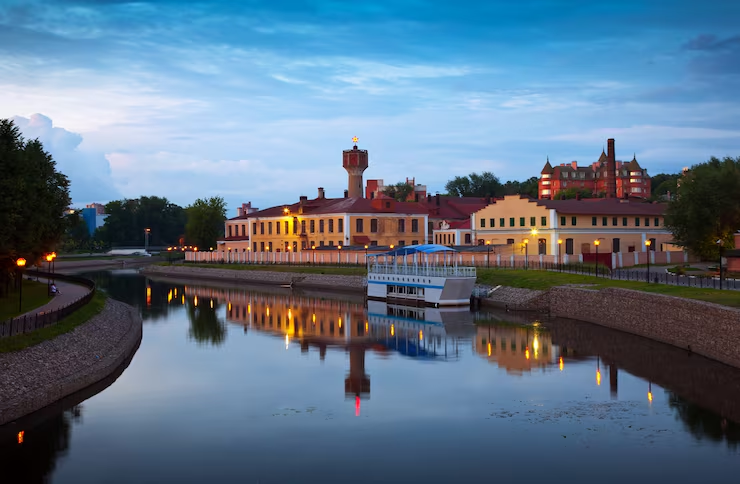
Brunswick, known in German as Braunschweig, is one of northern Germany’s most historically significant cities. Once the powerful capital of the Duchy of Brunswick, the city played a central role in medieval politics, trade, and culture. Its legacy is closely tied to Henry the Lion, one of the most influential rulers of the Holy Roman Empire, who transformed Brunswick into a major political and economic center during the 12th century.
The city’s historic core is a remarkable blend of medieval, Renaissance, and modern architecture. Despite suffering damage during World War II, Brunswick has been carefully restored, preserving its rich heritage. Walking through the city, visitors encounter beautifully reconstructed half-timbered houses, historic squares, and grand churches that reflect its former ducal prestige.
Brunswick is also a city of innovation and learning. It is home to respected research institutions, universities, and cultural centers, making it a dynamic place where history and modern life coexist. Museums such as the Herzog Anton Ulrich Museum house world-class art collections, while theaters and music venues contribute to a lively cultural scene.
The city’s layout is unique, structured around five traditional districts, each centered on a historic church. This design gives Brunswick a distinctive character and makes exploring its neighborhoods a rewarding experience.
Brunswick is not just a destination for history lovers—it is a living city that tells the story of medieval power, intellectual growth, and cultural resilience. It serves as the perfect gateway to understanding the wider Brunswick–Lüneburg region.
2. Brunswick Cathedral (Dom St. Blasii) – Sacred Symbol of Power
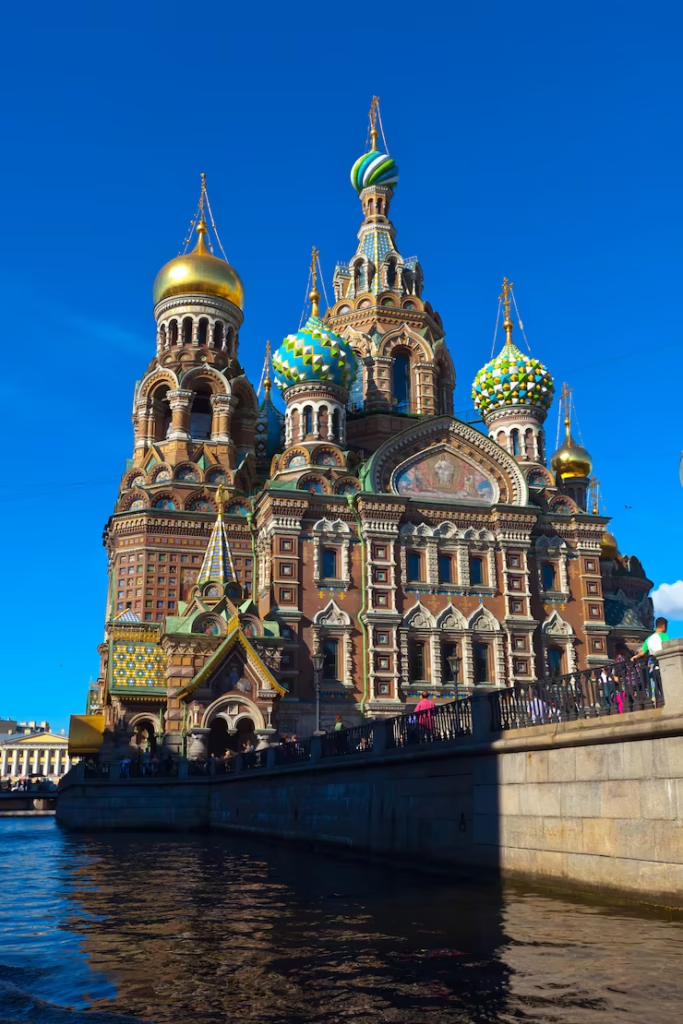
Brunswick Cathedral, officially known as Dom St. Blasii, is one of the most important Romanesque churches in Germany and a powerful symbol of medieval authority. Founded in the 12th century by Henry the Lion, the cathedral was designed not only as a religious structure but also as a statement of political ambition.
The exterior reflects classic Romanesque architecture with its solid stone walls, rounded arches, and twin towers. Inside, the cathedral reveals a solemn yet impressive atmosphere, with high vaulted ceilings, medieval tombs, and historic artworks. The most famous feature is the tomb of Henry the Lion and his wife Matilda, marking the cathedral as a dynastic memorial site.
Another highlight is the iconic Brunswick Lion, originally placed outside the cathedral as a symbol of ducal power. The lion became an enduring emblem of the city and remains one of Germany’s most recognized medieval symbols.
The cathedral also houses remarkable religious art, including a 12th-century crucifix and richly decorated chapels. Over the centuries, it has served as a spiritual, political, and cultural center for the region.
Today, Brunswick Cathedral continues to function as an active place of worship while welcoming visitors from around the world. It offers deep insight into how religion and rulership were closely intertwined in medieval Germany, making it an essential stop for anyone exploring Brunswick’s historic identity.
3. Dankwarderode Castle – Fortress of Medieval Authority

Dankwarderode Castle is one of Brunswick’s most historically significant landmarks, standing as a powerful reminder of the city’s medieval importance. Built in the 12th century under the rule of Henry the Lion, the castle served as the ducal residence and political heart of Brunswick.
The structure reflects Romanesque military architecture, with thick stone walls and a commanding position near the cathedral. Dankwarderode was designed not just as a fortress but as a symbol of authority, reinforcing the duke’s control over the region.
Inside the castle, visitors can explore museum exhibits showcasing medieval artifacts, weapons, and artworks connected to Brunswick’s ruling dynasty. One of the most valuable pieces is a replica of the medieval Brunswick Lion, linking the castle directly to the city’s identity.
Dankwarderode Castle also played a ceremonial role, hosting important gatherings and reinforcing Brunswick’s status within the Holy Roman Empire. Its proximity to the cathedral and Burgplatz highlights the close relationship between political and religious power during the Middle Ages.
Today, the castle is preserved as a cultural monument and museum, offering visitors an immersive journey into medieval governance and court life. For history enthusiasts, Dankwarderode Castle is an essential destination that brings Brunswick’s ducal past vividly to life.
4. Burgplatz (Brunswick) – Heart of Medieval Brunswick
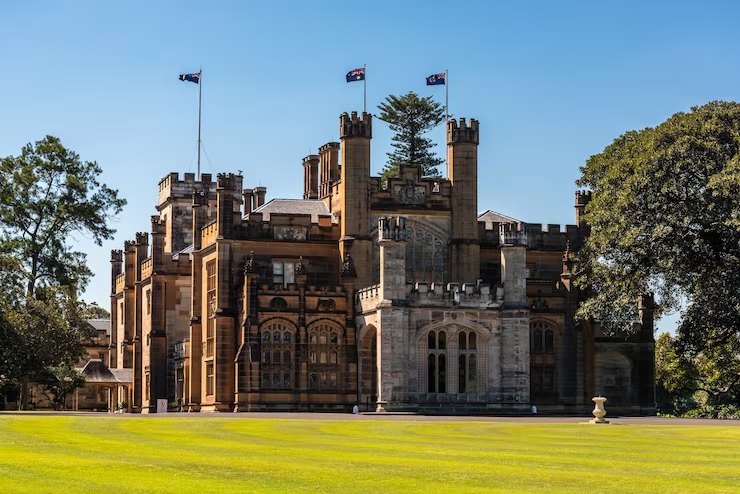
Burgplatz is the historic heart of Brunswick and one of the most impressive medieval squares in Germany. Surrounded by iconic landmarks such as Brunswick Cathedral, Dankwarderode Castle, and historic guild houses, the square offers a perfectly preserved snapshot of medieval urban life.
In the Middle Ages, Burgplatz served as the political and ceremonial center of the city. Important announcements, religious events, and public gatherings took place here, making it the focal point of Brunswick’s civic identity.
The square’s architecture reflects centuries of history. Half-timbered buildings stand alongside Romanesque stone structures, creating a visually striking blend of styles. At the center of Burgplatz once stood the original Brunswick Lion, symbolizing ducal authority and civic pride.
Today, Burgplatz remains a vibrant public space. Cultural events, markets, and seasonal celebrations bring the square to life, while cafés and museums invite visitors to linger and explore.
Walking through Burgplatz feels like stepping back into medieval Europe. It offers an unmatched opportunity to understand how power, religion, and daily life intersected in historic Brunswick, making it a must-visit landmark for travelers.
5. Lüneburg – Wealth, Salt, and Hanseatic Glory
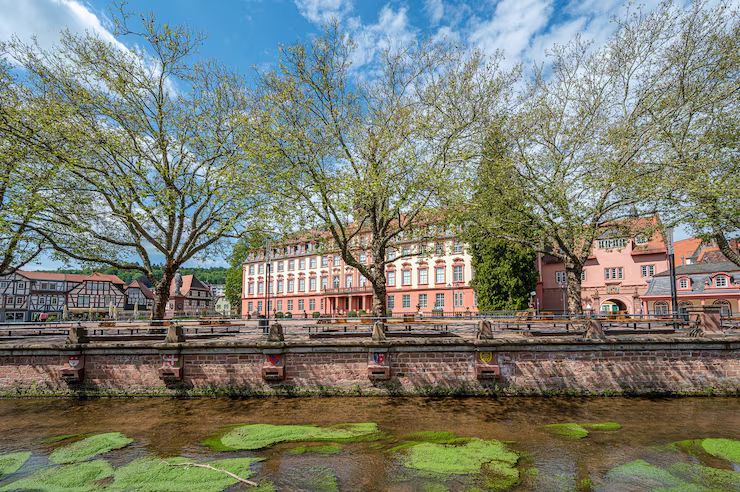
Lüneburg is a beautifully preserved medieval town whose prosperity was built on salt—often called “white gold.” During the Middle Ages, Lüneburg’s salt mines made it one of the wealthiest towns in northern Germany and a key member of the Hanseatic League.
The town’s wealth is visible in its stunning architecture. Brick Gothic churches, grand merchant houses, and elegant town halls dominate the skyline. Lüneburg’s Old Town remains remarkably intact, offering visitors a chance to experience authentic Hanseatic urban design.
Salt shaped every aspect of life in Lüneburg. The industry funded education, culture, and trade, allowing the town to flourish for centuries. Today, museums and guided tours explain how salt production influenced regional and European history.
Lüneburg also has a lively modern side. A large student population brings energy to its medieval streets, filling cafés, shops, and cultural venues. Despite this, the town retains a calm, historic atmosphere that appeals to travelers seeking both history and charm.
Lüneburg stands as one of Germany’s finest examples of a preserved Hanseatic town and serves as a cornerstone of the Brunswick–Lüneburg heritage.
6. Lüneburg Old Town – A Living Hanseatic Museum

Lüneburg Old Town is one of the best-preserved medieval town centers in northern Europe and feels like an open-air museum of Hanseatic history. Wealth generated by the salt trade allowed the city to build impressive brick Gothic structures, elegant merchant houses, and grand civic buildings that still dominate the streets today. Walking through the Old Town is like stepping back into the 14th and 15th centuries.
The architecture is particularly striking. Tall stepped gables, red-brick façades, and ornate townhouses line narrow cobbled streets. Landmarks such as the Old Crane by the river, historic warehouses, and the medieval Town Hall reveal how trade shaped Lüneburg’s prosperity. Many buildings lean slightly due to centuries of salt mining beneath the city, adding unique character and charm.
Despite its age, the Old Town is vibrant and lively. Small cafés, boutiques, bookshops, and artisan stores are woven seamlessly into historic buildings. The presence of students from Leuphana University brings youthful energy while preserving the town’s relaxed, cultured atmosphere.
Cultural events, Christmas markets, and summer festivals regularly take place in the Old Town squares, making it a year-round destination. Museums and guided tours explain the salt trade’s impact on European history and Lüneburg’s role in the Hanseatic League.
Lüneburg Old Town is not just a historical site—it is a living, breathing city center where medieval beauty meets modern life, making it one of Germany’s most rewarding destinations for travelers who love history, architecture, and authentic atmosphere.
7. Lüne Abbey (Kloster Lüne) – Monastic Tranquility and Art
Lüne Abbey, or Kloster Lüne, is a former Benedictine monastery that stands as one of the most peaceful and culturally rich landmarks in Lüneburg. Founded in the 12th century, the abbey played a significant religious and economic role during the Middle Ages and later became a Lutheran women’s convent.
The abbey complex is beautifully preserved, featuring red-brick Gothic architecture, serene courtyards, and elegant half-timbered structures. One of its greatest treasures is the collection of medieval tapestries, considered among the finest in northern Europe. These textiles provide rare insight into religious art, daily life, and craftsmanship from the late Middle Ages.
Inside the abbey church, visitors experience a calm and reflective atmosphere. Wooden choir stalls, painted ceilings, and historical furnishings reflect centuries of devotion and tradition. The surrounding gardens and cloisters add to the sense of serenity, making it an ideal place for quiet exploration.
Lüne Abbey also tells the story of women’s religious life over several centuries. The convent community maintained education, art, and spiritual traditions, preserving knowledge during times of political and social change.
Today, guided tours allow visitors to explore the abbey’s interior, learn about monastic life, and admire its artistic heritage. Kloster Lüne offers a gentle contrast to Lüneburg’s busy Old Town and remains a place of reflection, beauty, and historical depth.
8. Lüneburg Heath (Lüneburger Heide) – Purple Landscapes and Natural Beauty
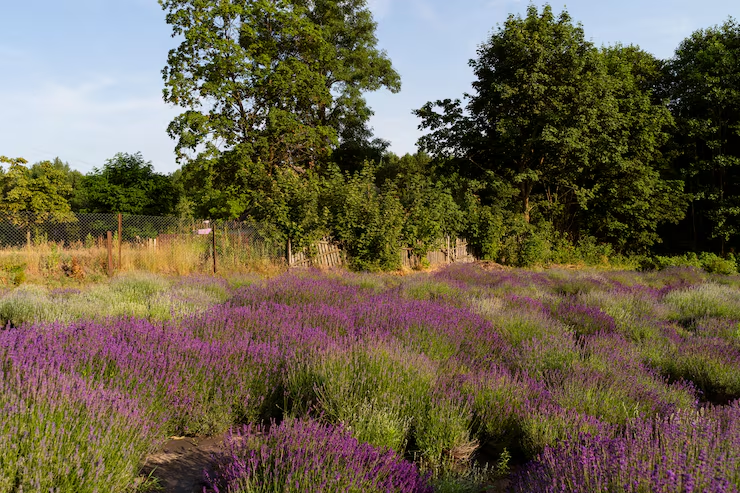
The Lüneburg Heath is one of Germany’s most iconic natural landscapes, famous for its vast open heathlands that bloom in brilliant shades of purple from August to September. This unique environment developed over centuries through traditional sheep grazing and human land use, creating a cultural landscape unlike any other.
Stretching across large areas of northern Germany, the heath is characterized by rolling hills, juniper bushes, forests, and quiet villages. During the heather bloom, the scenery becomes almost surreal, attracting photographers, hikers, and nature lovers from across Europe.
The region is ideal for outdoor activities. Well-marked hiking and cycling trails wind through open heathland and shaded woodland. Traditional horse-drawn carriages offer a nostalgic way to explore the landscape, while nature centers explain local ecology and conservation efforts.
Wildlife thrives here, including rare bird species, heathland plants, and native sheep breeds such as the Heidschnucke. These sheep are not only symbolic of the region but also essential for maintaining the heath ecosystem.
Beyond nature, the Lüneburg Heath is rich in folklore and rural traditions. Thatched-roof farmhouses, small museums, and village festivals preserve the area’s cultural identity.
The Lüneburg Heath is a perfect destination for travelers seeking peace, open space, and a deep connection to nature shaped by centuries of human history.
9. Celle – Ducal Elegance and Half-Timbered Beauty
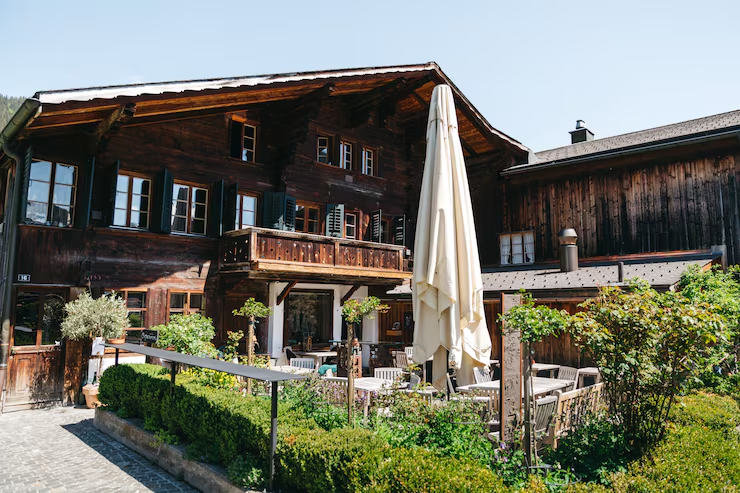
Celle is a picturesque town best known for its stunning collection of half-timbered houses and its role as a former residence of the Dukes of Brunswick-Lüneburg. With over 400 preserved timber-frame buildings, Celle is considered one of Germany’s most beautiful historic towns.
The Old Town is compact and charming, filled with colorful façades, decorative carvings, and narrow streets. Each building tells a story of craftsmanship and prosperity from the 16th and 17th centuries. Small shops, cafés, and galleries bring life to the historic setting.
Celle’s importance grew when it became a ducal residence, attracting artists, architects, and intellectuals. This legacy is reflected in the town’s refined atmosphere and cultural institutions, including museums and theaters.
The town is also surrounded by rivers and green spaces, offering scenic walking paths and parks. Seasonal events, markets, and festivals make Celle lively throughout the year.
Celle successfully balances tourism and daily life, allowing visitors to enjoy an authentic historic town that feels welcoming rather than staged. Its elegance, accessibility, and preserved architecture make it a highlight of the Brunswick–Lüneburg region.
10. Celle Castle – Renaissance Splendor and Royal History

Celle Castle is the crown jewel of the town and one of the most impressive Renaissance palaces in northern Germany. Originally built as a medieval fortress, it was transformed into a grand residence for the Dukes of Brunswick-Lüneburg during the Renaissance and Baroque periods.
The castle’s white façade, decorative gables, and surrounding moat create a striking visual impression. Inside, richly decorated halls, royal apartments, and a historic chapel reveal the refined lifestyle of the ducal court.
One of the most remarkable features is the castle theater, one of the oldest preserved Baroque theaters in Europe. It reflects the importance of music, drama, and culture at the ducal court and continues to host performances today.
The castle museum presents exhibitions on regional history, royal life, and art, offering deep insight into centuries of political and cultural development. Visitors can explore furnished rooms, ceremonial halls, and private chambers that once housed powerful rulers.
Celle Castle is not only an architectural masterpiece but also a symbol of the region’s aristocratic heritage. It stands as a bridge between medieval defense and Renaissance elegance, making it an essential destination for history lovers.
11. Wolfenbüttel – Residence City of Culture and Learning
Wolfenbüttel is a charming historic town that once served as the residence of the Dukes of Brunswick-Wolfenbüttel. Though smaller than nearby Brunswick, it played a crucial political, cultural, and intellectual role in northern Germany for centuries. The town’s well-preserved old quarter reflects its past importance as a ducal capital and center of scholarship.
The Old Town features elegant half-timbered houses, Baroque buildings, and tranquil canals that give Wolfenbüttel a relaxed, almost storybook atmosphere. Unlike larger tourist cities, it feels intimate and authentic, allowing visitors to explore at a leisurely pace.
Wolfenbüttel is particularly famous for its contributions to literature and education. It attracted philosophers, theologians, and writers, including Gotthold Ephraim Lessing, one of Germany’s most influential Enlightenment thinkers. Museums and cultural institutions throughout the town celebrate this intellectual heritage.
The town’s layout reflects its planned Baroque design, with wide streets and symmetrical buildings that contrast beautifully with older medieval structures. Cafés, small museums, and cultural venues bring modern life into historic surroundings.
Wolfenbüttel is ideal for travelers who appreciate history without crowds. Its blend of scholarship, architecture, and small-town charm makes it one of the most underrated cultural destinations in the Brunswick-Lüneburg region.
12. Wolfenbüttel Palace – Baroque Grandeur of Ducal Power
Wolfenbüttel Palace is one of the largest and most impressive Baroque palace complexes in northern Germany. Once the principal residence of the Dukes of Brunswick-Wolfenbüttel, it symbolized political authority, artistic ambition, and cultural refinement.
The palace’s massive size immediately reflects the power of its former rulers. Elegant courtyards, decorative façades, and symmetrical wings create a sense of grandeur typical of Baroque architecture. The surrounding gardens further enhance the palace’s stately presence.
Inside, visitors can explore richly decorated halls, ceremonial rooms, and residential apartments that reveal the lifestyle of the ducal court. Ornate ceilings, period furniture, and historical artworks provide insight into courtly life and governance.
Today, the palace houses museums and educational institutions, blending history with modern cultural use. Exhibitions focus on regional history, ducal administration, and artistic development during the Baroque era.
Wolfenbüttel Palace stands as a powerful reminder of the political structure of pre-modern Germany, when regional rulers governed independent territories. Its preservation allows visitors to understand the scale and ambition of ducal rule in the Brunswick lands.
13. Herzog August Library – Treasure House of Knowledge
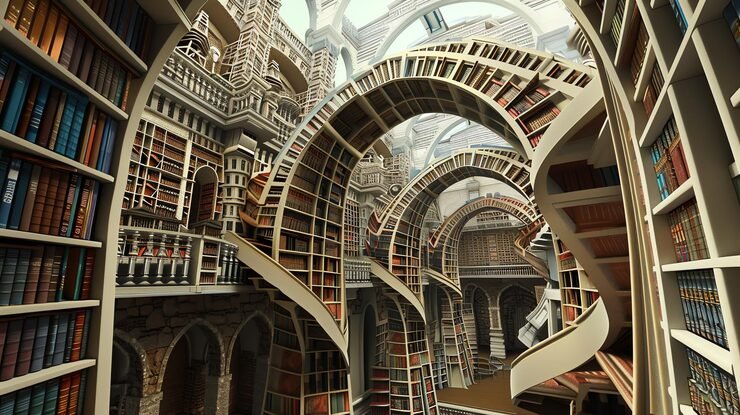
The Herzog August Library in Wolfenbüttel is one of the most important historic libraries in Europe and a world-renowned center for research and scholarship. Founded in the 17th century, it was designed to collect and preserve knowledge from across Europe at a time when books were rare and valuable.
The library’s historic building is an architectural highlight, combining Renaissance and Baroque elements. Inside, beautifully preserved reading rooms, wooden galleries, and ancient bookcases create an atmosphere of quiet reverence for learning.
The collection includes medieval manuscripts, early printed books, maps, and rare documents that span centuries of European intellectual history. Scholars from around the world continue to visit Wolfenbüttel to study its unparalleled holdings.
One of the library’s most famous figures is Gotthold Ephraim Lessing, who served as its librarian and contributed greatly to German literature and philosophy. His presence cemented the library’s reputation as a hub of Enlightenment thought.
Even for non-specialists, guided tours make the library accessible and fascinating. Visitors gain insight into how knowledge was preserved, organized, and shared long before the digital age. The Herzog August Library is not just a building—it is a monument to human curiosity and intellectual ambition.
14. Goslar – Imperial City of Medieval Power
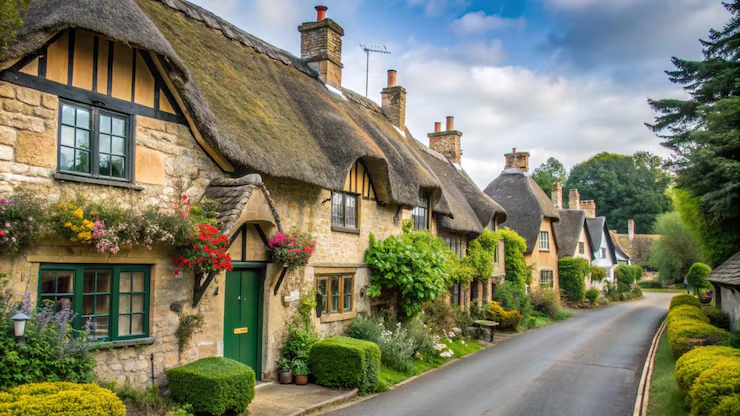
Goslar is one of Germany’s most historically significant towns, once serving as an imperial city of the Holy Roman Empire. Its prosperity was built on rich silver mines in the nearby Harz Mountains, which made Goslar a center of wealth and political influence during the Middle Ages.
The Old Town of Goslar is a UNESCO World Heritage Site, celebrated for its exceptionally preserved medieval architecture. Narrow streets, timber-framed houses, and stone buildings create a powerful sense of stepping into the past.
Goslar’s importance attracted emperors, merchants, and craftsmen, shaping a city that combined political authority with commercial success. Churches, guild halls, and townhouses reflect this blend of power and prosperity.
Today, Goslar is a vibrant town where history and daily life coexist. Museums, cultural events, and traditional restaurants allow visitors to experience medieval heritage in a living city.
The surrounding Harz Mountains add natural beauty, making Goslar an ideal destination for travelers interested in both history and outdoor activities.
15. Imperial Palace of Goslar (Kaiserpfalz) – Symbol of Imperial Authority
The Imperial Palace of Goslar, or Kaiserpfalz, is one of the most important surviving palaces of the Holy Roman Empire and a UNESCO World Heritage Site. Built in the 11th century, it served as a residence and administrative center for German emperors.
The palace’s massive stone halls and monumental design reflect imperial power and ambition. Unlike later royal palaces built for luxury, the Kaiserpfalz was designed for governance, ceremonies, and political gatherings.
Inside, visitors can explore the grand Imperial Hall, which once hosted royal assemblies and diplomatic events. Historic murals and exhibitions explain the palace’s role in medieval politics and its connection to the silver mines that financed imperial authority.
The Kaiserpfalz stands as a rare and powerful reminder of Germany’s imperial past. Its preservation allows modern visitors to understand the political structure of medieval Europe and the central role Goslar played in shaping it.
16. Harz Mountains – Legendary Landscape of Nature and Mining
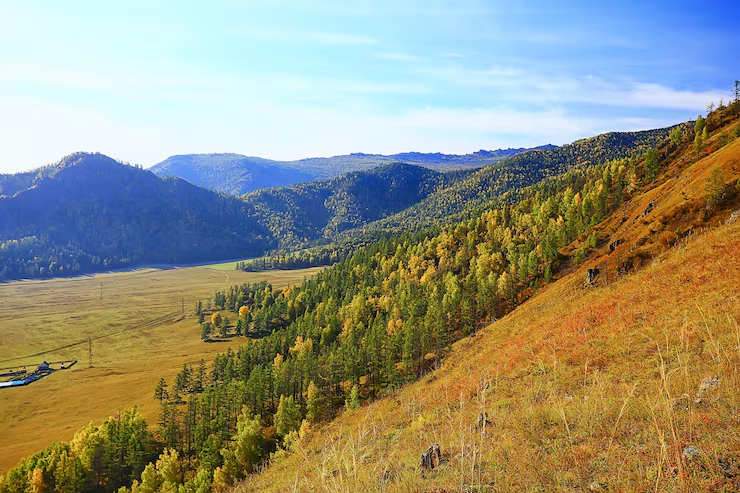
The Harz Mountains form one of northern Germany’s most scenic and historically significant mountain ranges. Closely tied to the rulers of Brunswick and nearby territories, the Harz region was a vital source of silver, copper, and other minerals that fueled medieval wealth and imperial power.
Beyond its mining heritage, the Harz is renowned for its dense forests, dramatic valleys, rivers, and mist-covered peaks. Hiking trails crisscross the region, offering routes for all skill levels. In winter, parts of the Harz transform into popular destinations for skiing and snow sports.
The mountains are deeply woven into German folklore. Legends of witches, spirits, and medieval myths are especially associated with the Brocken, the highest peak in the range. This rich storytelling tradition adds a mystical character to the landscape.
Historic mining sites, tunnels, and museums allow visitors to explore the region’s industrial past, while traditional towns showcase half-timbered architecture and local customs. Steam trains still climb the mountains, offering a nostalgic way to enjoy panoramic views.
The Harz Mountains are perfect for travelers seeking a blend of outdoor adventure, history, and legend, making them one of the most diverse attractions in the Brunswick-Lüneburg region.
17. Wernigerode – The Colorful Gateway to the Harz
Wernigerode is one of Germany’s most picturesque towns, often described as a “fairy-tale town” due to its vibrant half-timbered houses and charming streets. Located at the northern edge of the Harz Mountains, it serves as an ideal base for exploring the surrounding region.
The Old Town is filled with beautifully restored medieval buildings painted in bright colors. The Market Square, with its ornate town hall, is the heart of Wernigerode and a popular gathering place for visitors and locals alike.
Wernigerode’s history is closely linked to the Counts of Stolberg-Wernigerode, who shaped the town’s development. Museums, historic churches, and cultural festivals bring this heritage to life throughout the year.
The town also serves as a hub for the historic Harz narrow-gauge railway, including steam trains that travel up to the Brocken. This railway experience is a major attraction, offering both scenic beauty and historical charm.
With its blend of architectural beauty, cultural richness, and easy access to nature, Wernigerode is a must-visit destination for travelers seeking romance, history, and outdoor exploration.
18. Wernigerode Castle – Romantic Hilltop Landmark

Wernigerode Castle towers above the town, creating one of the most iconic views in the Harz region. Perched on a forested hill, the castle looks straight out of a storybook, with turrets, towers, and panoramic terraces.
Originally a medieval fortress, the castle was transformed into a Romantic Historicist palace in the 19th century. Its design reflects the era’s fascination with medieval architecture and aristocratic grandeur.
Inside, visitors can explore lavishly decorated rooms filled with period furniture, artwork, and tapestries. Each room offers insight into noble life, social customs, and artistic tastes of the aristocracy.
The castle’s elevated position provides stunning views over Wernigerode and the Harz Mountains. Walking paths and gardens surrounding the castle make it a popular destination for photographers and hikers.
Wernigerode Castle represents both historical continuity and romantic imagination, making it one of the most visually striking landmarks in the region.
19. Hildesheim – Ancient Bishopric City of Art and Faith
Hildesheim is one of Germany’s oldest cities and played a crucial role as a medieval bishopric. Its religious influence shaped art, architecture, and culture across northern Germany.
Despite suffering heavy damage during World War II, Hildesheim has been meticulously restored. The historic market square features beautifully reconstructed timber-framed houses that showcase traditional craftsmanship.
The city is internationally recognized for its Romanesque churches, bronze doors, and sacred art treasures. Museums and church complexes highlight Hildesheim’s importance as a center of medieval Christianity.
Hildesheim’s blend of religious heritage, urban life, and cultural preservation makes it a unique destination. Visitors can experience centuries of history while enjoying modern cafés, festivals, and cultural events.
20. St. Michael’s Church, Hildesheim – UNESCO Romanesque Masterpiece
St. Michael’s Church is one of the most important Romanesque churches in Europe and a UNESCO World Heritage Site. Built in the early 11th century, it represents a masterpiece of medieval architecture and religious symbolism.
The church’s symmetrical design reflects theological concepts of order and harmony. Its painted wooden ceiling, depicting the Tree of Jesse, is one of the most remarkable surviving medieval artworks in Germany.
St. Michael’s was designed not only as a place of worship but also as a statement of spiritual and political authority. Its architecture influenced Romanesque church design throughout Europe.
Today, visitors can explore the church’s serene interior, learn about its historical significance, and appreciate its artistic treasures. The site stands as a timeless symbol of faith, creativity, and architectural innovation.