
Now Reading: Top 20 Tourist Places in Eritrea
-
01
Top 20 Tourist Places in Eritrea
Top 20 Tourist Places in Eritrea
1. Asmara – Africa’s Modernist Capital in the Clouds
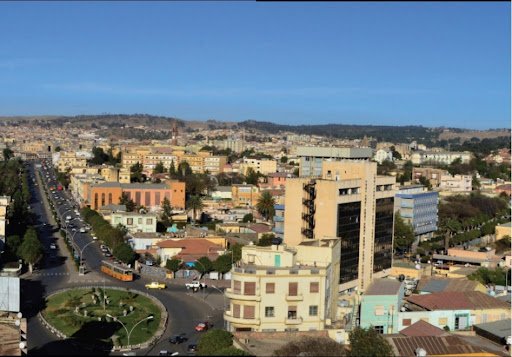
Asmara, the capital of Eritrea, is one of the most architecturally unique cities in the world. Perched at an elevation of approximately 2,325 meters (7,628 feet) above sea level in the Eritrean Highlands, the city enjoys a cool, spring-like climate year-round — a refreshing contrast to the hot coastal plains below. But what truly sets Asmara apart is not just its altitude or pleasant weather — it is its extraordinary architectural identity.
Often called “Africa’s Art Deco Capital,” Asmara was designated a UNESCO World Heritage Site in 2017 for its remarkably preserved modernist architecture. During the Italian colonial period, particularly in the 1930s, the city became a laboratory for avant-garde architectural experimentation. Italian architects designed futuristic buildings, rationalist government structures, cinemas, cafés, petrol stations, and churches in Art Deco, Futurist, and Modernist styles. Unlike many colonial cities where old architecture was replaced or damaged, Asmara’s buildings remain largely intact, creating an open-air architectural museum unlike anywhere else in Africa.
Walking along Harnet Avenue, the city’s main boulevard, feels like stepping into a 1930s European film set — yet the atmosphere is distinctly African. Palm trees line the streets, locals gather at sidewalk cafés, and the scent of freshly brewed Italian-style espresso drifts through the air. Cinema Impero, with its bold geometric façade and neon signage, stands as one of the finest surviving examples of Art Deco architecture on the continent. Nearby, the Fiat Tagliero Building dramatically stretches its concrete “wings” outward like an airplane frozen in takeoff.
Beyond its architecture, Asmara has a strong cultural rhythm. Coffee culture is central to daily life, and traditional Eritrean coffee ceremonies remain an important social ritual. Markets bustle with vendors selling spices, fresh produce, and handmade goods. The city also reflects religious harmony, with mosques, Orthodox churches, and Catholic cathedrals coexisting within walking distance of one another.
The Cathedral of Our Lady of the Rosary rises above the skyline with its tall bell tower, offering panoramic views of the city’s rooftops and surrounding mountains. Meanwhile, the Al Khulafa Al Rashiudin Mosque, with its elegant minaret, represents the city’s Islamic heritage.
Asmara is not a fast-paced metropolis. Instead, it moves with calm dignity. There is little traffic congestion, and life unfolds at a measured pace. The cool mountain air, clean streets, and cohesive urban design create an atmosphere that feels orderly yet relaxed.
What makes Asmara truly special is its authenticity. Unlike many destinations reshaped by heavy tourism, Asmara remains largely unchanged by global commercialization. Visitors experience a city that feels real, lived-in, and proud of its heritage.
Asmara is more than a capital — it is a rare fusion of African identity and European modernist ambition, preserved in time. For architecture lovers, history enthusiasts, and travelers seeking something truly different, Asmara is one of Africa’s most fascinating urban destinations.
2. Fiat Tagliero Building – Africa’s Most Dramatic Futurist Landmark
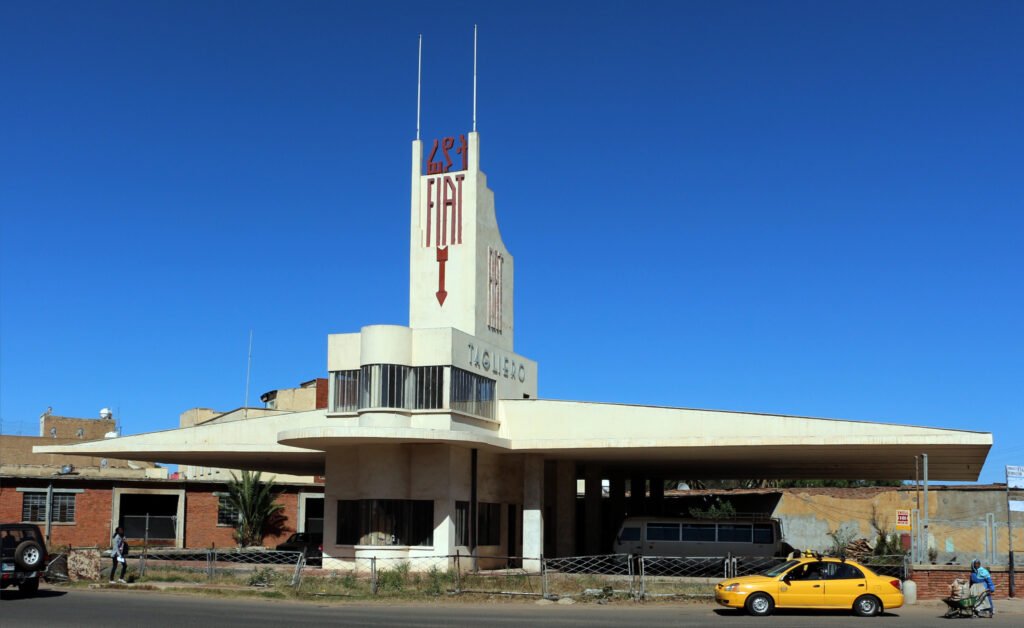
Standing boldly along Harnet Avenue in Asmara, the Fiat Tagliero Building is not just a petrol station — it is one of the most daring architectural statements of the 20th century. Built in 1938 during the Italian colonial period, this extraordinary structure represents the peak of Futurist design in Africa and remains one of the most iconic buildings on the continent.
Designed by Italian architect Giuseppe Pettazzi, the building was inspired by the era’s fascination with speed, aviation, and technological progress. The 1930s were a time when flight symbolized modernity and ambition. Pettazzi captured this spirit by designing the station in the shape of an airplane ready for takeoff. The central tower resembles an aircraft fuselage, while two massive reinforced concrete wings stretch horizontally from each side — each extending approximately 15 meters (49 feet).
What makes the structure even more remarkable is its engineering boldness. The wings were constructed without visible support columns. When the architect insisted that no additional supports be added, construction workers reportedly feared the structure would collapse. Legend says Pettazzi even threatened to shoot anyone who attempted to add supports, confident in his engineering calculations. Decades later, the wings remain perfectly intact — a testament to the brilliance of its design.
The building originally served as a service station for Fiat vehicles, but its architectural significance far surpassed its practical function. The bold geometric lines, aerodynamic symmetry, and reinforced concrete form embody Italian Rationalism and Futurism — architectural movements that emphasized innovation, movement, and modern identity.
Unlike many colonial-era buildings across Africa that have been altered or demolished, the Fiat Tagliero has been preserved almost exactly as it was built. It still stands as a functioning petrol station, blending daily life with architectural greatness. This living functionality adds to its uniqueness — it is not a museum piece locked in time, but an active part of Asmara’s urban fabric.
Visually, the building is breathtaking. Its pale exterior contrasts sharply against Asmara’s blue skies, and its dramatic wings create a powerful silhouette. Photographers often capture it at sunrise or sunset, when soft light enhances its sculptural qualities.
The Fiat Tagliero Building also symbolizes a broader narrative. It reflects a period when Asmara was envisioned as a “modernist city of the future.” While the colonial era was complex and politically charged, the architectural legacy left behind is undeniably extraordinary.
Today, the building stands as a centerpiece of Asmara’s UNESCO World Heritage designation. It represents innovation, preservation, and the rare survival of early 20th-century Futurist architecture on a global scale.
For architecture enthusiasts, the Fiat Tagliero is not just a stop — it is a pilgrimage site. It demonstrates how bold vision, engineering confidence, and artistic ambition can create something timeless.
In a world where many cities lose their architectural identity to modernization, the Fiat Tagliero Building remains proudly suspended in mid-air — frozen in motion, forever ready for takeoff.
3. Asmara Cathedral – A Towering Spiritual Landmark
The Cathedral of Our Lady of the Rosary, commonly known as Asmara Cathedral, is one of the city’s most photographed and admired landmarks. Built in 1922, the cathedral showcases Neo-Romanesque architectural style with red-brick construction and a soaring bell tower that dominates the skyline.
The cathedral reflects the strong Italian Catholic influence during the colonial era. Its façade features arched windows, intricate brickwork, and a symmetrical design that stands out among Asmara’s modernist structures.
Visitors can climb the bell tower for panoramic views of the city’s rooftops and surrounding mountains. From above, the grid layout of Asmara becomes clearly visible, highlighting its planned urban design.
Inside, the cathedral offers a serene atmosphere with stained glass windows and wooden pews. Despite its European architectural style, the church serves a vibrant Eritrean congregation, blending imported design with local faith traditions.
The cathedral stands as a symbol of both spiritual devotion and architectural heritage. It reflects the layered identity of Asmara—where African culture and European design intersect harmoniously.
4. Tank Cemetery – A Powerful Reminder of Struggle
On the outskirts of Asmara lies one of Eritrea’s most unusual and emotionally impactful sites: the Tank Cemetery. This open-air field contains hundreds of destroyed military vehicles, including tanks, armored carriers, and artillery remnants from Eritrea’s long war for independence.
The site serves as a silent monument to the country’s resilience. The rusting machinery, piled and scattered across the landscape, tells a powerful story of conflict, sacrifice, and national determination.
Visitors often describe the atmosphere as both sobering and reflective. It is not a typical tourist attraction but rather a historical site that provides insight into Eritrea’s difficult journey toward independence.
The Tank Cemetery symbolizes survival and strength. It reminds visitors that behind Eritrea’s peaceful landscapes lies a history of struggle that shaped the nation’s identity.
For history enthusiasts, it offers a deeper understanding of Eritrea’s modern past.
5. Massawa – The Pearl of the Red Sea
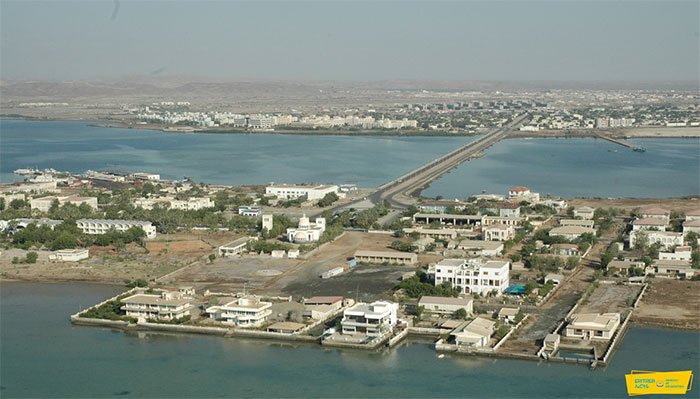
Massawa, located along Eritrea’s Red Sea coastline, offers a dramatic contrast to the cool highlands of Asmara. Known as the “Pearl of the Red Sea,” this historic port city blends Ottoman, Egyptian, and Italian architectural influences.
Massawa consists of two sections: the old island city and the newer mainland area. The old quarter features narrow alleyways, coral-stone buildings, and historic mosques that reflect centuries of maritime trade and cultural exchange.
The city played a crucial role as a Red Sea trading hub connecting Africa, Arabia, and the Mediterranean. Its architecture tells the story of these influences, with Ottoman-style balconies and Italian colonial structures standing side by side.
The climate in Massawa is hot and humid, typical of coastal Red Sea cities. However, the ocean views and sea breeze offer moments of relief. Nearby beaches and islands make it a gateway for marine exploration.
Massawa is historically rich and visually unique. Its layered architecture and coastal charm make it one of Eritrea’s most fascinating destinations.
6. Dahlak Archipelago – The Untouched Jewel of the Red Sea
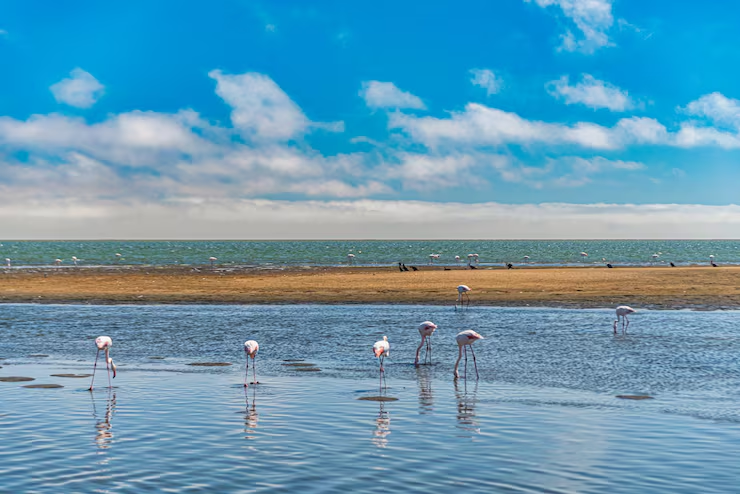
Scattered like emeralds across the sparkling waters of the Red Sea, the Dahlak Archipelago is one of Eritrea’s most extraordinary natural treasures. Comprising more than 200 islands, islets, and coral outcrops, this remote island chain remains one of the least explored marine destinations in the world. For travelers seeking pristine beaches, untouched coral reefs, and complete isolation from mass tourism, the Dahlak Archipelago is a dream destination.
Historically, the islands were part of ancient trade routes linking Africa, Arabia, and the Mediterranean. Archaeological remains on some islands reveal that they were once inhabited and served as trading posts centuries ago. Today, most of the islands are sparsely populated or completely uninhabited, preserving their raw natural beauty.
The real magic of the Dahlak Archipelago lies beneath the surface of the sea. The Red Sea is famous for having some of the world’s most vibrant coral reef systems, and the waters surrounding Dahlak are no exception. Divers and snorkelers can encounter colorful coral gardens, tropical fish, sea turtles, dolphins, and even shipwrecks resting on the seabed. Unlike heavily trafficked dive destinations elsewhere in the Red Sea, Dahlak’s underwater ecosystems remain largely undisturbed.
Above water, the islands offer white sandy beaches, crystal-clear lagoons, and dramatic rocky coastlines. The silence here is profound — broken only by waves, seabirds, and the wind. Visitors often describe the experience as stepping into another world, far removed from modern noise and crowds.
Reaching the archipelago typically involves a boat journey from Massawa, adding to the sense of adventure. The remoteness is part of the appeal. Dahlak is not about luxury resorts or nightlife; it is about raw nature, solitude, and the rare privilege of experiencing an untouched marine paradise.
For eco-travelers, divers, and those seeking true escape, the Dahlak Archipelago represents one of Africa’s last hidden coastal frontiers.
7. Dahlak Kebir – History and Isolation on Eritrea’s Largest Island
Among the many islands of the Dahlak Archipelago, Dahlak Kebir stands out as the largest and most historically significant. Its name, meaning “Great Dahlak,” reflects both its size and its importance in regional history.
For centuries, Dahlak Kebir served as a strategic trading hub in the Red Sea. Merchants from Arabia, Africa, and Asia passed through its ports, leaving behind traces of Islamic cemeteries, ruins, and inscriptions that hint at its vibrant past. These historical remnants add a layer of cultural intrigue to the island’s natural beauty.
Today, Dahlak Kebir is home to small fishing communities whose lives revolve around the sea. Traditional wooden boats dot the shoreline, and daily life moves at a gentle pace shaped by tides and weather patterns. Visitors are often welcomed with warm hospitality, gaining insight into a way of life that has remained largely unchanged for generations.
The island’s landscape is rugged yet beautiful. Sandy beaches blend into rocky cliffs, and the surrounding waters shimmer in shades of turquoise and deep blue. Snorkeling near the coast reveals thriving coral reefs and diverse marine species.
Dahlak Kebir offers a rare blend of history, culture, and natural isolation. It is not a polished tourist hotspot — it is an authentic island environment where time seems to slow down.
For travelers willing to venture beyond typical routes, Dahlak Kebir delivers a truly original Red Sea experience.
8. Qohaito (Kohaito) – Ancient Highland Civilization Above the Clouds
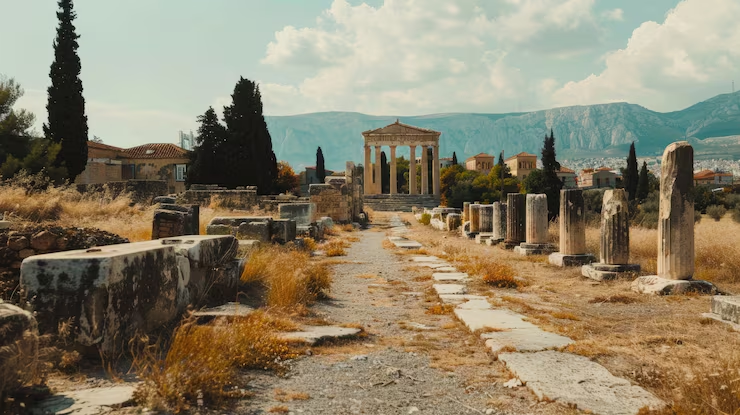
High in Eritrea’s mountains lies Qohaito, one of the country’s most significant archaeological treasures. Perched on a plateau overlooking dramatic valleys, this ancient settlement dates back over 2,500 years and is believed to have been part of the pre-Aksumite civilization.
The setting alone is breathtaking. Surrounded by cliffs and expansive highland scenery, Qohaito feels both majestic and mysterious. The site includes temple ruins, stone pillars, ancient dams, and rock carvings that reveal the sophistication of early Eritrean societies.
One of Qohaito’s most impressive features is its ancient water reservoir system. Engineers of the time constructed dams and channels to manage seasonal rainfall — evidence of advanced planning and agricultural knowledge.
Visitors walking through the ruins often feel transported back to antiquity. Unlike heavily restored archaeological sites elsewhere in the world, Qohaito remains largely untouched, adding to its authenticity.
The panoramic views from the plateau stretch across the surrounding highlands, offering dramatic photo opportunities and moments of quiet reflection.
Qohaito is not just a historical site — it is proof that Eritrea’s civilization dates back thousands of years. For history lovers and cultural explorers, it stands as one of the country’s most compelling destinations.
9. Adulis – The Ancient Red Sea Trading Power
Adulis, located near the Red Sea coast, was once one of the most important ports of the ancient Aksumite Empire. Between the 1st and 7th centuries AD, Adulis served as a key trading center linking Africa with Rome, Persia, India, and Arabia.
Though much of the site remains unexcavated, archaeological discoveries have revealed pottery, inscriptions, and structural foundations that indicate its former importance. Historical records from Greek and Roman sources describe Adulis as a bustling port filled with merchants and goods from across the ancient world.
Standing on the site today, visitors see low stone ruins scattered across a coastal plain. While the remains may appear modest, their historical significance is immense. Adulis was once a gateway of global trade, connecting Eritrea to international networks centuries ago.
The surrounding landscape, with views toward the Red Sea, reinforces the city’s maritime legacy. It is easy to imagine ancient ships docking along its shores.
Adulis represents Eritrea’s deep historical connection to global commerce and civilization.
10. Keren – A City of Mountains and Tradition
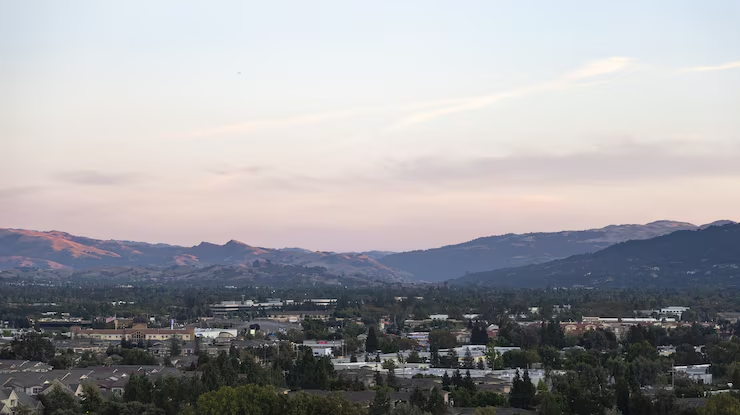
Nestled between dramatic rocky mountains, Keren is Eritrea’s second-largest city and one of its most culturally vibrant destinations. Unlike Asmara’s Italian modernism, Keren offers a more traditional African atmosphere shaped by local customs and ethnic diversity.
The city is famous for its lively camel market, where traders gather weekly to buy and sell livestock. The market is colorful, energetic, and deeply rooted in centuries-old traditions. It offers visitors a rare glimpse into authentic rural commerce.
Keren is also home to important religious landmarks, including the shrine of Mariam Dearit, a sacred baobab tree believed to have spiritual significance. The surrounding mountains provide stunning backdrops and scenic viewpoints.
Life in Keren moves at a slower pace. Markets, tea houses, and small shops create a warm, community-focused environment.
For travelers seeking cultural immersion rather than architecture alone, Keren provides a rich and memorable experience.
11. Keren Camel Market – A Living Tradition of the Highlands
The Keren Camel Market is not just a marketplace — it is one of the most authentic and culturally vibrant experiences in Eritrea. Held weekly in the city of Keren, this traditional livestock market has been operating for generations and remains deeply rooted in the social and economic fabric of the region.
From early morning, traders begin arriving from surrounding villages, leading camels, goats, sheep, and cattle across dusty roads toward the open trading grounds. The sight alone is remarkable — long lines of camels moving against a dramatic backdrop of rocky mountains. The market quickly fills with the sounds of bargaining, animal calls, and animated conversation.
Camels are the highlight of the market. These resilient animals are highly valued in Eritrean rural life, used for transport, agriculture, and trade. Buyers carefully inspect their posture, teeth, and strength before negotiating prices. The process is both practical and ceremonial, reflecting traditions passed down through generations.
Beyond livestock trading, the market is a vibrant social gathering. Vendors sell spices, grains, fresh produce, woven baskets, and handmade goods. Women in colorful traditional dress carry baskets balanced gracefully on their heads, while elders gather in shaded areas discussing community matters over tea.
For visitors, the Keren Camel Market offers a rare opportunity to witness rural commerce in its purest form. Unlike commercial tourist attractions, this market exists for locals — and that authenticity makes it incredibly powerful.
The market also provides insight into Eritrea’s diverse ethnic groups, particularly the Tigre and Bilen communities who inhabit the region. Observing daily interactions here reveals the strong communal ties and agricultural traditions that define highland life.
Photography enthusiasts will find endless compelling scenes, but respectful engagement is essential. This is a working market, not a staged performance.
Visiting the Keren Camel Market is not simply about sightseeing — it is about stepping into the rhythm of traditional Eritrean life and witnessing a centuries-old economic system still thriving in the modern world.
12. Debre Bizen Monastery – A Sacred Sanctuary in the Mountains
High above the Eritrean landscape, perched on a steep mountain near the town of Nefasit, lies Debre Bizen Monastery — one of the most spiritually significant sites in the country. Founded in the 14th century, this ancient Eritrean Orthodox monastery has preserved religious traditions and manuscripts for over 600 years.
Reaching Debre Bizen requires effort. Visitors must hike up a rugged mountain path that winds through rocky terrain and forested slopes. The climb is challenging but rewarding, offering breathtaking panoramic views of valleys and distant hills.
The monastery itself is simple yet deeply atmospheric. Stone walls, modest structures, and quiet courtyards create a serene environment. Inside, monks maintain centuries-old religious practices, and the monastery houses a remarkable collection of ancient manuscripts and religious texts.
Debre Bizen is also known for its strict religious customs. Traditionally, women are not permitted to enter the monastery grounds, a rule rooted in longstanding Orthodox tradition. While this may be surprising to some visitors, it reflects the monastery’s dedication to preserving its historical spiritual codes.
The silence at Debre Bizen is profound. Wind moves gently through the trees, and the sounds of prayer echo softly within the stone walls. It is a place of reflection, humility, and devotion.
For travelers interested in religious history, architecture, and highland scenery, Debre Bizen Monastery offers a deeply meaningful experience. It represents Eritrea’s enduring spiritual heritage and the resilience of faith across centuries.
13. Filfil Rainforest – Eritrea’s Unexpected Green Escape
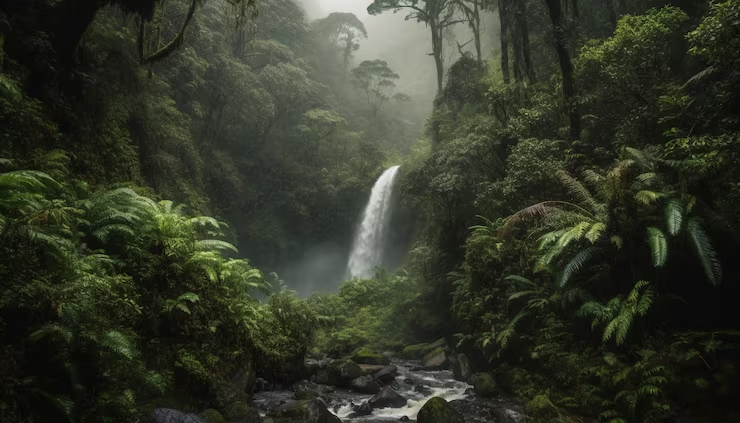
When most people imagine Eritrea, they picture dry highlands or coastal desert landscapes. However, the Filfil Rainforest offers a completely different side of the country. Located between Asmara and Massawa, this lush mountain forest is one of Eritrea’s most beautiful natural regions.
As travelers descend from the cool highlands toward the Red Sea, the landscape transforms dramatically. The air becomes warmer, and dense greenery replaces rocky terrain. Filfil is filled with tall trees, thick vegetation, and diverse wildlife.
The forest is home to monkeys, birds, and various native plant species. Its cool mountain streams and shaded valleys create a refreshing atmosphere, particularly during Eritrea’s warmer months.
Driving through Filfil is a scenic experience. Winding roads cut through the forest, revealing panoramic viewpoints where visitors can pause and admire the surrounding greenery. The contrast between Filfil’s lush environment and the arid regions nearby highlights Eritrea’s geographical diversity.
Local communities live within and around the forest, maintaining agricultural traditions and close relationships with nature. The area is ideal for hiking, birdwatching, and photography.
Filfil Rainforest proves that Eritrea is far more environmentally diverse than many travelers expect. It is a hidden green sanctuary within a country known for dramatic contrasts.
14. Nakfa – The Symbol of Eritrean Independence
Nakfa is more than just a town — it is a powerful symbol of Eritrea’s struggle for independence. Located in the northern highlands, Nakfa served as a key stronghold for Eritrean liberation fighters during the 30-year war against Ethiopian rule.
Throughout the conflict, Nakfa became a center of resistance. Underground tunnels were carved into the mountains, serving as shelters, hospitals, and strategic headquarters. The town endured heavy bombardment but remained resilient.
Today, visitors can see remnants of these wartime structures, including preserved trenches and memorial sites. Nakfa’s historical significance is so profound that Eritrea’s national currency was named after the town.
The surrounding landscape is rugged and mountainous, adding to the sense of strength and endurance associated with the area. The people of Nakfa take pride in their town’s role in shaping the nation’s independence.
For travelers interested in modern history and political heritage, Nakfa provides a deeper understanding of Eritrea’s identity. It represents sacrifice, determination, and national unity.
15. Metera – Echoes of the Aksumite Civilization
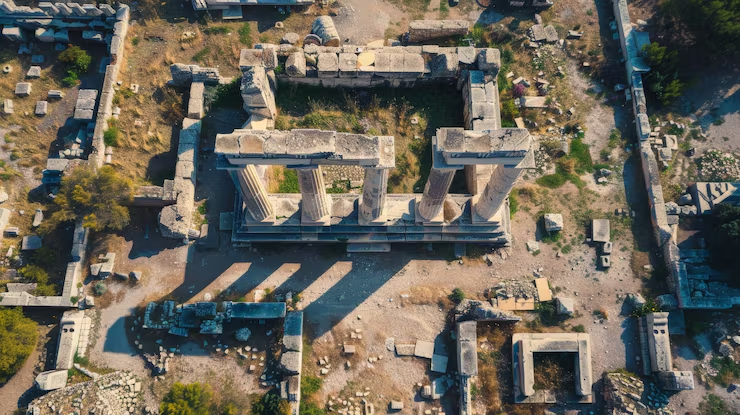
Metera is one of Eritrea’s most important archaeological sites, dating back to the Aksumite period between the 1st and 8th centuries AD. Located near the Ethiopian border, Metera was once a thriving settlement connected to ancient trade networks.
Today, visitors can explore stone ruins, ancient temple remains, and carved inscriptions that reveal the site’s historical significance. Archaeologists have uncovered evidence of religious structures and residential buildings that demonstrate advanced architectural knowledge.
Metera reflects Eritrea’s deep historical roots long before colonial influence. The site highlights the region’s connection to the powerful Aksumite Empire, which once controlled vast territories in East Africa and across the Red Sea.
Walking among the ruins, visitors can imagine a once-thriving community engaged in trade, religion, and daily life. The quiet atmosphere allows for reflection on centuries of civilization that shaped the region.
Metera is a must-visit destination for history enthusiasts seeking insight into Eritrea’s ancient past.
16. Sembel – Eritrea’s Pre-Aksumite Archaeological Treasure
Just outside the capital city of Asmara lies Sembel, one of Eritrea’s most important yet often overlooked archaeological sites. While Asmara is celebrated for its 20th-century modernist architecture, Sembel takes visitors thousands of years further back in time — into the pre-Aksumite era.
Discovered in the late 20th century, the Sembel site revealed remnants of an ancient settlement dating back to approximately 800–400 BCE. Archaeologists uncovered pottery fragments, stone tools, housing foundations, and evidence of organized community life. These findings proved that complex societies existed in the Eritrean highlands long before the rise of the Aksumite Empire.
Unlike monumental ruins such as temples or palaces, Sembel represents everyday life in an early civilization. The foundations of circular and rectangular houses suggest a structured settlement with social organization. Pottery designs show craftsmanship and cultural identity, while tools indicate agricultural and domestic activity.
The significance of Sembel lies in its historical depth. It reshaped understanding of the Horn of Africa’s early development and demonstrated that Eritrea’s civilization roots extend far beyond colonial narratives.
Today, the site remains relatively quiet and undeveloped, giving it an authentic and reflective atmosphere. Visitors walking through the area can imagine early communities farming the highland soil and building homes in the same landscape that still surrounds Asmara today.
Sembel may not have towering monuments, but its importance is profound. It tells the story of Eritrea’s earliest known urban settlement and adds a crucial chapter to the country’s rich historical timeline.
For history enthusiasts and archaeology lovers, Sembel offers a rare glimpse into Eritrea’s ancient beginnings.
17. Assab – Southern Gateway to the Red Sea
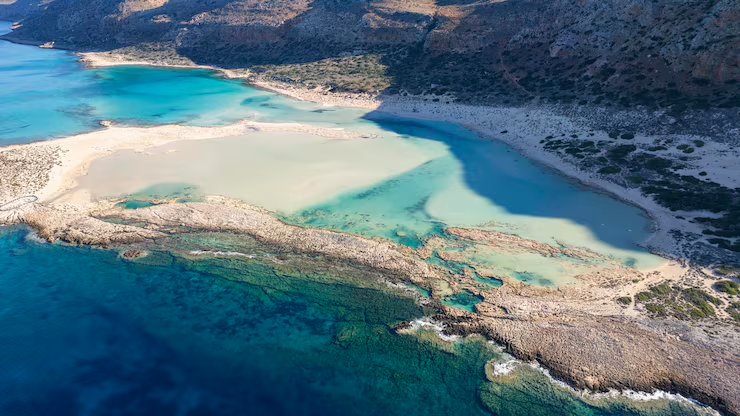
Located in the far southeastern corner of Eritrea near the Djibouti border, Assab is a port city defined by desert landscapes, salt flats, and dramatic Red Sea coastlines. Unlike the cooler highlands of Asmara or the historic charm of Massawa, Assab presents a harsher yet strikingly beautiful environment.
The surrounding region features wide open desert plains that stretch toward the horizon, interrupted by volcanic formations and shimmering salt deposits. The intense heat and dry climate create a raw, almost otherworldly atmosphere.
Assab’s coastline is one of its most captivating features. Clear turquoise waters meet white sandy beaches, offering pristine and uncrowded coastal scenery. Because tourism remains limited, visitors often find themselves alone on vast stretches of shoreline.
The city itself has historically served as a strategic port and fuel hub due to its proximity to international shipping routes. While its infrastructure is modest, Assab’s appeal lies in its rugged authenticity and untouched marine environment.
Adventurous travelers may explore nearby islands, dive into coral-rich waters, or photograph the dramatic contrast between desert and sea. The sunsets over the Red Sea are particularly breathtaking, casting golden reflections across calm waters.
Assab is not a polished resort destination — it is a frontier. For those who appreciate remote landscapes and dramatic coastal scenery, Assab delivers an unforgettable experience.
18. Gash-Barka Region – Eritrea’s Cultural and Agricultural Heartland
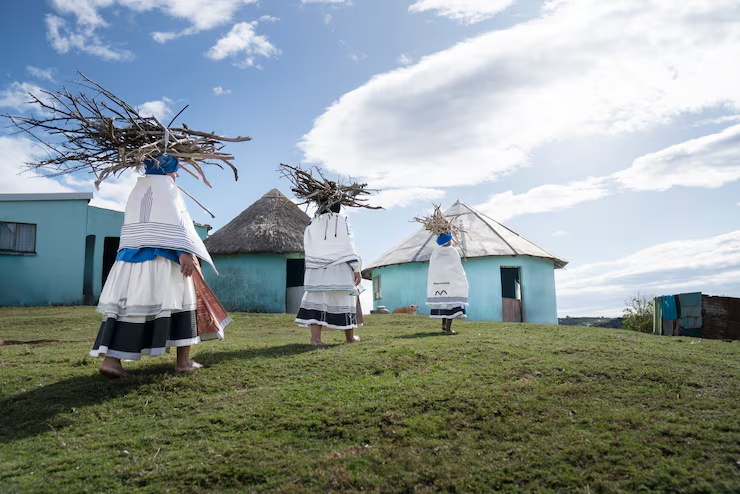
The Gash-Barka region, located in western Eritrea, is often called the country’s “breadbasket.” Characterized by savannah landscapes, agricultural plains, and culturally diverse communities, this region offers a completely different perspective from the highlands and coastal zones.
The landscape here is wide and open. Golden grasses stretch across flat terrain, dotted with acacia trees and small farming villages. Seasonal rivers nourish farmland where crops such as sorghum and millet are grown.
Gash-Barka is home to multiple ethnic groups, including the Kunama and Nara communities, each with distinct languages, traditions, and customs. Visitors to the region may witness traditional dances, village ceremonies, and agricultural practices that have remained consistent for generations.
Unlike Eritrea’s urban centers, life in Gash-Barka revolves around farming and livestock. Markets sell fresh produce, grains, and handmade goods. The slower pace of life allows travelers to experience rural Eritrea authentically.
Wildlife can also be found in parts of the region, including antelope and bird species adapted to savannah ecosystems.
Gash-Barka may not have grand monuments, but it represents the cultural foundation of Eritrea. It is where agricultural traditions, community bonds, and rural life continue to shape the nation’s identity.
19. Emba Soira – The Roof of Eritrea
Rising to approximately 3,018 meters (9,902 feet), Emba Soira is the highest mountain peak in Eritrea. Located within the country’s central highlands, this majestic summit offers breathtaking panoramic views and cooler mountain air.
The journey to Emba Soira takes travelers through scenic highland terrain, where terraced hillsides and small villages dot the landscape. The ascent itself can range from moderate to challenging, depending on the chosen route.
Reaching the summit rewards hikers with sweeping views across mountain ridges and valleys. On clear days, the landscape stretches endlessly, revealing the dramatic geography that defines Eritrea’s highland region.
The mountain is not heavily commercialized, making the hiking experience peaceful and immersive. Birdlife, alpine vegetation, and fresh mountain breezes create a serene atmosphere.
Emba Soira symbolizes natural grandeur and offers a refreshing escape from urban environments. It is particularly appealing for trekkers and nature enthusiasts seeking quiet adventure.
Standing atop Eritrea’s highest point provides not only stunning scenery but also a powerful sense of connection to the country’s rugged terrain.
20. Semenawi Bahri (Green Belt) – Eritrea’s Mountain Sanctuary
Semenawi Bahri, meaning “Green Belt,” is one of Eritrea’s most beautiful natural reserves. Located north of Asmara, this mountainous area is known for its lush forests, scenic viewpoints, and cool climate.
Unlike the drier surrounding regions, Semenawi Bahri features dense vegetation, making it a popular weekend escape for locals. The area is ideal for hiking, picnicking, and birdwatching.
The landscape includes forested slopes, rocky cliffs, and deep valleys. Trails wind through greenery, offering both gentle walks and more challenging treks. Wildlife such as baboons and various bird species inhabit the forest.
One of the highlights of Semenawi Bahri is its panoramic viewpoints. Visitors can look across vast stretches of mountainous terrain and appreciate Eritrea’s dramatic geography.
Because of its proximity to Asmara, it is one of the most accessible natural destinations in the country. Yet despite its accessibility, it retains a peaceful and uncrowded atmosphere.
Semenawi Bahri perfectly concludes Eritrea’s diverse travel story — combining highland scenery, biodiversity, and tranquility in one destination.