
Now Reading: Top 20 Tourist Places in Estonia
-
01
Top 20 Tourist Places in Estonia
Top 20 Tourist Places in Estonia
1. Tallinn – A Fairytale Capital of Medieval Towers and Modern Innovation
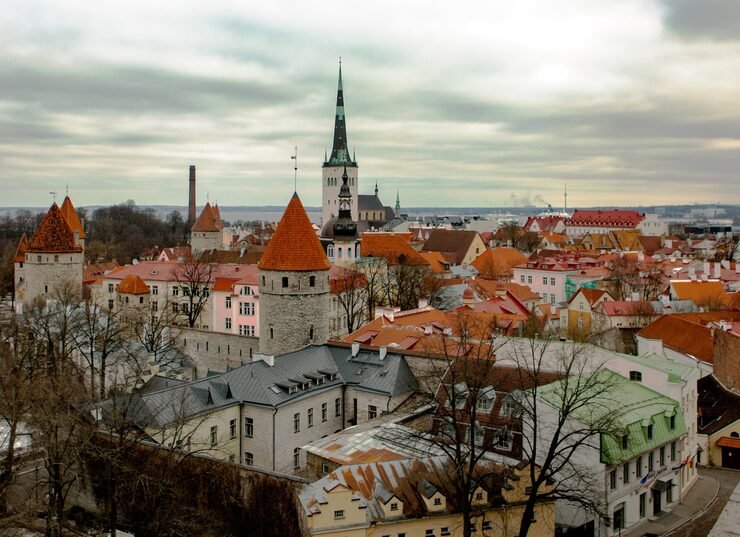
Tallinn, the capital of Estonia, is one of Europe’s most enchanting cities. Overlooking the Gulf of Finland, this Baltic gem seamlessly blends medieval charm with cutting-edge digital innovation. While Estonia is known as one of the most technologically advanced countries in the world, Tallinn’s heart lies in its remarkably preserved Old Town — a UNESCO World Heritage Site that feels like stepping into a storybook.
Founded in the 13th century, Tallinn quickly became an important trading hub in the Hanseatic League, connecting merchants from across Northern Europe. Its wealth during the medieval period allowed for the construction of strong defensive walls, merchant houses, churches, and guild halls — many of which still stand today.
Walking through Tallinn’s cobblestone streets, visitors encounter Gothic spires, red-roofed towers, and pastel-colored buildings. The city is divided into two historic sections: the Lower Town, where merchants and traders once lived, and Toompea Hill, home to nobility and government institutions. This layered structure gives Tallinn a unique vertical skyline filled with church towers and fortress walls.
But Tallinn is not frozen in time. Beyond the medieval walls lies a vibrant modern city. Estonia’s digital revolution began here — the country pioneered e-residency, online voting, and tech startups like Skype. Trendy neighborhoods such as Telliskivi Creative City offer art galleries, cafés, and innovation hubs.
Seasonally, Tallinn transforms beautifully. In winter, snow blankets the rooftops, and Christmas markets light up the Town Hall Square. In summer, long Nordic evenings create a lively atmosphere filled with festivals and outdoor dining.
Tallinn offers something rare: a city where ancient Europe and modern progress coexist harmoniously. Whether you’re drawn by history, architecture, culture, or innovation, Tallinn stands as one of Northern Europe’s most captivating capitals.
2. Tallinn Old Town – One of Europe’s Best-Preserved Medieval Cities
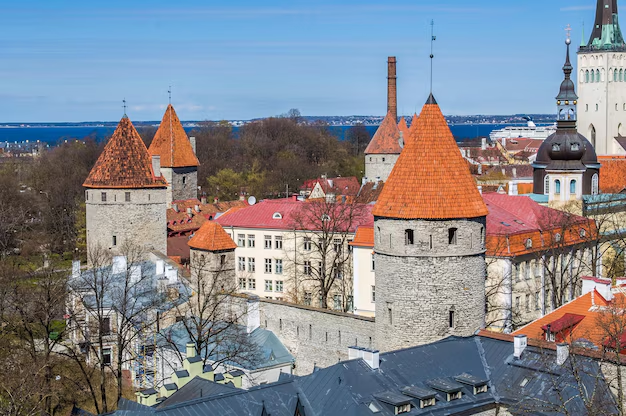
Tallinn Old Town is widely regarded as one of the best-preserved medieval city centers in Europe. Enclosed by ancient stone walls and watchtowers, this UNESCO World Heritage Site is the historic core of Estonia’s capital and its most visited attraction.
Dating back to the 13th century, the Old Town retains its original street network, guild houses, churches, and merchant residences. Unlike many European cities that suffered heavy wartime destruction, Tallinn’s Old Town survived largely intact, preserving its Gothic and medieval character.
The Town Hall Square (Raekoja Plats) is the heart of the Old Town. Surrounded by colorful merchant houses, the square hosts festivals, markets, and concerts throughout the year. Tallinn Town Hall itself, built in the 15th century, is the only surviving Gothic town hall in Northern Europe.
The Old Town is divided into Upper Town (Toompea) and Lower Town. Toompea sits atop a limestone hill and offers panoramic views of the city’s red rooftops and church spires. Lower Town, once home to traders and artisans, features narrow alleyways and hidden courtyards.
Visitors can walk along preserved city walls, climb defensive towers like Kiek in de Kök, and explore medieval churches such as St. Olaf’s Church, once one of the tallest buildings in the world.
Tallinn Old Town feels immersive and authentic — not just a preserved museum, but a living community where cafés, boutiques, and residents coexist within centuries-old walls.
3. Toompea Castle – Estonia’s Political and Historical Symbol
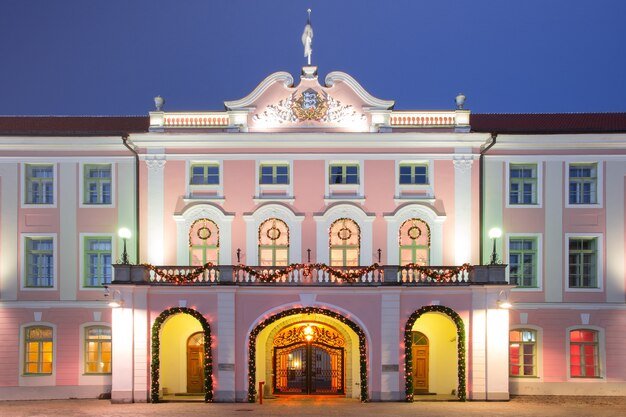
Perched atop Toompea Hill, Toompea Castle dominates Tallinn’s skyline and serves as a symbol of Estonia’s political power and resilience. Originally built in the 13th century by Danish rulers, the castle has been rebuilt and modified over centuries by various powers, including the Teutonic Order and Russian Empire.
Today, Toompea Castle houses the Estonian Parliament (Riigikogu), making it both a historical monument and an active seat of government.
The castle’s pink Baroque façade contrasts with its medieval foundations. The Tall Hermann Tower, standing 48 meters high, flies the Estonian flag each morning — a powerful symbol of national independence regained in 1991 after Soviet occupation.
From Toompea Hill, visitors can enjoy some of Tallinn’s most iconic viewpoints, including Kohtuotsa and Patkuli viewing platforms, offering breathtaking views over the Old Town and the Baltic Sea.
Toompea Castle represents Estonia’s layered history — Danish rule, German knights, Swedish control, Russian imperial influence, Soviet occupation, and finally modern independence.
4. Alexander Nevsky Cathedral – A Russian Orthodox Masterpiece
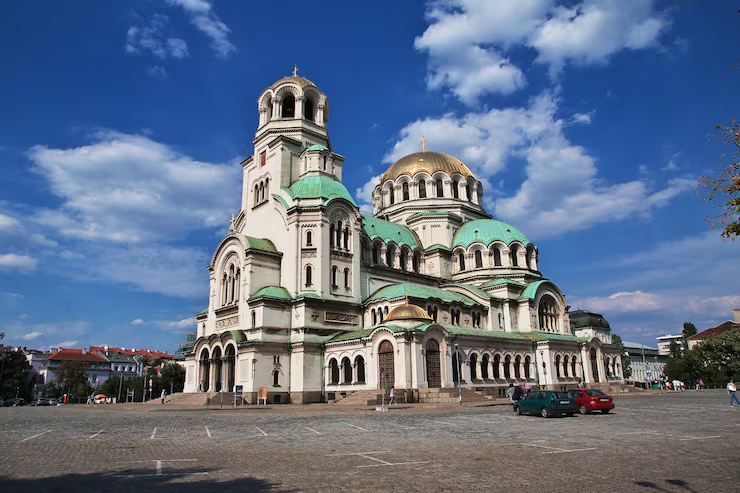
Standing prominently on Toompea Hill, Alexander Nevsky Cathedral is Tallinn’s largest and most visually striking Orthodox church. Built between 1894 and 1900 during the Russian Empire period, the cathedral reflects Moscow-style architecture with onion domes and intricate decorative details.
The cathedral was constructed when Estonia was part of the Russian Empire, and its presence symbolized imperial authority at the time. Despite political tensions over its origins, today it remains one of Tallinn’s most photographed landmarks.
Inside, visitors find richly decorated icons, gilded ornamentation, and traditional Orthodox artwork. The cathedral’s bells — the largest weighing over 15 tons — create powerful echoes across Toompea Hill.
The cathedral’s black domes crowned with golden crosses contrast beautifully against Tallinn’s pastel medieval skyline.
It stands not only as a religious site but also as a reminder of Estonia’s complex history under foreign rule.
5. Kadriorg Palace – Baroque Elegance in the Baltic
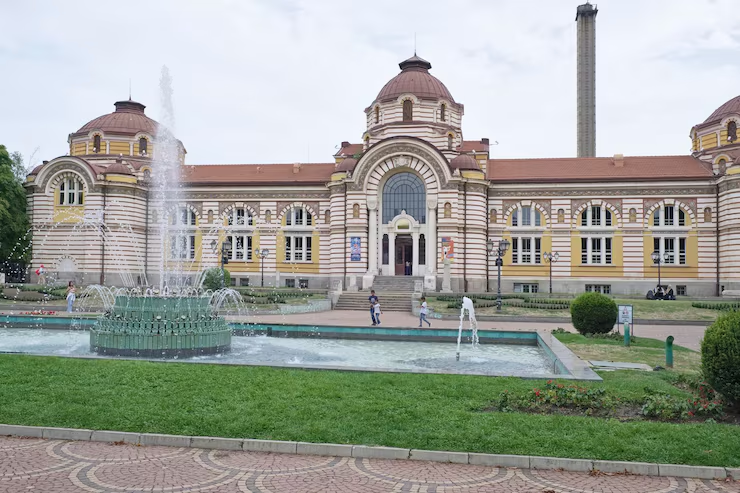
Kadriorg Palace, located in eastern Tallinn, offers a completely different architectural style from the medieval Old Town. Built in 1718 by order of Russian Tsar Peter the Great, the palace was designed as a summer residence for his wife, Catherine I.
The palace is a stunning example of Baroque architecture, featuring symmetrical design, grand halls, and beautifully landscaped gardens. Today, it houses the Kadriorg Art Museum, displaying European and Russian artworks from the 16th to 20th centuries.
Surrounding the palace is Kadriorg Park, a peaceful green space with ponds, walking paths, and flower gardens. Locals often visit for picnics and relaxation.
Kadriorg Palace reflects Estonia’s time under Russian imperial rule while also serving as a cultural center in modern Estonia.
6. Lahemaa National Park – Estonia’s Wild Coastal Wonderland
Lahemaa National Park is Estonia’s largest and one of Europe’s most beautiful protected natural areas. Located about an hour east of Tallinn, Lahemaa stretches across dense forests, rocky coastlines, bog landscapes, waterfalls, and historic manor estates. Established in 1971 during the Soviet era, it became one of the first national parks in the former USSR — a groundbreaking conservation effort at the time.
The name “Lahemaa” means “Land of Bays,” referring to the park’s deeply indented northern coastline along the Gulf of Finland. This coastal region features dramatic limestone cliffs, massive glacial boulders, sandy beaches, and charming fishing villages that have preserved traditional wooden architecture for centuries.
One of the most fascinating aspects of Lahemaa is its bog landscapes. Estonia is famous for its peat bogs, and Lahemaa contains some of the most accessible and photogenic examples. Boardwalk trails allow visitors to walk safely across wetlands dotted with small pools, dwarf pines, and unique plant species. During sunrise or sunset, the reflections across the still water create magical scenery.
Wildlife thrives in Lahemaa. The park is home to moose, lynx, wild boar, brown bears, and numerous bird species. While sightings of large mammals are rare, the sense of untouched wilderness is strong.
Beyond nature, Lahemaa also preserves cultural history. Historic manor houses such as Palmse Manor and Sagadi Manor showcase Baltic German aristocratic heritage. These elegant estates contrast beautifully with the surrounding wilderness.
Lahemaa offers a perfect escape from city life — a place where forests meet sea, and where Estonia’s deep connection to nature is fully experienced.
7. Tartu – Estonia’s Intellectual and Cultural Heart
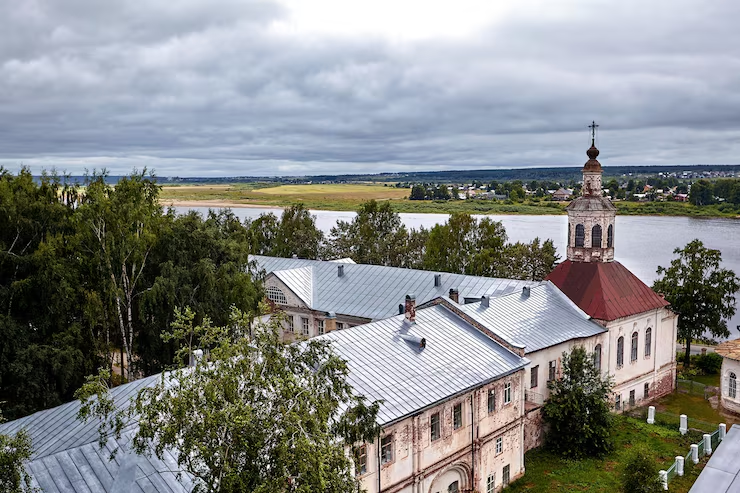
Tartu, Estonia’s second-largest city, is widely known as the country’s intellectual capital. Located in southern Estonia along the Emajõgi River, Tartu has a vibrant academic atmosphere, youthful energy, and rich cultural heritage.
Founded in the 11th century and later developed under Swedish rule, Tartu has long been a center of learning. The presence of the University of Tartu has shaped the city’s identity for nearly four centuries, giving it a distinctly scholarly and progressive spirit.
The city center features neoclassical architecture, lively squares, bookstores, art galleries, and cozy cafés filled with students and academics. Town Hall Square serves as the heart of the city, where the iconic “Kissing Students” fountain symbolizes youth and romance.
Tartu also plays an important role in Estonia’s national awakening movement during the 19th century, when intellectuals helped shape the country’s cultural and linguistic identity.
Beyond academia, Tartu offers museums, science centers, theaters, and music festivals. The Estonian National Museum, located just outside the city center, is one of the most modern and impressive museums in the Baltic region, telling the story of Estonia’s cultural evolution.
Tartu feels different from Tallinn — less medieval, more intellectual, and deeply connected to Estonia’s cultural roots. It is a city that celebrates ideas, creativity, and national identity.
8. University of Tartu – A Legacy of Knowledge Since 1632
Founded in 1632 by Swedish King Gustavus Adolphus, the University of Tartu is one of Northern Europe’s oldest universities. It has played a central role in shaping Estonia’s intellectual, political, and scientific development.
The university’s main building, with its grand neoclassical columns, stands proudly in central Tartu. Its architecture reflects Enlightenment ideals of order, reason, and progress. Walking through its halls, visitors can sense centuries of academic tradition.
The university has educated many prominent Estonian scholars, scientists, and national leaders. It was also a key institution during Estonia’s national awakening period, when cultural and linguistic identity became central to independence movements.
One of the university’s most fascinating attractions is the Old Observatory, which contributed significantly to astronomical research in the 19th century. The university also houses a historic library and art museum featuring ancient sculptures and artifacts.
Students bring vibrancy to the city, organizing cultural festivals, debates, and public lectures. The youthful energy of Tartu stems largely from this institution.
The University of Tartu is not just an academic center — it is a symbol of Estonia’s commitment to education, innovation, and intellectual freedom.
9. Pärnu – Estonia’s Summer Capital
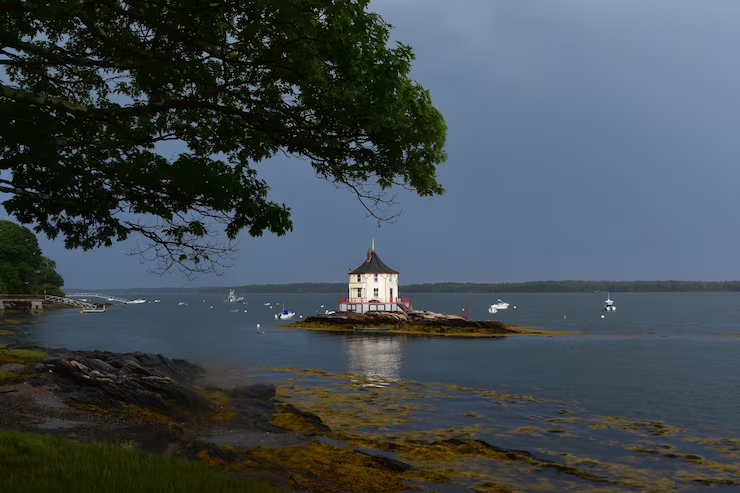
Pärnu is Estonia’s most beloved seaside resort town. Located along the southwestern coast, this charming destination becomes the country’s “Summer Capital” when warm weather arrives.
Pärnu’s main attraction is its long sandy beach, which stretches gently along the Gulf of Riga. Unlike rocky northern coastlines, Pärnu’s beach features shallow, calm waters ideal for swimming and families. During summer months, the promenade fills with cyclists, sunbathers, and festival-goers.
The town itself blends wooden 19th-century villas with spa resorts and modern cafés. Pärnu has a long history as a spa town dating back to the 1800s when it became a popular wellness destination within the Russian Empire.
Cultural events define Pärnu’s summer atmosphere. Concerts, outdoor theater performances, and beach festivals create a lively yet relaxed mood. The town feels cheerful, colorful, and welcoming.
Even outside summer, Pärnu retains charm with quiet coastal walks and historic architecture. It represents Estonia’s softer, leisure-oriented side — a perfect balance to Tallinn’s medieval grandeur and Tartu’s academic intensity.
10. Saaremaa Island – Windmills, Castles, and Island Serenity
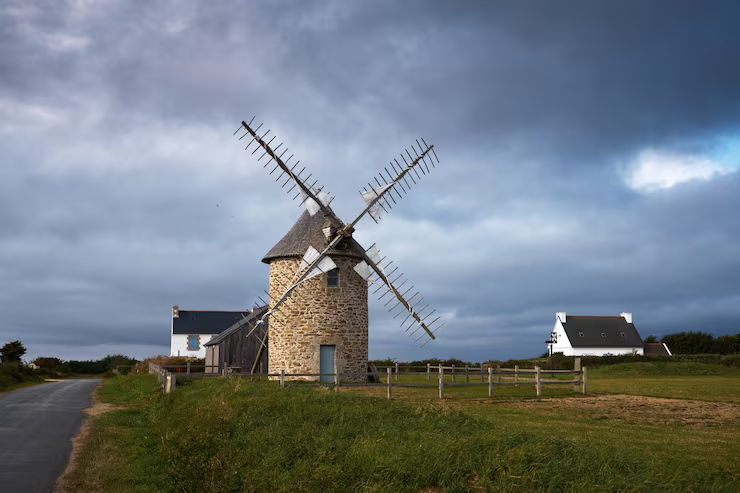
Saaremaa is Estonia’s largest island and one of its most enchanting destinations. Located in the Baltic Sea, Saaremaa feels distinctly slower-paced than mainland Estonia, offering rustic charm and natural tranquility.
The island is famous for its iconic wooden windmills, particularly in the village of Angla. These traditional structures symbolize rural Estonian heritage and agricultural history.
Saaremaa’s landscapes include coastal cliffs, forests, juniper fields, and quiet beaches. The island’s isolation has helped preserve local traditions, dialects, and architecture.
One of Saaremaa’s most impressive landmarks is Kuressaare Castle, a remarkably preserved medieval fortress located in the island’s main town. The castle stands surrounded by a moat, creating a fairytale-like setting.
Saaremaa is also known for its meteorite crater at Kaali, formed thousands of years ago and surrounded by legends.
Life on Saaremaa moves at a gentle rhythm. Locals value nature, tradition, and simplicity. Visitors often describe the island as peaceful and grounding.
Saaremaa captures the essence of Estonia’s rural beauty — wind-swept, historic, and quietly magical.
11. Kuressaare Castle – Estonia’s Best-Preserved Medieval Fortress
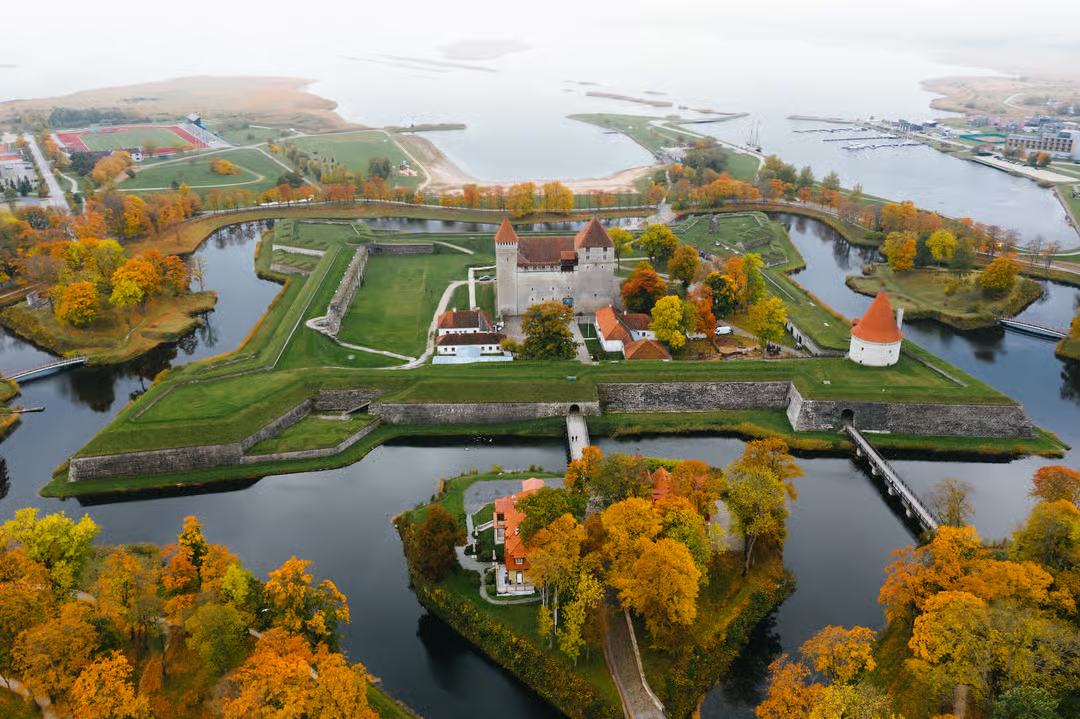
Rising majestically from the flat landscapes of Saaremaa Island, Kuressaare Castle is one of the most impressive and best-preserved medieval fortresses in the Baltic region. Surrounded by a wide moat and expansive green parkland, the castle looks like something straight out of a medieval fairytale.
Built in the late 14th century by the Teutonic Order, Kuressaare Castle (also known as Arensburg Castle) was originally constructed as a defensive stronghold and administrative center. Its thick limestone walls, imposing watchtowers, and central courtyard were designed for both protection and governance.
Unlike many European castles that have been partially destroyed or heavily restored, Kuressaare Castle retains much of its original structure. Visitors can walk along its defensive corridors, climb narrow spiral staircases, and explore vaulted chambers that once housed knights and clergy.
Inside the castle, the Saaremaa Museum offers detailed exhibitions about the island’s history, including Viking-era settlements, medieval trade, Swedish rule, and Soviet occupation. These exhibits help visitors understand how Saaremaa has been shaped by centuries of foreign powers and regional conflict.
The castle’s location enhances its beauty. The surrounding moat reflects the fortress walls, creating stunning photo opportunities, especially during sunset. The nearby Kuressaare town park provides a peaceful setting for strolls after exploring the fortress.
Kuressaare Castle is more than just a historical monument — it is a living symbol of Saaremaa’s resilience and Estonia’s medieval heritage.
12. Hiiumaa Island – Estonia’s Quiet Natural Escape
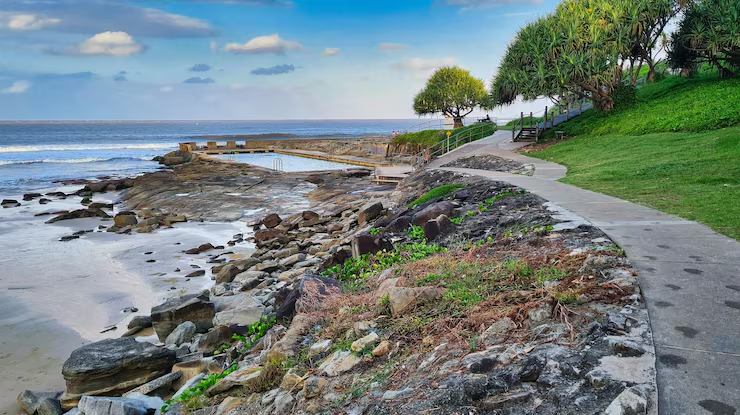
Hiiumaa, Estonia’s second-largest island, is a place where time slows down. Less visited than Saaremaa, Hiiumaa is known for its unspoiled landscapes, traditional fishing villages, dense forests, and iconic lighthouses.
The island’s peaceful atmosphere is one of its greatest appeals. With fewer crowds and wide open spaces, Hiiumaa offers visitors a deep connection to nature. Coastal roads wind through pine forests, past wind-swept beaches and quiet harbors.
One of Hiiumaa’s most famous landmarks is Kõpu Lighthouse, one of the oldest continuously operating lighthouses in the world, dating back to the 16th century. Climbing to the top rewards visitors with sweeping views over the Baltic Sea and forested island terrain.
Hiiumaa also features unique cultural traditions. The island’s relative isolation has preserved dialects, folklore, and rural lifestyles that differ subtly from mainland Estonia.
Nature lovers can explore hiking trails, birdwatching sites, and remote beaches where seals are sometimes spotted resting on coastal rocks. The island’s flat terrain makes cycling a popular way to explore.
Hiiumaa is ideal for travelers seeking tranquility rather than nightlife. It embodies Estonia’s understated charm — simple, natural, and deeply rooted in the Baltic landscape.
13. Soomaa National Park – The Land of the “Fifth Season”
Soomaa National Park is one of Estonia’s most unique natural destinations. Located in southwestern Estonia, the park is famous for its seasonal flooding phenomenon known as the “Fifth Season.”
Each spring, melting snow and heavy rains cause rivers to overflow, transforming forests and meadows into vast flooded wetlands. Locals refer to this as the Fifth Season — a time when boats replace cars, and canoeing through submerged forests becomes possible.
This rare natural event has shaped the park’s identity and traditions. For centuries, locals have used dugout canoes to navigate the flooded terrain. Today, guided canoe tours allow visitors to experience this extraordinary seasonal transformation firsthand.
Beyond flooding, Soomaa is characterized by raised bogs, rivers, and dense woodland. Boardwalk trails cross the bog landscapes, allowing visitors to walk safely over soft peat surfaces while enjoying panoramic views.
Wildlife is abundant in Soomaa. The park is home to wolves, lynx, beavers, and numerous bird species. Early morning hikes often reveal mist rising from wetlands, creating an almost mystical atmosphere.
Soomaa National Park highlights Estonia’s strong relationship with nature. It is not about dramatic mountains or towering waterfalls, but about subtle beauty, seasonal change, and ecological balance.
14. Narva – Estonia’s Eastern Frontier City
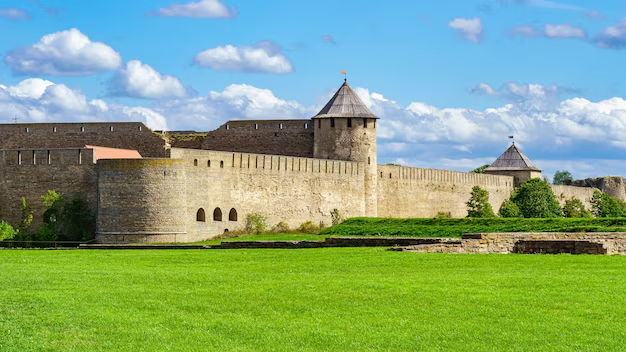
Located on Estonia’s eastern border along the Narva River, Narva is one of the country’s most historically complex cities. Directly across the river lies Russia, making Narva a symbolic meeting point between the European Union and the Russian Federation.
Narva’s identity has been shaped by centuries of conflict and shifting borders. Swedish, Russian, German, and Soviet influences have all left their mark. During World War II, much of the city was destroyed, and it was later rebuilt in Soviet architectural style.
Despite this turbulent history, Narva remains culturally fascinating. A large portion of its population speaks Russian, giving the city a distinct atmosphere compared to the rest of Estonia.
The highlight of Narva is its impressive medieval castle, which stands dramatically on the riverbank facing Russia’s Ivangorod Fortress. This visual contrast between two historic fortresses separated by an international border is striking.
Narva represents Estonia’s geopolitical significance and cultural diversity. It is a city where history, politics, and identity intersect in powerful ways.
15. Narva Castle (Hermann Castle) – Fortress on the Border
Narva Castle, also known as Hermann Castle, dates back to the 13th century when Danish rulers established it as a defensive stronghold. Over time, it was expanded by the Livonian Order and later modified under Swedish and Russian control.
The castle’s Tall Hermann Tower rises prominently above the Narva River, directly facing Russia’s Ivangorod Fortress on the opposite bank. Few places in Europe offer such a dramatic visual representation of two nations standing face-to-face across a narrow waterway.
Inside the castle, the Narva Museum presents exhibitions detailing medieval warfare, regional history, and Estonia’s border heritage. Visitors can climb the tower for panoramic views of both Estonia and Russia.
The castle has witnessed countless battles, treaties, and political shifts. It symbolizes centuries of conflict but also coexistence between neighboring cultures.
Today, Narva Castle stands as a reminder of Estonia’s resilience and strategic importance. It is not only a historic monument but also a symbol of modern European borders and identity.
16. Rakvere Castle – Medieval Adventure in Northern Estonia
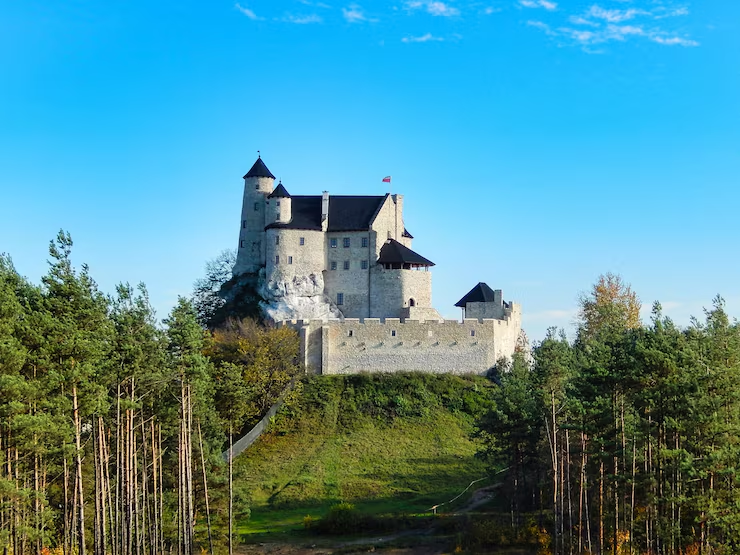
Rakvere Castle, located in northern Estonia about 100 kilometers east of Tallinn, is one of the country’s most engaging medieval attractions. Unlike many castle ruins that simply stand as quiet remnants of the past, Rakvere Castle has transformed into an interactive historical experience that brings the Middle Ages vividly to life.
Originally built in the 13th century by the Danes and later expanded by the Livonian Order, Rakvere Castle was strategically positioned to defend northern Estonia. Over the centuries, it witnessed numerous battles involving Danish, German, Swedish, Polish, and Russian forces. Although much of the original fortress fell into ruin, the remaining limestone walls and towers still dominate the surrounding landscape.
Today, Rakvere Castle is known for its immersive medieval theme experience. Visitors can participate in hands-on activities such as archery, sword fighting demonstrations, and medieval craft workshops. Actors dressed as knights, monks, and alchemists recreate daily life from centuries ago, making it particularly appealing for families and history enthusiasts.
Inside the castle complex, exhibitions explore medieval justice systems, weaponry, and daily routines. There are even themed chambers where visitors can learn about ancient medical practices or the darker aspects of medieval punishment.
From the castle’s elevated towers, sweeping views stretch across the town of Rakvere and the surrounding countryside. The nearby Rakvere sculpture of a giant bull — symbolizing the town’s historical livestock trade — adds a modern cultural touch.
Rakvere Castle offers more than static history. It invites visitors to step into the medieval world, combining education with entertainment in a uniquely Estonian way.
17. Viljandi – Romantic Ruins and Lakeside Serenity
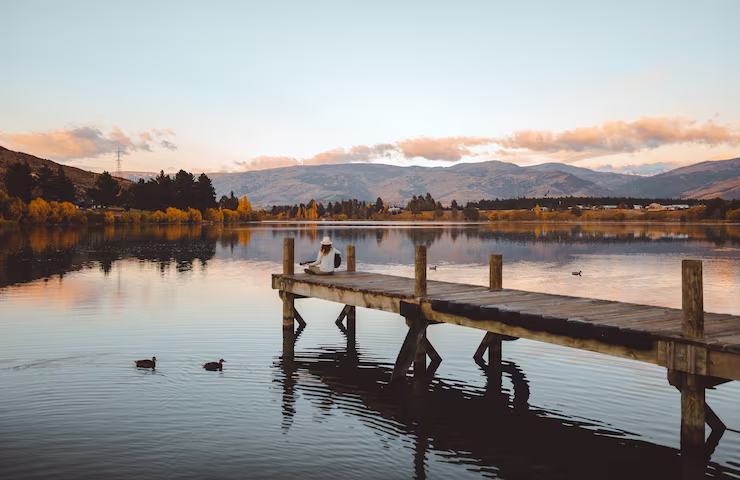
Viljandi is one of Estonia’s most charming small towns, known for its picturesque setting, medieval ruins, and strong folk music traditions. Located in southern Estonia, the town sits along the shores of Lake Viljandi, creating a peaceful and scenic atmosphere.
The highlight of Viljandi is the ruins of Viljandi Castle, originally built in the 13th century by the Livonian Order. Although much of the fortress is now in ruins, its remaining walls and stone foundations still evoke a sense of medieval grandeur. The castle once served as a powerful defensive stronghold in southern Estonia.
A suspension bridge connects different sections of the old fortress grounds, offering panoramic views of Lake Viljandi and the surrounding rolling hills. The area is particularly beautiful during autumn, when golden foliage reflects in the lake.
Viljandi is also known as Estonia’s folk music capital. Each summer, the Viljandi Folk Music Festival attracts performers and visitors from around the world. Traditional Estonian music fills the streets, celebrating national identity and heritage.
The town center features colorful wooden houses, small cafés, and artisan shops. Life in Viljandi moves at a relaxed pace, making it ideal for slow travel and cultural immersion.
Viljandi captures Estonia’s romantic side — where history, nature, and tradition come together harmoniously.
18. Otepää – Estonia’s Winter Sports Capital
Otepää, located in southern Estonia, is widely known as the country’s winter sports capital. Surrounded by rolling hills, forests, and lakes, Otepää offers some of Estonia’s most varied landscapes.
While Estonia is generally flat, the Otepää region features gentle hills that make it ideal for skiing and snowboarding during winter months. Cross-country skiing is particularly popular here, and the area has hosted international competitions.
In winter, snow-covered forests create a serene Nordic atmosphere. Ski trails weave through the landscape, and cozy cabins provide warmth after a day outdoors.
However, Otepää is not only a winter destination. During summer, the region transforms into a hub for hiking, cycling, swimming, and canoeing. Lake Pühajärv, one of Estonia’s most beautiful lakes, is located near the town and offers scenic walking paths and water activities.
Otepää also holds symbolic significance. In 1884, the first Estonian national flag was consecrated here, making the town important in Estonia’s independence history.
Whether blanketed in snow or bathed in summer sunlight, Otepää represents Estonia’s outdoor lifestyle and deep appreciation for seasonal change.
19. Kihnu Island – A Living Cultural Heritage
Kihnu Island, located in the Gulf of Riga, is one of Estonia’s most culturally unique destinations. Recognized by UNESCO for its intangible cultural heritage, Kihnu preserves traditions that have remained intact for centuries.
The island is famous for its strong matriarchal culture. Historically, while men spent long periods at sea as fishermen, women managed the island’s daily life, agriculture, and cultural traditions. This social structure shaped Kihnu’s identity.
Traditional clothing is still worn by many women, especially older generations. Bright striped skirts, patterned aprons, and colorful headscarves create a vibrant visual identity unique to the island.
Kihnu’s culture includes folk music, handicrafts, storytelling, and seasonal festivals. Visitors can witness traditional dances and hear ancient songs that have been passed down orally.
The island itself is small and flat, making bicycles the primary mode of transportation. Wooden houses, quiet beaches, and lighthouses contribute to its rustic charm.
Kihnu offers an authentic glimpse into Estonia’s rural maritime heritage. It is not about grand monuments, but about living tradition and community continuity.
20. Jägala Waterfall – Estonia’s Most Impressive Natural Cascade
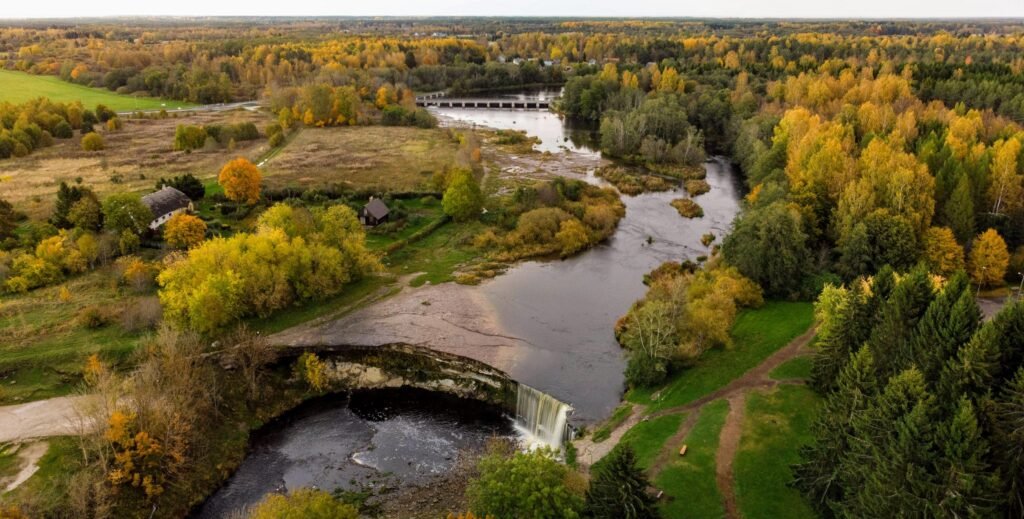
Located about 30 kilometers east of Tallinn, Jägala Waterfall is the largest natural waterfall in Estonia. While Estonia is not known for dramatic waterfalls, Jägala stands out as a powerful and picturesque natural attraction.
The waterfall is approximately 8 meters high and over 50 meters wide, creating a broad curtain of cascading water. During spring snowmelt, the flow becomes particularly strong, making it an impressive sight.
In winter, Jägala transforms into a frozen wonderland. Icicles form along the edges, and the waterfall can partially freeze, creating stunning ice formations that attract photographers.
Visitors can walk along viewing platforms both above and below the waterfall, offering different perspectives. The surrounding river valley is peaceful, with walking paths and scenic picnic spots.
Jägala Waterfall may not rival Europe’s tallest cascades, but its accessibility and seasonal beauty make it one of Estonia’s most beloved natural landmarks.