
Now Reading: Top 5 Tourist Places in Anhui, China
-
01
Top 5 Tourist Places in Anhui, China

Top 5 Tourist Places in Anhui, China
Anhui: A Journey Through Mountains, History, and Living Traditions
Anhui Province, located in eastern China, is one of the country’s most culturally rich and visually striking regions. Often overshadowed by its neighboring provinces, Anhui quietly preserves some of China’s most iconic landscapes, ancient villages, sacred mountains, and historical cities. From mist-covered granite peaks to white-walled Huizhou villages and deeply spiritual Buddhist sites, Anhui offers travelers an authentic experience that blends nature, culture, and history.
This travel guide explores five must-visit destinations in Anhui: Huangshan (Yellow Mountains), Hongcun Village, Xidi Village, Jiuhua Mountain, and Hefei. Each destination reveals a different face of Anhui, making the province a complete travel experience.
1. Huangshan (Yellow Mountains) – Nature’s Grand Masterpiece
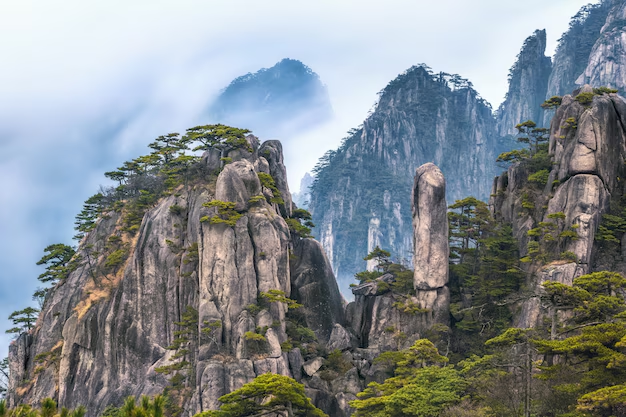
Huangshan, also known as the Yellow Mountains, is undoubtedly the most famous attraction in Anhui and one of the most celebrated mountain landscapes in all of China. Recognized as a UNESCO World Heritage Site, Huangshan is renowned for its dramatic granite peaks, ancient pine trees, hot springs, and its legendary “sea of clouds.”
The mountain range rises sharply from the surrounding plains, creating a surreal landscape that seems almost painted rather than real. Huangshan’s scenery has inspired Chinese poets, painters, and philosophers for centuries, shaping traditional Chinese landscape art.
Iconic Natural Features
Huangshan is famous for four defining elements:
- Strangely-shaped granite peaks
- Ancient Huangshan pine trees
- Hot springs
- Sea of clouds
The granite peaks appear to rise straight from the earth, often shrouded in mist. When clouds fill the valleys below, the peaks seem to float like islands in the sky. This phenomenon is especially breathtaking at sunrise and sunset, when golden light illuminates the clouds.
The pine trees of Huangshan are equally iconic. Twisting and growing directly out of rock faces, some of these trees are over 1,000 years old. Their resilience symbolizes strength and longevity in Chinese culture.
Hiking and Viewing Platforms
Huangshan offers an extensive network of stone stairways, trails, and viewing platforms. Popular scenic spots include Bright Summit Peak, Lotus Peak, Celestial Capital Peak, and Flying-over Rock. Cable cars are available for visitors who want to enjoy the views without strenuous hiking, though many travelers choose to climb on foot for a deeper connection with the landscape.
Cultural and Spiritual Significance
Beyond its natural beauty, Huangshan holds deep cultural importance. It has long been associated with Taoist philosophy, representing harmony between humans and nature. Many ancient inscriptions, temples, and pavilions can be found along the trails, adding historical depth to the journey.
Best Time to Visit
The best time to visit Huangshan is spring (April–May) and autumn (September–October). Winter also attracts visitors due to snow-covered peaks and frost-covered pine trees, creating a magical atmosphere.
Huangshan is not just a mountain—it is a living symbol of China’s natural and artistic heritage.
2. Hongcun Village – A Living Ink Painting
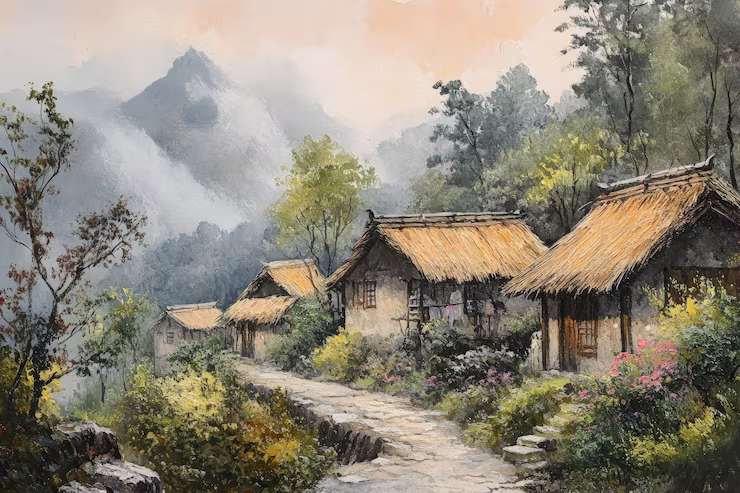
Hongcun Village is one of China’s most beautiful and well-preserved ancient villages. Located at the foot of Mount Huangshan, Hongcun is a UNESCO World Heritage Site and a masterpiece of traditional Huizhou architecture. The village feels like stepping into a classical Chinese ink painting brought to life.
Unique Village Design
What makes Hongcun truly unique is its ingenious layout. The entire village was designed to resemble an ox:
- Leigang Hill forms the “head”
- Village buildings form the “body”
- Moon Pond acts as the “stomach”
- South Lake represents the “abdomen”
- Water channels serve as the “intestines”
This symbolic design reflects ancient Chinese beliefs in harmony, feng shui, and the flow of life.
Architecture and Atmosphere
Hongcun’s buildings are characterized by whitewashed walls, black-tiled roofs, carved wooden doors, and elegant courtyards. Many residences date back to the Ming and Qing dynasties, showcasing refined craftsmanship and artistic detail.
Walking through the narrow stone lanes, visitors encounter ancestral halls, old residences, stone bridges, and tranquil ponds reflecting the surrounding mountains and houses.
Cultural Life
Hongcun is not a museum village—it is still inhabited. Locals continue traditional lifestyles, farming nearby fields, running tea houses, and preserving ancestral customs. This living culture adds authenticity and warmth to the experience.
The village is also famous among artists and photographers. Painters often set up easels near Moon Pond or South Lake to capture the reflections and changing light throughout the day.
Best Time to Visit
Spring brings blooming flowers and fresh greenery, while autumn offers golden fields and clear skies. Early mornings and evenings are especially peaceful, before day-trippers arrive.
Hongcun is a place where time slows down, allowing travelers to experience the beauty of simplicity and tradition.
3. Xidi Village – A Timeless Ming–Qing Treasure
Xidi Village, located close to Hongcun, is another UNESCO World Heritage Site and one of the best-preserved examples of Huizhou village culture. While Hongcun is known for poetic beauty, Xidi is celebrated for its historical depth and architectural richness.
Historical Background
Founded over 900 years ago, Xidi flourished during the Ming and Qing dynasties due to the success of Huizhou merchants. These wealthy merchants invested heavily in their hometown, building grand residences, ancestral halls, and decorative stone archways.
Architectural Highlights
Xidi features over 120 preserved ancient houses, many with intricate wood, brick, and stone carvings. The carvings often depict:
- Mythological stories
- Moral lessons
- Flowers and animals
- Symbols of prosperity and longevity
Stone archways at the village entrance honor scholars and officials, reflecting the village’s strong emphasis on education and Confucian values.
Village Layout and Streets
The village streets are narrow and winding, paved with smooth stone slabs polished by centuries of footsteps. Unlike modern urban planning, Xidi’s layout evolved organically, giving it a natural, lived-in feeling.
Cultural Significance
Xidi represents the moral and social structure of traditional Chinese society. Clan relationships, ancestral worship, and respect for elders remain deeply embedded in village life.
Visitor Experience
Compared to Hongcun, Xidi is often quieter and less crowded, making it ideal for travelers who enjoy slow exploration and historical storytelling.
Xidi is not just a village—it is a preserved chapter of Chinese civilization.
4. Jiuhua Mountain – Sacred Land of Buddhism
Jiuhua Mountain is one of China’s Four Sacred Buddhist Mountains and holds immense spiritual significance. Unlike Huangshan’s dramatic scenery, Jiuhua Mountain offers a serene, contemplative atmosphere deeply connected to Buddhist devotion.
Spiritual Importance
Jiuhua Mountain is associated with Ksitigarbha Bodhisattva, the guardian of souls. For centuries, monks and pilgrims have come here to pray, meditate, and seek enlightenment.
The mountain is home to more than 90 temples, many hidden among forests and cliffs.
Natural Beauty
Covered in lush vegetation, Jiuhua Mountain features gentle peaks, waterfalls, streams, and mist-filled valleys. The peaceful environment enhances its spiritual atmosphere, making it ideal for reflection and retreat.
Temples and Pilgrimage
Key temples include:
- Huacheng Temple
- Tiantai Temple
- Baisui Palace
Pilgrims often climb the mountain on foot as an act of devotion, while visitors can use cable cars to access higher areas.
Cultural Experience
Visitors may encounter monks chanting, burning incense, and performing rituals. Vegetarian Buddhist cuisine is widely available, offering a unique culinary experience.
Jiuhua Mountain is not only a religious site but also a place of inner peace and natural harmony.
5. Hefei – Modern Capital with Ancient Roots
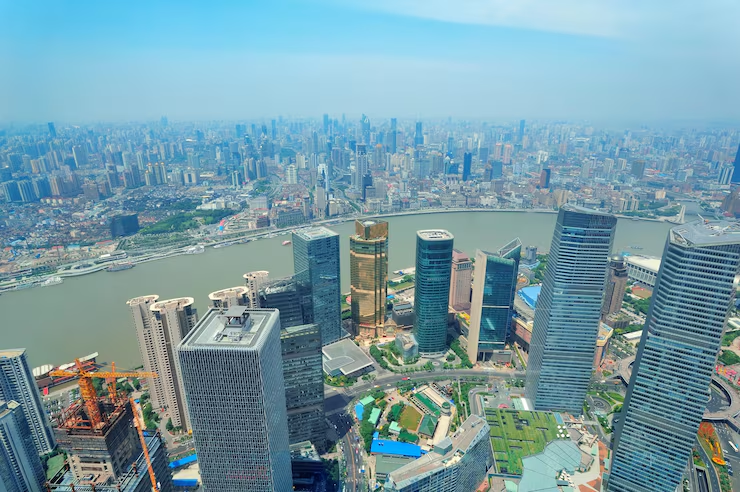
Hefei, the capital of Anhui Province, is a vibrant city that blends modern development with rich historical heritage. Often overlooked by tourists, Hefei offers museums, parks, lakes, and cultural landmarks that provide insight into Anhui’s past and present.
Historical Significance
Hefei has a history spanning over 2,000 years and played a strategic role during the Three Kingdoms period. It has long been a center of governance, culture, and education.
Top Attractions
- Anhui Museum – Showcases bronze artifacts, Huizhou culture, and calligraphy.
- Xiaoyaojin Park – Linked to ancient military history.
- Baohe Park – Dedicated to Bao Zheng, a legendary Song dynasty judge.
- Chaohu Lake – One of China’s largest freshwater lakes, ideal for relaxation.
Modern City Life
Hefei is also a growing tech and education hub, home to universities and research institutes. Modern shopping districts, cafes, and green spaces make it a comfortable city for travelers.
Food and Culture
Hefei is known for Anhui cuisine, featuring slow-cooked dishes, wild herbs, freshwater fish, and rich broths.
Hefei serves as the perfect gateway to explore Anhui while offering its own unique charm.