

Now Reading: Top 5 Tourist Places in Cairo, Egypt.
-
01
Top 5 Tourist Places in Cairo, Egypt.
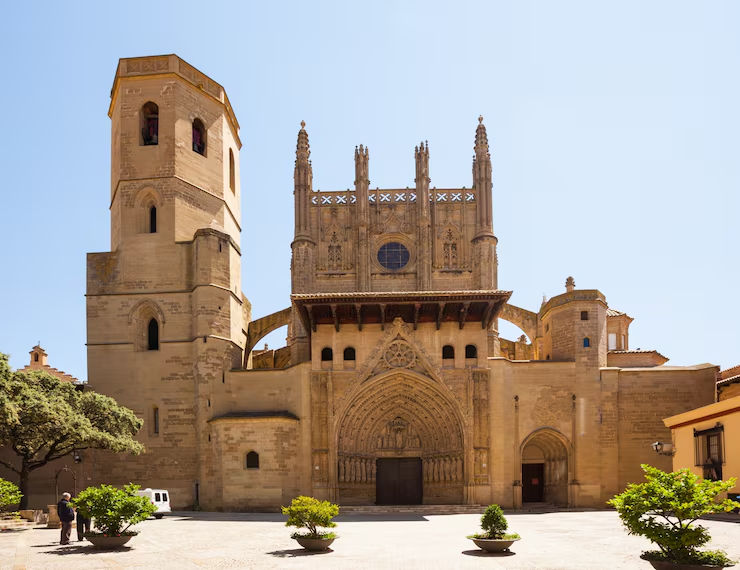
Top 5 Tourist Places in Cairo, Egypt.
Cairo is not just the capital of Egypt — it is the beating heart of one of the world’s oldest civilizations. A city where ancient Pharaohs, Islamic rulers, Coptic Christians, and modern Egyptians have all left their imprint, Cairo is a living museum layered with history, culture, faith, and vibrant daily life.
With a population exceeding 20 million people in its greater metropolitan area, Cairo is one of the largest cities in Africa and the Middle East. It is energetic, chaotic, inspiring, and unforgettable. The city stands on the banks of the Nile River, blending millennia-old monuments with modern skyscrapers, traditional markets with busy highways, and spiritual landmarks with contemporary art spaces.
While many travelers associate Cairo primarily with the Pyramids of Giza, the city itself holds countless treasures waiting to be explored. From world-famous museums filled with golden artifacts to medieval Islamic fortresses and ancient Christian churches, Cairo offers an experience unlike any other.
In this detailed guide, we will explore five of Cairo’s most iconic and historically significant landmarks:
- Egyptian Museum
- Citadel of Saladin
- Khan El Khalili Bazaar
- Al-Azhar Mosque
- Coptic Cairo
Let us begin our journey into the timeless soul of Egypt.
1. Egyptian Museum – Treasures of Tutankhamun and Beyond
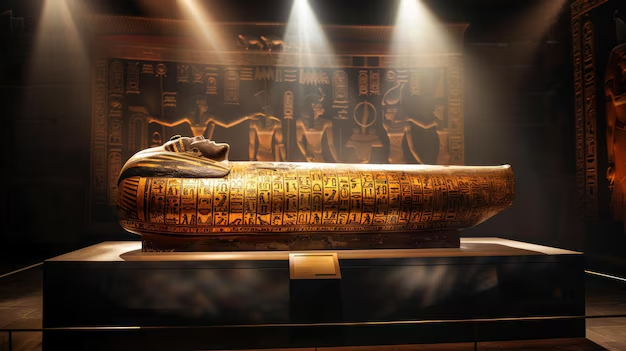
A Treasury of Ancient Civilization
Located in Tahrir Square in downtown Cairo, the Egyptian Museum is one of the most important archaeological museums in the world. Established in 1902, the museum houses more than 120,000 artifacts spanning over 5,000 years of Egyptian history.
Stepping inside the museum feels like entering a time capsule. Every hallway, display case, and gallery reveals objects that once belonged to kings, queens, priests, and ordinary Egyptians.
Though Egypt now has the Grand Egyptian Museum near the Giza Pyramids, the historic Egyptian Museum in Cairo remains a cultural landmark and an essential stop for understanding the country’s ancient past.
The Golden Glory of Tutankhamun
The museum’s most famous collection is the treasures of Pharaoh Tutankhamun.
Discovered in 1922 by British archaeologist Howard Carter in the Valley of the Kings, Tutankhamun’s tomb was found almost completely intact. Inside were over 5,000 objects, many of which are displayed in Cairo.
Among the highlights:
- The golden funerary mask
- Golden shrines and coffins
- Jewelry and amulets
- Ceremonial weapons
- Chariots
The golden mask of Tutankhamun is perhaps the most recognizable artifact in the world. Crafted from solid gold and inlaid with precious stones, it symbolizes the artistic mastery of ancient Egypt.
Standing before it is an emotional moment for many visitors — a direct connection to a young king who ruled over 3,000 years ago.
Mummies and Royal Legacy
The museum also contains royal mummies, including some of Egypt’s most powerful rulers. Though many royal mummies have been transferred to the National Museum of Egyptian Civilization, the Egyptian Museum still preserves important examples of ancient burial traditions.
Visitors can observe sarcophagi, statues of deities, temple reliefs, and everyday objects like tools, cosmetics, and pottery.
These artifacts remind us that ancient Egypt was not only about pyramids and pharaohs but also about daily life, religion, and innovation.
Why It’s Essential
The Egyptian Museum provides context for everything else you will see in Egypt. It connects temples, tombs, and monuments to the people who built them.
For history lovers, it is one of the most significant museums on Earth.
2. Citadel of Saladin – Guardian of Islamic Cairo
A Fortress Above the City
High on Mokattam Hill stands the Citadel of Saladin, one of Cairo’s most iconic Islamic landmarks. Built in 1176 AD by Salah ad-Din (Saladin), the fortress was designed to protect Cairo from Crusader invasions.
For nearly 700 years, the Citadel served as the seat of government and royal residence for Egypt’s rulers.
Its elevated location offers panoramic views of Cairo, including distant glimpses of the Pyramids on clear days.
The Mosque of Muhammad Ali
The most striking structure inside the Citadel is the Mosque of Muhammad Ali, built in the 19th century by Muhammad Ali Pasha, the founder of modern Egypt.
Often called the “Alabaster Mosque,” it features:
- Large central dome
- Elegant minarets
- Ottoman-style architecture
- Marble-covered walls
Inspired by Istanbul’s Blue Mosque, the structure dominates Cairo’s skyline.
Inside, the mosque is breathtaking. Massive chandeliers hang from the ceiling, and sunlight filters through stained-glass windows.
Visitors must remove their shoes before entering, and modest dress is required.
A Complex of History
Beyond the mosque, the Citadel includes:
- Military museums
- Palaces
- Historic wells
- Defensive walls
Walking through the fortress corridors transports visitors back to medieval Cairo.
A Symbol of Strength
The Citadel represents Islamic Cairo’s power and resilience. It is both a military monument and a religious landmark.
Visiting at sunset offers unforgettable views as the call to prayer echoes across the city.
3. Khan El Khalili Bazaar – A Journey into the Soul of Old Cairo
A Market That Never Sleeps
Khan El Khalili is not just a marketplace — it is the living, breathing heart of Islamic Cairo. Established in 1382 during the Mamluk era by Emir Djaharks el-Khalili, the bazaar has witnessed over six centuries of trade, storytelling, and human connection. Merchants from Africa, Arabia, Persia, and the Mediterranean once gathered here, turning it into one of the most important commercial hubs in the Islamic world.
Today, it remains one of the most vibrant and historic markets in the Middle East.
The moment you step into Khan El Khalili, the modern world fades. The paved streets narrow into winding alleyways framed by medieval architecture. Stone buildings lean toward each other as if whispering secrets from centuries past. Wooden mashrabiya balconies hang above shop entrances. Decorative lanterns glow warmly even in daylight.
This is not a quiet shopping district — it is alive.
You hear vendors calling out to visitors in multiple languages:
“Welcome my friend!”
“Best price for you!”
“Just looking? No problem!”
You smell cinnamon, cardamom, roasted nuts, and freshly brewed coffee drifting through the air.
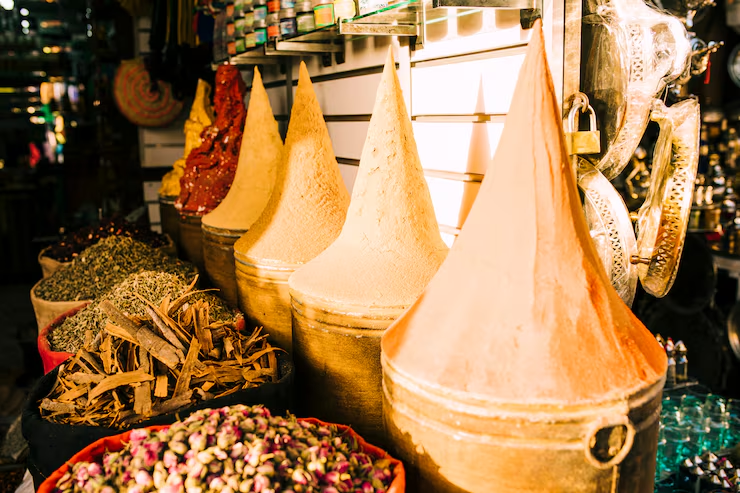
You see flashes of gold jewelry, vibrant scarves, polished brass trays, and pyramids of colorful spices.
It is chaotic. It is loud. It is unforgettable.
Unlike sterile modern malls, Khan El Khalili engages every sense.
A History Carved in Stone
Khan El Khalili began as a caravanserai — a place where traveling merchants could store goods and rest during long trade journeys. The word “khan” refers to such a trading inn. Over time, it expanded into a massive commercial district filled with workshops, warehouses, and shops.
During the Mamluk and Ottoman periods, Cairo was one of the richest cities in the world, and this bazaar was its economic center. Gold traders, spice merchants, textile sellers, and metal craftsmen all operated here.
Remarkably, many streets are still organized by trade:
- One lane specializes in gold jewelry.
- Another is filled with copper artisans.
- Another sells perfumes and essential oils.
- Another is devoted to textiles and scarves.
This structure reflects medieval trade traditions that still survive today.
Traditional Crafts and Handmade Treasures
Khan El Khalili is famous for preserving Egyptian craftsmanship. Unlike mass-produced tourist souvenirs, many items here are still handmade.
Copper and Brass Workshops
You can watch artisans hammering intricate patterns into copper trays and lamps. The rhythmic tapping of metal tools echoes through narrow corridors. Each piece is carved with geometric patterns or Arabic calligraphy.
The famous Egyptian lanterns — with colored glass panels — are especially popular. When lit at night, they cast magical shadows across walls.
Jewelry and Silver
The gold and silver shops are dazzling. Fine filigree bracelets, pharaonic-inspired pendants, scarab rings, and cartouche necklaces engraved with your name in hieroglyphics are common purchases.
Gold Street inside the bazaar is particularly famous and heavily guarded.
Perfume and Essential Oils
Egypt has a long tradition of perfume-making dating back to ancient times. Small glass bottles filled with jasmine, lotus, sandalwood, and musk oils line shop shelves.
Unlike commercial sprays, these oils are alcohol-free and highly concentrated.
Shopkeepers often offer demonstrations, gently placing a drop on your wrist while explaining its origin.
Papyrus Art
Hand-painted papyrus scrolls depict scenes from ancient Egyptian mythology — gods like Ra, Isis, Horus, and Anubis appear in vibrant detail.
Some workshops demonstrate how real papyrus is made from the plant fibers, separating authentic pieces from cheaper imitations.
The Art of Bargaining
Bargaining is not rude here — it is cultural tradition.
The first price offered is rarely the final price. Smiling, patience, and respectful negotiation are expected. Vendors enjoy the interaction as much as the sale.
Tips for bargaining:
- Never appear overly eager.
- Ask for the price, then counter with about half.
- Keep it friendly and lighthearted.
- Be prepared to walk away.
Often, the seller will call you back with a better offer.
It is not just shopping — it is social theater.
Café Culture and Intellectual History
One of the most legendary spots in Khan El Khalili is El Fishawy Café, established in 1773. It has never closed — even during wars and revolutions.
The café’s mirrors, wooden chairs, and brass décor reflect old Cairo charm.
Over the decades, poets, writers, and thinkers gathered here. Among them was Naguib Mahfouz, Egypt’s Nobel Prize-winning novelist, who often wrote about the bazaar and Islamic Cairo.
Sitting here with mint tea or Turkish coffee while watching people pass by is a timeless Cairo experience.
You may hear:
- The clink of tea glasses
- The bubbling of shisha pipes
- Animated political discussions
- Laughter from groups of friends
The café represents Cairo’s intellectual and artistic soul.
Nighttime Magic
Khan El Khalili transforms after sunset.
Lanterns glow brighter.
The air cools.
Music drifts through the alleys.
The crowds grow denser.
The market becomes even more atmospheric at night. Reflections shimmer off brass and gold surfaces, and the call to prayer echoes through the surrounding mosques.
It feels like stepping into an Arabian tale.
4. Al-Azhar Mosque – Beacon of Islamic Scholarship
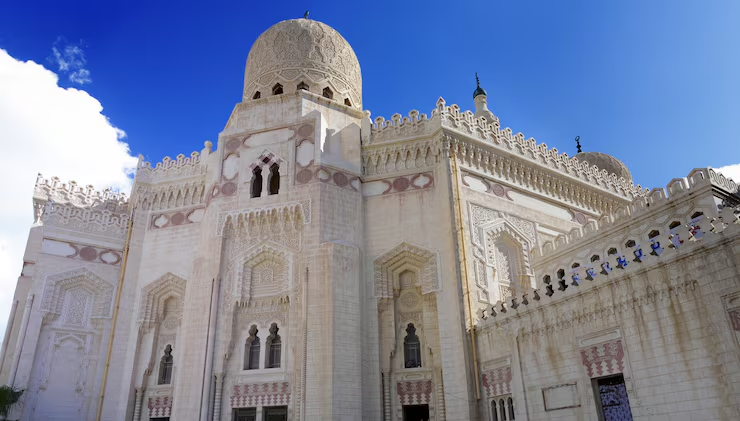
A Thousand Years of Knowledge
Founded in 970 AD during the Fatimid Caliphate, Al-Azhar Mosque is one of the oldest continuously operating universities in the world.
The name “Al-Azhar” is believed to honor Fatimah al-Zahra, daughter of the Prophet Muhammad.
For over 1,000 years, scholars have studied theology, Islamic law, grammar, astronomy, and philosophy within its walls.
Al-Azhar is not just a mosque — it is an institution that shaped Islamic thought across Africa, Asia, and the Middle East.
Architectural Beauty Through the Centuries
The mosque has expanded over centuries, blending Fatimid, Mamluk, and Ottoman architectural styles.
Marble Courtyard
The central courtyard is paved with white marble that reflects sunlight beautifully. Surrounded by arched colonnades, it offers a serene atmosphere.
Despite the busy streets outside, stepping inside feels peaceful and contemplative.
Minarets
Al-Azhar has multiple minarets built in different eras. Each one reflects the artistic style of its period.
They rise above Islamic Cairo’s skyline, calling worshippers to prayer five times a day.
Interior Details
Inside the prayer hall:
- Arabic calligraphy lines the walls.
- Geometric patterns decorate arches.
- Chandeliers hang from high ceilings.
- Soft carpets cover the floors.
The atmosphere is quiet, dignified, and spiritual.
A Living University
Al-Azhar University remains one of the most influential centers of Sunni Islamic scholarship in the world.
Students from Indonesia, Nigeria, Pakistan, Turkey, and beyond come here to study.
Lessons are often held in small circles inside the mosque, where a teacher sits surrounded by students discussing religious texts.
It is learning in its most traditional form.
Visiting as a Traveler
Visitors are welcome outside prayer times.
Important guidelines:
- Dress modestly (shoulders and knees covered).
- Women may need a headscarf.
- Remove shoes before entering prayer areas.
- Speak quietly and respect worshippers.
Visiting Al-Azhar provides not only architectural appreciation but insight into Islamic intellectual heritage.
5. Coptic Cairo – The Cradle of Christian Egypt
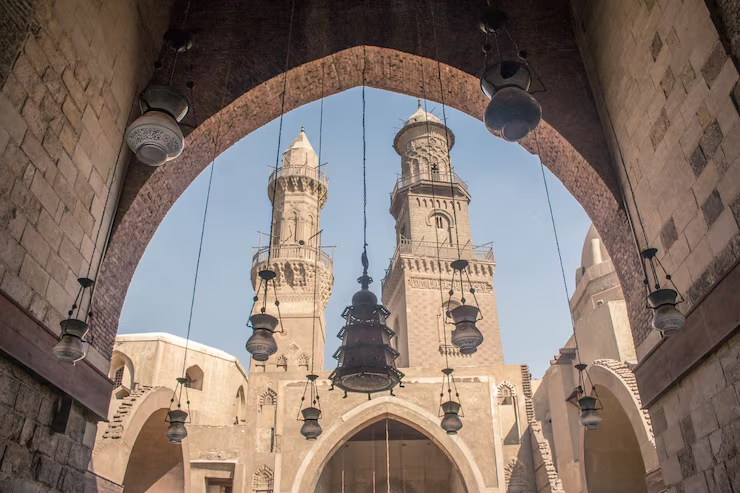
A Sacred Christian Quarter
Coptic Cairo lies within the remains of the ancient Roman fortress of Babylon. It is one of the oldest continuously inhabited parts of Cairo.
Christianity arrived in Egypt in the 1st century AD through Saint Mark. Egypt became one of the earliest centers of Christian theology and monasticism.
Coptic Cairo preserves this heritage.
The Hanging Church (Saint Virgin Mary’s Church)
Built in the 3rd century and reconstructed multiple times, the Hanging Church sits above the southern gate of the Roman fortress.
It appears suspended in midair — hence the name.
Its wooden ceiling resembles the hull of Noah’s Ark.
Inside, you will find:
- Beautiful iconostasis screens
- Detailed religious icons
- Carved wooden pulpits
- Soft candlelight
The church remains active, hosting services and weddings.
Church of St. Sergius and Bacchus
Also known as Abu Serga, this church is believed to stand above a cave where the Holy Family took refuge during their flight into Egypt.
Descending into the crypt is a powerful experience.
Stone columns and ancient architecture reflect early Christian design influenced by Roman structures.
Ben Ezra Synagogue
Originally a church and later converted into a synagogue, Ben Ezra highlights Cairo’s once-diverse religious community.
It is traditionally believed to be near the place where baby Moses was found in the Nile.
Though Egypt’s Jewish population is now small, this synagogue stands as a symbol of multicultural heritage.
Monastic Influence and Coptic Identity
Egypt played a major role in early Christian monasticism. Desert monks and hermits shaped global Christian traditions.
The Coptic Church developed its own liturgy and artistic style, seen in icons and architecture.
Even today, Coptic Christians form a significant minority in Egypt and celebrate ancient traditions.
A Symbol of Religious Coexistence
Within a small walking area, you find:
- Churches
- A synagogue
- Nearby mosques
This close proximity reflects centuries of shared space.
Coptic Cairo is quiet compared to the rest of the city. Its narrow lanes and stone walls create a reflective atmosphere.
Walking here feels like stepping back nearly two thousand years.
Final Reflection
Together, Khan El Khalili, Al-Azhar Mosque, and Coptic Cairo reveal Cairo’s layered identity:
- Commercial and vibrant
- Intellectual and spiritual
- Christian, Jewish, and Muslim
- Ancient yet alive
Cairo is not defined by one civilization — it is defined by all of them.
Few cities in the world hold such depth in such close proximity.
And once you walk these streets, their stories stay with you forever.










porntude
A really good blog and me back again.