
Now Reading: Top 5 Tourist Places in Giza, Egypt.
-
01
Top 5 Tourist Places in Giza, Egypt.
Top 5 Tourist Places in Giza, Egypt.
When people think of Egypt, one destination immediately comes to mind — Giza. Home to the world-famous Pyramids of Giza and the legendary Great Sphinx, this historic city represents one of the most iconic landscapes on Earth. But beyond the postcard image of pyramids rising from the desert, Giza offers far more: ancient necropolises, groundbreaking archaeological discoveries, modern museums, and unforgettable Nile experiences.
Located just across the Nile River from Cairo, Giza blends ancient civilization with modern Egyptian life. It is a destination where 4,500-year-old monuments stand proudly beside bustling streets, and where history feels alive in every direction.
Whether you are a first-time visitor to Egypt or a returning traveler seeking deeper exploration, Giza is a must-visit destination that never fails to inspire awe.
Let’s explore the top attractions in Giza.
1. The Pyramids of Giza – The Last Wonder of the Ancient World
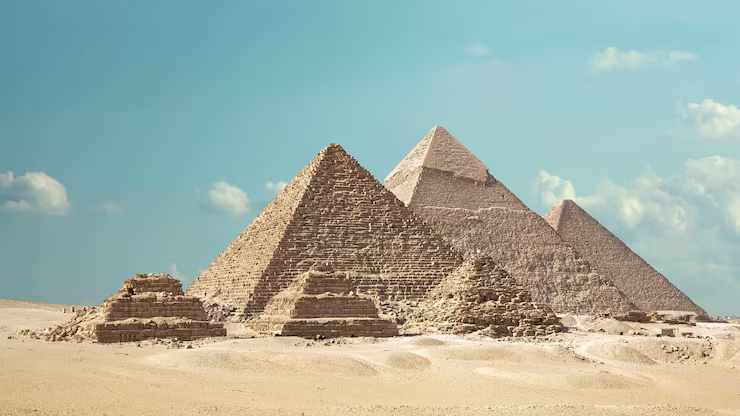
The Pyramids of Giza are the most famous monuments in Egypt — and the only surviving Wonder of the Ancient World.
Built over 4,500 years ago during the Fourth Dynasty of the Old Kingdom, these pyramids were constructed as royal tombs for powerful pharaohs. Standing at the edge of the Sahara Desert, they continue to amaze visitors with their scale, precision, and mystery.
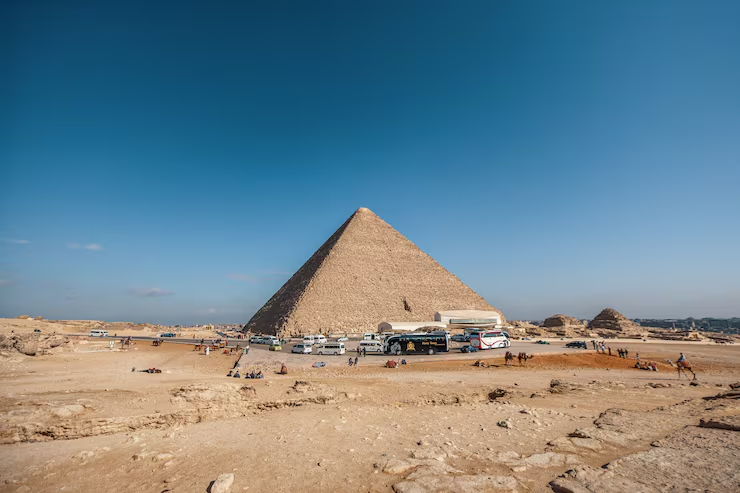
The Great Pyramid of Khufu
The largest and most impressive of the three pyramids is the Great Pyramid, built for Pharaoh Khufu (also known as Cheops). Originally standing at 146 meters (481 feet), it remained the tallest man-made structure in the world for nearly 4,000 years.
What makes it extraordinary:
- Built with approximately 2.3 million stone blocks
- Each block weighs several tons
- Near-perfect alignment with the cardinal directions
- Complex internal chambers and passageways
Visitors can enter the pyramid and climb through narrow corridors leading to the King’s Chamber — an unforgettable and slightly adventurous experience.
Pyramid of Khafre
The second pyramid belongs to Pharaoh Khafre. It appears taller than the Great Pyramid due to its elevated position, and it still retains some of its original smooth limestone casing at the top.
Pyramid of Menkaure
The third and smallest pyramid was built for Pharaoh Menkaure. Though smaller, it remains an essential part of the iconic Giza skyline.
The Great Sphinx
Guarding the pyramids stands the Great Sphinx of Giza, one of the most mysterious monuments in the world.
Carved from a single limestone rock, the Sphinx features:
- The body of a lion
- The head of a pharaoh (believed to represent Khafre)
It symbolizes strength and wisdom. Standing before the Sphinx, visitors often feel a deep connection to ancient history.
Why Visit the Pyramids of Giza?
- Experience one of the world’s greatest archaeological sites
- Witness the only remaining Ancient Wonder
- Capture unforgettable desert sunrise and sunset photos
- Ride camels or horses across the plateau
- Explore ancient tombs and smaller pyramids nearby
The Giza Plateau is not just a monument — it is a journey back to the dawn of civilization.
2. Saqqara – The Birthplace of Pyramid Design
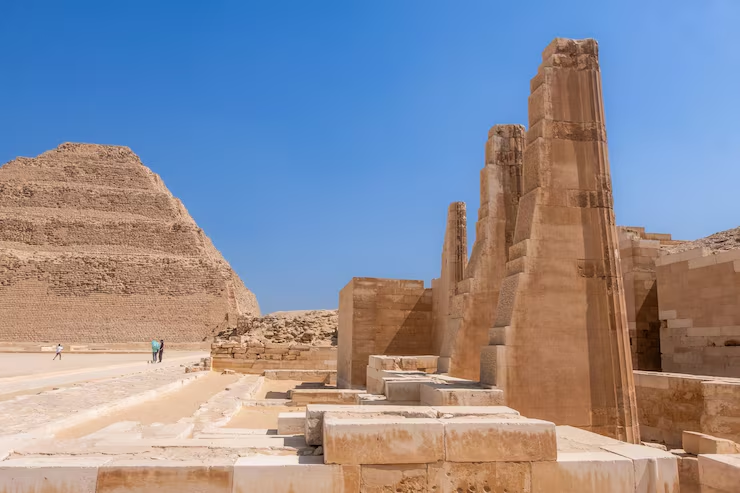
About 30 kilometers south of Giza lies Saqqara, one of Egypt’s most important archaeological sites.
While the Giza pyramids are the most famous, Saqqara holds something even more historically significant — the Step Pyramid of Djoser, the world’s first pyramid.
The Step Pyramid of Djoser
Built around 2630 BCE for Pharaoh Djoser by the architect Imhotep, this pyramid marked a revolutionary moment in architectural history.
Instead of smooth sides, it consists of six stepped layers stacked on top of one another. It represents the transition from simple mastaba tombs to the true pyramids seen later at Giza.
Why Saqqara is Special
Saqqara is not just one pyramid — it is a vast necropolis filled with:
- Tombs decorated with colorful wall carvings
- Ancient burial shafts
- Newly discovered artifacts
- The Pyramid of Teti
- Serapeum (burial place of sacred Apis bulls)
The tomb paintings here are remarkably well preserved, showing daily life scenes from ancient Egypt — farming, fishing, music, and religious rituals.
For history enthusiasts, Saqqara offers deeper insight into Egypt’s early dynasties and the evolution of pyramid construction.
3. Dahshur – The Experimental Pyramids
Further south lies Dahshur, a quieter and less crowded pyramid site that showcases architectural experimentation.
Dahshur is home to two fascinating pyramids built by Pharaoh Sneferu.
The Bent Pyramid
The Bent Pyramid is unique because its angle changes midway up the structure. Originally planned with a steep slope, the builders adjusted the angle during construction to prevent collapse.
This visible change gives the pyramid its distinctive “bent” appearance.
The Red Pyramid
The Red Pyramid is considered Egypt’s first successful smooth-sided pyramid. Its reddish limestone blocks give it its name.
Visitors can enter the Red Pyramid and explore its interior chambers, often with far fewer crowds than at Giza.
Why Visit Dahshur?
- Peaceful atmosphere
- Fewer tourists
- Up-close pyramid exploration
- Stunning desert scenery
Dahshur allows travelers to experience pyramid history in a more relaxed setting.
4. The Grand Egyptian Museum – A New Era of Archaeology
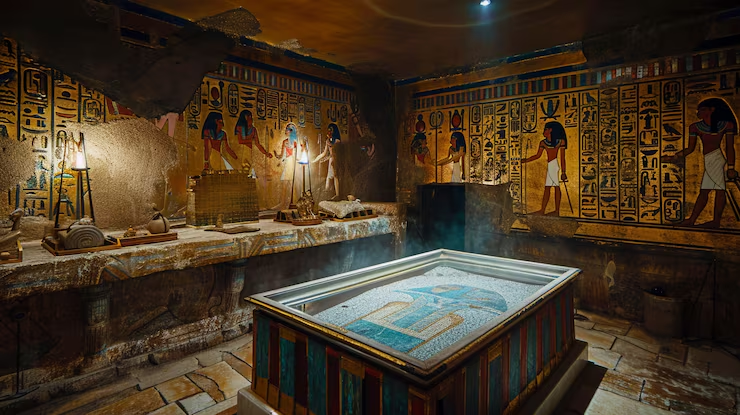
Located near the Giza Plateau, the Grand Egyptian Museum (GEM) is one of the most ambitious museum projects in the world.
Designed to house over 100,000 artifacts, the museum represents a new chapter in preserving and displaying Egypt’s ancient heritage.
Highlights of the Grand Egyptian Museum
- The complete treasures of Tutankhamun
- Massive statues of ancient pharaohs
- Interactive exhibits
- Modern architectural design
- Panoramic pyramid views from inside the museum
The museum blends cutting-edge technology with ancient artifacts, creating a world-class visitor experience.
For anyone visiting Giza, the Grand Egyptian Museum is an essential stop that enhances understanding of Egypt’s history.
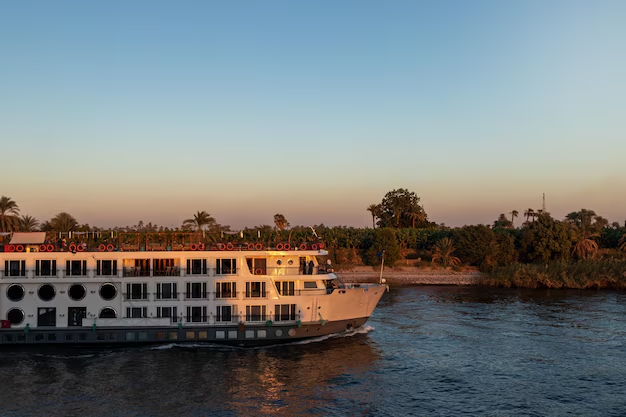
5. Nile Cruises – A Different Perspective of Giza
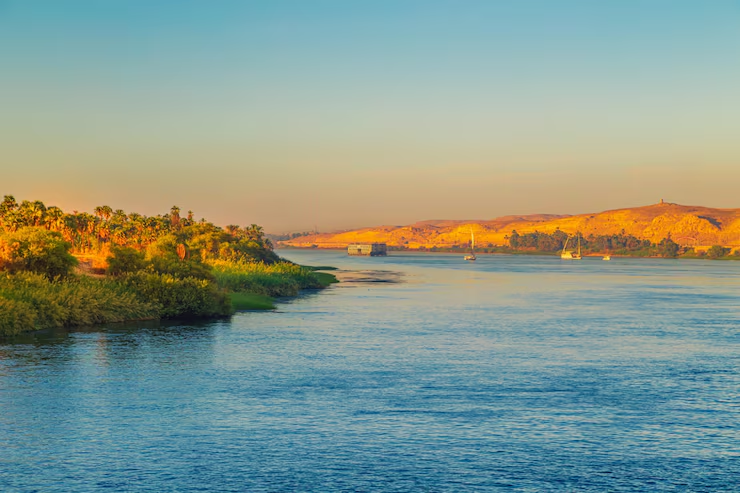
While Giza is famous for its desert monuments, the Nile River offers another side of its beauty.
Nile Dinner Cruises
Visitors can enjoy:
- Traditional Egyptian cuisine
- Live music and dance performances
- Belly dancing shows
- Stunning nighttime views of Cairo and Giza
Felucca Boat Rides
For a more traditional experience, travelers can take a felucca — a wooden sailing boat — for a peaceful ride along the Nile.
The gentle breeze and river reflections create a calming contrast to the busy city streets.
Nile cruises provide relaxation after a full day exploring pyramids and museums.
Culture and Modern Life in Giza
Beyond its ancient monuments, Giza is a living, vibrant city with bustling streets, markets, and local neighborhoods.
Visitors can explore:
- Traditional cafés
- Local restaurants serving koshari and grilled meats
- Shopping areas
- Artisan markets selling souvenirs
Giza combines ancient grandeur with modern Egyptian culture.
Best Time to Visit Giza
The best months to visit are October to April, when temperatures are cooler and more comfortable for walking outdoors.
Early mornings and late afternoons are ideal for exploring the pyramids to avoid heat and crowds.