Now Reading: Top 5 Tourist Places in Luxor, Egypt.
-
01
Top 5 Tourist Places in Luxor, Egypt.
Top 5 Tourist Places in Luxor, Egypt.
If there is one place in Egypt where history rises from the ground in monumental form, it is Luxor. Often called the world’s greatest open-air museum, Luxor stands on the site of ancient Thebes — the powerful capital of Egypt during the New Kingdom period. Here, colossal temples, royal tombs, and sacred monuments tell the story of pharaohs, gods, and one of the most advanced civilizations in human history.
Unlike Cairo, which blends modern life with ancient remnants, Luxor feels like a living museum. Nearly every corner reveals towering columns, carved hieroglyphs, or grand statues that have stood for more than 3,000 years.
Divided by the Nile River into the East Bank and the West Bank, Luxor offers two distinct experiences: monumental temples dedicated to the gods on the East Bank, and vast burial sites for kings and queens on the West Bank.
Whether you are passionate about archaeology, fascinated by ancient civilizations, or simply seeking one of the most extraordinary cultural journeys on Earth, Luxor delivers an unforgettable experience.
Let’s explore the most iconic attractions in Luxor.
1. Karnak Temple – The Largest Religious Complex Ever Built
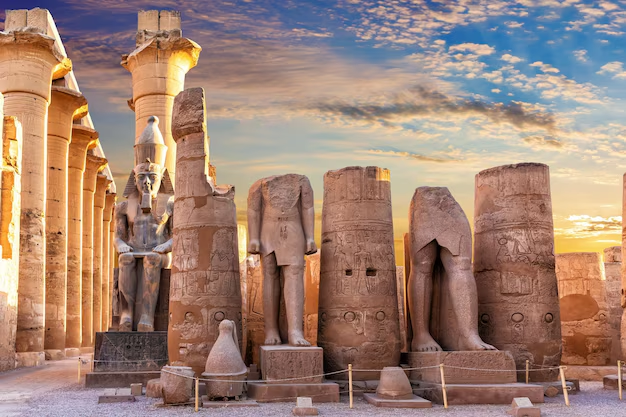
No visit to Luxor is complete without stepping into the magnificent Karnak Temple Complex. Covering over 200 acres, Karnak is not just a temple — it is an entire city of sanctuaries, pylons, obelisks, and sacred lakes built over a span of nearly 2,000 years.
A Monument to the Gods
Karnak was primarily dedicated to Amun-Ra, the king of the gods, along with his wife Mut and son Khonsu. Successive pharaohs expanded the complex, each leaving their mark in stone.
Walking through Karnak is like traveling through centuries of history.
The Great Hypostyle Hall
One of Karnak’s most breathtaking features is the Great Hypostyle Hall, a vast forest of 134 massive columns arranged in 16 rows.
These columns:
- Reach heights of over 20 meters
- Are covered in detailed hieroglyphs
- Create dramatic light and shadow effects
Standing among them feels almost surreal — as if dwarfed by ancient power and ambition.
Obelisks and Sacred Lake
Karnak also features towering obelisks, including one erected by Queen Hatshepsut, and a sacred lake used for religious rituals.
Every stone at Karnak tells a story of devotion, politics, and artistic mastery.
Why Karnak is Extraordinary
- Largest temple complex in Egypt
- Built over multiple dynasties
- Incredible hieroglyphic carvings
- Architectural innovation spanning centuries
Karnak is not simply visited — it is experienced.
2. Luxor Temple – A Masterpiece Illuminated at Night
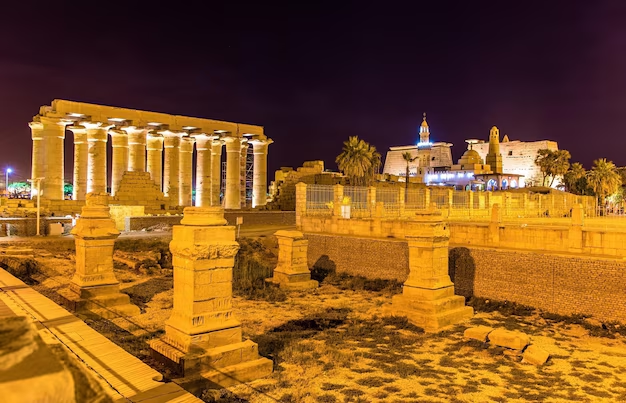
Located in the heart of modern Luxor city, Luxor Temple is one of the most beautifully preserved temples in Egypt.
Unlike Karnak, which evolved over centuries, Luxor Temple has a more unified architectural style. It was primarily built by Amenhotep III and later expanded by Ramses II.
Avenue of Sphinxes
Luxor Temple was once connected to Karnak by a 3-kilometer-long avenue lined with hundreds of sphinx statues. This grand ceremonial road was used during the annual Opet Festival.
Today, much of this avenue has been restored, allowing visitors to imagine the grandeur of ancient processions.
Colossal Statues of Ramses II
At the temple entrance stand enormous seated statues of Ramses II. Their scale and precision reflect the pharaoh’s desire to project eternal power.
The Magic of Night Illumination
While Luxor Temple is impressive during the day, it becomes truly magical at night.
Soft golden lights illuminate:
- Massive columns
- Ancient relief carvings
- Towering statues
The calm evening atmosphere combined with dramatic lighting creates one of the most unforgettable sights in Egypt.
Visiting Luxor Temple after sunset offers a completely different emotional experience — peaceful, majestic, and timeless.
3. Valley of the Kings – Tombs of the Pharaohs
Crossing to the West Bank of the Nile brings you to one of the most important archaeological sites in the world — the Valley of the Kings.
Hidden among desert hills, this valley served as the burial place for New Kingdom pharaohs for nearly 500 years.
Why the Valley Was Chosen
Unlike pyramids, which were visible targets for tomb robbers, the tombs here were carved deep into desert cliffs to protect royal burials.
Inside the Tombs
The Valley contains more than 60 tombs, including those of:
- Tutankhamun
- Ramses II
- Seti I
- Thutmose III
Inside, walls are covered with colorful scenes from the Book of the Dead, guiding pharaohs through the afterlife.
The tomb of Tutankhamun, discovered in 1922 by Howard Carter, remains one of the most famous archaeological finds in history.
A Spiritual Atmosphere
Standing inside these tombs, surrounded by detailed paintings created over 3,000 years ago, feels intimate and powerful. The silence of the desert above contrasts with the artistic brilliance hidden within.
The Valley of the Kings offers direct connection to the individuals who once ruled ancient Egypt.
4. Temple of Hatshepsut – A Dramatic Cliffside Wonder
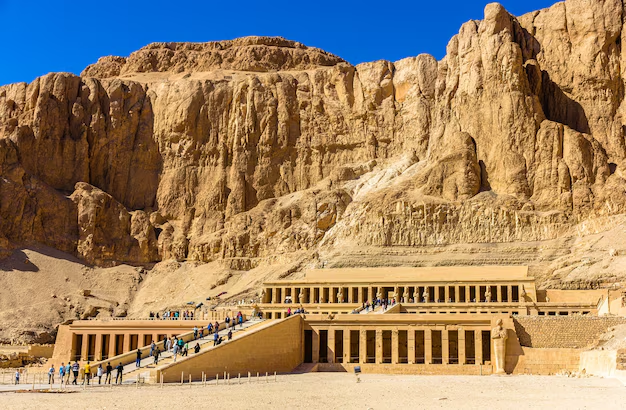
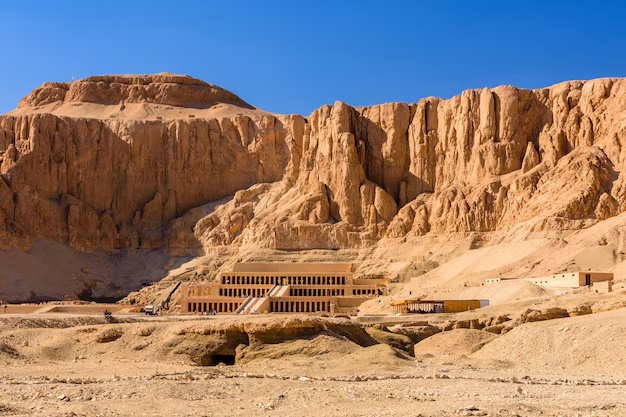
One of Luxor’s most architecturally unique monuments is the Temple of Hatshepsut, located at Deir el-Bahari.
Built for Queen Hatshepsut, one of Egypt’s few female pharaohs, this temple stands dramatically against towering limestone cliffs.
A Monument to a Powerful Queen
Hatshepsut ruled during a prosperous and peaceful period. Her temple reflects elegance and innovation rather than brute monumentality.
The structure features:
- Three massive terraces
- Long colonnaded walkways
- Detailed relief carvings
Architectural Harmony
The temple blends seamlessly with the surrounding cliffs, creating one of Egypt’s most photogenic landscapes.
Historical Significance
Hatshepsut’s reign was marked by trade expeditions and economic growth. However, after her death, attempts were made to erase her legacy.
Despite these efforts, her temple remains one of the most impressive monuments in Luxor.
Visiting this site offers not only architectural admiration but also insight into one of ancient Egypt’s most fascinating rulers.
5. Hot Air Balloon Rides – Sunrise Over the Nile

For a truly unforgettable Luxor experience, few activities compare to a hot air balloon ride at sunrise.
A View Like No Other
As the balloon rises gently above the Nile Valley, passengers witness:
- The sun emerging over the desert
- The Nile River glowing in morning light
- Green farmland contrasting with golden sands
- Temples and tombs scattered below
The peaceful silence of floating above ancient monuments creates a magical perspective.
Why It’s Special
From the air, you can see:
- The layout of ancient Thebes
- The Valley of the Kings
- Hatshepsut’s Temple
- The Colossi of Memnon
It’s one of the most breathtaking ways to appreciate Luxor’s geography and historical scale.
East Bank vs West Bank – Two Sides of History
Luxor’s unique layout divides its monuments symbolically:
East Bank – Land of the Living
West Bank – Land of the Dead
Temples dedicated to gods were built on the sunrise side of the Nile, while royal tombs were placed on the sunset side — symbolizing the journey into the afterlife.
This spiritual symbolism adds deeper meaning to exploring both sides of the river.
Culture and Modern Life in Luxor
Though famous for ancient monuments, Luxor is also a lively modern city.
Visitors can enjoy:
- Traditional markets (souks)
- Nile-side cafés
- Felucca boat rides
- Local restaurants serving Egyptian cuisine
The blend of ancient grandeur and everyday Egyptian hospitality creates a welcoming atmosphere.
Best Time to Visit Luxor
The best time to visit is from October to April, when temperatures are cooler.
Summer can be extremely hot, especially when exploring outdoor archaeological sites.
Early mornings and late afternoons are ideal for sightseeing.
Why Visit Luxor?
Luxor offers:
The largest religious complex ever built
Temples illuminated beautifully at night
Royal tombs hidden in desert valleys
One of Egypt’s most iconic female rulers
Unmatched sunrise views from the sky
Direct connection to the New Kingdom era
Few destinations in the world provide such concentration of monumental history in one place.
Final Thoughts
Luxor is not just a destination — it is a journey through time. From the towering columns of Karnak to the illuminated elegance of Luxor Temple, from the hidden tombs of the Valley of the Kings to the dramatic terraces of Hatshepsut’s Temple, every monument tells a story of power, faith, and eternity.
Add the serenity of a Nile sunrise from a hot air balloon, and Luxor becomes an experience that touches both intellect and emotion.
For anyone exploring Egypt, Luxor is essential — a city where the ancient world still stands in magnificent form, waiting to be discovered.