
Now Reading: Top 5 Tourist Places in Liaoning, China
-
01
Top 5 Tourist Places in Liaoning, China
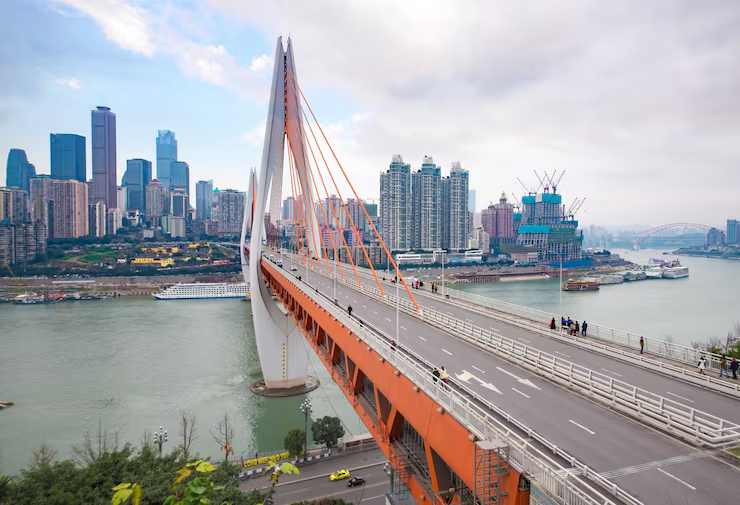
Top 5 Tourist Places in Liaoning, China
Liaoning Travel Guide: Imperial Palaces, Coastal Cities, Sacred Mountains, and the Historic Gateway of Northeast China
Liaoning Province sits at the southern gateway of Northeast China, where imperial history, coastal scenery, industrial heritage, and sacred landscapes come together. As one of China’s most historically significant provinces, Liaoning played a crucial role in the rise of the Qing Dynasty, the development of modern industry, and China’s maritime connections.
From the UNESCO-listed Shenyang Imperial Palace and the vibrant seaside city of Dalian, to the mysterious Benxi Water Cave, the temple-covered peaks of Anshan Qianshan, and the dramatic Great Wall meeting the sea in Huludao, Liaoning offers a diverse and deeply rewarding travel experience.
This 2,000+ word comprehensive Liaoning travel guide explores the province’s top five must-visit destinations:
- Shenyang
- Dalian
- Benxi Water Cave
- Anshan Qianshan
- Huludao
1. Shenyang – Imperial Palace and the Birthplace of the Qing Dynasty

Shenyang, the capital of Liaoning Province, is one of China’s most important historical cities. Long before Beijing became the imperial center, Shenyang—formerly known as Mukden—served as the first capital of the Qing Dynasty.
Shenyang Imperial Palace (UNESCO World Heritage Site)
The Shenyang Imperial Palace is China’s second-largest imperial palace complex, after the Forbidden City in Beijing. Built in the early 17th century, it served as the royal residence of Nurhaci and Hong Taiji, the founders of the Qing Dynasty.
Unlike Beijing’s Forbidden City, the Shenyang Palace blends:
- Traditional Han Chinese architecture
- Distinct Manchu and Mongolian design elements
Inside the palace complex, visitors can explore:
- Grand halls used for ceremonies
- Royal living quarters
- Intricately decorated courtyards
The palace offers invaluable insight into the early Qing court and Manchu culture.
Qing Tombs and Historical Sites
Nearby imperial tombs, including Zhaoling (Beiling Park) and Fuling (Dongling Park), are also UNESCO-listed and showcase traditional feng shui principles and imperial burial customs.
Modern Shenyang
Today, Shenyang is a modern metropolis with:
- Museums and cultural centers
- Lively shopping districts
- Expansive parks
Why Visit Shenyang
Shenyang is essential for travelers interested in imperial history, Manchu heritage, and China’s dynastic transition.
2. Dalian – China’s Elegant Coastal City
Dalian is Liaoning’s most international and scenic city, known for its coastal beauty, clean streets, and European-influenced architecture. Located at the southern tip of the Liaodong Peninsula, Dalian has long been a key port city.
Beaches and Coastal Scenery
Dalian boasts some of Northern China’s best beaches, including:
- Xinghai Beach
- Bangchui Island
- Fujiazhuang Beach
The coastline features dramatic cliffs, seaside roads, and panoramic viewpoints ideal for walking and photography.
Russian and Japanese Architectural Influence
Due to its complex history, Dalian displays a mix of:
- Russian-style buildings
- Japanese urban planning
- Modern Chinese architecture
This blend gives the city a unique, cosmopolitan character.
Urban Parks and Squares
Landmarks such as Xinghai Square, one of Asia’s largest city squares, highlight Dalian’s openness and seaside charm.
Seafood and Lifestyle
Dalian is famous for its:
- Fresh seafood
- Relaxed pace of life
- Clean and orderly urban environment
Why Visit Dalian
Dalian offers a refreshing contrast to industrial Northeast China, combining coastal leisure, international flair, and modern comfort.
3. Benxi Water Cave – A Hidden Underground World
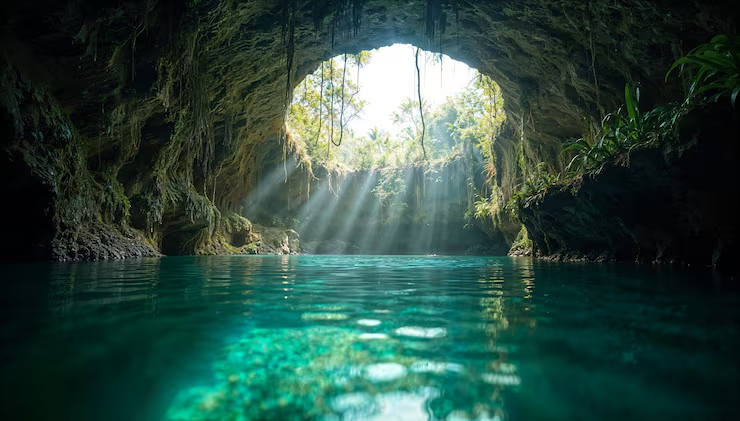
The Benxi Water Cave is one of Liaoning’s most unique natural attractions and the longest navigable underground river cave in Asia.
An Underground River Adventure
Visitors explore the cave by boat, gliding through illuminated caverns filled with:
- Stalactites and stalagmites
- Crystal-clear underground waters
- Vast chambers shaped by millions of years of erosion
The cave maintains a constant cool temperature year-round, making it ideal in any season.
Geological Wonder
The cave system stretches for thousands of meters and showcases remarkable limestone formations created over geological time.
Why Visit Benxi Water Cave
Benxi Water Cave offers a rare, immersive experience beneath the earth’s surface, perfect for nature lovers and families.
4. Anshan Qianshan – Sacred Mountains and Buddhist Temples
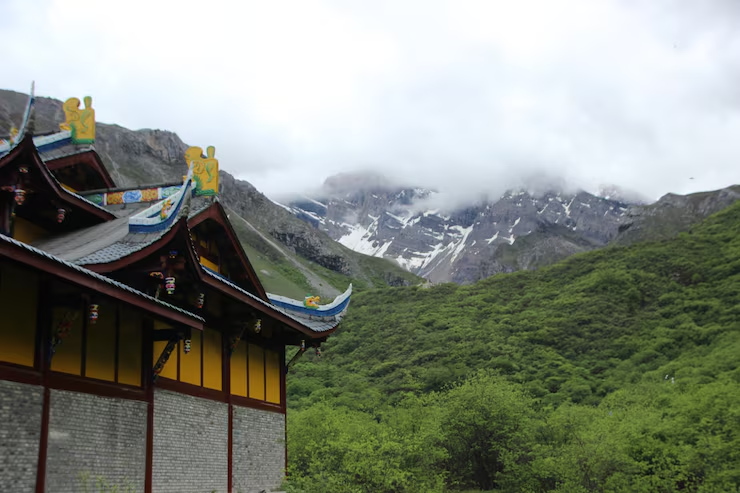
Qianshan, meaning “Thousand Mountains,” is a scenic mountain range near Anshan and one of Liaoning’s most important religious and cultural sites.
A Sacred Landscape
Qianshan has been a center of:
- Buddhism
- Taoism
- Folk religious practices
for over 1,400 years.
Temples and Pilgrimage Routes
The mountain is dotted with:
- Ancient temples
- Cliffside shrines
- Stone inscriptions
Pilgrims and hikers follow winding paths that connect spiritual landmarks across the range.
Natural Beauty
Qianshan’s peaks, forests, and valleys offer:
- Seasonal flowers in spring
- Lush greenery in summer
- Autumn foliage
- Snow-covered temples in winter
Why Visit Qianshan
Qianshan is ideal for travelers seeking spiritual depth, scenic hiking, and cultural exploration.
5. Huludao – Where the Great Wall Meets the Sea

Huludao is a coastal city famous for one of China’s most dramatic sights: the Great Wall descending directly into the sea.
Jiumenkou Great Wall
The Jiumenkou section of the Great Wall is unique because it:
- Crosses a river
- Features nine water gates
- Connects mountain fortifications to coastal defenses
This engineering marvel illustrates the strategic importance of Liaoning in China’s northern defense.
Coastal Landscapes
Beyond the Great Wall, Huludao offers:
- Quiet beaches
- Fishing villages
- Coastal cliffs
Historical Significance
Huludao was a crucial military gateway between the Central Plains and Northeast China throughout history.
Why Visit Huludao
Huludao combines military history, coastal scenery, and dramatic landscapes, making it one of Liaoning’s most photogenic destinations.
Best Time to Visit Liaoning
- Spring (Apr–May): Mild weather and blooming parks
- Summer (Jun–Aug): Best for Dalian beaches
- Autumn (Sep–Oct): Ideal for sightseeing and hiking
- Winter: Cold but atmospheric, fewer crowds