
Now Reading: Top 5 Tourist Places in Roraima, Brazil
-
01
Top 5 Tourist Places in Roraima, Brazil
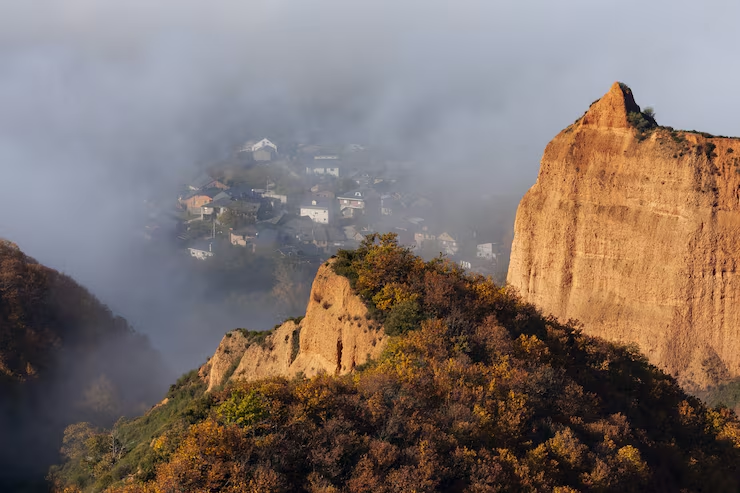
Top 5 Tourist Places in Roraima, Brazil
Introduction: Roraima – Brazil’s Land of Tabletop Mountains and Indigenous Heritage
Roraima is Brazil’s northernmost state and one of the most mysterious and visually striking regions in South America. Bordering Venezuela and Guyana, Roraima is defined by vast savannas, powerful rivers, dense forests, and ancient tabletop mountains known as tepuis. Unlike Brazil’s coastal and urbanized states, Roraima offers a sense of isolation, raw nature, and deep indigenous culture.
This state is home to Mount Roraima, one of the oldest geological formations on Earth, as well as indigenous communities whose traditions date back thousands of years. Roraima is a destination for adventure seekers, nature lovers, photographers, and travelers looking to experience Brazil beyond the usual tourist trail.
In this in-depth 2000+ word travel guide, we explore the top 5 tourist places in Roraima:
- Mount Roraima
- Boa Vista
- Tepequém
- Uiramutã
- Rio Branco
Together, these destinations showcase the dramatic landscapes, cultural richness, and adventurous spirit of Roraima.
1. Mount Roraima – The Legendary Tabletop Mountain
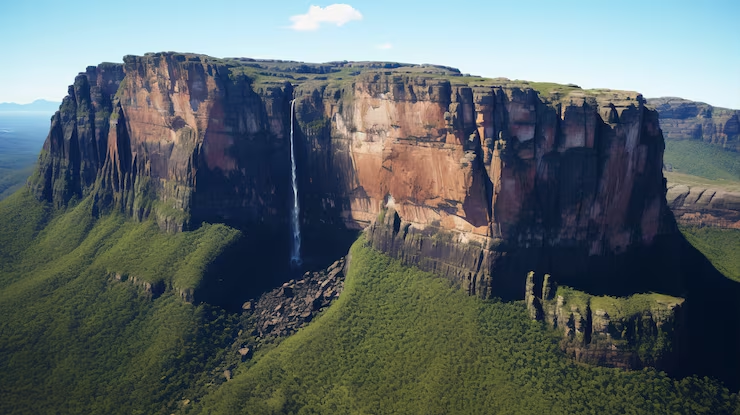
Mount Roraima is without question the most iconic attraction in the state and one of the most extraordinary natural landmarks in South America. Rising sharply from the surrounding rainforest and savanna, this massive flat-topped mountain forms a natural border between Brazil, Venezuela, and Guyana.
An Ancient Geological Wonder
Mount Roraima is estimated to be nearly two billion years old, making it one of the oldest rock formations on Earth. Its sheer vertical cliffs and flat summit give it a surreal, otherworldly appearance that has inspired explorers, scientists, and writers for centuries.
The mountain famously inspired Sir Arthur Conan Doyle’s novel The Lost World, and standing at its base or summit truly feels like stepping into another time.
Trekking to the Summit
Reaching the summit of Mount Roraima requires a multi-day guided trek, usually starting from Venezuela, as access from the Brazilian side is more restricted and protected.
The trek passes through savanna landscapes, rivers, mist-covered forests, and steep rock ascents. At the top, travelers encounter a strange world of rock formations, crystal-clear pools, endemic plants, and constant clouds drifting across the plateau.
Unique Flora and Fauna
The summit hosts plant species found nowhere else on Earth, adapted to the harsh, nutrient-poor environment. Carnivorous plants, rare orchids, and unusual mosses thrive in this isolated ecosystem.
Mount Roraima is not just a mountain—it is a living museum of Earth’s ancient past.
2. Boa Vista – The Planned Capital of Roraima
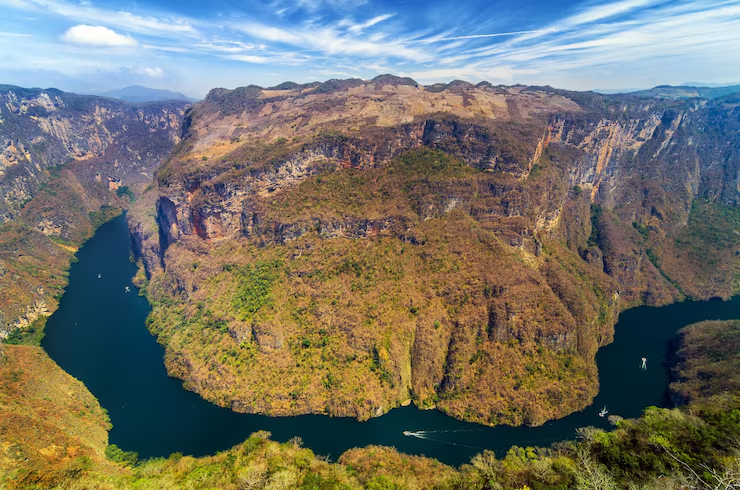
Boa Vista, the capital city of Roraima, is the state’s main urban center and gateway for travelers exploring the region. Unlike many Brazilian cities, Boa Vista was carefully planned and has a distinctive radial design inspired by European urban planning.
A City on the Rio Branco
Boa Vista sits on the banks of the Rio Branco, offering scenic river views and cooling breezes in the hot equatorial climate. The riverfront is a popular gathering place, especially during sunset, when the sky reflects beautifully on the water.
Cultural Life and Landmarks
The city features cultural centers, museums, and markets that reflect the diversity of Roraima’s population, including indigenous, northeastern Brazilian, and immigrant influences.
Key attractions include civic squares, monuments, and local markets where visitors can sample Amazonian fruits, fish dishes, and regional specialties.
Base for Exploration
Boa Vista serves as the primary base for trips to Mount Roraima, Tepequém, and indigenous territories. Its hotels, tour operators, and transportation connections make it an essential stop for any traveler to the state.
3. Tepequém – Waterfalls, Trails, and Adventure Tourism
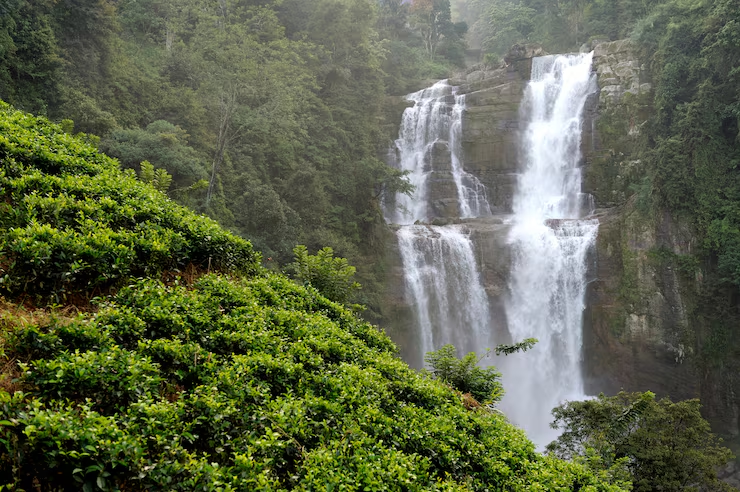
Tepequém is one of Roraima’s most exciting emerging adventure tourism destinations. Located in a mountainous region in the municipality of Amajari, Tepequém is known for its cooler climate, dramatic landscapes, and outdoor activities.
A Former Mining Region Turned Eco-Destination
Once associated with diamond mining, Tepequém has reinvented itself as an eco-tourism and adventure hotspot. Today, visitors come for hiking, cycling, and exploring nature rather than mining.
Waterfalls and Natural Pools
The region boasts several beautiful waterfalls and clear streams surrounded by lush vegetation. These natural pools provide refreshing spots to relax after a day of hiking.
Trails and Scenic Views
Hiking trails lead to panoramic viewpoints offering sweeping views of hills, valleys, and forests. The terrain makes Tepequém ideal for trekking, mountain biking, and photography.
Tepequém combines adventure, tranquility, and natural beauty, making it a favorite among nature lovers.
4. Uiramutã – Indigenous Culture and Sacred Landscapes
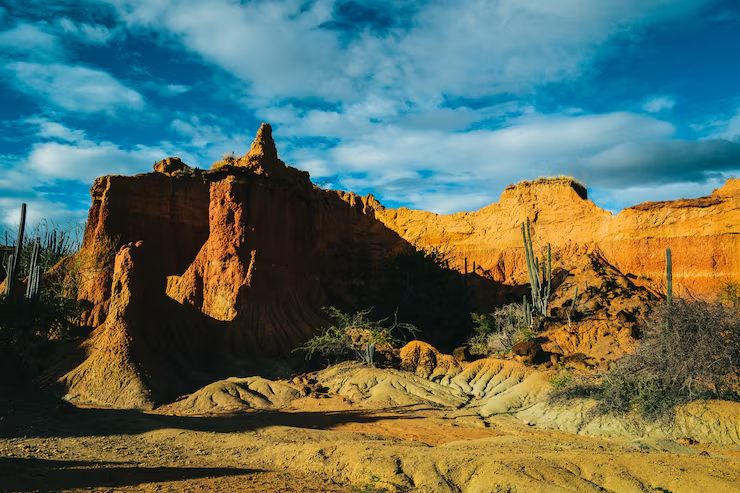
Uiramutã is one of Brazil’s most culturally significant destinations, located near the borders with Venezuela and Guyana. It lies within indigenous territories and is home primarily to the Macuxi people.
Indigenous Traditions and Way of Life
Visiting Uiramutã offers a rare opportunity to learn about indigenous traditions, languages, crafts, and spiritual beliefs. The Macuxi people have a deep connection to the land, rivers, and mountains, particularly Mount Roraima, which holds spiritual importance.
Cultural Tourism with Respect
Tourism in Uiramutã is community-based and focused on cultural exchange rather than mass tourism. Visitors are encouraged to approach the region with respect, following local guidelines and customs.
Natural Beauty and Sacred Sites
The surrounding landscapes include savannas, hills, and rivers that play an important role in indigenous cosmology. These environments add a profound cultural depth to the natural beauty of the region.
Uiramutã is not just a destination—it is a cultural experience that offers insight into Brazil’s indigenous heritage.
5. Rio Branco – Scenic River and Wildlife Corridor
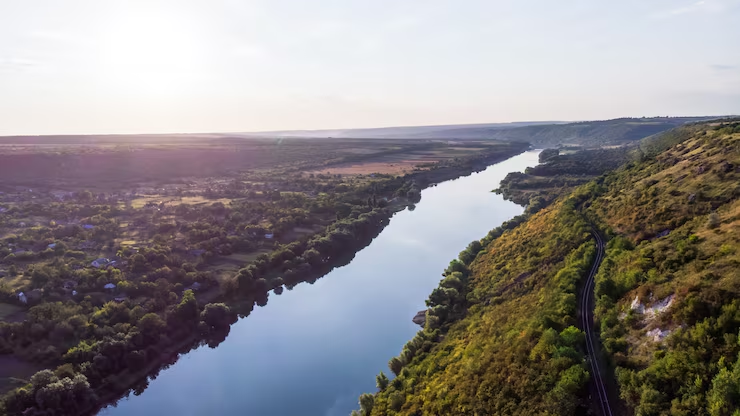
The Rio Branco is the most important river in Roraima and a defining feature of the state’s geography. Flowing through savannas and forests, it supports wildlife, transportation, and human settlement.
River Landscapes and Sunset Views
The river provides stunning scenic views, especially near Boa Vista. Boat trips offer peaceful journeys through calm waters, with opportunities to observe birds and riverside life.
Biodiversity and Ecosystems
The Rio Branco basin supports a wide range of wildlife, including fish, birds, and mammals. Its waters are essential for both ecological balance and local communities.
Cultural and Economic Importance
For centuries, the river has been a vital transportation route and food source. Fishing traditions and riverside communities remain closely tied to its seasonal rhythms.
Conclusion: Why Roraima Is One of Brazil’s Most Extraordinary States
Roraima is a destination unlike any other in Brazil. From the awe-inspiring heights of Mount Roraima to the planned streets of Boa Vista, the adventure landscapes of Tepequém, the deep indigenous heritage of Uiramutã, and the life-giving waters of the Rio Branco, the state offers a powerful blend of nature, culture, and history.
Traveling through Roraima is an experience of discovery and connection—with ancient landscapes, indigenous wisdom, and untouched environments. For travelers seeking authenticity, adventure, and breathtaking scenery, Roraima stands as one of Brazil’s most unforgettable destinations.