
Now Reading: Top 5 Tourist Places in Vaupés, Colombia
-
01
Top 5 Tourist Places in Vaupés, Colombia
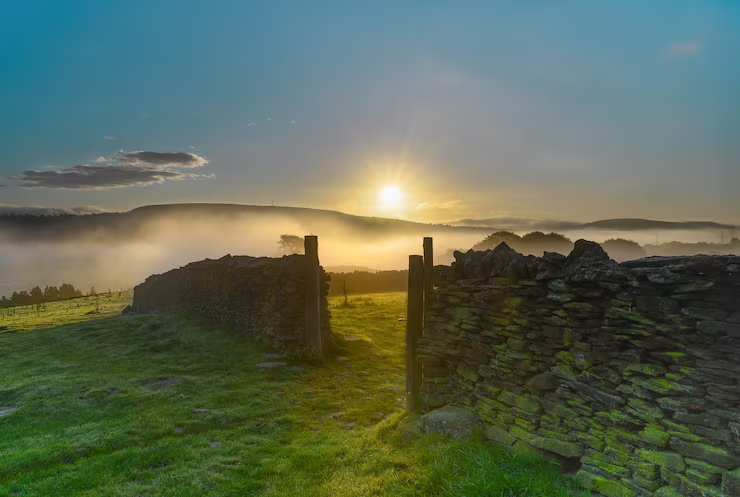
Top 5 Tourist Places in Vaupés, Colombia
Vaupés, Colombia: Into the Sacred Heart of the Amazon
Hidden deep in southeastern Colombia, far from highways, crowds, and conventional tourism routes, lies Vaupés—one of the country’s most remote, mysterious, and culturally profound regions. This department is not a destination you casually visit; it is a place you enter with humility, patience, and respect.
Vaupés is where the Amazon reveals its most spiritual dimension. Here, rivers are not just waterways but ancestral lifelines, hills are sacred beings, and indigenous knowledge shapes every interaction with the land. The forests feel ancient, alive, and aware. Silence is meaningful. Time slows down.
From the isolated river town of Mitú to the winding Vaupés River, from the living traditions of Tukano and other indigenous peoples to jungle expeditions filled with wildlife and meaning, and the sacred hills that anchor cosmology and belief—Vaupés offers one of the most authentic Amazonian experiences anywhere in South America.
This is not mass tourism. This is cultural immersion and deep nature travel at its most raw and real.
Mitú – The Gateway to Colombia’s Deep Amazon
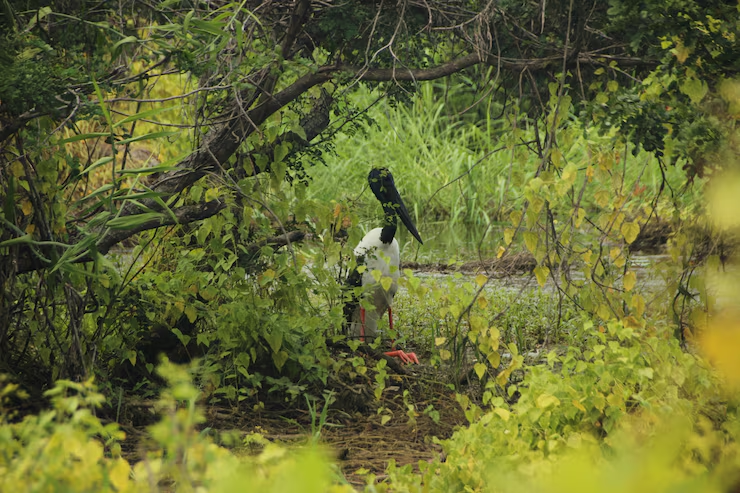
Mitú, the capital of Vaupés, is one of Colombia’s most remote departmental capitals. There are no highways connecting it to the rest of the country. Access is primarily by air or river, reinforcing the sense that arriving here is a journey in itself.
A Town at the Edge of the Forest
Mitú sits on the banks of the Vaupés River, surrounded entirely by dense Amazon rainforest. The town is small, functional, and deeply shaped by indigenous presence. Unlike Amazonian cities influenced by outside development, Mitú retains a strong native identity.
Life here is quiet and deliberate. There are no high-rise buildings or luxury hotels. Instead, you’ll find modest homes, community spaces, river docks, and markets selling local produce and forest goods.
A Meeting Point of Cultures
Mitú is a crossroads where different indigenous groups converge for trade, education, healthcare, and ceremonies. Spanish is spoken, but many residents also speak indigenous languages, especially from the Tukano linguistic family.
Visitors quickly realize that Mitú is not designed to entertain—it exists to support life in one of the world’s most complex ecosystems.
Living with the River
The river dictates daily rhythms. Boats arrive and depart with supplies, people, and stories. Children play along the riverbanks, elders sit watching the water flow, and fishermen return with their catch as they have for generations.
Why Mitú stands out:
It is a rare Amazonian capital where indigenous culture remains central, not peripheral.
Vaupés River – The Cultural Lifeline of the Region
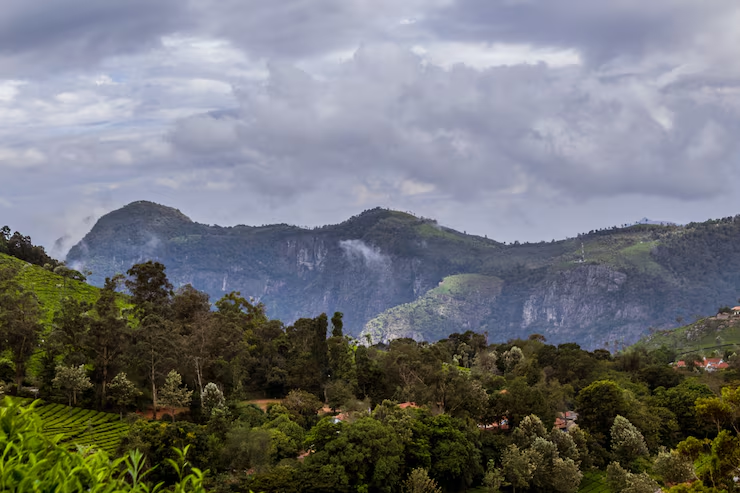
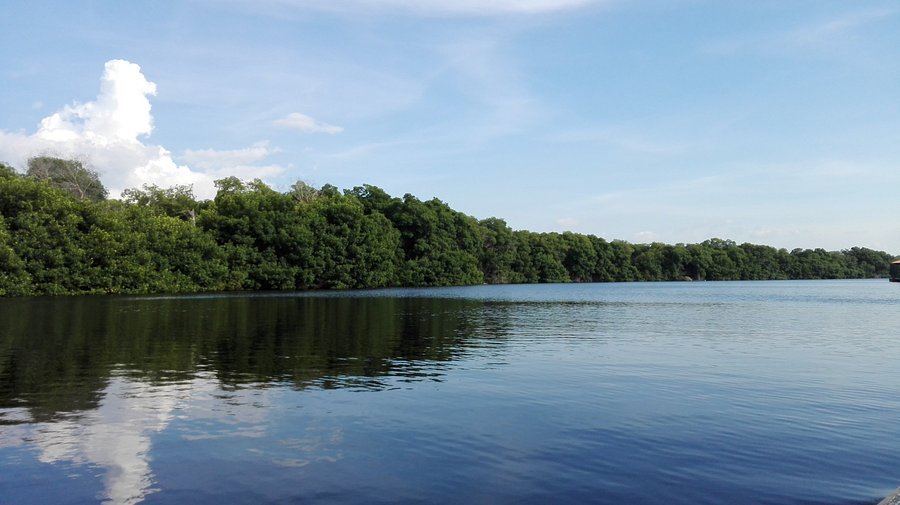
The Vaupés River is far more than a geographic feature—it is the spiritual, economic, and cultural backbone of the department.
A River That Sustains Life
The river provides:
- Transportation between communities
- Food through fishing
- Water for daily use
- A spiritual framework for indigenous cosmology
In a region without roads, the river is the connective tissue that binds villages, families, and traditions.
Travel Along the Water
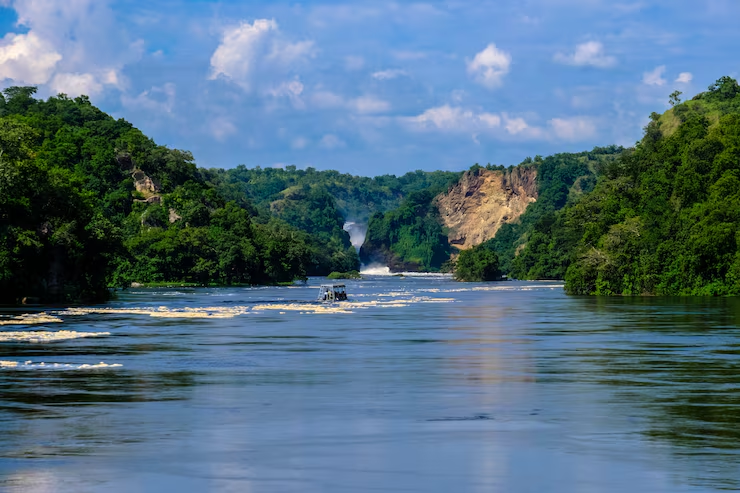
Moving along the Vaupés River by canoe or motorized boat is one of the most immersive ways to experience the region. The journey reveals:
- Dense jungle walls rising from the water
- Small indigenous settlements along the banks
- Birds, monkeys, and river life
- Sacred sites known only to local guides
The river teaches patience. Travel is slow, dictated by currents, weather, and daylight.
Spiritual Meaning
For indigenous communities, the river is alive. It is a being with memory and intention. Many myths describe the river as a path of origin, along which ancestors traveled to shape the world.
Why the Vaupés River stands out:
It is a living ancestor, not just a waterway.
Indigenous Communities – The Living Legacy of Tukano Culture
Vaupés is one of Colombia’s most indigenous departments. A majority of the population belongs to native communities, particularly the Tukano, Desana, Barasana, Cubeo, and other groups.
A World Guided by Ancestral Knowledge
Indigenous life in Vaupés is governed by deep cosmological understanding. The forest, rivers, animals, and hills are interconnected through stories, rituals, and laws passed down orally for centuries.
Knowledge is held collectively and transmitted through:
- Storytelling
- Ceremonies
- Songs and chants
- Daily practices
Nothing exists in isolation.
Malocas – Centers of Community Life
Traditional communal houses known as malocas serve as ceremonial, educational, and social spaces. These structures represent the universe itself, with symbolic directions, levels, and meanings.
Visitors who are respectfully invited into a maloca witness:
- Rituals connected to seasons and cycles
- The use of sacred plants
- Collective decision-making
Cultural Respect and Responsibility
Travelers must understand that indigenous tourism in Vaupés is not entertainment. It is an exchange that requires respect, permission, and humility. Photography, participation, and movement are often guided by strict cultural norms.
Why indigenous culture in Vaupés stands out:
It is not reconstructed—it is lived, continuous, and intact.
Jungle Expeditions – Exploring One of Earth’s Richest Ecosystems
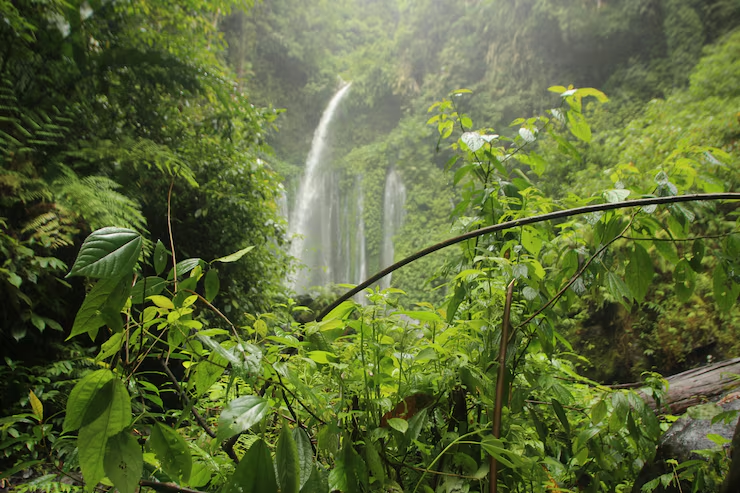
The rainforest of Vaupés is among the most biologically diverse environments on the planet. Jungle expeditions here are not adrenaline tourism—they are lessons in observation and awareness.
Wildlife Encounters
With experienced local guides, travelers may encounter:
- Monkeys moving through the canopy
- Colorful macaws and toucans
- Frogs, insects, and reptiles
- River dolphins in certain areas
Animals are not chased or disturbed. Encounters happen naturally, often unexpectedly.
Learning the Forest Language
Indigenous guides read the jungle like a book—interpreting sounds, tracks, and subtle changes in the environment. What appears silent to outsiders is full of information to those who know how to listen.
Expeditions often include:
- Medicinal plant knowledge
- Survival techniques
- Mythological explanations of animals
- Respectful hunting and gathering principles
Walking with Awareness
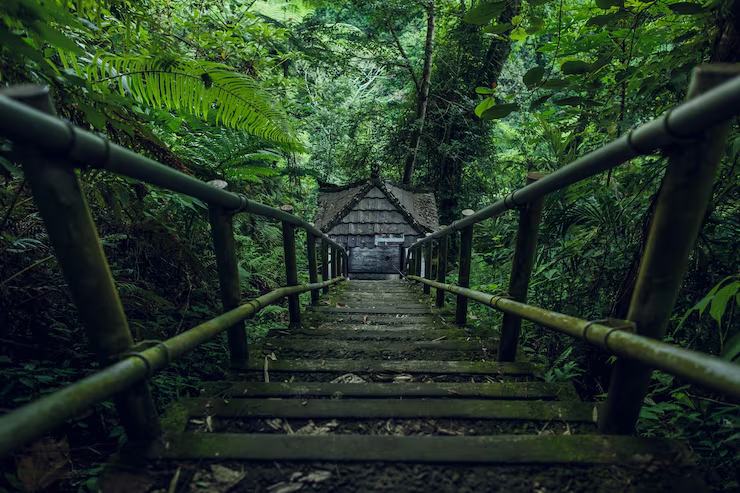
Trails are minimal. Paths shift with seasons. Every step requires attention. This slows travelers down and fosters a deeper connection with place.
Why jungle expeditions in Vaupés stand out:
They offer wisdom-driven exploration rather than adventure tourism.
Sacred Hills – Where Geography Meets Spirituality
Scattered across the Vaupés landscape are sacred hills and rock formations that hold immense spiritual significance. These are not landmarks in the tourist sense—they are sites of origin, transformation, and memory.
Hills as Living Beings
In indigenous cosmology, hills are ancestors, guardians, or transformed beings from creation stories. They are often associated with:
- The origin of clans
- Sacred animals
- Cosmic events
Some hills are forbidden to climb, touch, or even approach without proper rituals.
Story Landscapes
Each sacred hill is part of a larger narrative map. Elders can recount how landscapes were formed through journeys of mythical beings, making geography inseparable from storytelling.
Silence and Reverence
Visitors are expected to maintain silence and respect near these sites. There are no signs, fences, or viewing platforms—only understanding passed through generations.
Why sacred hills stand out:
They show how land can be spiritual identity, not property.
Why Vaupés Is One of Colombia’s Most Profound Destinations
Vaupés does not offer comfort, convenience, or spectacle. What it offers is far rarer:
- Cultural continuity untouched by mass tourism
- Amazonian ecosystems in near-pristine condition
- Indigenous worldviews still guiding daily life
- Travel that transforms perspective rather than entertains
This is a destination for travelers seeking depth, humility, and learning.
Final Thoughts: Vaupés as a Journey, Not a Place
To visit Vaupés is to accept that you are not the center of the experience. The forest, the river, the ancestors, and the community come first. Comfort gives way to meaning. Speed gives way to awareness.
Vaupés teaches visitors how to listen—to water, wind, stories, and silence.
For those willing to approach with respect and patience, Vaupés offers something unforgettable:
a glimpse into a world where nature and culture are still one.