

Now Reading: Top 5 Best Places to Visiting in Kendrapara – Temples, Wildlife & Heritage Sites
-
01
Top 5 Best Places to Visiting in Kendrapara – Temples, Wildlife & Heritage Sites

Top 5 Best Places to Visiting in Kendrapara – Temples, Wildlife & Heritage Sites
1.Gahirmatha

A sanctuary for turtles exists as the exclusive turtle conservation area in Odisha while situated nearest to the Bhitarkanika National Park boundaries. Gahirmatha Beach hosts this Turtle Sanctuary as its place to observe Olive Ridley Turtles. A sunrise boat journey through the river leads passengers into the vast sea waters while bringing joy to their hearts. The turtles make their complete journey across the South Pacific Ocean until they reach Gahirmatha to breed. Some 500 thousand members of these species mate at the beach throughout the yearly time period.
The nesting beach for Olive Ridley Turtles attracts worldwide attention by extending from Dhamara river mouth in the north to Brahmani river mouth in the south.
Orissa owns a single marine sanctuary named Gahirmatha Marine Wildlife Sanctuary. The Government of Orissa established Gahirmatha Marine Sanctuary in 1997 because of its valuable ecological value and wide-ranging flora and fauna collection. Olive Ridley Turtles have used Gahirmatha beach as a vital nesting and birthing site ever since ancient times because they make yearly spectacular migratory trips for breeding and healing. Research indicates that Olive Ridley Sea Turtles come from pacific oceans by passing through Sri Lankan coastal waters of the Indian Ocean to reach Gahirmatha’s coastal region in the north. The mating season for these turtles occurs during November through January but their breeding period extends for eight months from October to May.
Anyone can find it interesting to observe turtles as they climb up from the deep ocean to labor before choosing a spot for egg laying then dig a hole to bury their 200 eggs before hiding the area and returning to the sea.
2.Batighar
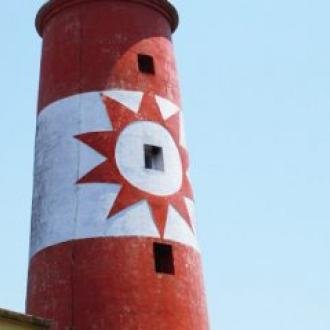
The installation of this lighthouse marks its position as the first built for eastern Indian coast. The location exists at approximately 45 kilometers distance from the District headquarters. Batighar village lies across from Kharinasi river as its home location. The area encompasses pleasant natural scenery as its main feature. Historically this location was named Kaudia Dwip until traditional hunting occurred on its lands belonging to the Kujanga Kings. The construction of this lighthouse began on 6th December 1836 before it started serving as a light source in 16th October 1837. The construction materials arrived at the site from the Barabati Fort facility located in Cuttack. The structure reaches 125 feet in height while the base wall extends to 15 feet. The structure extends up to 10 feet across the base at its ground level. Climbers need to ascend 138 cement concrete steps and 16 steps of a ladder to reach the top. The unique feature of this lighthouse is its operation since the time it first became lit because present management falls under Calcutta Light House.
On 16th October 1837 first light came out from this light house.This Light house was built by Mr H.Wright .This light house is 60 feet above sea level built on sand heap.This is a six storied building having space to take rest on each floor having a big window .There are 16 Bullet proof glasses attached at the top floor.Year 1857 is in scripted on that glass which is remain as it is.Within the circular room there is a wheel of 3 feet radius having an electric bulb at the center.This bulb is of 440 v 230 w,this light can be seen from 60 km in the sea.This Light House is opened for Tourist from 7.00 am to 10.am and 4 pm to evening.
3.Shri Baldev Jew
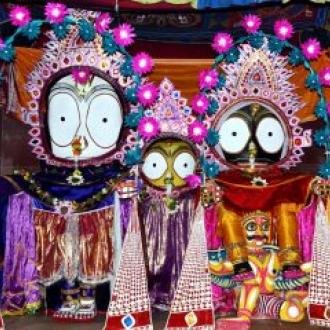
Shri Baldev Jew Mandir Situated at Ichhapur, 5 km from Kendrapara Town. One can see in here the gorgeous temple with other smaller temples developed on its flank evincing the architectural splendor of ancient Odisha. Lord Baladev is the principal deity of the temple along with his brother and the sister. An idol of idol representing Tulasi as Goddess in a sitting posture is also there after the seven holy steps. The gods and goddesses have different dresses and ornamentation for different significant festivals. The Chariot on which the three gods go to ride during Car Festival is called as “Brahma Taladhwaja Rath”. This is proclaimed to be the largest chariot in the world.
This was Built within 1700 by King of Kujanga and chhederabaranga Gopinath Narendra and Jagannath Mahapatra.The Manika Debi and Jagannath Temple was built by first mahanta Ramanuja Das .The total area of this temple is arround 3 acers.Height of the main temple is 75 ft ,middle temple is of 40 ft,height of Jagamohana is 65 ft and of BataMandir is 70 ft .Within the temple complex there is a Beautiful 45 ft height Sri Mahalaxmi Temple .The Flag on the main temple is knoen as “Brahma Chirala”or “Brahma Bana”,where as the flag at the top of the 5 ft high Nilachakra is known as”Brahma Nilachakra”.This place also known as Tulasi khetra,Gupta khetra,Gupta Brundabana,Sri Baladeba khetra and Manibigraha khetra .
The rituals and poojas to the deities are unintroduced, different in other temples. This is complete Baishnaba Khetra, Sri baladev Jew param Baishnab without any Tantrik Sadhana. Sri Baladev Jew not made from wood,HE,self “MANIBIGHRAHA”. No Nabakalebara rituals took place here.
The main festival of temple is Rathajatra held as Srigundicha and Bahudajatra. The main Naibedya of Sri Baladev Jew is “RASABALI” who is very famous.
4.Bhitar Kanika

The territory called Bhitara Kanika served under the governance of Kanika Estate before it ceased to exist. The deep mangrove forests and saline rivers lead to its status as a sanctuary which was officially declared on 21.04.1975. People worldwide recognize this location as an important site for natural crocodile reproduction. The national park spreads across 672 square kilometers of mangrove forests and wetland which lies within the Brahmani-Baitarani estuarial region of Kendrapara districts north eastern space. Crossed by a thick network of brooks with the bay of Bengal on the east , Bhitar Kanika is home to over 215 species of birds , including winter migratory birds from Europe and Central-Asia as the park provides a congenial atmosphere and serene , pollution free environment , birds migrate thousands of miles to Bhitar Kanika to escape the harsh winter in Ladakh, ManoSarovar , Himalayan region, Siberia , Kazaksthan , Mongolia , Russia , Afghanistan , Iraq, Northen Asia and some central European countries. In August 2002 the area received its status as the second Ramsar Site of the state. The site possesses rare biodiversity because it consists of land areas combined with the tidal waters of the deltaic region as well as the estuaries and coastal waters of the Bay of Bengal.
5.Hukitola
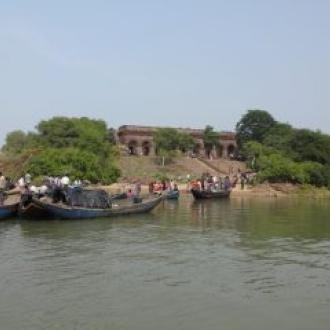
Hukitola stands in Jambu island within the Bay of Bengal situated under Mahakalapara Block in Kendrapara District. During the “Naanka” drought period which started in 1866/67 British builders constructed the large plinth-area building on Jambu island. The British constructed the storehouse to hold rice shipments coming through the sea from Burma and various other areas. The 19th-century development in construction technology manifest through this building. This magnificent structure with underground rainwater storage represents historical achievements of maritime activity in the state.
Throughout the year students as well as scholars and history enthusiasts visit this location to admire its scenic beauty and important historical background. The port together with the palace experienced a decline in significance after 1924 with the British establishment of the new port at false point.
Yet the major uniqueness of the palace emerges from the design of its roof slope arrangement. The palace prevents rain water from accumulating by channeling it towards four big water receptacles. The accumulated water served as drinking water for the merchants who remained there during every month.
Related articles : Top 5Best Places to Visiting in Kandhamal – Waterfalls, Temples & Nature Escapes


Pingback: Best Places to Visiting in Kendujhar – Khandadhar, Sanaghagara & Maa Tarini Temple