

Now Reading: Top 5 Best Places to Visit in Jhargram – Palaces, Forests & Waterfalls
-
01
Top 5 Best Places to Visit in Jhargram – Palaces, Forests & Waterfalls
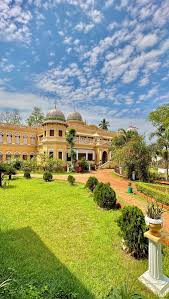
Top 5 Best Places to Visit in Jhargram – Palaces, Forests & Waterfalls
1.Gopiballavpur Eco Tourism Park
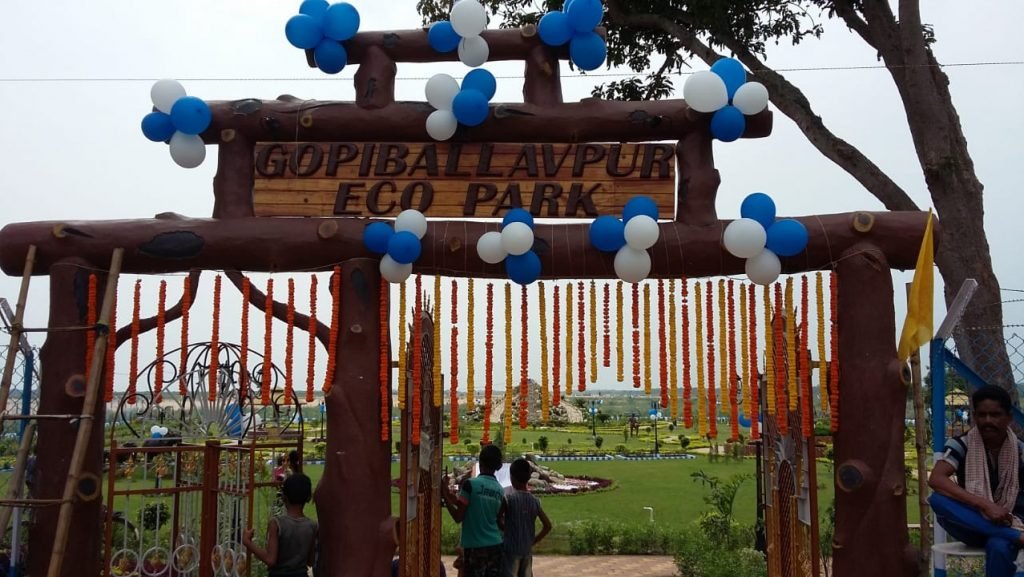
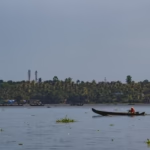
Straddled on the banks of the river Subarnarekha, Gopiballavpur Eco Tourism Park is an ideal haven in the district Jhargram of west Bengal. About 38 km away from the town of Jhargram, this eco-park is a paradise for nature lovers and risk seekers.
West Bengal Forest Department is in control so there are eco cottages and tents as an option for overnight accommodation. These allow both a sense of rustic appeal and comfort, so guests may fully appreciate the peace of the outdoors.
2.Chilkigarh Raj Palace
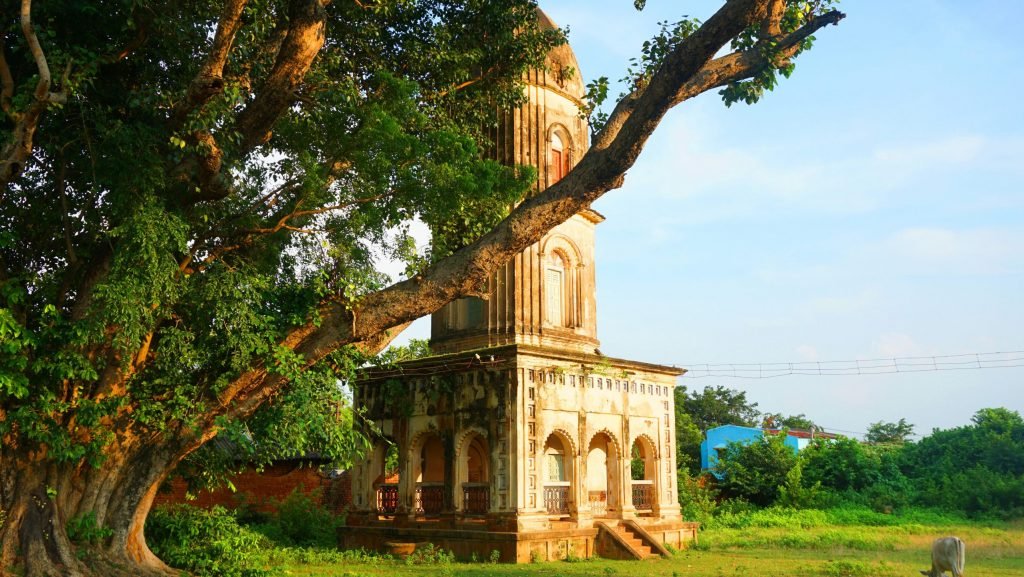
In the heart of Jhargram district, West Bengal, Chilkigarh Raj Palace is an ongoing testament to the district’s proud historical past. Standing for more than 4 centuries, it is rooted in accounts of war, piety as well as great architectural design.
Historical Significance
It was said in legends that King Jagatdeo of the Suryavansh dynasty, from Madhya Pradesh today, triumphed over King Dhalraj of Chilkigarh. After his victory, he took the royal name King Dhawaldev and consolidated his foothold in the district. With this, for the first time a dynasty called Dhawaldev came into existence in Chilkigarh.
To secure his world, against endless attack by the Maratha ‘Borgi’ invaders, King Dhawaldev had his palace built along the Dulung River, creating this with the riverbank as a natural barrier.
Chilkigarh Raj Palace has an interesting blend of traditional and local architectural building elements. Although many of the buildings have been eroded by years, many of them remain and they still stir the atmosphere of the past royalty. There were different buildings, courtyards, and temples existing in this area of the palace on one occasion that point towards the majestic style of regal living in that time.
Entry Fee: Every visitor must pay a minimal charge of ₹20.
Location: Chilkigarh town lies in West Bengal about 14 kilometers away from the Jhargram town.
3.Kodopal Agro Tourism Park
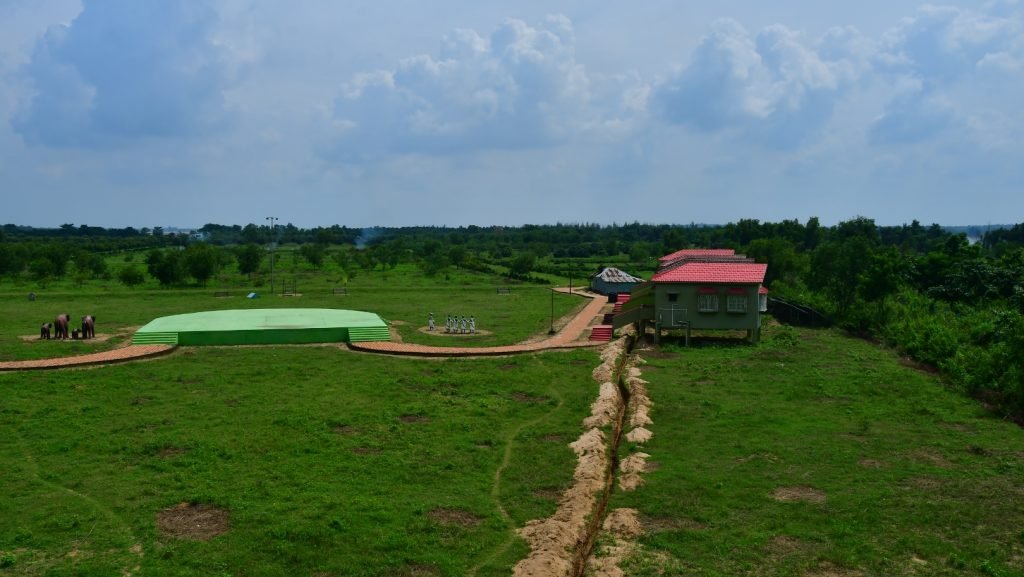
Located at the confluence of Dulung and Subarnarekha rivers in Jhargram district, West Bengal, the same park is also named Kodopal Eco-Nest & Biological Fruit Basket. An outstanding experience that combines nature, heritage, and sustainable lifestyles awaits the visitors as West Bengal Government has spread this effort over 75 acres of land.
In a sea of lush greenery, the park stands out for its medicinal herbs and many fruit bearing trees such as mangoes and dragon fruits. Kodopal Agro Tourism Park, which is located in close proximity of the confluence of Dulung and the Subarnarekha rivers brings tranquility to a person and is the ideal place to get relaxed and refresh oneself for nature lovers.
Lodging in one of the eight tastefully appointed cottages owes visitors the opportunity to experience comfort and nature. The site proves its devotion to sustainability with 95 street lights powered only by solar power. Equipped with two watchtowers, guests can appreciate breathtaking panoramas of the landscape immersing themselves in the natural surrounding of the park.
Location: A little off from Jhargram town, it is located ca. 45 km from there, close to Rohini village, Sankrail block.
4.Bandarvula Tribal Interpretation Centre
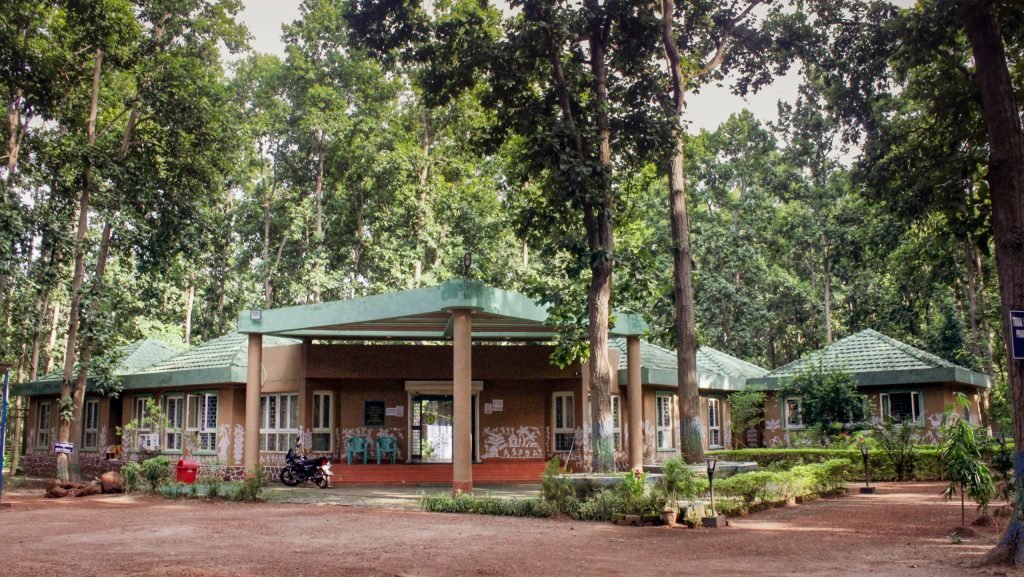
Bandarvula Tribal Interpretation Centre is a repository of cultural heritage of the region which lies roughly 1 km away from Jhargram town in West Bengal and is perched as a part of serene sal forests. As a state-governed project, this site becomes a vibrant gathering place for showcase and preservation of the region’s significant tribal legacy.
Cultural Significance
The center is dedicated to featuring the customary traditions of the indigenous tribes of Jhargram, namely the Santhals, Mundas, Lodhas, Bhumijs and Sabars. The center has exhibits of traditional tribal art and crafts, musical and household instruments, giving close insights into the way of life and traditions of the local tribes. Cultural entertainments are performed in the center, especially during the weekend; Chhau and Jhumur tribal dances in addition to Tusu and Bhadu traditional folk songs is presented during the performance.
It is housed in a thick sal forest which provides the center with a serene environment that adds much to the appreciation of the culture. The environment, placed wherever within the sal forest, illustrates both the aesthetic appeal and the congenial interaction the tribal people have with their natural habitat.
5.Tapavan
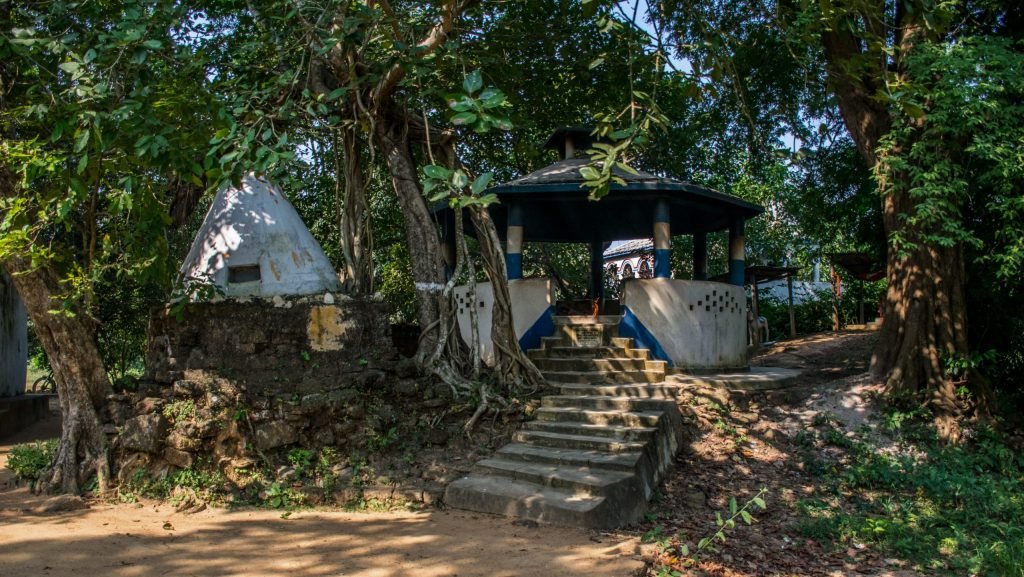
Located in the midst of green of Chandabila forest range in West Bengal, Tapovan is a peaceful spiritual refuge with rich mythological fascination in the past. This peaceful escape only 7 km from the Rameshvara Temple was also historically considered to be the place where Sage Valmiki wrote the Ramayana.
Sacred Significance
Tapovan has a sacred temple of Lord Rama, Goddess Sita, Sage Valmiki, Hanuman, and the divine twins Luv and Kush. According to local myth, after Sita’s banishment, she found shelter here under the instructions of Sage Valmiki and bore Luv and Kush. The temple consecrated to Lord Rama and Goddess Sita, it brings together these historic events, making a must-see pilgrimage place for people who appreciate spiritual and historical traditions.
Surrounded by dense green foliage, Tapovan offers a quiet scene adorned with soothing sound of a rivulet close by aptly-named as Sita Nala. The brook casts a peaceful spell not far away but flows in the midst of lush foliage through Tapovan, from the river Subarnarekha and makes it more serene.
Related articles : Top 5 Best Places to Visit in Jalpaiguri – Wildlife, Rivers & Heritage







Pingback: Best Places to Visit in Kalimpong – Deolo Hill, Durpin Monastery & More