Now Reading: 15 Best Places to Visit in Junagadh for History & Nature Lovers
-
01
15 Best Places to Visit in Junagadh for History & Nature Lovers

15 Best Places to Visit in Junagadh for History & Nature Lovers
1. Mahabat Maqbara

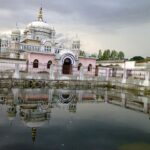
The mausoleum called Mausoleum of Bahaduddnbhai Hasainbhai stands as Mahabat Maqbara which makes it a vital stop for visitors exploring Junagarh. The shrine Bahaduddinhassainbhai Maqabra contains the resting places of Mohabbat khanji and Bahaduddin Hasainbhai under its roof which was built in the late 19th century.
This monument exhibits unique architectural features of Indo-Islamic and Gothic styles through its specific arches along with intricate stone carvings on walls along with windows and silver-decorated entrances and winding staircases wrapping around four tall minarets and its old step-well and onion-shaped dome in the grounds. Patan district boasts Jama Masjid as in addition to other sites.
Mahabat Maqbara Architecture
The combination of Indian Islamic Gothic architectural traditions creates a mesmerizing structure at Mahabat Maqbara. Various types of carvings combine with expert artwork from floor to ceiling of this structure.
Architects designed the Mahabat Maqbara with arches and pillars and accompanied them with typical Islamic dome features. A central part of this Maqbara consists of two pillars supporting a spiral staircase under distinct dome structures.
The structure contains two supporting pillars which lead to a spiral staircase that stands under separate dome elements.
History of the Mahabat Maqbara
Mahabat Khanji started construction of the Mahabat Maqbara in 1878 until Bahadur Khanji finished its construction in 1892. The city of Junagadh appeared in 1748 to become a British-led colony that started its rule in 1807. A dispute existed between India and Junagadh Province over the land where this monument resides before independence.
Regardless of no shared border between Junagadh and Pakistan Mahabat Khan III pushed for their union under Pakistan. The national unrest at that time led Mahabat Khan III to relocate to Pakistan leaving Junagadh and its magnificent structure to remain in Indian sovereignty.
Timings : Open 24 hours
Entry Fee : Free
2. Uparkot Fort
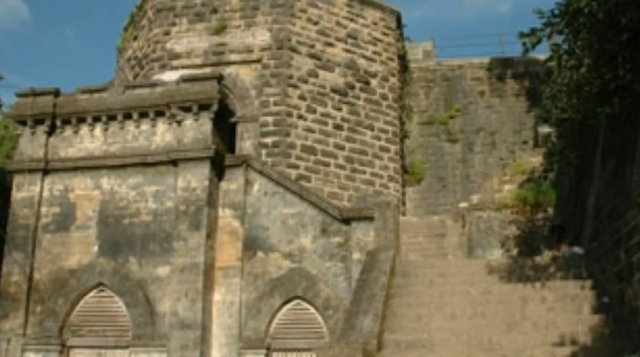
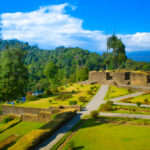
Speaking of Uperkot it stands as the upper citadel positioned in the eastern part of Junagadh. The fort extends over 2300 years and certain parts of its walls rise 20m high while a former 300ft-deep moat inside the fort walls was reputed to contain protective crocodile inhabitants.
Both Neelam and Manek stand as the primary tourist destinations inside the fort because these two items were created in Cairo and delivered through Turkish efforts. Stepwells along with caves are additional attractions in the fort complex.
History of the Uparkot Fort in Junagadh
The Uparkot Fort staining the base of Girnar Hills emerged after the Mauryan Empire established it in 319 BC. The change in administrative capital from Uparkot to Vallabhi in Saurashtra region of Gujarat eliminated the essential requirement for the fort.
According to locals the Uparkot Fort stands as the oldest structural remnant of Junagadh as experts estimate its construction at around 2300 years ago. By resisting 12 attempts to conquer Junagadh the Uparkot Fort secured the town until it finally surrendered to the Chudamas.
Uparkot Fort Architecture
During the 2nd century builders formed Buddha caves inside the rock to create sacred monastic structures inside Uparkot Fort. The ancient mosque of Jama Masjid from the 15th century provides shelter to the tomb of Nuri Shah in the same location.
The fort extends to heights between 60 to 70 feet and it was designed in Indo-Gothic style featuring three entrances with an ancient Torana in sight. Different ceremonies of Jainism, Hinduism and Buddhism are conducted on this elevated structure. Stepwells named the Adi Chadi along with Adi Kavi Wav and the Navghan Kuvo are found among the temples within the fort area.
The mythical construction of Adi Kavi Wav resulted from two enslaved women who toiled within the Chudamasa realm. A square lake named Nawabi Lake exists within the premises of Uparkot Fort. Among its expansive premises stands a deep moat reaching a depth of at least 300 feet. History reveals that crocodiles once dwelled in this space before they devoured any enemy trying to invade the fort.
3. Girnar Hill

Located at a distance of 5 km from Junagadh town stands Girnar Hill as a sacred mountain that the Vedas established centuries ago. People have viewed Girnar as a holy destination since ancient times at least through Mohan-jo-Daro period.
Local residents along with Hindu and Jain believers come to visit the natural paradise that stands in the Gir Forest. The religious sites along with prehistoric locations and mountain ranges are available to visitors at Girnar.
The prestigious mountain known as Revatak Parvata stands tall from the plains and presents a complete layer of Indian religious temples on its slope. A large number of religious travelers gather to scale the 10,000 stone steps which lead to the mountain peak during the early morning hours. Visitors who want to reach all uppermost temples should allocate a whole day for the journey. Pilgrims and porters make a slow and steady climb during early morning twilight as they climb the stairway.
The Jain temples consist of mosaic-decorated domes alongside elaborate stupas which can be found approximately two-thirds of the path towards the summit. The principal 12th-century Temple of Neminath dedicated to the 22nd Tirthankar sits at the entrance of the first left-hand gateway beyond the first gate. Visitors can access this particular temple during all hours of day because it never closes. In 1177 two brothers funded the construction of the triple Temple of Mallinath which praises the ninth Tirthankar. A number of monks together with spiritual leaders visit this temple for festivals.
Various Hindu temples are situated in the higher sections. At the summit stands the Temple of Amba Mata that newly-wedded couples come to worship in order to find happiness in their married life. Getting to the additional four peaks with their respective temples requires climbing an extensive portion of down and up from the current location. Temple of Gorakhnath rests at the height of 1117m which is Gujarat’s highest point. At the summit of the steep peak lies Dattatraya shrine which honors a three-headed manifestation of Vishnu. Kali receives worship at the last tiny peak as devotees have established a shrine in her honor.
Girnar Hill serves as the Nirvana bhumi that led to the last resting place of 22nd Tirthankara Lord Neminatha. In the 11th century people built a temple to commemorate Tirthankara.
The ideal period for tourism to Girnar Hill exists between November and February. During the month of Magha (January–February) the Bhavnath Mela raises a spiritual celebration at Bhavnath Mahadev Temple at Girnar Taleti through performances of folk music and dancing while attracting large numbers of nagas (Saivite holy men). During this occasion Shiva is believed to have carried out his destructive cosmic dance as the Lord of Dance. Visitors can experience the Girnar Parikrama festival during November of each year.
4. Adi-kadi Vav & Navghan Kuwo
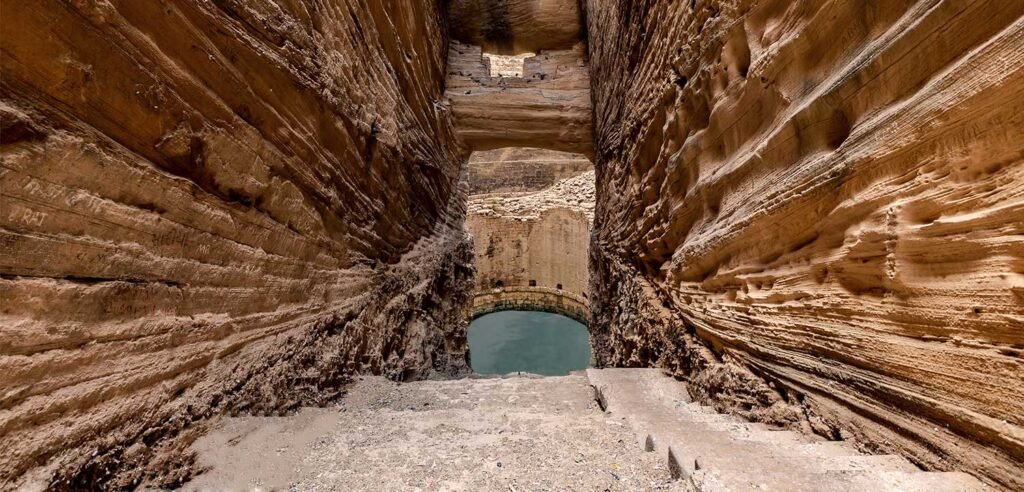
The Adi-kadi Vav & Navghan Kuwo are the two famous stepwells located within the Uparkot Fort. While the former was built by two slave girls of the Chudasama kingdom, the latter came into being much before the Adi-kadi Vav.
The Adi-kadi Vav is a 9-layered step well from the 1400s. However, this stepwell is also attached to a tragic story. While the girls were at the task, they were unable to dig out any water. Thus, the local priest pronounced that water would surface only if Adi and Kadi, the two unmarried girls were sacrificed. Thus, this piece of history also has a tragic story.
However, the Navghan Kuwo is a relatively early well that was constructed sometime during the 1060s. One significant feature of this stepwell is its underground spiral stairway that meets the bottom where the water is found. Carved in soft stone, the Navghan Kuwo is a unique stepwell.
The two stepwells located inside Uparkot represent unusual constructions which diverge from typical Gujarat stepwells. Most wells require digging through multiple layers of subsoils and rocks while stone construction elements such as columns and stairs follow similar above-ground building techniques. The creators of these two structures hew the entire well space directly from stone blocks resulting in naturally occurring well structures. The entire structure of both stone wells directly derives from a single piece of rock because structural building activities never took place.
The 15th-century stone construction Adi-kadi Vav consists entirely of one continuous block of difficult rock material. The well shaft reaches extremely deep in the stone after visitors descend down 120 narrow step stairs through the stone structure. Different belief systems from two sources tell the origin of the well name. The legend reports the king commanded the workers to dig a stepwell inside durable stone however they discovered no water source. The marriage-less sacrifice of females promised to reveal water according to the royal priest. The excavation of the well was possible only after the sacrifice of Adi and Kadi who turned out to be the unlucky choices. Water manifested after their death. Historians state that the terms Adi and Kadi actually referred to two servant girls who constantly retrieved water from the well during their daily tasks. Residents continue to exhibit their appreciation for the location by hanging both clothes and bangles from local trees despite the way they learned about this practice.
5. Gir National Park
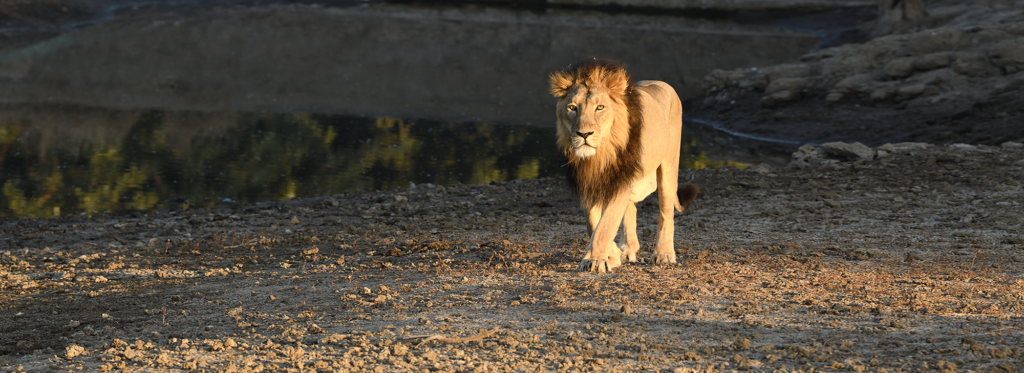
The Gir National Park along with Wildlife Sanctuary maintains itself as the last refuge for Asiatic Lions. The Gir National Park with its Wildlife Sanctuary exists within Gujarat territory at Talala Gir. Gir National Park operates from June 16th through October 15th annually while April and May provide the optimal conditions for wildlife observation.
Gir stands alone as the spot where humans can connect with a location that functions fundamentally for sustaining a specific species in existence. The Nawab of Junagadh started the preservation campaign to save the lions just before they reached the brink of extinction because of hunting practices.
The authorized officials reported 411 lions as part of their 2010 census. Gir National Park houses a total of 2375 fauna varieties with 38 mammal species alongside more than 300 bird species and 37 reptile species and over 2000 insect species. Existed wildlife in this area consists of leopard, chausingha, spotted deer, hyena, sambar deer and chinkara.
Lions (Panthera leopersica) maintain their final habitat within the 1412-sq-km forested and hilly sanctuary which lies approximately half way between Veraval and Junagadh. A safari journey through natural forests creates pure joy whether visitors manage to catch glimpses of lions or other animals and various birds in their sanctuary. The sanctuary can only be accessed by obtaining a safari permit online through advance booking.
Devalia Safari Park functions as the alternative to obtain wildlife encounters involving lions if you fail to book a permit in Gir National Park. Here you get promised encounters but they are organized in a way that seems somewhat planned. The sanctuary shelters 37 other mammal species with dainty chital (spotted deer), sambar (large deer), nilgai (blue bull / large antelopes), chousingha (four-horned antelopes), chinkara (gazelles), crocodiles and occasionally seen leopards all showing population growth. Visitors interested in bird watching will find the park attractive because it supports more than 300 bird species which mostly reside there. The rescued wildlife has prospered but more than fifty percent of the maldhari (herders) who formerly inhabited the sanctuary received resettlement orders because authorities claimed their livestock ate vital foods intended for antelopes and gazelles and became prey for both lions and leopards. Live population in the park stands at 1000 people yet their domestic animals contribute to 25% of total lion prey consumption.
The Gir Interpretation Zone at Devalia positions itself 12 kilometers west of Sasan Gir village inside the sanctuary grounds. The guarded area of 4.12 sq km within the sanctuary holds an entire collection of wildlife species from Gir. A guaranteed opportunity exists to spot both lions and leopards since buses run one-hour tours throughout the area. Travelers within this area might encounter foxes, mongoose, and blackbuck although blackbuck serves as food for the lions.
The sanctuary began operations in 1965 while officials established a national park core area with a size of 259 square kilometers during 1975. The lion population in the region elevated from under 200 to 674 recorded during Census 2020 since the late 1960s.
Fysical visitation should take place during the winter months starting from November through March.
6. Edicts of Ashoka
Timings : 9:00 AM – 1:00 PM, 2:00 PM – 6:00 PM
Time Required : 1-2 hrs
Entry Fee : Indian Tourists: INR 5, Foreign Tourists: INR 100
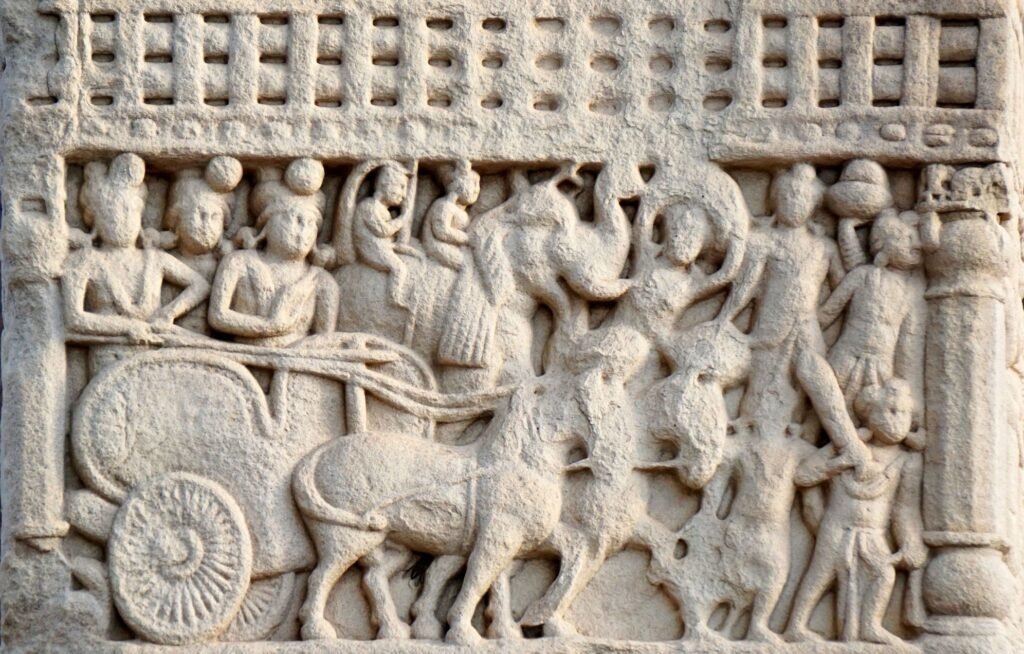
Edict? You may be wondering what an edict is. An edict quite literally means an order or decree issued by an official authority. King Ashoka is one of the most revered figures in Indian history. After a lifetime of war and violent pursuits, he renounced his throne and took up the virtues of Buddhism in spirit. Mindfulness, meditation, kindness, and gratitude became his new mantra, along with the renunciation of greed and animal sacrifice. To spread this message of peace, he inscribed edicts across the region, from the coasts of India to Nepal, Pakistan, Bangladesh, and Afghanistan. One such edict is at the foot of Girnar Hill in Junagadh, Gujarat.
Dating back to 250 BC, there are 14 Edicts of Ashoka inscribed in large granite stones at the Western end of India. The edicts are written in Brahmi script preaching the ideas of love, peace, and tolerance, and apply to persons of any faith, not just Buddhism. The scriptures were carved into stone by an iron pen, and enclose knowledge of significant historical importance. Today, the rock edicts are protected by a modern white building, guarding the age-old wisdom in its original form.
Ashoka’s rock edicts are an off the beaten track tourist spot, which would be mainly of interest to history buffs. The edicts are a gem from the past, symbolic of ancient wisdom and virtues that form the foundation of India which makes it a must-visit for almost every Indian as well as any enthusiast who truly wishes to absorb the knowledge legacy of India.
Colonel James Todd from Britain who obtained fame as a historian discovered in 1822 the historic messages engraved on Junagadh rocks. The inscriptions that originate from the Maurya emperor Ashoka represent the oldest recorded content dating back to the 3rd century BC. Two Sanskrit inscriptions were inscribed by Rudradaman followed by Skandgupta in 150 AD and 450 AD respectively. Their scripts represent the oldest known Sanskrit texts that provide information about Lake Sudarshan in its ancient state. The inscription describes how Chandragupta Maurya built a dam followed by an irrigation system during his reign.
The Nawab Rasool Khan of Junagadh State ordered the construction of protective structures to safeguard the ancient rocks during 1900. The rulers of the region performed restorations on this structure in 1939 and 1941 until its collapse occurred in 2014. The National Museum of Delhi displays a compact Ashokan Edict outside its premises.
Inscriptions at Ashoka’s Rock Edicts
Ashokan Brahmi script used for writing edicts focused on conveying messages about non-violence and lessons of dharma as well as tolerance and secular approaches. The scripture retains its ultimate importance among ancient historical records.
Through the Ashokan edicts the British found their first comprehensive historical records of India. British scholar James Princep spent multiple years translating the Orissa stone edicts before their discovery in that Indian state. When British historian Colonel James Todd discovered another Ashokan edict in Junagadh the British scholar James Princep managed to break the code. Princep accomplished two significant feats in his research as he validated Ashoka’s royal narrative while beginning a process that shaped the development of nine stages of Devnagiri script. The birth of Devanagari script consists of three separate evolutionary stages that researchers identify today.
- Ashoka Brahmi – the original script
- The script developed by Gupta Brahmi contained minimal progress from Ashoka Brahmi.
- The rounded script known as Kutila served as the source for the evolution of Devnagiri.
Sightseeing at Edicts Of Ashoka
A small white structure operates as a museum to display the Edicts of Ashoka at the base of Mount Girnar. During the period when emperors made their inscriptions Junagadh functioned as the leading city in the Gujarat region. This region contains fertile land that conveys Buddhist and Jain religious beliefs. Many Jain religious institutions were built in the 11th and 12th centuries throughout the region. Rising a thousand steps through Mount Girnar will lead you to Lord Neminath’s Jain complex among numerous other Jain abodes.
Best Time To Visit Edicts of Ashoka
Visiting Edicts of Ashoka can be best accomplished in winter months because of the dry and mountainous environment surrounding these rock edicts. When summer temperatures rise high it becomes difficult to visit the sites but during the rainy season the rocks become dangerously slippery.
Tips For Visiting Edicts of Ashoka
- When touring this site during winter months guests should dress in light but roomy garments.
- Walking along this region proves simplest with sports shoes for footwear.
- Biologists need to bring binoculars along with a camera to maximize their enjoyment of the site.
7. Sarkheswar Beach

Sarkeshwar Beach exists in Balana village of Jafrabad city. This beach occupies a position adjacent to Junagadh near Amreli district. The beach exists at a distance of 11.6 km from central Jaffrabad city. The city of Jaffrabad exists together with its municipal authority.
Sarkheswar Beach presents itself as a peaceful beach which maintains its clean condition. Visitors will discover that Sarkheswar Beach showcases remarkable turquoise blue water as well as dazzling white sand. The beach remains unexplored along its natural state and lacks complete development.
The loose arranged sand grains on Sarkeshwar beach mainly consist of rocky substances such as cobblestones combined with pebbles as well as shingles and gravel and sand.
Travelers who wish to spend one day at this location will find it adequate. Visiting this beach permits families to walk together as a group with their friends.
Sarkheswar Beach presents its best visitability during the evening hours. The evening time brings both peaceful relaxation and a chance to unwind at this location.
The small number of people who visit Sarkheswar Beach ensures there will be little crowd for you to see.
The most favorable period for visiting Sarkheswar Beach exists during winter months.
The most favorable period to experience Sarkheswar Beach begins during winter months and provides an ideal vacation time.
Nearest Best Places To Visit
Visitors can find Madhavpur Beach to be an exceptional attraction throughout Junagadh District. A post describing Madhavpur Beach will appear soon on our site.
Travelers should consider visiting the combination of Madhavpur Beach and Nagoa Beach together with Porbandar Chopati Beach and Jalandhar Beach and Chorwad Beach due to their high visitor appeal.
Many Hindu Hindu temples along with Jain temples and Muslim temples near this beach transform it into a pilgrimage spot of Gujarat.
Sarkheswar Beach distance from main cities
The beach exists at a short distance of 156.6 km from Junagadh yet sits just 10 km outside Jaffrabad city.
8. Sakkarbaug Zoological Gardens

On the Junagadh Rajkot Highway stands Sakkarbaug Zoological Gardens also known as Junagadh Zoo and Sakkarbaug Zoo which serves as a significant zoological park in Junagadh to see purebred Asiatic lions. The zoo maintains its collection of various birds and animals together with wild boar and blue bull and antelope while offering its natural history museum and veterinary hospital inside its premises.
The Shakkar Baug Zoological Garden stands as a major attraction among all places in Junagadh. Children should visit the family-oriented attraction at Sakkarbagh. The pride attraction at Sakkarbaugh resides in its Asiatic lion population. Leopard and antelope along with deer and blackbuck and wild boar and blue bull and birds and an aquarium occupy space in this site. Shakarbagh Zoological Garden consists of two main facilities – natural history museum along with veterinary hospital. The entire 200 hectares of land makes up Sakkar Baugh.
- Location: Junagadh Rajkot Highway – NH-8D
- The stated timings for the park run from 8:00 am to 5:00 pm while it remains closed on Wednesdays.
- Entrance fees:
- INR 10 per person for children (under 12 years) INR 20 per person (12 years and above) for adults INR 20 video camera INR 100
9. Girnar hills
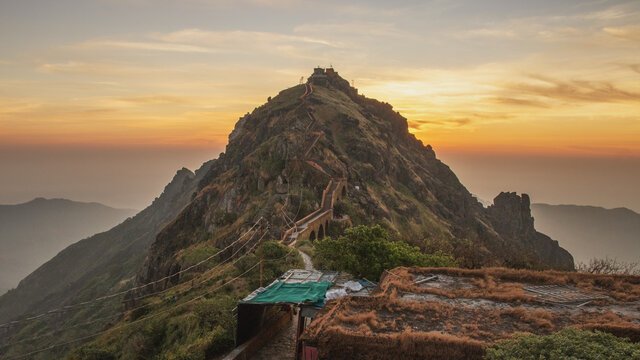
Girnar Parikrama becomes the largest yearly spiritual event in the Hindu community. A total of more than ten lakh followers journey to Girnar for the scheduled procession. Sadhus together with pilgrims commence and terminate their march at the Bhavanat Temple. The Hindu festival occurs during the 11th day of the month Kartik according to Hindu calendar. Junagarh depends heavily on this religious procession for its economic success.
Girnar exists as a holy mountain climaxing at 3672 feet above sea level in Junagadh district. Resting on Girnar hills are 866 temples which belong to Hindu and Jain religious groups. Following the 9,999 stairway beginning at Girnar Taleti (Foothills) allows access to the summit peak. Walking to Girnar Hill during the morning creates a spiritual journey which stays in the memory of everyone who attends. The sacred temples receive many Hindu and Jain people as visitors throughout the year.
Among the Hindu temples worth visiting in Junagadh are Gorakshanath Temple, Dattatreya Temple, Amba Mata Temple together with several more religious sites. Among all other temples in Girnar the ancient Dattatreya Paduka holds the highest religious value to Hindus.
Girnar Hill serves as a vital Jain religious place that Jains have honored since the third century. The Girnar hill features Tirthankara Neminath Temple as well as Lord Rishbhadeva and Mallinath and Lord Parshvanath Temple among other Jain temples that can be observed on the hill.
Time: 6:00 am to 5:00 pm
Entry Fee: Free
10. Madhavpur Beach
The beach in Madhavpur presents a mesmerizing combination of coconut trees and heavenly surroundings. A fresh expanse of verdant green vegetation near the other side of the beach enhances its visual appeal across the road.
Swimming is not advised at Madhavpur beach because high water levels exist together with a population of thousands of turtle species. Visitors can easily reach the Madavraiji Haveli Temple through short distances from the beach where it operates under three names including Old Madavrai temple and Shree Madavrai Temple. Two different Shaiva temples from the 12th-century remain present in the area.
You can access Madhavpur Beach through a 2-kilometer journey from the Madhavpur city center along with a simple 20-minute walk and a 3-kilometer railway station via a 30-minute walk or a 10-minute drive.
The walkable distance from Madhavpur city center extends 2 kilometers until it reaches Madhavpur beach. Travelers can reach Madhavpur railway station through a 30-minute walking journey and a 10-minute drive because it exists 3 km from the beach. A bus station establishes its presence at a distance of about 2 km from the beach area.
Things to Do at Madhavpur Beach
The swimming conditions at Madhavpur beach remain unfavorable but guests can enjoy various options within its vicinity. Anglers can ride camels on the beach coastline for a price between INR 50 to INR 100. Visitors can access horse riding services within this beach area.
The Old Madhavrai Temple located nearby has gained its fame through the fair that the Mer community organizes. Numerous small food stalls together with shacks can be found near the beach shore. The sunset-view at Madhavpur beach presents a pleasing sight to visitors.
11. Dattatreya Temple
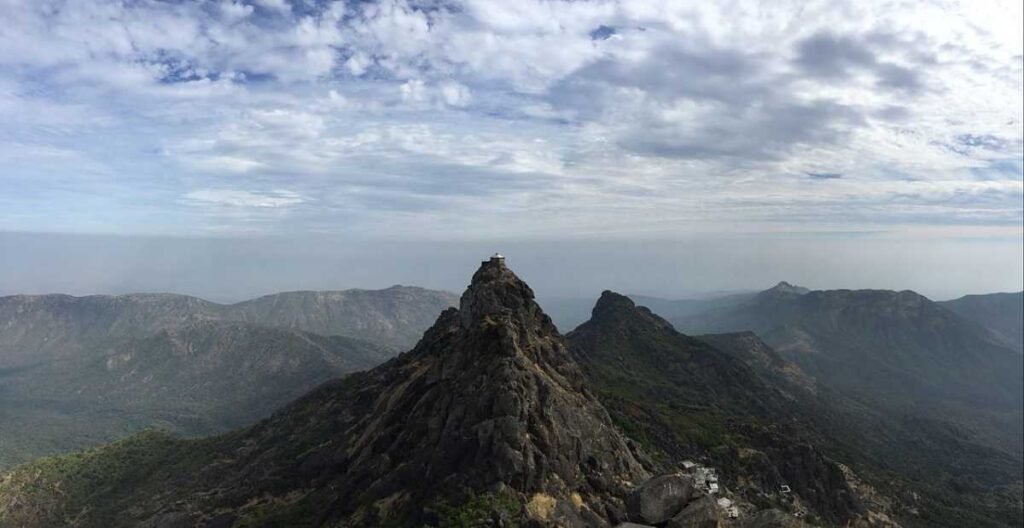
A highly respected Hindu temple stands at the summit of Girnar Mountain within Junagadh in Gujarat. The sacred temple is dedicated to Brahma along with Vishnu and Shiva who share the name Dattatreya or Datta.
The spiritual site of Dattatreya Temple exists at the summit of the mountain where worshippers must climb 10000 steep steps to reach it. Thousands of Hindu devotees visit this temple for Maha Shivaratri when the annual fair occurs each year at Magha time.
Legend of the Dattatreya Temple
The Hindu religion honors Dattatreya as an essential deity who established early principles of yoga practice within Hinduism. Dattatreya stands as the fusion of Shiva and Brahma and Vishnu which gives him his Trimurti title.
the legend suggests the Girnar Hill where Dattatreya spent his childhood years now contains the Dattatreya Temple because of his presence there According to tradition he spent twelve thousand years achieving high levels of transcendence after becoming a monk at this site.
Trekking to the Dattatreya Temple
Walking to the temple through ten thousand steps should take between 7 and 8.5 hours. In total the roundabout trail takes between 15 and 16 hours to complete. The journey becomes progressively more challenging starting from the ascent before it intensifies during the return trip.
Fitting for the journey requires proper exercise and sufficient water supplies are necessary for the trek. You should start your journey to the temple at the beginning of morning. The adventure to reach Dattatreya Temple exists outside the scope of ability for people suffering from cardiovascular issues or respiratory problems.
12. Goddess Ambe Temple
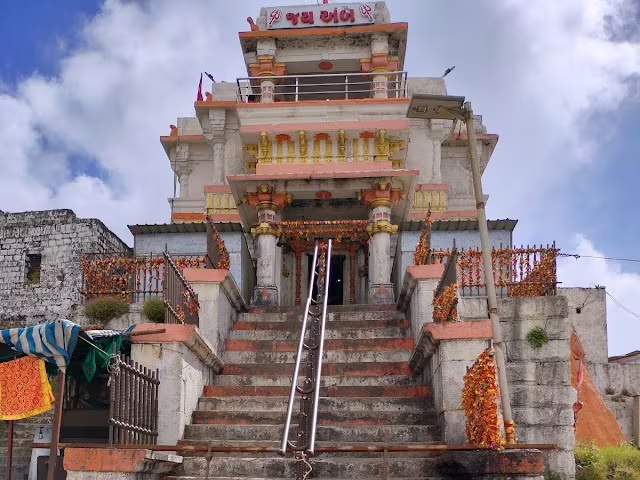
Goddess Ambe Temple or Ambe Mata Temple represents a sacred Hindu place of worship situated at the summit of Girnar Hill in Junagadh district of Gujarat. The shrine honors Ambe Ma as its main deity and observes the most traffic from newlyweds. Visitors visiting the temple can enjoy seeing the town’s beautiful panorama from their vantage point.
Visitors who came to Junagadh would find its scenic environment deeply appealing. A large number of international and domestic visitors visit Junagadh because of its historic sites and religious sites. The Temple of Amba Mata, Junagadh receives a prominent position among all religious sites documented in the Holy Places register of Junagadh. You can easily access the Junagadh Temple of Amba Mata by riding through frequent bus service connecting Junagadh with major regions of Gujarat.
History of Temple of Amba Mata, Junagadh
The Temple of Amba Mata at Junagadh Operates as an historic religious sanctuary located in Gujarat India. This temple was built during the time period of the 12th century.
Description of Temple of Amba Mata, Junagadh
The sacred Junagadh Temple of Amba Mata rests at the summit of Girnar Hill which reaches 600 meters high. Goddess Amba who manifests as an incarnation of the mother Goddess presides as the main deity at this Hindu place of worship. Every year many thousands of pilgrims visit this temple to perform their devotional rituals and obtain spiritual gifts. Many new couples choose this temple as their preferred destination to receive blessings from the Goddess before leaving. Goddess Amba blesses married couples with eternal love when people request her divine providence.
Visitors who visit Junagadh Temple of Amba Mata can experience enchanting views of their surroundings.
Come to the Temple of Amba Mata in Junagadh right now to receive spiritual peace. The experience of this visit will stay with you throughout many months ahead.
13. Ahmedpur Mandvi Beach, Junagadh
The pristine Arabian Sea touches the entire 6 kilometres of the coastal terrain at Ahmedpur Mandvi Beach. The beach exists in the area where Diu and Gujarat meet while featuring windmills throughout its space alongside its smooth white shoreline. People can find perfect swimming conditions and water activities with dolphin sighting at this beach which welcomes many tourists annually.
The Arabian Sea reveals spectacular views at Ahmedpur Mandvi Beach while visitors can stroll over its smooth sandy shoreline. The beach offers both picturesque views and a complete range of water activities which fulfill your adventurous nature. Near the beach you will find multiple beautiful temples as well as palaces while a fishing village creates happy and vibrant surroundings.
Activities in Ahmedpur Mandvi Beach include
Beach activities at Ahmedpur Mandvi Beach include swimming combined with water scooter operations and parasailing activities and surfing opportunities. Local residents prefer spotting dolphins and riding camels as main entertainment activities during their time at the Mandvi beach. Sunbathing on the beaches of Ahmedpur Mandvi Beach is best done when temperatures remain moderate. When the heat becomes intense you should consider different activities such as picnics. The magical beauty of Ahmedpur Mandvi Beach unfolds during dawn under the sun or at dusk under moonlight.
Other Attractions Nearby
Multiple sites including temples, havelis and mansions along with bungalows from past colonial times exist in the beach area and seek visitors’ attention. These royal havelis and mansions show their magnificent façade to visitors although they were once owned by kings.
Best time to Visit Ahmedpur Mandvi Beach
The most suitable time to spend a visit at Ahmedpur Mandvi Beach exists during the wintry period from October through March. The winter seasons bring comfortable weather to Ahmedpur Mandvi Beach with temperatures between 20°C to 28°C. The water activities together with relaxation moments perfectly fit during the winter season.
Every year Ahmedpur Mandvi Beach celebrates the vibrant Rann Utsav festival during the winter season thus making it the best period for travelers to visit. Large numbers of people travel to Ahmedpur Mandvi Beach during the yearly period leading to heightened vitality across the town. You should not miss witnessing the Rann Utsav at Ahmedpur Mandvi Beach and should adjust your travel plans accordingly.
14. Damodar Kund Water Reserve
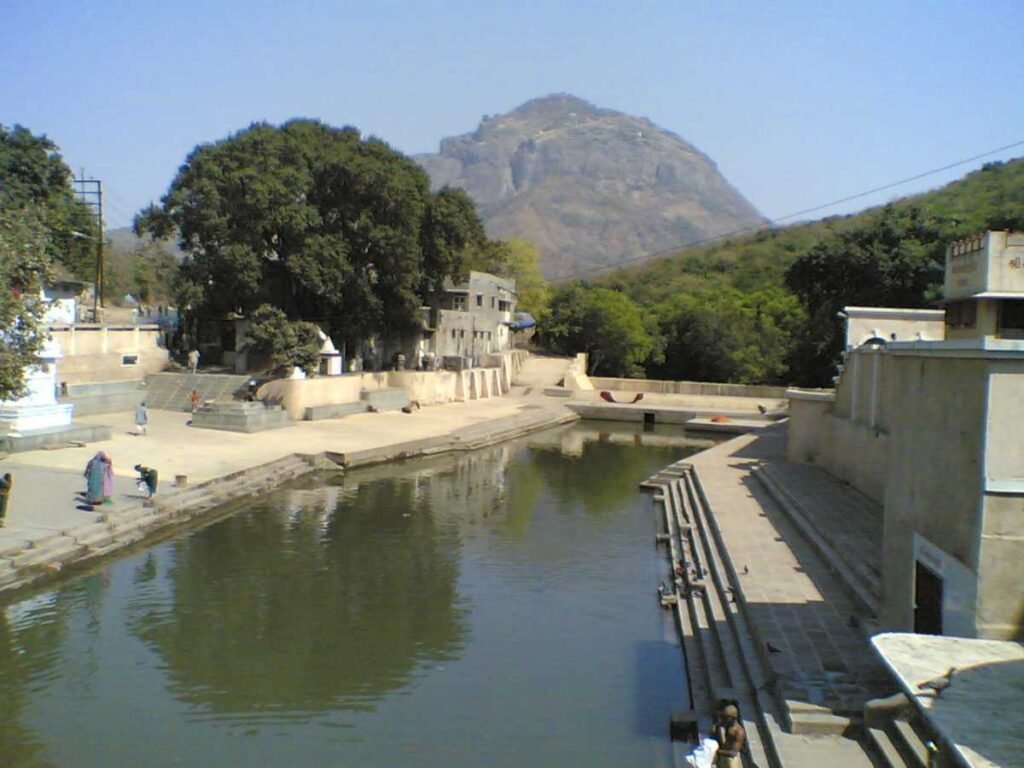
Situated at the base of Girnar hills near Junagadh in Gujarat India stands the holy water source Damodar Kund as described by Hindu beliefs. Hindus consider this lake sacred per Hindu mythology because many Hindus prefer to bathe and immerse cremated remains here to provide departed souls with spiritual liberation. The lake water features bone-dissolving characteristics while its dimensions reveal 257 ft of length and 50 ft of width with a simple 5 ft depth. Religious steps to climb Girnar hills begin near the well-developed Damodar Kund ghat.
The religious lake known as Damodar Kund sits beneath Girnar hills at a location near Junagadh in Gujarat State of India. The Hindu mythology of Damodar Kund makes it sacred so many Hindus choose to bathe and drown ashes and bones after cremation at this site for the belief that departed souls attain moksha through this ritual. The lake possesses mineral characteristics that allow it to disintegrate bones. It stands 257 feet in length and 50 feet in width while measuring just 5 feet in depth. Numerous well constructed steps ascend from the vicinity of Damodar Kund toward Girnar hills.
15. Jama Masjid, Junagadh

Jama Masjid stands as a recognized landmark within Uparkot area of Junagadh in Gujarat. The mosque stands as a remarkable structure built from yellow sandstone that presents both white marble flooring in its great courtyard alongside a big ablution pool at its site. Carpings within the interior walls include detailed designs and the central dome is crafted to resemble a lotus blossom.
Jama Masjid stands as a vital historic landmark of Junagadh because it originated in 1423. The main courtyard of Jama Masjid presents an open space where white marble decorates its surface. A total of 260 pillars stand throughout the hall and the area contains 15 domes. The prayer routines of five times daily also occur at all mosques in Jama Masjid temples. The building serves Sunni Muslims as its congregation.
Location: Chita Khana, Mullawada
Entry Fee: None
Jama Masjid stands as an unbreakable historical monument of Junagadh which Ahmed Shah I built during 1423 as the founder of Ahmedabad. The monument stands as the most celebrated architectural landmark of Junagadh because it features an architectural design with open surfaces that showcase white marble floors and a spiritual water reservoir. The yellow sandstones utilized in mosque construction include intricate decorative features. These architectural elements support the roof through 260 columns and 15 domes which creates an enchanting light and shadow interplay as one walks through the hall. The main domes of the mosques show a lotus flower design which closely resembles the dome patterns of Jain temple architecture. Visitors on a Junagadh expedition should stop at Jama Masjid due to its exceptional beauty.