

Now Reading: 5 Best Places to Visit in Mehsana for a Historical and Spiritual Tour
-
01
5 Best Places to Visit in Mehsana for a Historical and Spiritual Tour

5 Best Places to Visit in Mehsana for a Historical and Spiritual Tour
1. Modhera Sun Temple
The Modhera village exists approximately 106 kilometers north west of Ahmedabad and lies at a 30 kilometer distance from Hotel Bhagyoday in mehsana city. Modhera used to be an essential location of the past. Today Modhera operates as a small abandoned rural settlement. Since few tourists discover this site compared to the famous Konark Sun temple Modhera successfully maintains both its original character and enchanting atmosphere. Monthey popularly stands out because of its eleventh century Sun temple dedicatd to the Sun god. The three days dance festival takes place at Modhera in January.
Every year Modhera stands out because of its annual celebration which is known as the Modhera Dance Festival. Every year the Modhera Dance Festival occurs during the third week of January as a post-celebration of Uttarayan dance festival. People commemorate this festival within the Sun Temple complex at Modhera. The celebration of annual Indian classical dance festivals during the annual occasion was approved by the cultural departments from Gujarat and West Zone Cultural Centre as well as the Sun Temple. The organizers wanted to duplicate the original performance environment in which classical dances had been performed in the past.
Sun Temple
The Sun Temple from the 11th century remains the principal attraction of Modhera. A knoll in Modhera serves as the resting place for the 11th century Sun temple. King Bhimdev I constructed the Sun Temple during 1026-27 AD whereas the Sun Temple at Konark came later in 1278. Constructed by the impressive Solanki dynasty during the 11th century the temple stands as a remarkable Hindu temple in Gujarat. The Modhera temple shares a close architectural resemblance with the Sun temple at Konark in Orissa. Both temples were crafted for the dawn sun to illuminate Surya images precisely during seasonal equinoxes. A complex main hall leading to the shrine exists after traversing through a compound pavilion with multiple pillars.
The hall contains both decorative columns and extraordinary stone sculptures. Extensive intricate carvings cover the temple exterior which depicts evolving gods and demonic figures. The historic structure exists today as an extraordinary landmark surrounded by the desolate desert environment despite suffering damage from Mahmud of Ghazni along with earthquake events. Each surviving pillar showcases remarkable engravings of deity goddesses and birds as well as beasts together with blossoming flowers. The fifty two elaborately shaped pillars exhibit sequential frames which narrate the stories of Ramayana alongside Mahabharata. The interior hall contrasts strongly with the exterior through simple decoration which features twelve niches showing Surya’s different monthly appearances. The sensual decoration reaches its completion through erotic sculptures panels.
A big rectangular kunda pool equipped with staircase access exists before the temple east front together with 100 shrines. Lord Ganesh and Vishnu along with a Shiva incarnation respectively face three sides of the pool as it stands surrounded by temples. The main entrance of the temple is accessible from a high staircase on the western side. The primary temple elevates above its environment after sitting on a stone-faced brick culminate. Entering through the elaborately decorated entry portal leads to a neat square hall with pillars. Cusped arches served as Mughal buildings’ distinctive architectural feature during their construction about 600 years after the temple’s creation. The entry hall has a stepped pyramid roof structure which extends across its surface. An inner sanctuary occupies the western section of the temple while following its oblong design plan. Every upper level of the structure has suffered complete destruction.
Modhera Sun Temple
The sanctuary roof extended into a low pyramidal shape which stood in front of its height while above the sanctuary. Sun worshipper Surya received first sunlight illumination at every solar equinox within his sanctuary. Archaeologists practice a slow restoration process of the building using sandstone materials.
2. Bahuchar Mata Temple
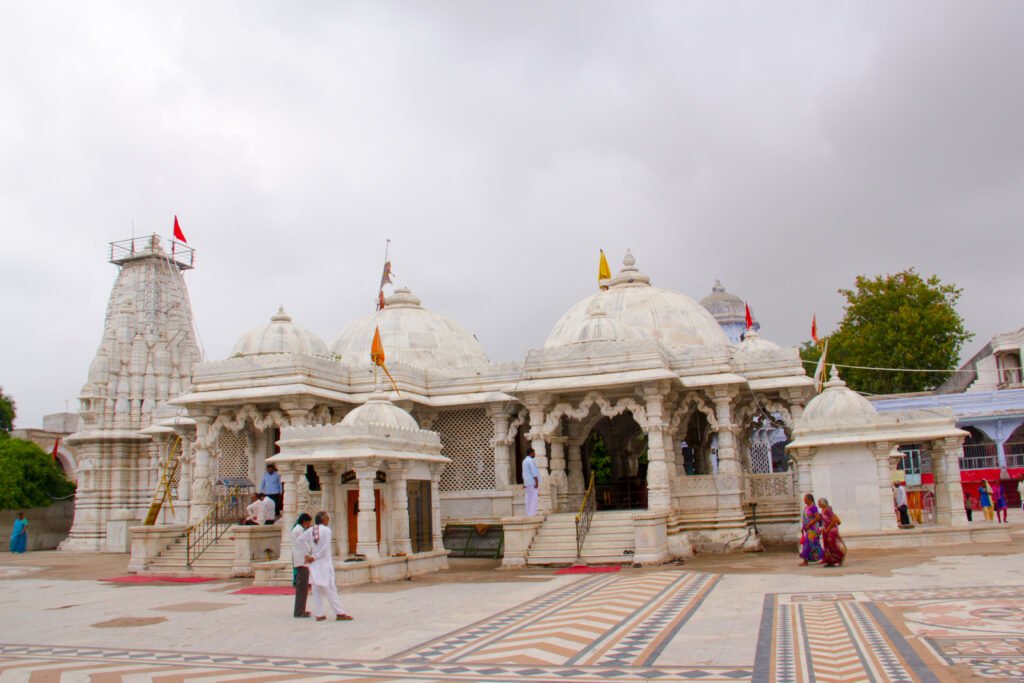
The Bahucharaji Temple
Shrine Bahucharaji Temple exists as a Hindu religious site within Mehsana district of Gujarat state. Devotees consider this temple as very important due to its ability to grant blessings and satisfy their spiritual goals. Indian society identifies Bahuchara Mata as the principal divine protector of the hijra population.
Architecture of Bahucharaji Temple
The Bahucharaji Temple displays its intricate structure and its multicolored exterior. The temple premises display numerous Hindu mythological scenes through its elegant sculptural artworks and intricate carvings. The central main chamber of the temple contains Bahuchara Mata’s idol as devotees reach her to bestow great worship. Christian devotees can find other shrine temples that honor Lord Shiva and Hanuman within the temple grounds. The architecture of the Bahucharaji
The unique architectural style of Bahucharaji Temple which combines traditional elements of Gujarati and Rajasthani decoration creates an attraction for visitors through its visuals.
History
The Bahucharaji Temple exists since ancient times since local communities from the region honored their goddess Bahuchara Mata. A sage named Bhrugu Rishi established this temple through his dedication which brought divine blessings from the goddess as the legend tells. The temple has gone through several restoration projects and structural expansions while its religious nobility has stayed constant since ancient times. The Bahucharaji Temple serves as a dual purpose site since it has evolved to become both a place of worship and a cultural heritage landmark which attracts pilgrims alongside tourists from numerous locations.
Best Time To Visit
Pilgrims can visit the Bahucharaji Temple at any time yet find the most spiritual experience during Navratri festival celebrations. Bahuchara Mata stands as one of the divine aspects of Durga in the nine-day religious festival of Navratri. The temple becomes fully adorned with lights and flowers at this period while specific religious rituals and ceremonies take place. Devotees find it favorable to visit the Bahucharaji Temple twice during the year: at the Navratri festival in March or April and during the September springtime festival of Chaitra Navratri. The temple attracts millions of worshippers at this time who generate a lively celebration among the crowds.
How To Reach
Bahucharaji Temple can be found in Bahucharaji town where transportation options link the site easily by rail and road. A railway station exists in Mehsana at thirty kilometers distance from the temple. Visitors can reach the temple through taxi or bus service beginning from Mehsana. Air passengers travelling to the Bahucharaji Temple should arrive at Ahmedabad Airport because it lies about 100 kilometers away from the destination. The temple town can be reached by hiring a cab or taking a bus starting from the airport.
Significance Of The Bahucharaji Temple
To the hijra community in India Bahucharaji Temple displays great importance because Bahuchara Mata serves as their sacred protecting deity. People from diverse backgrounds visit this temple to find both spiritual blessings and emotional peace because the place symbolizes complete acceptance. Worshippers of Bahuchara Mata believe that her veneration generates financial advantages that combine with personal peace and shields them from wicked influences. Holy wishes of devout individuals who pray with faith at this temple are regarded as attainable because of its divine power. The Bahucharaji Temple in Mehsana presents itself as a religious site together with being a cultural monument which showcases the deep historical heritage and traditional practices of Gujarat. The Bahucharaji Temple attracts visitors who come to experience its beautiful architecture alongside its historical importance and spiritual atmosphere where they seek divine blessings from the goddess.
3. Thol Lake Bird Sanctuary
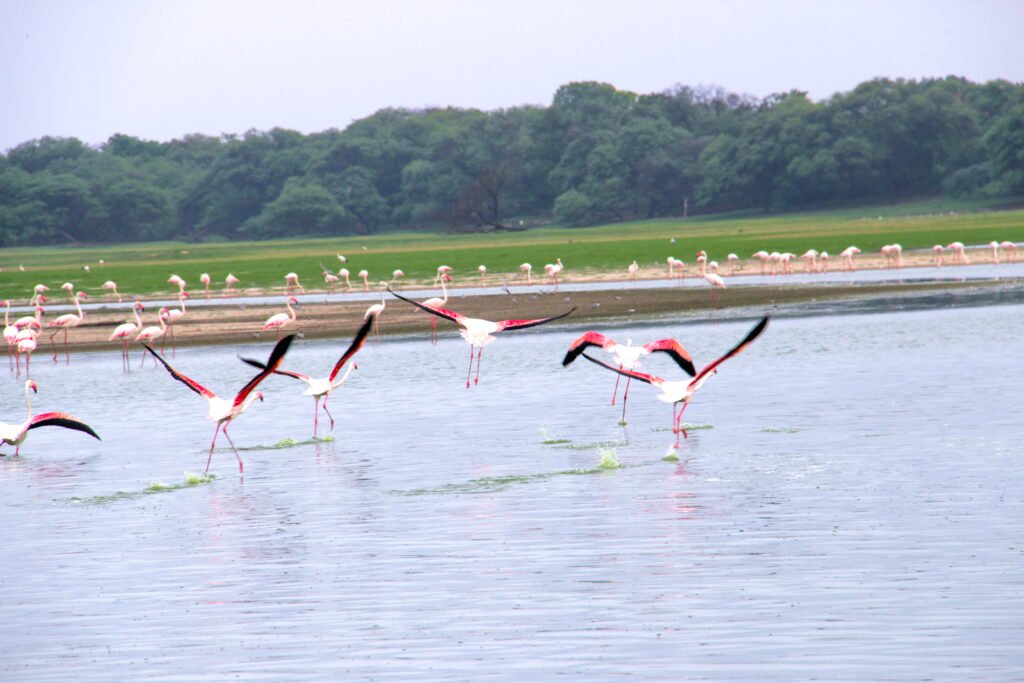
Thol Lake Bird Sanctuary resides within Mehsana district close to Ahmedabad in Gujarat near Ahmedabad to attract both migratory and resident bird species. Thol Lake extends across 7 square kilometers of shallow freshwater providing sanctuary for birdwatchers as well as nature enthusiasts and wildlife photographers.
Thol Lake gained status as a bird sanctuary in 1988 and now supports more than 150 bird species among them are the grand Sarus Crane together with flamingos and pelicans and different wading bird species and duck inhabitants. The sanctuary provides both eco-tourism opportunities and peaceful vacation experiences because of its natural environment and abundant biodiversity and verdant growth.
History
- The Gaekwads from Baroda built Thol Lake as an irrigation reservoir through their construction project in 1912 mainly for agricultural purposes.
- The lake experienced an ecosystem transformation which made it a thriving wetland habitat that wild animals and countless bird species came to occupy.
- The lake received official bird sanctuary status under the Wildlife Protection Act from 1972 in 1988 because of its ecological value.
- Thol Lake now stands as a vital sanctum for Gujarat’s biodiversity where it serves to protect numerous endemic along with migratory bird species.
Best Time to Visit Thol Lake Bird Sanctuary
There is always the best time all year-round to visit this park, especially during the winter season starting from October up to March when migratory birds come in.
It is advisable to plan the birding activities in the early morning between 6:00 AM to 9:00 AM and in the late evening just before sunset 4:00 PM to sunset.
The best times for a visit is during the winter season which is between October to February and also during the monsoon period which is in the months of July, August and September as the area surrounding the lake turns green.
Activities & Experiences at Thol Lake
📸 Birdwatching & Photography
The sanctuary is a reserve of birds and wildlife especially the photographers since one can get many vantage points to view the various species.
Sunsets are particularly easy for photographers to take pictures because the reflection on the water surface is very impressive.
🚶 Nature Walks & Trekking
Thus, one can take direct and nice walks around the lake through the trails they provided.
A small hike around the edge of the Lake will enable one to have a good view of the sanctuary.
🛶 Boating (Limited Availability)
Fishing is prohibited in the area, but there are occasions when local fishermen can be hired to take groups in their boats in order to get closer access to the colonies.
🌳 Picnic & Relaxation
Some families ring for a purpose of tourism and they prefer visiting Thol since it has natural beauty.
It’s advisable to carry along snacks and water because there are not many food vendors around the park.
Entry Fee & Timings
⏰ Timings:
Available Hours of Operation: Every Day 6:00AM – 6:00 PM.
Ideal time: The early hours of the morning and near the evening hours.
🎟️ Entry Fees:
₹50 per person (for Indian visitors).
₹200 per person (for foreign tourists).
Vehicle entry fee: ₹200 per four-wheeler.
Camera Fee: ₹500 for professional cameras.
4. Taranga Hills
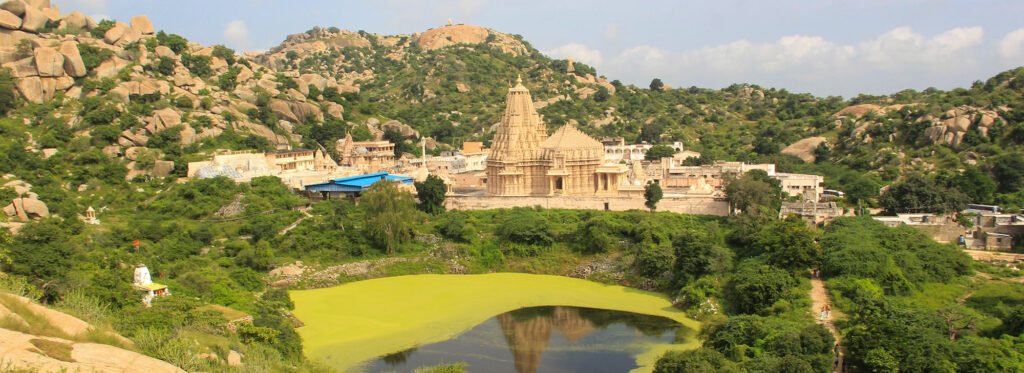
The Buddhist connection at the Taranga Hills exists near Vadnagar in the Aravali range. Migration begins adjacent to Saraswati riverbanks where the journey leads to the steep climb of Taranga hills.
The worshippers from Solanki Rajput royal clan dedicated this 12th century derasar which stands today as one of Gujarat’s best protected and least renovated temples.
The site occupies a position 128 km from Ahmedabad with Vadnagar positioned only 20 km away from it. It holds religious value for Buddhists and Jains because it has three peaks. The oldest Jain temple found its construction during the 12th century yet Buddhist monuments from the 4th century exist on this hill. Travelers who wish to visit the hilltop must endure a walking adventure. Followers of Buddha can find tiny shrines to worship Devi Taranamata upon reaching their destination. The stone plate contains carved depictions of Dhyani Buddha while weathered terracotta Buddha images can be observed in cave structures. People can find the Taranga Jain Temple by proceeding higher from this location. One of the most well-conserved temples from 12th century Gujarat exists as this derasar. A five-metre-tall statue at this Jain site represents the 2nd Jain Tirthankara Shri Ajitnath while displaying inner peace. In the Svetambara complex one can find 14 temples together with another 5 Digambara shrines.
Archaeological studies from 1938 indicate that this location was a Buddhist site operational in the 4th-5th century. Jain researchers determined this location to be either Tarvur or Taravar Nagar or Tarangiri or Tarangarh. The holy book ‘Kumarpal Pratibodh’ written by Acharya Shri Somprabhsurishwar describes the founding of the temple of Shashanadhishthatri Shri Siddhadayika Devi under King Vatsrai in the 6th century. A different tale exists about the collaboration between local Buddhist King Veni Vatsaraja and Jain monk Khaputacharya who constructed a temple in honor of goddess Tara.
5. Hatkeshwar Temple, Vadnagar
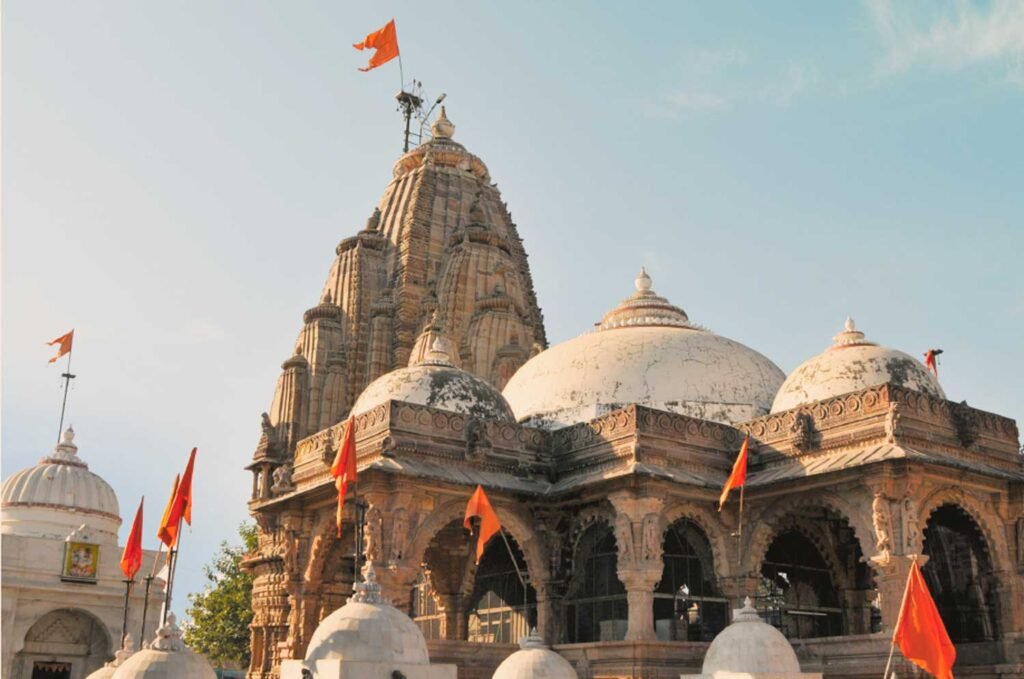
A profusely decorated religious structure built in the 17th century rests outside the town and worships Hatkeshwar Mahadev which served as the family deity for Nagar Brahmins who used to be a major community in Vadnagar. Pure devotees access the inner chamber to witness the swayambhu Shiva linga located there.
Outside Vadnagar you can find the 17th century temple of Hatkeshwar Mahadev which holds the deity that belonged to Nagar Brahmins who formed a historic community in the area.
The central chamber of the temple protects a spontaneously emerged Shiva linga called swayambhu. The shikhar emerges from the sanctum roof to reach great heights in the sky. The temple faces east while its wall rises high to display three circular domes and flat sections following the Indo-Saracenic design tradition.
The temple displays magnificent external ornamentation that includes engravings of the nine planets with musicians and dancing apsaras and regent deities and main Hindu gods and aesthetics from Ramayana and Mahabharata and several animals and floral designs. Several temples exist within the temple premises including an ancient Kashivishveshvara Shiva temple and two Jain temples as well as a Swaminarayan temple.






Pingback: 15 Best Places to Visit in Vadodara – Complete Travel Guide