
Now Reading: Best Places to Visit in Karimnagar – Temples, Forts & Scenic Attractions
-
01
Best Places to Visit in Karimnagar – Temples, Forts & Scenic Attractions

Best Places to Visit in Karimnagar – Temples, Forts & Scenic Attractions
1.Lakshmi Narasimha Swamy Temple
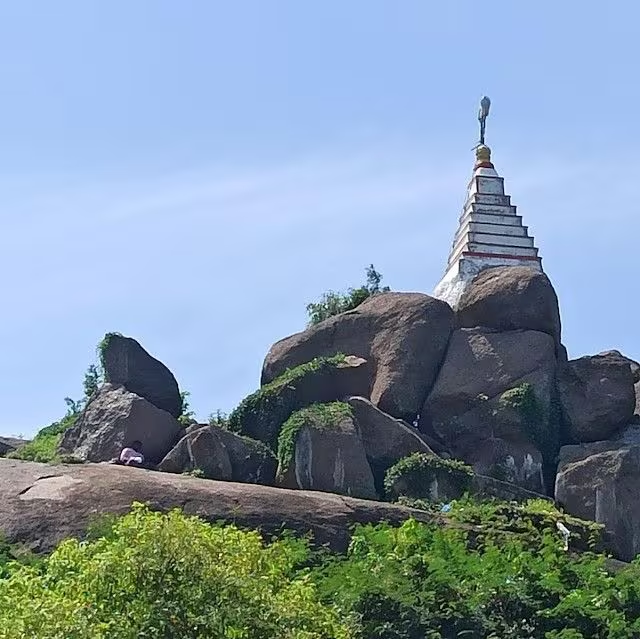
The Lakshmi Narasimha Swamy Temple is located at the top of a calm hill in between Vemulawada and Karimnagar and it is one of the best known temples for devotion, history and architecturally. This unique temple is devoted to the powerful, kind-hearted Lakshmi Narasimha, an avatar of the Lord, Vishnu, and a religious site serving as a physical journey and divinity.
What Makes It Special?
Beneath the temple is a granite constructed idol of Lord Lakshmi Narasimha radiating grace and power. The workmanship and the spiritual fraternity in the deity, makes this a place of reverence in pilgrimage among devotees of the region.
But these are not the only site that beckons the pilgrims- the entire temple circuit is alive with spiritual and cultural elements, which experiences like no other.
- Location: Between Vemulawada and Karimnagar, Telangana
- Suggested Duration: 1 to 2 hours
2.Sri Kaleshwara Muktheshwara Swamy Temple
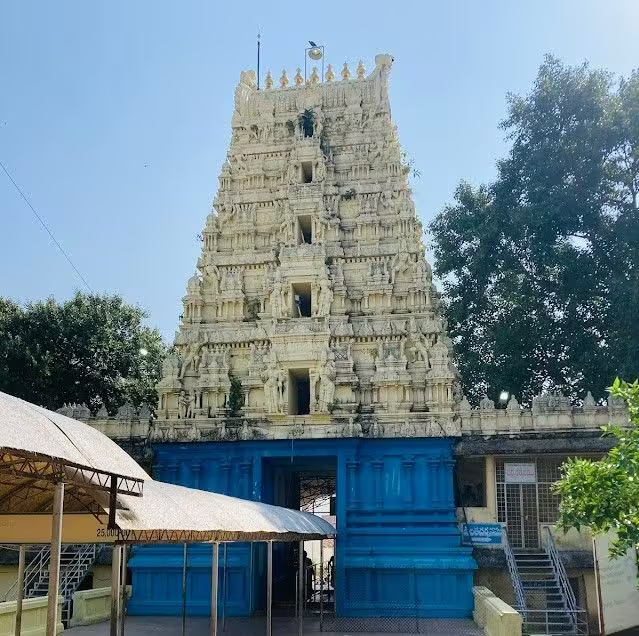
Sitting in the peaceful village of Kaleshwaram, in the state of Telangana, Sri Kaleshwara Muktheshwara Swamy Temple is a testimony at the omnipotence of Lord Shiva. A pilgrimage spot of respect in the banks of the Godavari river, this temple has a unique distinction of having two Shiva lingas chiselled on a single pedestal in Sri Kaleshwara and Sri Muktheshwara.
This makes the temple not only important spiritually but also because it draws multitudes of devotees from India the whole country over most especially religious events.
What Makes It Special?
What distinguishes the Kaleshwara Muktheshwara Swamy Temple from other Shiva temples is the fact that both Shiva Lingas, though twin, were carved out of the same base stone—a rarity in Indian architecture. The lingas dedicate Lord Shiva and Lord Yama, which makes this the only temple in the country where devotees offer the first prayers to Yama – the god of death – before going to Shiva.
- 🕔 Timings: Open 24 hours per day from 5 am to 8 pm.
- Location: Kaleshwaram, Telangana
3.Jagityal Fort

The Jagityal Fort, located in the heart of Jagityal town of Telangana, is a silent preserver of history—resonates stories of strategy, art and Mughal magnificence. This fort, constructed in the 17 th century on the orders of a governor of the Mughal period, Nawab Ibrahim, was a great medieval military base meant to defend the interests of Mughal empire in Deccan.
It is the European-style construction, the star-shaped layout and its peculiar architect who helps to understand the exterior of the fort: two French engineers infused the fort with the elegance and exactitude of a European castle.
History and Architecture
The Fort Jagityal (also referred to as Quila Fort) was strategically built lighted with lime and stones with a kind of moat which earlier on kept away enemies. It is thought that the name of the bridge is a kind of fusion of the names of the two French engineers, Jack and Tal, who played lead roles in designing and building it.
Today even in ruins the fort still has old-world charm, massive walls, towering bastions, with scattered remains of military defense equipment, particularly great cannons that once thundered in battle.
- Location: Jagityal, Telangana
- Suggested Duration: 3 to 4 hours
4.Molangur Fort

Hiding away from the noisy crowds in Karimnagar District, Molangur Fort is a thriving but unknown aspect of the Kakatiya dynasty’s grand history. This ancient fort is built on a rugged granite hill , atop which was erected by Voragiri Moggaraju , a trusted commander under the last of the great kakatiya rulers , Prathapa Rudra .
Mobilized as a resting place between Warangal Fort and Elgandal Fort and a transit point of Kakatiya army from one end of Deccan to another, Molangur Fort was a defense post also.
History & Heritage
Described as being a protected monument by the Archaeological Department, Molangur Fort is a quiet testemonial to the splendor of the medieval South Indian military architecture. The fort is a part of the natural landscape and dominated an elevation that affixed a splendid position for scouring enemy movement and protecting trade routes.
What To Expect?
Hilltop Adventure: Situated on a large granite stock the fort provides a thrilling and scenic climb.
Inscriptions: Historical clues and instructions are provided by ancient inscribed stones carved on summit boulders.
Dargah of Molang Shah Wali: At the fort’s entrance stand a holy Dargah and the total attraction of the site becomes spiritual and cultural.
Panoramic Views: The view to be had from the top of this hill is breathtaking as you look out over the landscape that surrounds you – an excellent reward for your climb.
- Location: Molangur, Karimnagar District, Telangana
5.Ramagiri Fort
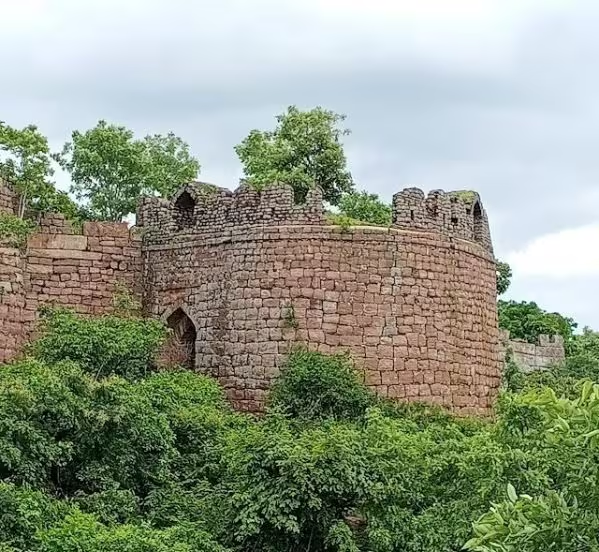
Ramagiri Fort (Also known as Ratnagarbha) is an ancient military fort built in Telangana province resting in harmonious style atop a hill and was once aspect of Satavahana and Kakatiya dynasties as its strategic outpost. Today the fort is a tranquil combination of rich history and natural beauty which beckons adventurers and lovers of history to enjoy its tranquil ramparts.
Historical Significance
With centuries of legacy behind its stone walls, these place represents Ramagiri Fort. It was an essential surveillance outpost when it served as a military outpost for some of South India’s greatest dynasties. Remnants of its bastions scattered on the hilltop offer their last glimpse into what had been formidable defense in the past.
The imposing characteristics of the fort present an amazing sight of the Manair and Godavari merging in the distance – it not only was a good strategic site then but an amazing location nowadays.
🕗 Timings: The fort timings are open everyday from 8:30 in the morning to 7:30 in the evening.
Location: Ramagiri, Telangana
Suggested Duration: 2 to 3 hours
Related articles : Best Places to Visit in Kamareddy – Temples, Forts & Natural Attractions