

Now Reading: Best Places to Visit in South 24 Parganas – Explore Nature & History
-
01
Best Places to Visit in South 24 Parganas – Explore Nature & History
Best Places to Visit in South 24 Parganas – Explore Nature & History
1. Bakkhali & Frasergunj

Hidden on the southwestern periphery of Sundarbans, the idyllic coastal sisters, Bakkhali and Frasergunj, are a quiet haven from the hurly-burly of modernity. Sprinkled with white sand beaches, rustic beach fishing villages, windswept shores, this unknown paradise in South 24 Parganas is where time stands still and mother nature hugs you back with its natural, unpolished beauty.
Named after a British official, Andrew Fraser, mesmerised with its beauty, Frasergunj has one of the most beautiful beaches in Eastern India. The white sands extend on the Bay of Bengal and merge with the soothing surf. The Frasergunj, on the other hand, is far less commercial, left untouched and peaceful, ideal for people who would want to get back to nature.
It is not only the visual beauty of Frasergunj, but the all-comprehending silence that makes it beautiful. The poetic sound of the lapping waves, the far-away calls of the migratory birds, and the golden colors of sunrise and sunset all across the horizon make this beach a poet’s and photographer’s heaven.
Highlights at a Glance:
Frasergunj Beach: White sand serenity and perfect for long walks and beachcombing.
Bakkhali Beach: Family-oriented, clean, and covered by casuarina trees.
Henry Island: Ideal for people who want to do solitude or nature lovers.
Birdwatching: In particular, during the winter, when migratory birds come.
Local seafood: You should not miss fresh catches from local fishermen’s stalls.
Best Time to Visit:
- The best time to visit is from October to March with good weather and bird’s migration.
- Avoid the monsoon (June-September) as strong tides and rains may make the travel difficult.
2. Sundarban
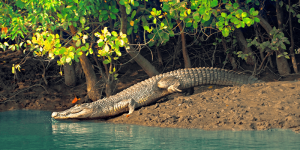
Welcome to the Sundarbans, an enchanted land where the land meets water, rivers flow into the sea and nature rules. This UNESCO-listed World Heritage is tucked at the southern end of West Bengal and is the world’s largest estuarine and mangrove forest and a precious collection of flora and fauna still enticing explorers, nature lovers, and wildlife fanatics from around the world.
It is named as ‘Sundarban’ because of the Sundari trees, which are predominant in the area’s mangrove vegetation. Extending over a huge delta made by the junction of Ganges, Brahmaputra, and Meghna Rivers, the Sundarbans stretch over India and Bangladesh to form a maze of mudflats, tidal rivers, creeks and dense mangrove forests.
One of its most curious elements is the bayonet-like pneumatophores – roots of mangrove trees stretching upwards in order to breathe, thus, making the landscape look surreal and out of this world.
Best Time to Visit
- Oct through March is the best time for the nice weather and wildlife watching.
- Do not go during monsoon (June to September) because of high tides and access problem.
3. Sagar Mela
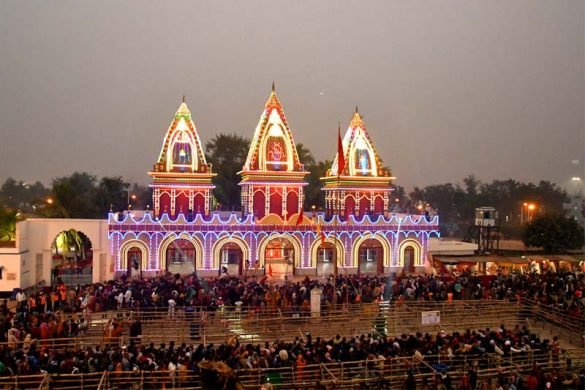
Right at the tip of South West Bengal where the great Ganga touches the infinite expanse of the Bay of Bengal is Sagardwip, a calm island for most part of the year, embraced with sea breeze and seclusion. However, during the mid-January, this peaceful nook turns into the spiritual sea of humanity because of the Sagar Mela, one of the biggest religious events in Eastern India, that take place on this very spot.
Sagar Mela is celebrated each yea on Makar Sankranti which comes on the last day of Bengali month of Pous (January 14th or 15th). This is at the time when millions of pilgrims from all over the country come to Sagardwip to take a holy dip at the juncture where Ganga completes her journey and enters the sea.
Devotees believe that by taking a dip here in this celestial alignment, all the sins are washed off and the path to salvation gets opened. The spiritual energy is felt – like divinity comes down from the heavens to brush over tides.
Best Time to Visit
- Attend in the time of Makar Sankranti (Jan 14-15) to see spiritual grandeur.
- For a peaceful experience, come earlier or later than the mela, and Sagardwip goes back to its peaceful scenic beauty.
Related articles : Best Places to Visit in Purulia – Explore Nature, Hills & Heritage








Pingback: Best Places to Visit in Uttar Dinajpur – Heritage, Nature & Culture