

Now Reading: Top 5 Best Places Visiting in Idukki – Waterfalls, Dams & Scenic Spots
-
01
Top 5 Best Places Visiting in Idukki – Waterfalls, Dams & Scenic Spots

Top 5 Best Places Visiting in Idukki – Waterfalls, Dams & Scenic Spots
1.Kulamavu Dam
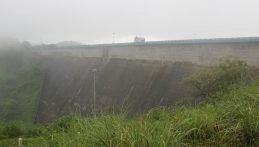
Kulamavu Dam functions as a vital element of the Idukki Hydro Electric Project while being positioned within the Idukki District area of Kerala in India. The Idukki Reservoir ranks as one of the largest hydroelectric storage facilities in India because Kulamavu Dam together with Idukki Arch Dam and Cheruthoni Dam feeds its construction.
Moolamattom Powerhouse enables Kerala to receive 780 MW of electricity supply through its operating facility. The hydroelectric system design collaborates with engineering to establish sustainable power generation by drawing from the area’s significant water resources.
Functional Significance
- The Kulamavu Dam functions as a vital element which controls water storage and regulation inside the Idukki Reservoir. A 2,027-meter power tunnel along with a 975-meter average length pressure shaft carries water from the reservoir for power generation. The water transportation system delivers water effectively from the reservoir to the Moolamattom underground power plant.
2.Cheruthoni Dam
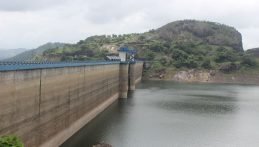
The renowned Idukki Hydro Electric Project uses Cheruthoni Dam as its essential component which stands in the Idukki District of Kerala. Together with Idukki Arch Dam and Kulamavu Dam the structure develops the enormous Idukki Reservoir.
The water management operations of the Idukki Reservoir depend heavily on Cheruthoni Dam. The Idukki Arch Dam uses concrete double-curvature arch design but Cheruthoni implements concrete gravity method instead. The major purpose of Cheruthoni Dam is to function as the spillway for the reservoir while controlling water flows during heavy rainfall events to safeguard the foundation of the hydroelectric system.
A network of 2,027-meter power tunnel along with a 975-meter pressure shaft transports stored water from Idukki Reservoir towards an underground power facility at Moolamattom. The power station ranks among the biggest hydroelectric projects in India because it possesses 780 MW of installed capacity. The replenishment of the reservoir occurs through stream diversion practices that help maximize water management in the surrounding area.
3.Periyar Tiger Reserve
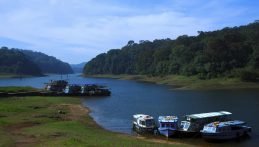
When you hear the name Thekkady everything becomes immediately associated with elephants in addition to expansive hill ranges and scented spice gardens. The Periyar forests which make up Thekkady rank among India’s best national wildlife reserves. Every area in the district contains beautiful spaces between plantations and hill towns which provide perfect paths for trekking and mountain walks.
Viewers can use the watch towers throughout Periyar Tiger Reserve to observe wildlife. Guests who visit these observation towers will experience spectacular viewpoints while they watch for wildlife present in the reserve.
4.Munnar
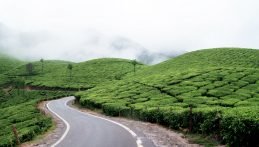
The hill station area of Munnar emerges through the junction of three mountain streams namely Mudrapuzha, Nallathanni and Kundala. Munnar exists at an elevation of 1,600 meters above sea level. Past summers the place served as the summer residence of the South India’s British administrative offices. Extended tea plantation areas combined with scenic holdings, curved paths and recreational facilities turn this site into a preferred tourist town. Neelakurinji stands as one of many exotic plant species discovered in both forested areas and grassy hills located in this region. The continued appearance of blue flowers signifies the momentous periods of twelve years when blue hues cover hills of Munnar. The next time Neelakurinji blooms will be in 2018. Anamudi soars as the tallest peak that can be found in South India as it exceeds 2,695 meters. Anyone seeking to trek should visit Anamudi because it offers perfect conditions for this activity.
Exploring Munnar offers many enjoyably diverse vacation activities both within and outside the hill station boundaries.
- Eravikulam National Park
- Visitors should not miss visiting Eravikulam National Park because it remains one of Munnar’s primary points of interest. The Nilgiri Tahr stands as the endangered species which makes Eravikulam National Park renowned. The 97 sq. km spread park shelters several species of rare butterflies alongside various rare animals and bird populations. People who love trekking will find this park excellent because it presents breathtaking views of tea estates obscured by misty layers. Visitors flock to the park right after hill slopes turn into a blue colorification caused by Neelakurinji blooming. The plant grows naturally only in this section of the Western Ghats then blooms for a twelve-year cycle.
- Mattupetty
- Located at a distance of 13 km from Munnar Town one will discover Mattupetty as a top destination for tourists. Mattupetty resides at 1700 m above sea level and popularizes itself through its storage masonry dam and gleaming lake which offers boat rides along the mountain vistas. Mattupetty engages visitors with its dairy farm operated by the Indo-Swiss Livestock project which maintains various lucrative breeds of cows.
- Tea Museum
- Munnar maintains an exclusive heritage story about tea plantation history. An exclusive tea museum in Munnar was built by Tata Tea a few years back to preserve and display unique features of tea plantation history which shaped Kerala’s high altitude tea regions.
5.Idukki Arch Dam
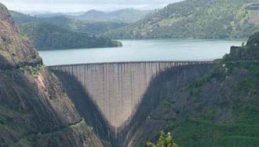
The Idukki Dam situated in Kerala India reaches 168.91 meters or 554 feet as an arch dam type. The dam stands between the two mountains – Kuravanmala (839)m and Kurathimala (925)m. The Kerala State Electricity Board has constructed and owns this facility. Operation from the Idukki Dam enables the production of hydroelectric power at 780 megawatts capacity.
The dam exists at the Periyar River site within the deep gorge between the Kuravan and Kurathi Hills which lie in Kerala India. The Asian continent and worldwide rankings position this structure as one of its highest and third-highest arch dams at 167.68 meters. The power generation started at this facility on 4 October 1975. [1]The structure belongs to the category of thin arc parabolic double curvature concrete dam types.
The authorities built these three hydroelectric facilities at Cheruthoni and Kulamavu in addition to Idukki. The artificial lake resulting from the three dams covers 60 square kilometers of land. Moolamattom Power house runs electricity operations by utilizing stored water stored within nearby rocky caves. Canada provided the government with both main financial contributions and long-term granting support to build the dam.
History
In 1919 the developments started toward building a power generation dam. Historical records indicate that Araya leader Shri Kolumban brought Malankara Estate Superintendent Thomas and his friend Thomas to their current Arch Dam location while they were hunting in the forest during 1922. According to the local belief he described how Kuravan and Kurathi Hills got their names from folklore. Mr. Thomas was captured by the mountain watercourse which led him to propose the dam idea that later became Idukki Arch Dam. Sri. W.J.John of Malankara Estate prepared a report about constructing a power generation facility at Idukki for the Travancore Government in 1932.
Visiting Time
- The public can see the Dam strictly during weekend days and holidays.
Related articles : Top 5 Best Places Visiting in Ernakulam – Backwaters, Beaches & Cultural Sites





Pingback: Top 10 Best Places Visiting in Kannur – Beaches, Forts & Cultural Gems
Pingback: Top 5 Best Places Visiting in Kasaragod – Forts, Temples & Coastal Beauty