
Now Reading: La Rioja Province: Argentina’s Land of Red Canyons, High Andes, and Timeless Landscapes
-
01
La Rioja Province: Argentina’s Land of Red Canyons, High Andes, and Timeless Landscapes
La Rioja Province: Argentina’s Land of Red Canyons, High Andes, and Timeless Landscapes
Located in northwestern Argentina, La Rioja Province is a destination defined by dramatic desert scenery, towering rock formations, high-altitude lagoons, and winding mountain roads. It is a land shaped by millions of years of geological forces, where nature dominates and human presence feels small yet deeply connected to the land.
Unlike Argentina’s more famous tourist regions, La Rioja remains peaceful, uncrowded, and authentic. Travelers who venture here are rewarded with some of the country’s most striking landscapes and a strong sense of adventure. From the UNESCO-listed Talampaya National Park to the remote beauty of Laguna Brava, and from historic Chilecito to the scenic Cuesta de Miranda and welcoming Villa Unión, La Rioja offers a journey through raw natural beauty and deep history.
Talampaya National Park – Red Canyons and Ancient Earth
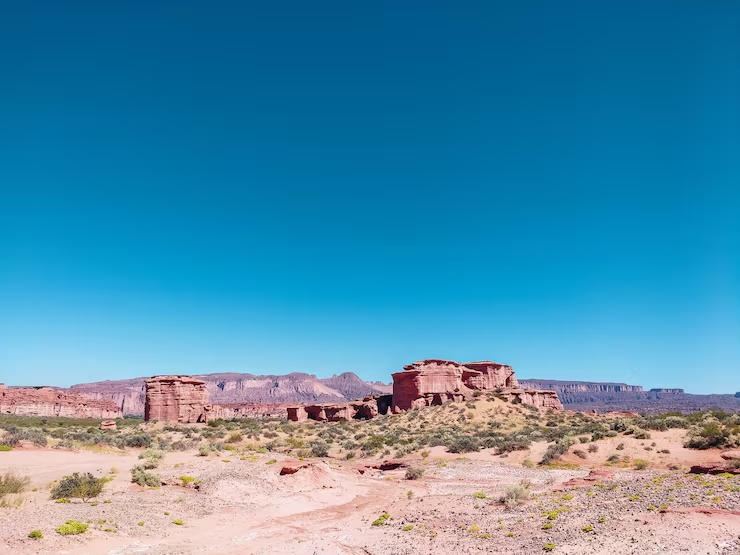
Talampaya National Park is the crown jewel of La Rioja and one of Argentina’s most extraordinary natural wonders. Designated a UNESCO World Heritage Site, the park protects a vast desert ecosystem dominated by towering red sandstone canyons, sculpted rock walls, and ancient geological formations.
The sheer scale of Talampaya is awe-inspiring. Vertical canyon walls rise more than 150 meters high, glowing in shades of red, orange, and ochre as sunlight moves across the desert. Wind and water erosion over more than 250 million years have shaped arches, pillars, and dramatic cliffs that feel almost otherworldly.
Talampaya is also a site of immense scientific importance. Fossils found here provide critical evidence of early dinosaur evolution, while ancient petroglyphs carved into rock surfaces reveal the presence of early indigenous cultures. These engravings offer a glimpse into life long before modern civilization.
Visitors explore the park through guided vehicle tours, hiking routes, and canyon excursions that explain the region’s geology, wildlife, and history. Guanacos, foxes, rheas, and condors inhabit the park, adding life to the stark desert scenery.
Talampaya is not just a park—it is a journey through Earth’s deep past and one of Argentina’s most unforgettable landscapes.
Chilecito – Mining History and Mountain Views
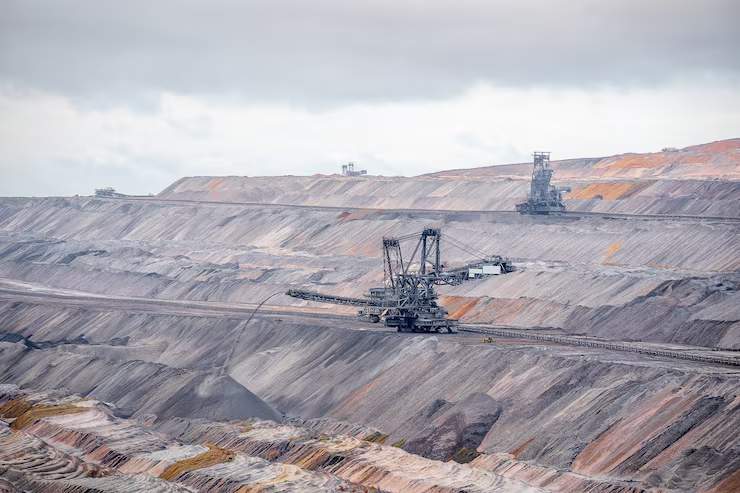
At the foot of the Famatina mountain range, Chilecito is La Rioja’s second-largest city and an important cultural and historical center. Known for its mining heritage, the city played a key role during Argentina’s early industrial era.
Chilecito’s most iconic landmark is the Cable Carril, a remarkable early 20th-century mining cableway system once used to transport minerals from high-altitude mines down to the valley. At the time of its construction, it was considered an engineering marvel. Today, preserved sections of the Cable Carril stand as monuments to the region’s industrial past.
Beyond mining history, Chilecito is surrounded by striking mountain scenery. Vineyards, olive groves, and orchards thrive in the fertile valleys fed by Andean meltwater. The city also serves as a gateway to hiking trails, mountain excursions, and rural villages where traditional lifestyles remain intact.
Chilecito offers a relaxed atmosphere, local cuisine, and a strong sense of regional identity. It is a place where history, nature, and daily life blend seamlessly.
Laguna Brava – Flamingos in the High Andes
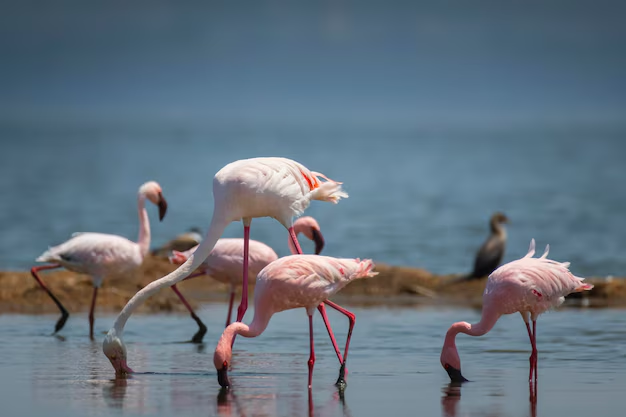
High in the Andes Mountains, near the border with Chile, lies Laguna Brava, one of La Rioja’s most spectacular and remote destinations. Sitting at over 4,000 meters above sea level, this high-altitude lagoon is surrounded by snow-capped peaks, volcanic landscapes, and vast open plains.
Laguna Brava is famous for its wildlife, especially large colonies of flamingos that gather along the lake’s mineral-rich waters. Vicunas, guanacos, Andean foxes, and condors are also commonly seen in the area, all adapted to the extreme conditions of the high Andes.
Reaching Laguna Brava is an adventure in itself. Access typically requires 4×4 vehicles and guided tours due to altitude, weather, and isolation. Along the route, travelers encounter surreal landscapes—salt flats, lava fields, and colorful rock formations shaped by volcanic activity.
The silence and scale of Laguna Brava create a powerful sense of isolation and beauty. It is one of the most pristine environments in Argentina and a highlight for nature lovers, photographers, and adventure travelers.
Cuesta de Miranda – One of Argentina’s Most Scenic Roads
The Cuesta de Miranda is one of Argentina’s most breathtaking mountain roads, connecting Chilecito with Villa Unión. This winding route is carved into steep mountain slopes and is considered a destination in its own right.
As the road climbs through the mountains, it reveals dramatic views of red rock cliffs, deep valleys, and layered geological formations that change color throughout the day. Sharp curves, narrow passages, and sudden viewpoints make the drive both thrilling and visually stunning.
The Cuesta de Miranda also holds historical importance, having served as a trade route during colonial times. Today, it stands as a testament to human perseverance in navigating La Rioja’s rugged terrain.
For travelers, driving this road is not just transportation—it is an unforgettable scenic experience that showcases the province’s raw beauty and geological diversity.
Villa Unión – Base for Nature Exploration
Villa Unión is a small but essential town that serves as the main base for exploring La Rioja’s natural attractions, including Talampaya National Park and Laguna Brava. Its strategic location makes it a hub for adventure travelers heading into the province’s most remote areas.
Despite its modest size, Villa Unión offers comfortable accommodations, local restaurants, and tour services. The town maintains a calm, welcoming atmosphere, with a pace of life shaped by the surrounding desert environment.
Local cuisine highlights regional flavors, including goat meat, empanadas, homemade breads, and traditional sweets. Evenings in Villa Unión are quiet, often accompanied by clear skies ideal for stargazing due to minimal light pollution.
Villa Unión may be small, but it plays a vital role in making La Rioja’s wild landscapes accessible while preserving a strong sense of authenticity.
Why La Rioja Is One of Argentina’s Most Underrated Destinations
La Rioja Province offers a travel experience unlike any other in Argentina. Its landscapes are vast, silent, and powerful, shaped by time and untouched by mass tourism. The province rewards travelers who seek adventure, solitude, and natural beauty rather than crowds.
From the monumental red canyons of Talampaya National Park, to the historic charm of Chilecito, the remote high-altitude splendor of Laguna Brava, the dramatic curves of Cuesta de Miranda, and the welcoming simplicity of Villa Unión, La Rioja delivers a complete and unforgettable journey.
For those willing to explore beyond the familiar, La Rioja reveals Argentina at its most raw, ancient, and breathtaking.