
Now Reading: Top 5 Tourist Places in Sichuan, China
-
01
Top 5 Tourist Places in Sichuan, China

Top 5 Tourist Places in Sichuan, China
Sichuan Travel Guide: Pandas, Sacred Mountains, Alpine Valleys, and the Soul of Southwest China
Sichuan Province is one of China’s most captivating travel destinations, renowned for its giant pandas, fiery cuisine, sacred Buddhist mountains, dramatic alpine landscapes, and deep cultural traditions. Located in southwest China, Sichuan sits at the crossroads of ancient civilization, Tibetan-influenced highlands, and fertile river basins, making it one of the most geographically and culturally diverse regions in the country.
Often described as the “Land of Abundance,” Sichuan has supported prosperous societies for over two thousand years. It was a center of ancient kingdoms, a stronghold of Buddhism, and a gateway between the Chinese heartland and the Tibetan Plateau. Today, travelers are drawn to Sichuan for its natural wonders, spiritual sites, wildlife conservation, and world-famous food culture.
This 2,000+ word comprehensive Sichuan travel guide explores the province’s top five must-visit destinations:
- Chengdu
- Jiuzhaigou Valley
- Mount Emei
- Leshan Giant Buddha
- Daocheng Yading
1. Chengdu – Giant Pandas, Teahouses, and China’s Food Capital

Chengdu, the capital of Sichuan Province, is one of China’s most relaxed yet culturally rich cities. Known worldwide as the home of giant pandas and the birthplace of Sichuan cuisine, Chengdu offers a perfect blend of urban comfort, traditional culture, and culinary adventure.
Chengdu Research Base of Giant Panda Breeding
The Giant Panda Base is Chengdu’s most iconic attraction. Dedicated to the conservation and breeding of pandas, the park allows visitors to observe these beloved animals in environments that closely resemble their natural habitat.
Early mornings are the best time to visit, when pandas are most active—playing, climbing, and feeding on bamboo.
A City of Slow Living
Despite being a major metropolis, Chengdu is famous for its laid-back lifestyle. Locals spend hours in:
- Traditional teahouses
- Public parks
- Mahjong corners
Places like People’s Park offer a glimpse into daily life, where tea drinking becomes a social ritual.
Culinary Capital of China
Chengdu is recognized by UNESCO as a City of Gastronomy. Signature dishes include:
- Hotpot
- Mapo tofu
- Kung pao chicken
- Dan dan noodles
Sichuan cuisine is known for its bold flavors, chili heat, and the distinctive numbing sensation of Sichuan peppercorns.
Why Visit Chengdu
Chengdu is the ideal gateway to Sichuan, offering pandas, food, culture, and easy access to surrounding natural wonders.
2. Jiuzhaigou Valley – Fairy-Tale Lakes and Waterfalls
Jiuzhaigou Valley, a UNESCO World Heritage Site, is one of China’s most breathtaking natural landscapes. Located in northern Sichuan, this high-altitude valley is famous for its multi-colored lakes, cascading waterfalls, snow-capped peaks, and pristine forests.
A Landscape of Color
Jiuzhaigou’s lakes are renowned for their vivid hues—turquoise, emerald, sapphire, and deep blue—caused by mineral deposits and light reflection. The clarity of the water allows fallen trees to be seen resting beneath the surface.
Waterfalls and Forests
Highlights include:
- Nuorilang Waterfall, one of China’s widest
- Pearl Shoal Waterfall
- Dense alpine forests that change color dramatically in autumn
Tibetan Influence
The valley is named after nine Tibetan villages scattered throughout the area. Tibetan culture adds a spiritual dimension to the landscape through prayer flags, traditional homes, and local customs.
Why Visit Jiuzhaigou Valley
Jiuzhaigou feels like a living painting, offering one of the most photogenic and serene nature experiences in Asia.
3. Mount Emei – Sacred Buddhist Mountain and Sea of Clouds

Mount Emei (Emeishan) is one of China’s Four Sacred Buddhist Mountains and a site of immense spiritual and natural beauty. Rising above the Sichuan Basin, it has been a pilgrimage destination for over 2,000 years.
Spiritual Significance
Mount Emei is associated with Samantabhadra, the Bodhisattva of Universal Virtue. Monasteries and temples line the mountain’s slopes, making it both a religious sanctuary and a natural retreat.
Scenic Beauty
Emei is known for:
- Mist-covered forests
- Ancient stairways
- Dramatic cliffs
- Sea-of-clouds views
At higher elevations, visitors may witness the famous Buddha halo, a circular rainbow phenomenon.
Wildlife and Monkeys
The mountain is home to wild Tibetan macaques, which are curious and sometimes mischievous, adding to the unique character of the journey.
Why Visit Mount Emei
Mount Emei offers a powerful blend of spiritual pilgrimage, mountain hiking, and breathtaking scenery.
4. Leshan Giant Buddha – World’s Largest Stone Buddha
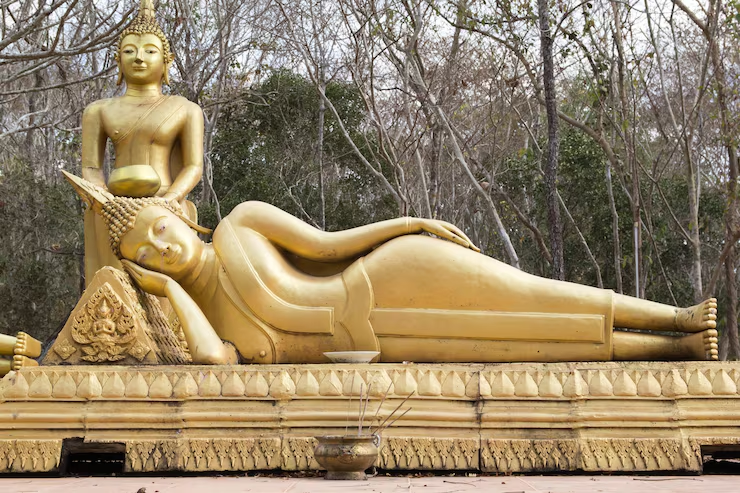
The Leshan Giant Buddha is one of China’s most iconic landmarks and a UNESCO World Heritage Site. Carved directly into a cliff face at the confluence of three rivers, it stands 71 meters tall, making it the largest stone Buddha statue in the world.
Engineering and Symbolism
Constructed during the Tang Dynasty, the Buddha was carved to calm dangerous river currents and protect passing boats. Its massive scale reflects both religious devotion and advanced engineering knowledge.
Viewing the Buddha
Visitors can:
- Descend steep stairways alongside the statue
- View it from boats on the river
- Explore nearby temples and viewpoints
Each perspective highlights different details of the Buddha’s serene expression.
Cultural Importance
The statue represents compassion, protection, and harmony between humanity and nature.
Why Visit Leshan Giant Buddha
This site is a must-see for travelers interested in Buddhist art, ancient engineering, and monumental heritage.
5. Daocheng Yading – The Last Shangri-La
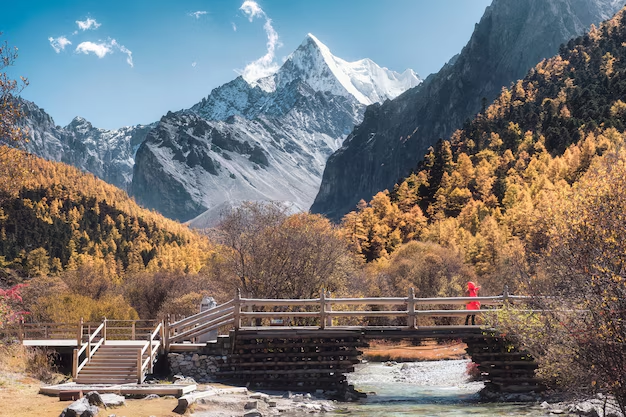
Daocheng Yading is often described as the “last pure land on Earth” or the real-life inspiration for Shangri-La. Located in western Sichuan on the edge of the Tibetan Plateau, it features snow-capped peaks, alpine meadows, glacial lakes, and sacred mountains.
Sacred Peaks and Landscapes
The reserve is centered around three holy mountains:
- Chenrezig
- Jampayang
- Chanadorje
Surrounding them are pristine valleys, turquoise lakes, and golden grasslands.
Tibetan Spirituality
Daocheng Yading is deeply sacred to Tibetan Buddhists. Pilgrims circumambulate the mountains as acts of devotion, adding spiritual depth to the landscape.
High-Altitude Adventure
At elevations above 4,000 meters, Yading is ideal for:
- Hiking
- Photography
- Nature immersion
The remote setting rewards visitors with unmatched serenity.
Why Visit Daocheng Yading
Daocheng Yading is perfect for travelers seeking raw natural beauty, spiritual connection, and epic alpine scenery.
Best Time to Visit Sichuan
- Spring (Apr–May): Flowers and mild weather
- Summer (Jun–Aug): Best for mountains and valleys
- Autumn (Sep–Oct): Best overall season
- Winter: Cold but fewer crowds
Related artical : Top 5 Tourist Places in Shanxi, China