
Now Reading: Best place to visit in Najaf
-
01
Best place to visit in Najaf
Best place to visit in Najaf
1. Imam Ali Shrine – The Spiritual Heart of Najaf

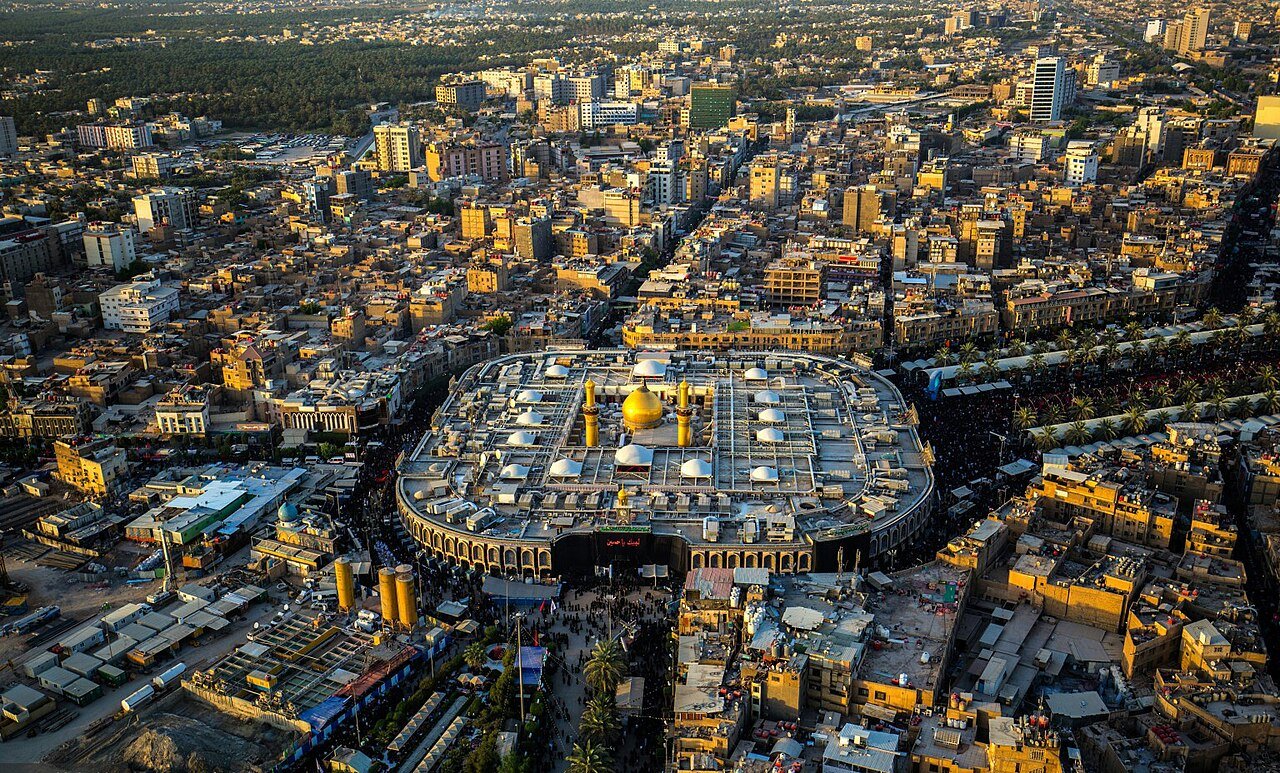
Imam Ali Shrine is one of the most sacred sites in the Islamic world and the most important landmark in Najaf. The shrine houses the tomb of Imam Ali ibn Abi Talib, the cousin and son-in-law of Prophet Muhammad and the first Imam in Shia Islam.
Visitors exploring the shrine experience magnificent golden domes, towering minarets, stunning courtyards, intricate calligraphy, beautiful mosaics, and a deeply spiritual atmosphere.
For centuries, the shrine has attracted millions of pilgrims from around the world seeking spiritual connection and religious knowledge.
The architectural beauty of the complex reflects generations of artistic and cultural achievements.
Photography lovers especially appreciate the golden architecture and illuminated nighttime views.
Every visit feels spiritual and unforgettable.
2. Wadi Al-Salam Cemetery – The Largest Cemetery in the World

Wadi Al-Salam Cemetery is recognized as one of the largest cemeteries in the world and holds immense religious significance for millions of Muslims.
Covering vast areas around the city, the cemetery has been used for more than a thousand years and contains the graves of scholars, religious leaders, and believers from many countries.
Visitors exploring the site experience historical tombs, religious monuments, spiritual landmarks, and fascinating insights into Islamic traditions.
The cemetery represents an important part of Najaf’s identity as a major center of pilgrimage.
Its scale and history make it one of the most unique places in the world.
Photography lovers especially appreciate the vast landscapes and historical atmosphere.
Every visit feels meaningful and reflective.
3. Najaf Old City – The Historic Soul of Iraq

Najaf Old City preserves centuries of religious, cultural, and architectural heritage.
Visitors exploring the old city experience traditional alleyways, historic houses, religious schools, local markets, and authentic Iraqi culture.
For generations, scholars, pilgrims, merchants, and travelers have walked through these historic streets.
The old city reflects the importance of Najaf as one of the world’s leading centers of Islamic learning.
Its traditional atmosphere provides a fascinating glimpse into Iraq’s rich cultural heritage.
Photography lovers especially appreciate the historical architecture and vibrant streets.
Every walk feels timeless and memorable.
4. Hawza of Najaf – One of the World’s Greatest Centers of Islamic Learning

Hawza of Najaf is one of the oldest and most influential religious educational institutions in the Islamic world.
For more than a thousand years, scholars from across the globe have traveled to Najaf to study theology, philosophy, jurisprudence, and Islamic sciences.
Visitors exploring the area experience historic seminaries, libraries, educational institutions, religious discussions, and intellectual traditions.
The Hawza has produced many of the most respected scholars in Islamic history.
Its influence extends far beyond Iraq and continues to shape religious scholarship worldwide.
Photography lovers especially appreciate the historical schools and architecture.
Every visit feels educational and inspiring.
5. Kufa Mosque – One of Islam’s Most Historic Mosques

Great Mosque of Kufa is one of the oldest and most significant mosques in the Islamic world.
The mosque is closely associated with Imam Ali and many important events in early Islamic history.
Visitors exploring the mosque experience magnificent courtyards, religious monuments, historical architecture, and deep spiritual significance.
For centuries, the mosque has remained an important destination for pilgrims and historians.
Its heritage makes it one of Iraq’s most treasured religious landmarks.
Photography lovers especially appreciate the beautiful Islamic architecture.
Every visit feels sacred and unforgettable.
6. Euphrates River Near Kufa – The Historic Waterway of Mesopotamia

Euphrates River is one of the most important rivers in human history and has supported civilizations in Mesopotamia for thousands of years.
Visitors exploring the riverbanks experience scenic landscapes, traditional villages, agricultural fields, and peaceful natural surroundings.
The river played a vital role in the growth of ancient civilizations, trade routes, and settlements throughout Iraq.
Its historical significance continues to attract travelers interested in the origins of human civilization.
The peaceful waters create beautiful scenery throughout the region.
Photography lovers especially appreciate the riverside views and sunsets.
Every visit feels relaxing and historical.
7. Najaf Sea – The Ancient Inland Basin

Bahr al-Najaf is a historic natural depression located west of the city and one of the region’s most interesting geographical features.
Historically, the basin occasionally filled with water and played an important role in the local environment and settlement patterns.
Visitors exploring the area experience desert landscapes, unique geological formations, birdlife, and panoramic views.
The surrounding scenery provides a striking contrast between the desert and the urban environment of Najaf.
Nature enthusiasts especially appreciate the peaceful atmosphere and open landscapes.
Photography lovers especially enjoy capturing the dramatic desert scenery.
Every journey feels unique and memorable.
8. Najaf Food Culture – The Traditional Flavors of Southern Iraq

Najaf is one of Iraq’s most important cultural and religious cities and offers a rich culinary tradition rooted in centuries of hospitality.
Visitors can enjoy traditional dishes such as Quzi, Dolma, Tashreeb, Kebabs, Kubba, rice specialties, fresh breads, dates, sweets, and regional delicacies.
The city’s role as a major pilgrimage destination has influenced its food culture, leading to a wide variety of traditional restaurants and local eateries.
Markets throughout Najaf offer authentic Iraqi flavors and culinary experiences.
The hospitality of the local people makes every dining experience especially memorable.
Food lovers especially enjoy exploring traditional restaurants near the old city and shrine areas.
Every meal feels flavorful and unforgettable.
Najaf beautifully combines Islamic heritage, world-famous pilgrimage sites, ancient history, religious scholarship, cultural traditions, historical landmarks, and extraordinary cuisine, making it one of the most significant spiritual destinations in the world.
Related artical : Best place to visit in Kirkuk