
Now Reading: Best place to visit in Jerusalem
-
01
Best place to visit in Jerusalem
Best place to visit in Jerusalem

Jerusalem is one of the world’s oldest and most significant cities, revered by billions of people as a sacred destination for Judaism, Christianity, and Islam. With a history spanning more than 3,000 years, Jerusalem stands as a living museum where ancient civilizations, religious traditions, and modern life coexist within its historic walls.
Located in the Judean Mountains, Jerusalem has witnessed the rise and fall of empires, the birth of major religions, and countless historical events that shaped human civilization. Today, the city attracts millions of pilgrims, historians, archaeologists, and travelers from around the globe.
Visitors can explore ancient religious sites, vibrant markets, museums, archaeological treasures, and diverse neighborhoods that reflect the city’s extraordinary cultural heritage.
Whether seeking spiritual experiences, historical exploration, or cultural discovery, Jerusalem offers an unforgettable journey through history.
1. Old City of Jerusalem – The Historic Heart of the Holy City

Old City of Jerusalem is the most famous part of the city and one of the world’s most important historical and religious sites.
Surrounded by ancient stone walls built during the 16th century, the Old City covers less than one square kilometer yet contains some of the most sacred places in the world. The area is divided into four historic quarters: the Jewish Quarter, Christian Quarter, Muslim Quarter, and Armenian Quarter.
Visitors can wander through narrow stone streets, bustling markets, ancient courtyards, and centuries-old buildings while experiencing a unique blend of cultures and traditions.
The Old City is recognized as a UNESCO World Heritage Site and remains the spiritual heart of Jerusalem.
2. Western Wall – Judaism’s Holiest Accessible Site

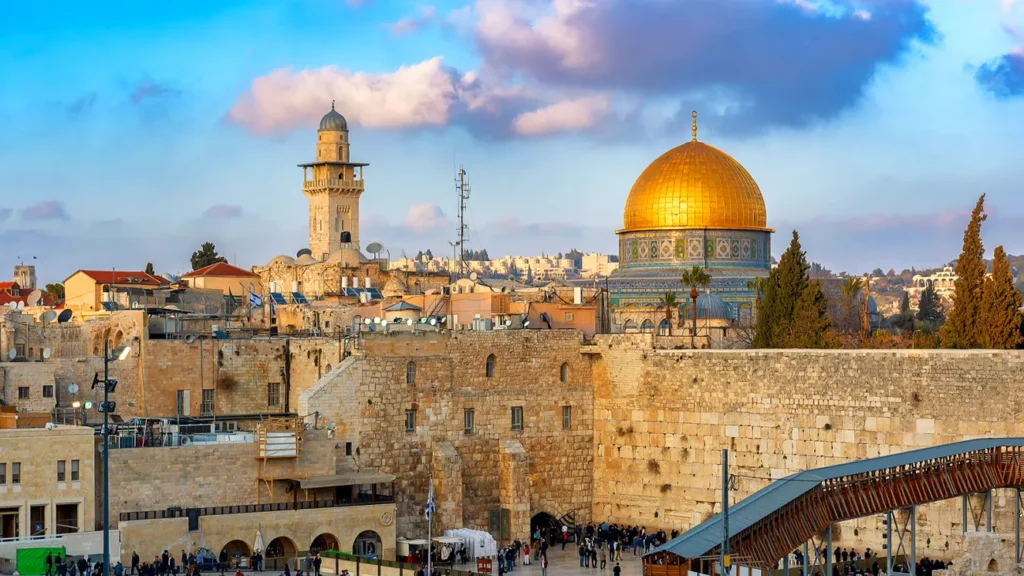
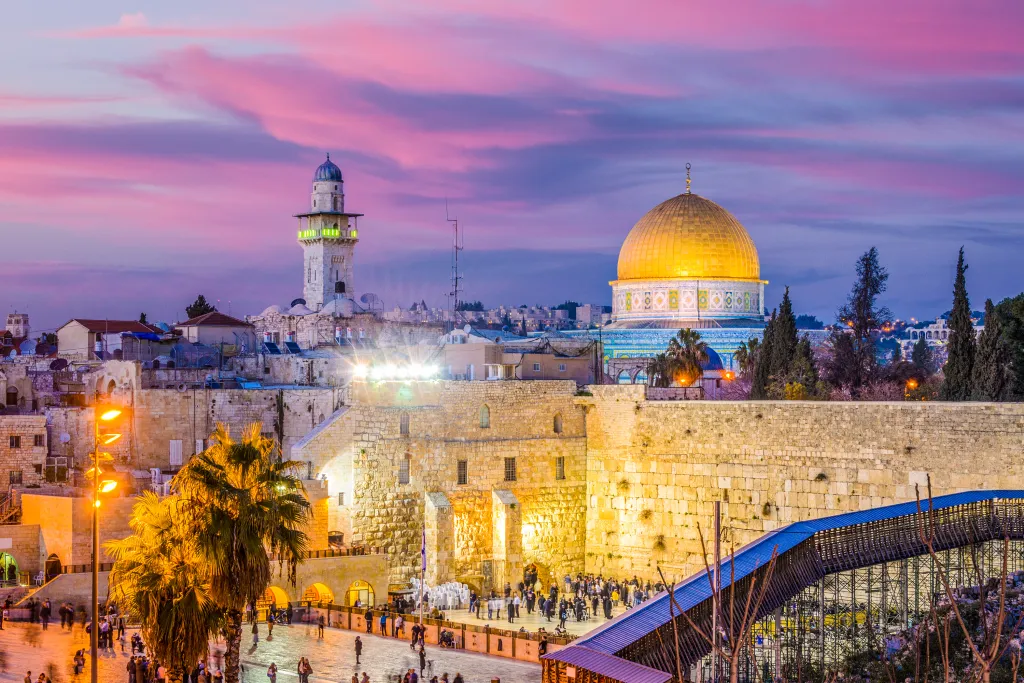
Western Wall is one of the most sacred sites in Judaism and attracts millions of worshippers and visitors each year.
The wall is a surviving remnant of the retaining structures that supported the Second Temple complex, which was destroyed by the Romans in 70 CE.
Visitors often place written prayers into the cracks between the ancient stones, a tradition practiced for centuries.
The atmosphere at the wall is deeply spiritual, with worshippers gathering daily for prayer, reflection, and religious ceremonies.
The site symbolizes Jewish history, resilience, and faith.
3. Church of the Holy Sepulchre – Christianity’s Most Sacred Shrine

Church of the Holy Sepulchre is considered by many Christians to be the holiest church in the world.
The church stands on the site traditionally believed to be where Jesus was crucified, buried, and resurrected.
Originally built during the 4th century under the rule of Emperor Constantine, the church has undergone numerous renovations and expansions throughout its history.
Visitors can explore chapels, ancient tombs, religious relics, and sacred spaces that have attracted Christian pilgrims for centuries.
The church remains one of the most important pilgrimage destinations in Christianity.
4. Dome of the Rock – The Icon of Jerusalem

Dome of the Rock is one of the most recognizable landmarks in the world.
Completed in 691 CE, it is among the oldest surviving examples of Islamic architecture and is located on the Temple Mount, known to Muslims as Haram al-Sharif.
The shrine’s magnificent golden dome dominates Jerusalem’s skyline and houses the sacred rock associated with important events in Jewish, Christian, and Islamic traditions.
Visitors admire its intricate mosaics, beautiful calligraphy, and remarkable architectural design.
The Dome of the Rock stands as a symbol of Jerusalem’s spiritual significance and architectural heritage.
5. Al-Aqsa Mosque – One of Islam’s Holiest Sites

Al-Aqsa Mosque is one of the most sacred sites in Islam and holds immense religious significance for Muslims worldwide.
The mosque forms part of the Haram al-Sharif complex and is believed to be the location from which Prophet Muhammad ascended to heaven during the Night Journey.
Its beautiful architecture, large prayer halls, and historical importance attract worshippers and visitors from around the world.
The mosque has served as an important center of Islamic worship and scholarship for over a thousand years.
Its spiritual significance makes it one of Jerusalem’s most revered landmarks.
6. Mount of Olives – The Best View of Jerusalem

Mount of Olives offers some of the most spectacular views of the city.
The hill has deep religious significance in Judaism, Christianity, and Islam and has been an important pilgrimage site for centuries.
Visitors can enjoy panoramic views of the Old City, the Dome of the Rock, and Jerusalem’s surrounding landscapes.
The area is also home to ancient cemeteries, churches, monasteries, and historical sites connected to the life of Jesus.
The Mount of Olives provides one of the most memorable perspectives of Jerusalem.
7. Yad Vashem – Israel’s Holocaust Memorial

Yad Vashem is the world’s leading Holocaust remembrance center.
Established to honor the memory of the six million Jews who perished during the Holocaust, the institution includes museums, archives, memorials, educational facilities, and research centers.
Visitors can learn about one of the darkest chapters in human history through powerful exhibitions, personal testimonies, historical documents, and artifacts.
The experience is both educational and deeply moving.
Yad Vashem serves as a place of remembrance, reflection, and commitment to preserving historical truth.
8. Mahane Yehuda Market – The Flavor of Jerusalem

Mahane Yehuda Market is Jerusalem’s most famous marketplace and one of the city’s liveliest attractions.
The market features hundreds of stalls selling fresh produce, spices, pastries, cheeses, meats, and traditional Middle Eastern foods.
Visitors can sample local specialties, enjoy street food, shop for souvenirs, and experience the vibrant atmosphere that reflects Jerusalem’s cultural diversity.
At night, many market stalls transform into bars, restaurants, and entertainment venues.
The market provides a wonderful opportunity to experience the city’s culinary traditions.
9. Tower of David – Jerusalem’s Ancient Citadel

Tower of David is one of the city’s most important historical landmarks.
Located near Jaffa Gate, the citadel contains archaeological remains spanning thousands of years, including structures from various civilizations that ruled Jerusalem.
Visitors can explore museum exhibits, ancient towers, fortifications, and observation points offering spectacular views of the city.
The site presents the story of Jerusalem through interactive displays and archaeological discoveries.
It remains one of the best places to understand the city’s long and complex history.
10. Food, Culture, and Traditions of Jerusalem

Jerusalem is renowned for its diverse culinary traditions, reflecting influences from Jewish, Arab, Armenian, Mediterranean, and Middle Eastern cultures. Visitors can enjoy falafel, hummus, shawarma, fresh breads, pastries, olives, spices, and traditional regional dishes.
The city’s cultural landscape is equally diverse, featuring festivals, religious celebrations, art galleries, music performances, and cultural institutions throughout the year.
Walking through Jerusalem reveals a fascinating blend of ancient traditions and modern life that exists nowhere else in the world.
Related artical : Best tourist place to visit in Ireland