
Now Reading: Best place to visit in Awbari
-
01
Best place to visit in Awbari
Best place to visit in Awbari

Introduction
Awbari, often spelled Ubari, is one of the most extraordinary desert destinations in North Africa. Located in the heart of the Fezzan region, Awbari is famous for its breathtaking oasis lakes, towering golden dunes, ancient caravan routes, and rich Tuareg heritage. Surrounded by some of the most spectacular desert scenery in the Sahara, the city serves as a gateway to landscapes that seem almost otherworldly.
For centuries, Awbari was an important stop for caravans crossing the Sahara. Travelers relied on its oases for water, shelter, and supplies while moving between North Africa and sub-Saharan Africa. Today, Awbari attracts adventurers, photographers, historians, and nature enthusiasts who wish to experience one of the Sahara’s most remarkable natural environments.
The combination of crystal-clear lakes, endless dunes, palm groves, and cultural traditions makes Awbari one of Libya’s most unforgettable destinations.
History of Awbari
The history of Awbari is closely connected to the development of oasis settlements in the Fezzan region. Due to its strategic location near major caravan routes, the area became an important center of trade and cultural exchange.
Merchants traveling through the Sahara transported goods such as gold, salt, ivory, textiles, and spices. These trade networks brought prosperity to oasis communities and encouraged the development of agriculture, craftsmanship, and local governance.
Over the centuries, Awbari became associated with the traditions of the Tuareg People, who played a major role in trade, transportation, and desert culture throughout the region.
Today, the city preserves its historical identity while continuing to serve as one of Libya’s most fascinating oasis settlements.
1. Gaberoun Lake

The Most Famous Desert Lake in Libya
Gaberoun Lake is one of the most spectacular natural attractions in the Sahara Desert.
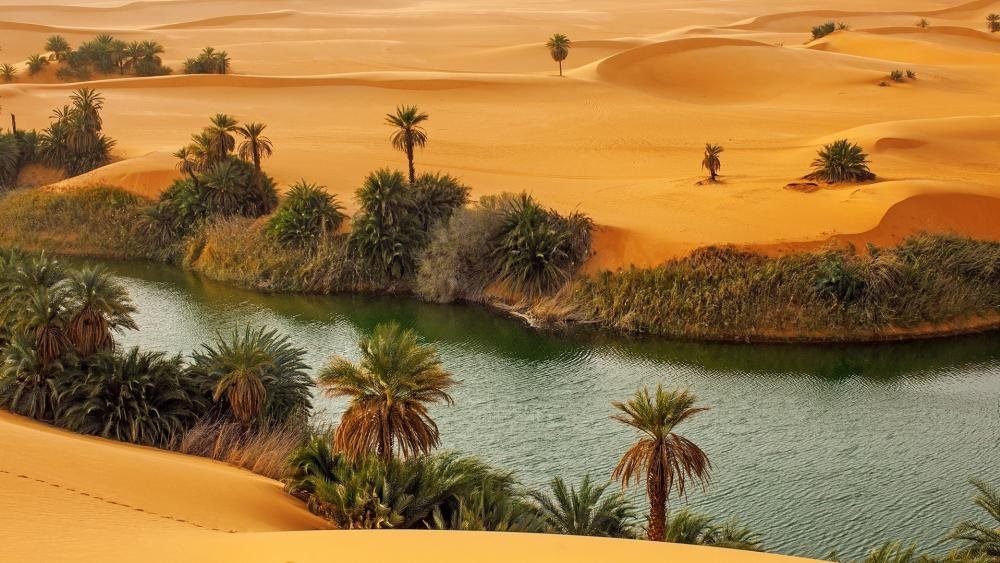
Surrounded by massive sand dunes and palm trees, the lake creates a stunning contrast between blue water and golden desert landscapes. The tranquil setting attracts visitors seeking natural beauty and unique photographic opportunities.
The lake is part of the famous Ubari Lakes system and remains one of Libya’s most iconic destinations.
Its breathtaking scenery makes it a highlight of any journey through the Fezzan region.
2. Umm Al-Maa Lake

A Hidden Gem in the Sahara
The beautiful Umm Al-Maa Lake is another remarkable desert lake located near Awbari.
Its calm waters, surrounded by palm groves and towering dunes, create an environment that appears almost surreal. Visitors often describe the lake as one of the most peaceful locations in the Sahara.
The site provides opportunities for sightseeing, photography, and appreciating the rare beauty of desert ecosystems.
The lake remains one of the region’s most treasured natural wonders.
3. Mandara Lake

Crystal Waters Among Golden Dunes
Mandara Lake is known for its striking scenery and peaceful atmosphere.
The lake reflects the surrounding dunes and sky, creating spectacular visual effects throughout the day. The combination of water, sand, and vegetation provides a rare glimpse into the ecological diversity of the Sahara.
Visitors often consider Mandara one of the most beautiful locations in southern Libya.
Its natural beauty continues to inspire travelers from around the world.
4. Ubari Sand Sea

Endless Oceans of Sand
The vast dune fields surrounding Awbari form part of one of the Sahara’s most impressive sand seas.
Towering dunes rise dramatically above the desert floor, creating landscapes of extraordinary beauty and scale. Wind continuously reshapes the dunes, producing ever-changing patterns and formations.
Visitors can enjoy desert excursions, dune exploration, and unforgettable sunset experiences.
The sand sea remains one of the defining features of Awbari.
5. Ancient Caravan Routes
Following the Paths of Desert Merchants
Awbari played an important role in the trans-Saharan trade networks that connected North Africa with regions further south.
Merchants crossing the desert relied on the oasis for water, food, and shelter. These routes facilitated the exchange of goods, ideas, and cultural traditions across vast distances.
Visitors can learn about the extraordinary journeys undertaken by traders who crossed one of the world’s most challenging environments.
The caravan heritage remains deeply connected to local history.
6. Tuareg Cultural Heritage

Guardians of the Sahara
Awbari is closely associated with the traditions of the Tuareg People, who have inhabited the Sahara for centuries.
Known for their desert knowledge, craftsmanship, music, and distinctive blue clothing, the Tuareg developed a rich cultural heritage that continues to influence the region today.
Visitors interested in culture can learn about traditional customs, storytelling, and desert lifestyles.
The preservation of Tuareg heritage remains an important aspect of community identity.
7. Palm Groves of Awbari

Green Life in the Desert
The palm groves surrounding Awbari provide essential resources for local communities.
Date cultivation has supported oasis life for generations while contributing to the region’s economy. The groves also create cooler microclimates and provide shelter from desert winds.
Visitors can explore these lush landscapes and learn about traditional agricultural practices.
The palm groves remain central to life in the oasis.
8. Desert Camping Experience

Sleeping Beneath the Stars
The desert surrounding Awbari offers some of the finest camping experiences in North Africa.
Visitors can spend evenings beneath clear skies filled with countless stars while enjoying the silence and beauty of the Sahara. Traditional desert camps provide opportunities to experience local hospitality and culture.
The experience of spending a night among the dunes remains unforgettable.
Desert camping is one of the most popular activities in the region.
9. Desert Wildlife and Ecosystems

Life in Extreme Conditions
Despite its harsh environment, the Awbari region supports a variety of wildlife adapted to desert conditions.
Birds, reptiles, insects, and specialized plant species survive through remarkable adaptations that allow them to thrive in extreme heat and limited water availability.
Visitors interested in ecology can gain insight into the resilience of life in the Sahara.
The region’s ecosystems demonstrate the remarkable diversity of desert environments.
10. Desert Sunrise and Sunset Viewpoints

Nature’s Greatest Light Show
The dunes surrounding Awbari provide some of the most spectacular sunrise and sunset views in the Sahara.
As sunlight interacts with the sand, the landscape transforms into vibrant shades of gold, orange, red, and purple. These dramatic displays attract photographers and nature enthusiasts from around the world.
Visitors often consider these moments among the highlights of their desert journey.
The scenery showcases the timeless beauty of the Sahara.
Related artical : Best place to visit in Marj