
Now Reading: Best place to visit in Libya
-
01
Best place to visit in Libya
Best place to visit in Libya
1. Leptis Magna – The Greatest Roman City in Africa

Introduction
Leptis Magna stands among the most extraordinary archaeological treasures of the ancient world and is widely regarded as the finest Roman city ever built in Africa. Located along Libya’s Mediterranean coast near the modern city of Khoms, Leptis Magna represents a remarkable testament to the power, wealth, and architectural brilliance of the Roman Empire.
Founded by Phoenician settlers around the 7th century BCE, the city later came under Carthaginian influence before becoming part of the Roman Republic. Its golden age arrived during the reign of Septimius Severus, who was born in the city and transformed it into one of the empire’s most magnificent urban centers.
Today, visitors can walk through remarkably preserved streets, temples, baths, markets, and theaters that have survived for nearly two thousand years. The city’s extraordinary preservation makes it one of the most important archaeological sites in the world.
Historical Importance
Leptis Magna served as a major commercial center connecting Africa, Europe, and the Middle East through maritime trade. Merchants transported olive oil, grain, exotic animals, and luxury goods through its bustling harbor. Wealth generated from trade allowed the city to develop impressive public monuments and sophisticated infrastructure.
The city reached its peak during the second and third centuries CE when Emperor Septimius Severus invested enormous resources into its expansion. Grand avenues, triumphal arches, and monumental buildings transformed Leptis Magna into a showcase of Roman power and prosperity.
Archaeologists continue to uncover evidence of advanced urban planning, engineering, and artistic achievement throughout the site.
Major Attractions
Visitors can explore the Severan Forum, Hadrianic Baths, Roman Theater, Amphitheater, Basilica, Harbor, and the magnificent Arch of Septimius Severus. These structures demonstrate the extraordinary scale and sophistication of Roman architecture.
The site remains one of the most valuable windows into daily life during the height of the Roman Empire.
2. Sabratha – The Mediterranean Jewel of Roman Libya

Introduction
Sabratha is one of North Africa’s most impressive archaeological sites and a UNESCO World Heritage Site. Situated along the Mediterranean coast west of Tripoli, the city flourished as a Phoenician trading settlement before becoming a major Roman urban center.
The city served as a vital port connecting Mediterranean trade networks with the interior regions of Africa. Merchants transported gold, ivory, spices, and other valuable goods through Sabratha, contributing to its wealth and prosperity.
Today, Sabratha stands as one of the best-preserved examples of Roman urban planning and architecture in North Africa.
Historical Legacy
Founded by Phoenician traders around the 6th century BCE, Sabratha grew into an important commercial center under Roman rule. Public buildings, temples, baths, and marketplaces reflected the city’s prosperity and strategic importance.
The city experienced significant development during the Roman Imperial period when monumental structures were constructed throughout the urban center.
Earthquakes and changing political conditions eventually led to its decline, but many of its most impressive monuments survived.
The Famous Roman Theater
The most iconic landmark in Sabratha is its magnificent Roman theater. Rising three stories high and decorated with elaborate columns, statues, and carvings, the theater is considered one of the finest surviving examples of Roman theatrical architecture anywhere in the world.
Visitors can also explore temples dedicated to Roman deities, basilicas, public baths, and residential districts that provide insight into life in the ancient city.
3. Cyrene – The Intellectual Capital of Ancient Libya

Introduction
Cyrene was one of the most important Greek cities outside Greece and became a renowned center of philosophy, science, education, and culture in the ancient Mediterranean world.
Founded by Greek settlers from Thera in 631 BCE, Cyrene developed into the capital of the Cyrenaica region and one of the wealthiest cities in North Africa.
Today, the site contains extensive ruins that showcase centuries of Greek and Roman civilization.
Historical Significance
Cyrene became famous for its intellectual achievements and was home to philosophers, mathematicians, scientists, and scholars whose contributions influenced the development of Western civilization.
The city prospered through agriculture and trade, particularly the export of silphium, a valuable plant prized throughout the ancient world.
Its cultural influence extended far beyond North Africa and contributed significantly to Greek intellectual history.
Architectural Highlights
Visitors can explore the Temple of Apollo, Agora, Acropolis, Sanctuary of Demeter, Roman Baths, and extensive necropolises. These monuments reflect both Greek and Roman architectural traditions and provide insight into the city’s long and distinguished history.
Cyrene remains one of the most important archaeological sites associated with ancient Greek civilization.
4. Ghadames Old Town – The Pearl of the Desert

Introduction
Ghadames Old Town is one of the most remarkable examples of traditional desert architecture in the world. Located near Libya’s borders with Algeria and Tunisia, the city has been called the “Pearl of the Desert” due to its beauty and historical significance.
The town developed as a major stop along trans-Saharan trade routes, connecting North Africa with sub-Saharan Africa.
Architectural Wonder
The old town consists of interconnected mud-brick houses designed to protect residents from the extreme desert climate. Covered passageways create shaded streets, while rooftop walkways allow movement throughout the city.
The innovative design provides natural cooling and demonstrates centuries of architectural adaptation to harsh environmental conditions.
Cultural Heritage
Ghadames reflects a unique blend of Arab, Amazigh, and Saharan influences. Traditional customs, crafts, and social structures continue to shape local identity.
The city remains one of the finest surviving examples of traditional Saharan urban planning.
5. Tripoli Medina – The Historic Heart of Libya

Introduction
Tripoli Medina is the historic center of Libya’s capital and one of North Africa’s most fascinating old cities.
For centuries, merchants, travelers, scholars, and craftsmen passed through its gates, creating a vibrant urban environment rich in culture and history.
Historical Importance
The Medina reflects influences from Phoenician, Roman, Arab, Ottoman, and Italian periods. Its narrow alleys, bustling markets, mosques, and traditional houses preserve centuries of urban development.
Visitors can explore ancient streets filled with history while experiencing the atmosphere of a living historic city.
Architectural Heritage
The Medina contains numerous historic mosques, caravanserais, marketplaces, and residential buildings that showcase traditional craftsmanship and architectural beauty.
Its rich cultural heritage continues to make it one of Libya’s most important historical destinations.
6. Red Castle Museum – Guardian of Libya’s History

Introduction
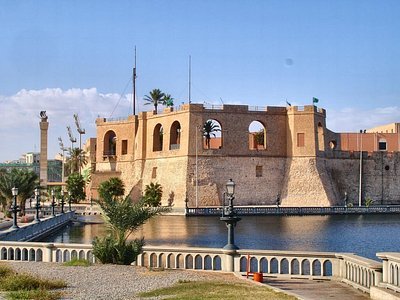
Red Castle Museum, also known as Assaraya Alhamra, is one of Libya’s most important cultural institutions.
Located in Tripoli, the massive fortress overlooks the Mediterranean Sea and preserves artifacts spanning thousands of years of Libyan history.
Historical Development
The fortress evolved through Phoenician, Roman, Arab, Ottoman, and Italian periods, with each civilization contributing to its expansion.
Its strategic location made it one of the most important defensive structures in North Africa.
Museum Collections
The museum contains archaeological artifacts, sculptures, mosaics, manuscripts, traditional costumes, and exhibits documenting Libya’s diverse historical heritage.
It remains one of the country’s most significant repositories of cultural memory.
7. Arch of Marcus Aurelius – A Roman Masterpiece

Introduction
The Arch of Marcus Aurelius is one of the most recognizable Roman monuments in Libya and one of the few surviving Roman structures in central Tripoli.
Built during the second century CE, the arch commemorates Emperor Marcus Aurelius and reflects the artistic and engineering achievements of Roman civilization.
Architectural Significance
Decorated with intricate carvings and relief sculptures, the arch demonstrates the exceptional craftsmanship of Roman artisans.
Its elegant proportions and remarkable preservation make it one of Libya’s most important historical landmarks.
The monument continues to symbolize the city’s ancient Roman heritage.
8. Akakus Mountains – The Natural Wonder of the Sahara

Introduction
The Akakus Mountains are among the most spectacular desert landscapes on Earth.
Located in southwestern Libya, the mountains feature towering sandstone formations, natural arches, deep canyons, and colorful rock formations shaped by millions of years of erosion.
Prehistoric Heritage
The mountains contain thousands of prehistoric rock paintings and engravings depicting animals, hunting scenes, and ancient human life.
These artworks provide evidence that the Sahara was once a fertile region inhabited by diverse communities.
Natural Beauty
The dramatic scenery attracts adventurers, geologists, archaeologists, and photographers from around the world.
The region remains one of Africa’s greatest natural treasures.
9. Ubari Lakes – The Miracles of the Desert

Introduction
The Ubari Lakes are among the Sahara Desert’s most extraordinary natural phenomena.
Surrounded by towering dunes and palm groves, these lakes create stunning landscapes where blue water contrasts dramatically with golden sand.
Geological Formation
The lakes were formed by ancient underground water systems and remain among the Sahara’s most unique ecological environments.
Despite their remote location, they support wildlife and oasis vegetation.
Tourist Attractions
Popular lakes include Gaberoun, Umm al-Maa, and Mandara. Visitors are drawn by the breathtaking scenery, peaceful atmosphere, and photographic opportunities.
The lakes remain one of Libya’s most remarkable natural destinations.
10. Tadrart Acacus – The Open-Air Museum of Human History

Introduction
Tadrart Acacus is a UNESCO World Heritage Site renowned for its extraordinary rock art, geological formations, and prehistoric significance.
Located in southwestern Libya, the region contains one of the world’s most important collections of ancient rock paintings and engravings.
Human History Preserved in Stone
The artwork found throughout Tadrart Acacus documents thousands of years of human history. Paintings depict giraffes, elephants, cattle, hunters, and daily life from periods when the Sahara was green and fertile.
These images provide invaluable insight into environmental change and human adaptation over millennia.
A Landscape Like No Other
Towering cliffs, sandstone arches, colorful rock formations, and endless desert vistas create one of the most visually stunning environments in Africa.
Tadrart Acacus remains one of humanity’s greatest archaeological and natural treasures, offering visitors a rare opportunity to explore both the history of civilization and the beauty of the Sahara.
11. Waw an Namus – The Volcanic Oasis of the Sahara

Introduction
Waw an Namus is one of the most extraordinary natural wonders in the Sahara Desert and one of Africa’s most fascinating geological formations. Located deep within the remote Libyan desert, Waw an Namus is a massive volcanic caldera surrounded by black volcanic ash fields, colorful lakes, and isolated desert vegetation. Its name translates roughly as “Oasis of Mosquitoes,” a reference to the insects that thrive around its rare water sources.
Visible from space due to its striking black volcanic deposits, Waw an Namus is often described as one of the most surreal landscapes on Earth. The contrast between dark volcanic terrain, blue-green lakes, and golden desert sands creates an almost alien environment unlike anywhere else in North Africa.
For adventurers, geologists, photographers, and nature enthusiasts, Waw an Namus represents one of Libya’s most spectacular hidden treasures.
Geological History
The volcanic crater was formed thousands of years ago through powerful volcanic activity that reshaped the surrounding desert landscape. Over time, groundwater accumulated within the caldera, creating several lakes despite the extreme arid conditions of the Sahara.
The black volcanic ash surrounding the crater stretches for kilometers and provides evidence of the immense eruptions that once occurred in the region.
Today, Waw an Namus remains one of the Sahara’s most remarkable geological landmarks.
12. Apollonia – The Ancient Port of Cyrene

Introduction
Apollonia was the ancient harbor city of Cyrene and one of the most important maritime centers in the eastern Mediterranean. Located along Libya’s beautiful coastline near modern Susah, Apollonia served as the gateway through which goods, travelers, and ideas entered and left the prosperous city of Cyrene.
Founded during the Greek period, the city flourished under Greek, Roman, and Byzantine rule. Its strategic coastal location enabled extensive trade with Greece, Egypt, and other Mediterranean civilizations.
Today, Apollonia is one of Libya’s most impressive archaeological sites, offering visitors the opportunity to explore ancient harbors, churches, palaces, and defensive walls overlooking the Mediterranean Sea.
Historical Significance
For centuries, Apollonia played a critical role in regional commerce and naval activity. Ships carrying grain, olive oil, wine, and luxury goods regularly docked at its harbor.
The city became especially important during the Byzantine era when large churches and public buildings were constructed throughout the settlement.
The ruins provide valuable insight into the maritime history of ancient North Africa.
13. Benghazi Zoo – A Family Attraction in Eastern Libya

Introduction
Benghazi Zoo is one of the most popular recreational destinations in eastern Libya and a favorite attraction for families, students, and visitors. Located within Libya’s second-largest city, the zoo serves as both an educational facility and a public leisure destination.
The zoo houses a variety of animal species and provides visitors with opportunities to learn about wildlife conservation and biodiversity. Large green spaces, walking paths, and recreational facilities make it a popular location for weekend outings.
Educational Importance
Beyond entertainment, the zoo plays an important role in environmental education by introducing visitors to different animal species and ecosystems.
Children and students benefit from learning about wildlife while enjoying outdoor recreational activities.
The zoo remains one of Benghazi’s most visited family attractions.
14. Green Mountains – Libya’s Natural Paradise

Introduction
The Jabal al Akhdar, commonly known as the Green Mountains, is one of Libya’s most beautiful natural regions. Unlike the country’s vast desert landscapes, this area features forests, fertile valleys, rolling hills, waterfalls, and rich biodiversity.
The region receives significantly more rainfall than most parts of Libya, allowing vegetation to flourish and creating landscapes that resemble parts of the Mediterranean rather than the Sahara.
Natural Beauty
The Green Mountains are famous for their scenic valleys, olive groves, wildflowers, and panoramic viewpoints. During spring, the region becomes particularly vibrant as flowers bloom across the countryside.
Visitors can enjoy hiking, photography, birdwatching, and nature exploration throughout the area.
The Green Mountains remain one of North Africa’s most unique ecological regions.
15. Ptolemais – The Forgotten Ancient Metropolis

Introduction
Ptolemais was once one of the largest cities in ancient Cyrenaica and served as an important administrative and commercial center.
Founded during the Hellenistic period and later expanded under Roman rule, the city contained magnificent public buildings, baths, forums, and residential districts.
Today, extensive ruins reveal the scale and sophistication of one of North Africa’s most important ancient cities.
Historical Importance
Ptolemais served as a major center of governance and trade, connecting inland settlements with Mediterranean maritime routes.
Its architecture reflects both Greek and Roman influences, making it an important site for understanding the development of ancient civilization in Libya.
The city remains one of the region’s most significant archaeological treasures.
16. Tobruk War Cemetery – A Memorial of Courage

Introduction
Tobruk War Cemetery is one of the most important World War II memorial sites in North Africa.
The cemetery honors thousands of soldiers who lost their lives during the North African Campaign, particularly during the fierce battles fought around Tobruk between Allied and Axis forces.
Beautifully maintained grounds provide a peaceful environment for remembrance and reflection.
Historical Significance
The Siege of Tobruk became one of the defining events of the North African Campaign. Soldiers from numerous nations fought under extremely difficult conditions across Libya’s deserts.
The cemetery stands as a powerful reminder of sacrifice, courage, and the human cost of war.
Visitors from around the world come to pay their respects and learn about this important chapter of history.
17. House Cave of Gharyan – Libya’s Underground Architecture

Introduction
The House Cave of Gharyan represents one of Libya’s most fascinating architectural traditions.
Residents of the Gharyan region developed underground homes carved into the earth to protect themselves from extreme temperatures. These cave houses feature central courtyards surrounded by rooms excavated into the ground.
Architectural Innovation
The underground design naturally regulates temperature, keeping interiors cool during hot summers and warm during colder seasons.
These structures demonstrate remarkable ingenuity and adaptation to environmental conditions.
Visitors can explore examples of this unique architectural heritage and gain insight into traditional desert life.
18. Martyrs’ Square – The Heart of Tripoli

Introduction
Martyrs’ Square is one of Libya’s most famous public spaces and serves as the symbolic center of the capital city.
Located near the Mediterranean waterfront and the historic Medina, the square has witnessed many significant political, cultural, and social events throughout Libya’s modern history.
Historical and Cultural Importance
The square has served as a gathering place for celebrations, public ceremonies, and important national events.
Surrounded by historic buildings and overlooking the sea, it remains one of Tripoli’s most recognizable landmarks.
Visitors often begin their exploration of the city from this iconic location.
19. Ras al Hilal Beach – The Hidden Coastal Paradise

Introduction
Ras al Hilal Beach is one of Libya’s most beautiful coastal destinations, located along the spectacular shores of the Green Mountains region.
The beach is famous for its crystal-clear waters, dramatic cliffs, natural coves, and lush surroundings that create a stunning contrast between mountains and sea.
Natural Beauty
Unlike many coastal areas in North Africa, Ras al Hilal combines Mediterranean beaches with nearby forests and green hills.
Visitors can enjoy swimming, photography, hiking, and relaxation in one of Libya’s most scenic coastal environments.
The area remains a hidden gem for nature lovers.
20. Ghat Oasis – The Jewel of the Western Sahara

Introduction
Ghat Oasis is one of the most historic and culturally significant oasis settlements in the Sahara Desert.
Situated near the borders of Algeria and Niger, the oasis has served for centuries as a center of trade, culture, and desert civilization.
Surrounded by palm groves, mountains, and vast desert landscapes, Ghat offers a unique blend of natural beauty and historical significance.
Cultural Heritage
The oasis is closely associated with the Tuareg People, whose traditions, language, and craftsmanship continue to shape local identity.
Visitors can experience authentic Saharan culture while exploring one of the desert’s most beautiful settlements.
Ghat Oasis remains one of Libya’s greatest treasures and a symbol of life flourishing in the heart of the Sahara.
Related artical : Best place to visit in Al Qubbah