
Now Reading: Best place to visit in Kazakhstan
-
01
Best place to visit in Kazakhstan
Best place to visit in Kazakhstan
1.Charyn Canyon – Kazakhstan’s Grand Canyon of Central Asia

Charyn Canyon is one of Kazakhstan’s most spectacular natural landmarks and one of the most breathtaking geological formations in Central Asia. Stretching for more than 150 kilometers along the Charyn River, this remarkable canyon has often been compared to the Grand Canyon of the United States due to its dramatic cliffs, colorful rock formations, and immense scale.
Formed over millions of years through the combined forces of wind, water, and geological activity, Charyn Canyon showcases towering sandstone walls that rise hundreds of meters above the canyon floor. The vibrant red, orange, and brown rock formations create an extraordinary landscape that appears almost otherworldly.
The most famous section of the canyon is known as the Valley of Castles, where natural rock formations resemble ancient fortresses, towers, and castles sculpted by nature itself. Walking through this area feels like stepping into a fantasy world shaped entirely by geological processes.
Beyond its stunning visual beauty, Charyn Canyon supports a unique ecosystem. Rare plants, birds, mammals, and reptiles inhabit the region, making it an important area for biodiversity conservation. The canyon’s microclimate has allowed certain plant species to survive for thousands of years.
Adventure travelers are drawn to Charyn Canyon for hiking, photography, camping, and exploration. The canyon offers countless opportunities to experience Kazakhstan’s natural beauty while witnessing one of the country’s most extraordinary landscapes.
Today, Charyn Canyon stands as one of Kazakhstan’s premier tourist attractions and a symbol of the nation’s incredible geological heritage.
2.Big Almaty Lake – A Jewel in the Tian Shan Mountains

Big Almaty Lake is one of the most beautiful alpine lakes in Central Asia and one of the most photographed natural attractions in Kazakhstan. Nestled high in the Tian Shan Mountains at an elevation of approximately 2,500 meters above sea level, the lake captivates visitors with its striking turquoise waters and dramatic mountain scenery.
The lake’s unique color changes throughout the year depending on weather conditions, sunlight, and seasonal changes. During sunny days, the water often appears brilliant blue or emerald green, creating a stunning contrast against the surrounding snow-capped peaks.
Big Almaty Lake serves as an important source of drinking water for the city of Almaty and is protected as part of the region’s natural conservation efforts. The pristine environment surrounding the lake contributes to its remarkable beauty and ecological significance.
Visitors traveling to the lake enjoy scenic mountain roads, breathtaking viewpoints, and fresh alpine air. The surrounding landscape offers opportunities for hiking, photography, wildlife observation, and appreciating the grandeur of the Tian Shan Mountains.
Every season brings a different perspective to Big Almaty Lake. Spring introduces blooming alpine vegetation, summer showcases vibrant colors, autumn paints the mountains in golden tones, and winter transforms the region into a snowy wonderland.
Its extraordinary setting has made Big Almaty Lake one of Kazakhstan’s most iconic natural destinations.
3.Kolsai Lakes – The Pearl of the Northern Tian Shan

Kolsai Lakes are among Kazakhstan’s most treasured natural attractions. Located within the breathtaking landscapes of Kolsai Lakes National Park, these three alpine lakes are often called the “Pearls of the Northern Tian Shan.”
Surrounded by dense forests, mountain meadows, and towering peaks, the lakes offer some of the most picturesque scenery in Central Asia. Their crystal-clear waters reflect the surrounding mountains, creating postcard-perfect views throughout the year.
The lakes were formed through geological processes that shaped the mountainous terrain over thousands of years. Today, they serve as important habitats for wildlife and contribute to the region’s ecological diversity.
Visitors can hike between the lakes, enjoy horseback riding, camp beneath the stars, and explore untouched natural environments. The journey to the upper lakes offers spectacular panoramic views and unforgettable outdoor experiences.
The peaceful atmosphere, pristine waters, and stunning mountain surroundings make Kolsai Lakes a paradise for nature lovers and adventure enthusiasts alike.
As one of Kazakhstan’s most beautiful destinations, the Kolsai Lakes showcase the country’s extraordinary natural wealth and environmental beauty.
4.Kaindy Lake – Kazakhstan’s Sunken Forest Wonder

Kaindy Lake is one of the world’s most unusual and fascinating lakes. Famous for its submerged forest, Kaindy Lake offers a surreal landscape unlike any other destination in Central Asia.
The lake was created following a powerful earthquake in 1911 that triggered a massive landslide, forming a natural dam that flooded a spruce forest. Rather than decaying completely, the submerged trees remained preserved beneath the cold mountain waters.
Today, the trunks of these trees rise dramatically above the lake’s surface like the masts of sunken ships. Beneath the water, branches remain remarkably intact, creating an underwater forest that fascinates divers and photographers.
The lake’s clear turquoise waters enhance its mystical appearance, while the surrounding mountains provide a spectacular natural backdrop.
Visitors often describe Kaindy Lake as one of the most magical places in Kazakhstan due to its unique geological history and extraordinary beauty.
The lake has become a symbol of nature’s power and resilience, attracting travelers from around the world.
5.Medeu – The World’s Highest Mountain Skating Rink

Medeu is one of Kazakhstan’s most famous sporting landmarks and a symbol of Almaty’s mountain culture. Situated at an elevation of approximately 1,691 meters above sea level, Medeu is renowned as one of the highest outdoor speed skating rinks in the world.
Surrounded by spectacular mountain scenery, the complex has hosted numerous international competitions and set hundreds of world records. The clean mountain air and favorable climatic conditions have contributed to its reputation as a world-class sports venue.
Medeu is not only a destination for athletes but also a popular recreational attraction. Visitors enjoy skating during winter, walking through scenic mountain surroundings, and exploring nearby trails.
The venue serves as a gateway to the beautiful mountain landscapes surrounding Almaty and remains one of Kazakhstan’s most beloved recreational destinations.
Its combination of sports history, natural beauty, and cultural significance makes Medeu an iconic landmark within Kazakhstan.
6.Shymbulak – Kazakhstan’s Premier Mountain Resort

Shymbulak is Kazakhstan’s leading ski resort and one of Central Asia’s most prestigious mountain destinations. Located high in the Tian Shan Mountains, Shymbulak offers spectacular alpine scenery and world-class recreational facilities.
The resort attracts visitors year-round with skiing, snowboarding, hiking, mountain biking, and sightseeing opportunities. During winter, its snow-covered slopes provide excellent conditions for winter sports, while summer transforms the area into a paradise for outdoor enthusiasts.
Modern cable cars transport visitors through breathtaking mountain landscapes, offering panoramic views of surrounding peaks and valleys.
Shymbulak has become a symbol of Kazakhstan’s growing tourism industry and its commitment to developing world-class recreational destinations.
The resort’s combination of luxury, adventure, and natural beauty continues to attract travelers from around the globe.
7.Bayterek Tower – The Symbol of Modern Kazakhstan

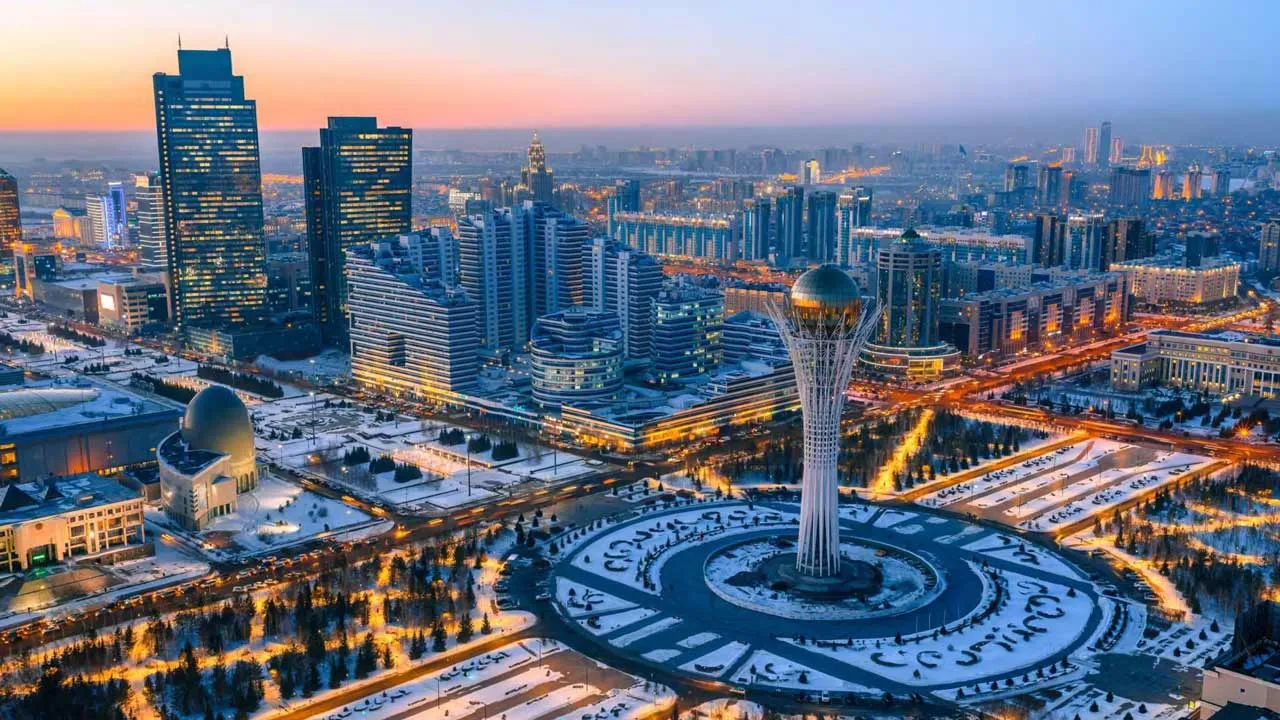
Bayterek Tower is one of Kazakhstan’s most recognizable landmarks and a powerful symbol of the nation’s independence and modernization.
Standing proudly in the center of Astana, the tower represents a Kazakh legend about the mythical tree of life and the sacred bird Samruk. The golden sphere at the top symbolizes the sun, prosperity, and the future aspirations of Kazakhstan.
Visitors can ascend to the observation deck to enjoy spectacular panoramic views of Astana’s futuristic skyline.
Since its completion, Bayterek Tower has become one of the country’s most visited attractions and a defining symbol of modern Kazakhstan.
Its innovative architecture reflects the ambition and vision that have shaped Kazakhstan’s development in the twenty-first century.
8.Khan Shatyr – The World’s Largest Tent-Shaped Building

Khan Shatyr is one of the most remarkable architectural achievements in the world. Designed by renowned architect Norman Foster, the structure resembles a giant transparent tent rising above Astana’s skyline.
The building houses shopping centers, entertainment venues, restaurants, parks, and recreational facilities beneath its massive canopy. Advanced engineering allows the interior to maintain comfortable temperatures year-round despite Astana’s extreme climate.
Khan Shatyr demonstrates Kazakhstan’s commitment to innovation, modern design, and urban development.
Its unique appearance and multifunctional design have made it one of the most famous landmarks in Central Asia.
9.Hazrat Sultan Mosque – The Largest Mosque in Central Asia

Hazrat Sultan Mosque is one of the most magnificent religious structures in Central Asia. Combining traditional Islamic architectural elements with modern construction techniques, the mosque stands as a symbol of faith, culture, and national identity.
Its grand domes, elegant minarets, intricate decorations, and spacious prayer halls create a breathtaking atmosphere for worship and reflection.
The mosque can accommodate thousands of worshippers and serves as an important spiritual center for Muslims throughout Kazakhstan.
Beyond its religious significance, Hazrat Sultan Mosque is admired for its architectural beauty and cultural importance.
It remains one of Astana’s most iconic landmarks and a testament to Kazakhstan’s rich Islamic heritage.
10.Palace of Peace and Reconciliation – A Monument to Global Harmony

Palace of Peace and Reconciliation is one of the most distinctive buildings in Kazakhstan and a global symbol of dialogue, tolerance, and international cooperation.
Designed in the shape of a pyramid by renowned architect Norman Foster, the structure was created to host international conferences, cultural events, and gatherings focused on promoting peace among different religions and cultures.
The building features stunning interior spaces, conference halls, exhibition areas, and artistic installations that celebrate diversity and mutual understanding.
Its unique architecture and symbolic purpose have made it one of Astana’s most recognizable landmarks.
Today, the Palace of Peace and Reconciliation represents Kazakhstan’s vision of unity, cooperation, and peaceful coexistence among nations and cultures.
11. Mausoleum of Khoja Ahmed Yasawi – The Spiritual Heart of Kazakhstan

Mausoleum of Khoja Ahmed Yasawi is one of the most important historical and religious monuments in Central Asia. Located in the ancient city of Turkistan, this magnificent structure is recognized as a UNESCO World Heritage Site and stands as a masterpiece of Islamic architecture.
Built in the late fourteenth century by the great conqueror Timur, the mausoleum honors the famous Sufi poet, philosopher, and spiritual leader Khoja Ahmed Yasawi. His teachings greatly influenced the spread of Islam among Turkic peoples and continue to inspire millions today.
The monument is renowned for its enormous turquoise dome, intricate tilework, elegant calligraphy, and impressive architectural design. Visitors are often amazed by the scale of the structure and the beauty of its decorative elements.
For centuries, pilgrims from across Central Asia have traveled to Turkistan to visit the mausoleum and pay their respects. Many Kazakh rulers and historical figures are also buried near the site, further enhancing its national significance.
Today, the mausoleum serves as a symbol of Kazakhstan’s spiritual heritage and remains one of the country’s most visited cultural landmarks.
12. Tamgaly Petroglyphs – Kazakhstan’s Ancient Open-Air Gallery

Tamgaly Petroglyphs represent one of the most remarkable archaeological treasures in Central Asia. Located within a dramatic canyon landscape, the site contains thousands of ancient rock carvings created over several millennia.
These petroglyphs date back to the Bronze Age and depict scenes of daily life, hunting, rituals, animals, warriors, and mysterious sun-headed deities. The carvings provide valuable insights into the beliefs, culture, and lifestyles of ancient nomadic civilizations that once inhabited the region.
The site contains more than 5,000 individual petroglyphs distributed across numerous rock surfaces. Archaeologists consider Tamgaly one of the most significant collections of prehistoric rock art in Eurasia.
Its UNESCO World Heritage designation recognizes the site’s outstanding cultural value and importance to human history.
Walking among these ancient carvings allows visitors to connect directly with civilizations that flourished thousands of years ago, making Tamgaly an unforgettable destination for history enthusiasts and cultural travelers.
13. Altyn-Emel National Park – Kazakhstan’s Desert Wonderland

Altyn-Emel National Park is one of Kazakhstan’s largest and most diverse protected natural areas. Covering thousands of square kilometers, the park showcases extraordinary landscapes that include deserts, mountains, canyons, river valleys, and unique geological formations.
The park’s name translates as “Golden Saddle,” inspired by a local legend and the golden appearance of surrounding hills during sunset. Its vast territory contains some of Kazakhstan’s most spectacular natural attractions, including the famous Singing Dune and colorful Aktau Mountains.
Wildlife thrives within the park’s protected environment. Visitors may encounter gazelles, argali sheep, wild asses, foxes, wolves, and numerous bird species.
Altyn-Emel offers opportunities for hiking, wildlife observation, photography, and adventure tourism. Its dramatic scenery often resembles landscapes found on other planets.
As one of Kazakhstan’s premier ecotourism destinations, the park highlights the country’s incredible environmental diversity and natural beauty.
14. Singing Dune – The Musical Sand Mountain

Singing Dune is one of the world’s most fascinating natural phenomena. Rising approximately 150 meters above the surrounding desert landscape, this enormous sand dune is famous for producing mysterious sounds that resemble music, humming, or distant organ notes.
The phenomenon occurs when dry sand particles move down the dune’s slopes, creating vibrations that generate powerful acoustic effects. Under the right conditions, the sound can be heard from several kilometers away.
Local legends have long attempted to explain the dune’s mysterious voice, attributing it to spirits, ancient warriors, or supernatural forces. Scientists, however, have studied the physical mechanisms responsible for the remarkable sounds.
Visitors often climb to the summit for breathtaking panoramic views of the Ili River Valley, surrounding mountains, and vast desert landscapes.
The Singing Dune remains one of Kazakhstan’s most unusual natural attractions and a must-see destination for travelers seeking unique experiences.
15. Burabay National Park – The Switzerland of Kazakhstan

Burabay National Park is widely regarded as one of Kazakhstan’s most beautiful natural destinations. Often called the “Switzerland of Kazakhstan,” the park is famous for its crystal-clear lakes, pine forests, granite mountains, and stunning rock formations.
The park offers a striking contrast to Kazakhstan’s vast steppes. Visitors are greeted by lush forests, scenic hiking trails, and picturesque lakes surrounded by dramatic cliffs and hills.
Legends and folklore are deeply connected to Burabay’s unique rock formations, many of which resemble animals, mythical creatures, and human figures.
The area is a popular destination for outdoor recreation including hiking, boating, fishing, camping, and wildlife observation. Its peaceful environment attracts visitors seeking relaxation and natural beauty.
Burabay remains one of Kazakhstan’s most beloved vacation destinations and a symbol of the country’s remarkable landscapes.
16. Lake Balkhash – The Lake of Two Waters

Lake Balkhash is one of Asia’s largest lakes and among the world’s most unique bodies of water. Stretching over 600 kilometers, the lake is famous for containing both freshwater and saltwater within the same basin.
The western portion receives freshwater from rivers such as the Ili River, while the eastern section contains higher concentrations of salt. This rare combination creates two distinct aquatic environments within a single lake.
Lake Balkhash supports diverse ecosystems, fish populations, and migratory bird species. It also plays an important role in regional climate regulation and economic activities such as fishing and tourism.
Visitors are drawn to its beautiful shorelines, expansive views, and ecological significance.
The lake remains one of Kazakhstan’s most valuable natural resources and one of the country’s most fascinating geographical features.
17. Baikonur Cosmodrome – Gateway to Space

Baikonur Cosmodrome is the world’s first and largest operational space launch facility. From this historic site, humanity entered the space age and achieved some of its greatest scientific milestones.
In 1957, the world’s first artificial satellite, Sputnik 1, was launched from Baikonur. Four years later, Yuri Gagarin began his historic journey into space from the same launch facility.
For decades, Baikonur has served as a center for international space exploration, scientific research, and technological innovation.
Visitors interested in science and engineering can witness launch preparations, explore museums, and learn about the remarkable achievements that originated from this legendary spaceport.
Baikonur remains one of the most significant sites in the history of human spaceflight.
18. Mangystau Mountains – Kazakhstan’s Alien Landscape

Mangystau Mountains are among the most unusual and visually stunning landscapes in Central Asia. Located in western Kazakhstan, the region features dramatic cliffs, chalk formations, canyons, and desert plateaus that resemble scenes from another planet.
Millions of years of geological activity have created extraordinary formations sculpted by wind, water, and erosion. The region’s remote location has helped preserve its pristine natural beauty.
Ancient fossils, underground mosques, historical sites, and sacred locations add cultural significance to the area’s geological wonders.
Adventure travelers and photographers frequently visit Mangystau to experience some of the most unique scenery in Eurasia.
The mountains stand as a testament to the incredible geological diversity found throughout Kazakhstan.
19. Boszhira Valley – Kazakhstan’s Most Spectacular Desert Landscape

Boszhira Valley is widely considered one of Kazakhstan’s most breathtaking natural wonders. Located within the Ustyurt Plateau, the valley is famous for its towering white limestone cliffs, dramatic rock formations, and vast desert panoramas.
The landscape was formed millions of years ago when ancient seas covered the region. As the waters receded, extraordinary geological structures emerged, creating one of the most photogenic locations in Central Asia.
The valley’s iconic peaks and cliffs attract photographers, hikers, filmmakers, and nature enthusiasts from around the world.
Visitors often describe Boszhira as one of the most surreal and awe-inspiring places they have ever seen.
Its extraordinary beauty has made it a symbol of Kazakhstan’s untamed wilderness.
20. Aksu-Zhabagly Nature Reserve – Central Asia’s Oldest Nature Sanctuary

Aksu-Zhabagly Nature Reserve is the oldest protected nature reserve in Central Asia and one of Kazakhstan’s most important conservation areas.
Established in 1926, the reserve protects a remarkable variety of ecosystems including mountains, forests, rivers, alpine meadows, and deep canyons. It is home to hundreds of plant species and numerous rare animals, including snow leopards, lynxes, ibex, bears, and golden eagles.
The reserve forms part of the Western Tian Shan UNESCO World Heritage area and plays a critical role in preserving biodiversity.
Visitors can explore scenic trails, observe wildlife, and experience some of the most pristine natural environments in Central Asia.
Aksu-Zhabagly stands as a shining example of Kazakhstan’s commitment to environmental conservation and sustainable tourism.
Related artical : Best place to visit in Stepnogorsk