
Now Reading: Best place to visit in Kuching
-
01
Best place to visit in Kuching
Best place to visit in Kuching
1. Sarawak Cultural Village

Sarawak Cultural Village is one of the most important cultural attractions in Malaysia and offers visitors an immersive journey into the diverse traditions of Sarawak’s indigenous communities. Often referred to as a “Living Museum,” the village showcases authentic traditional houses representing various ethnic groups including the Iban, Bidayuh, Orang Ulu, Melanau, Malay, and Chinese communities.
Visitors can explore traditional architecture, observe cultural demonstrations, participate in handicraft workshops, and enjoy performances featuring traditional music and dance. The village provides valuable insight into the customs, lifestyles, and history of Sarawak’s people while preserving cultural traditions for future generations. The combination of education, entertainment, and cultural authenticity makes Sarawak Cultural Village one of Kuching’s premier attractions.
2. Bako National Park

Bako National Park is the oldest national park in Sarawak and one of Malaysia’s most spectacular wildlife destinations. Located on a peninsula along the coast, the park contains a remarkable variety of ecosystems including mangroves, rainforest, cliffs, beaches, and rocky shorelines.
The park is famous for its population of proboscis monkeys, one of Borneo’s most distinctive and endangered species. Visitors may also encounter wild boars, macaques, monitor lizards, and numerous bird species while exploring the park’s network of hiking trails. Dramatic coastal landscapes, unusual rock formations, and diverse wildlife make Bako National Park a must-visit destination for nature lovers.
3. Kuching Waterfront

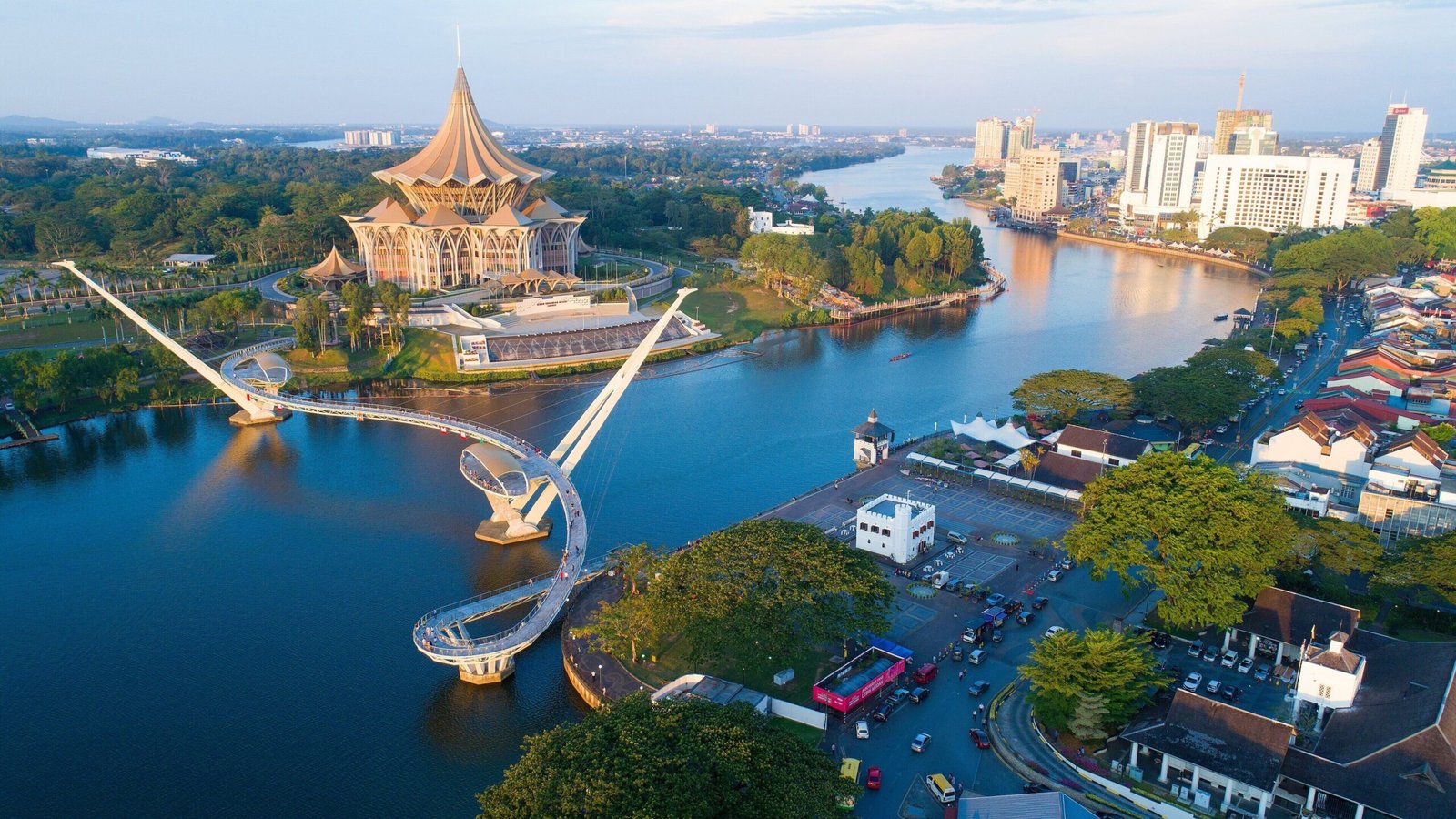
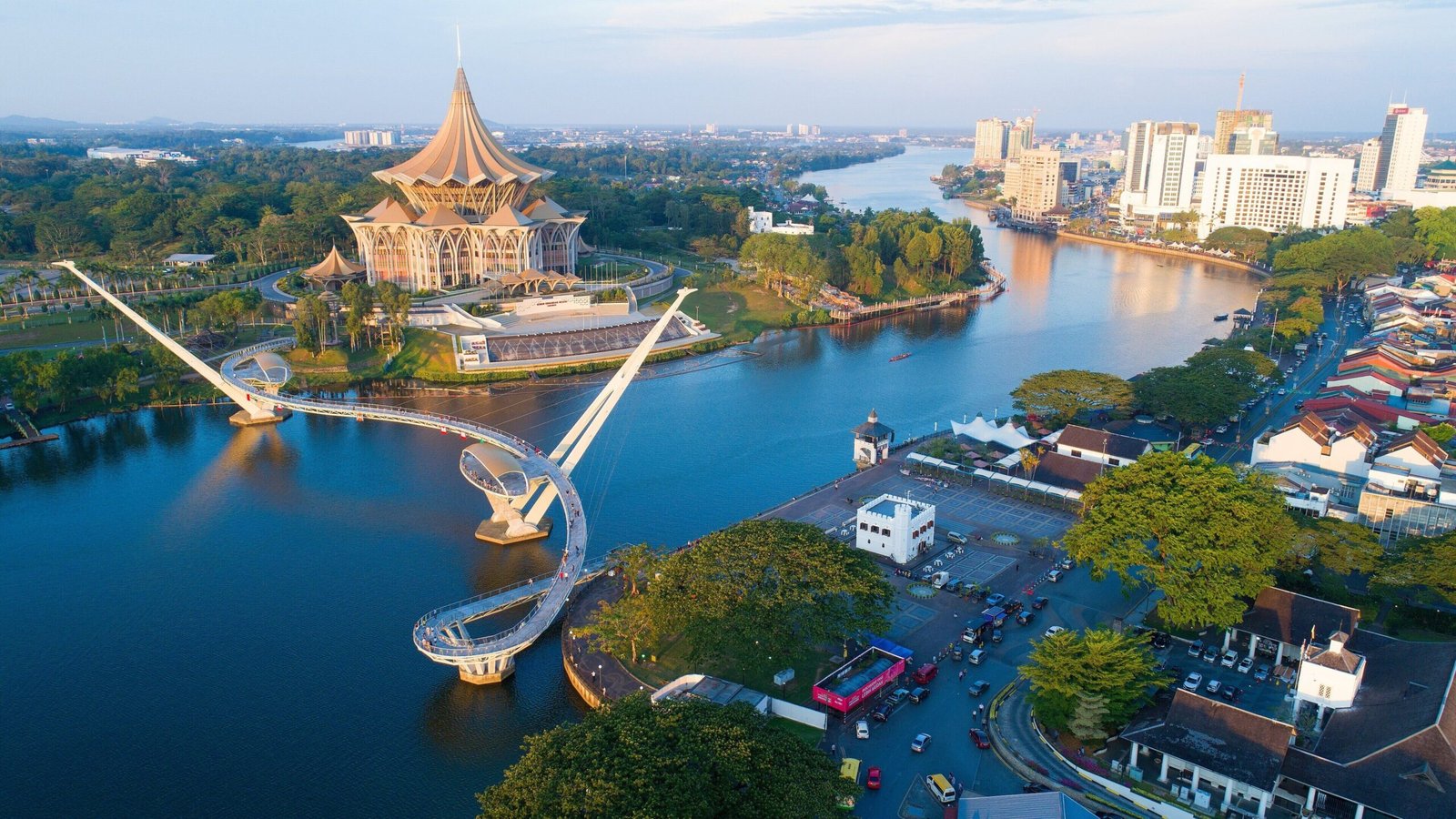
The Kuching Waterfront is the heart of the city and one of the most enjoyable places to experience Kuching’s atmosphere. Stretching along the banks of the Sarawak River, the beautifully landscaped promenade offers stunning views of historical landmarks, traditional boats, and modern city developments.
Visitors can stroll along the waterfront, enjoy local food, watch cultural performances, and admire landmarks illuminated at night. The area serves as a gathering place for residents and tourists alike and perfectly captures the relaxed charm that makes Kuching one of Malaysia’s most beloved cities.
4. Semenggoh Wildlife Centre

Semenggoh Wildlife Centre is one of the best places in Malaysia to observe orangutans in a semi-wild environment. Established as a rehabilitation center for rescued and orphaned orangutans, the facility plays a crucial role in wildlife conservation and environmental education.
Visitors have the opportunity to observe these remarkable primates during feeding sessions while learning about conservation efforts aimed at protecting Borneo’s endangered wildlife. The center’s rainforest setting provides a natural habitat that allows orangutans to live with a high degree of freedom while remaining protected.
5. Fort Margherita

Fort Margherita is one of Kuching’s most important historical landmarks. Built in 1879 by Charles Brooke, the second White Rajah of Sarawak, the fort was designed to protect the city from attacks and safeguard the Sarawak River.
Today, the fort houses exhibits that explore Sarawak’s colonial history and the legacy of the Brooke dynasty. Visitors can admire the fort’s architecture while enjoying panoramic views of the river and surrounding cityscape.
6. Sarawak Museum

The Sarawak Museum is one of the oldest and most respected museums in Southeast Asia. Its extensive collections document the history, archaeology, ethnography, and natural heritage of Sarawak and Borneo.
Visitors can explore exhibits featuring indigenous artifacts, traditional costumes, tribal weapons, archaeological discoveries, and natural history specimens. The museum provides a comprehensive introduction to the cultural and environmental richness of the region.
7. Mount Santubong

Mount Santubong is one of Sarawak’s most recognizable natural landmarks and a popular destination for hikers and outdoor enthusiasts. Rising dramatically above the surrounding rainforest and coastline, the mountain offers challenging trekking routes and breathtaking views.
The mountain is rich in biodiversity and local folklore, making it both a natural and cultural attraction. Visitors reaching the summit are rewarded with spectacular panoramas of the South China Sea, coastal forests, and nearby villages.
8. Cat Museum

Kuching is often associated with cats due to the similarity between the city’s name and the Malay word for cat. The Cat Museum celebrates this connection through an extensive collection of cat-related exhibits, artwork, photographs, and memorabilia from around the world.
Visitors can explore fascinating displays dedicated to feline history, culture, mythology, and popular culture. The museum’s unique theme makes it one of Malaysia’s most unusual and memorable attractions.
9. Damai Beach

Damai Beach is one of the most popular coastal destinations near Kuching and offers visitors a relaxing tropical escape. Surrounded by rainforest and overlooking the South China Sea, the beach combines natural beauty with excellent tourism facilities.
Visitors can enjoy swimming, beach walks, water sports, and spectacular sunsets while relaxing in a peaceful environment. The nearby resorts and attractions make Damai Beach an excellent destination for both day trips and extended stays.
10. Astana

The Astana is one of Kuching’s most iconic historical landmarks and serves as the official residence of the Governor of Sarawak. Built in 1870 by Charles Brooke as a gift for his wife Margaret, the building stands prominently on the northern bank of the Sarawak River.
Its elegant colonial architecture, beautiful gardens, and historical significance make it a prominent feature of the city’s skyline. While the interior is generally not open to the public, visitors can admire the building from the waterfront and learn about its important role in Sarawak’s history.
Related artical : Best place to visit in Kota Kinabalu