
Now Reading: Best place to visit in Langkawi
-
01
Best place to visit in Langkawi
Best place to visit in Langkawi
1. Langkawi Sky Bridge

The Langkawi Sky Bridge is the most iconic attraction in Langkawi and one of the world’s most impressive engineering achievements. Suspended approximately 660 meters above sea level on the summit of Machinchang Mountain, this spectacular curved pedestrian bridge stretches 125 meters across a dramatic mountain gorge. Supported by a single towering pylon, the bridge appears to float above the rainforest, offering visitors breathtaking panoramic views of the Andaman Sea, nearby islands, lush tropical forests, and even southern Thailand on clear days.
Visitors reach the bridge by taking the famous Langkawi Cable Car, one of the world’s steepest cable car systems, which itself provides unforgettable views throughout the journey. Walking across the bridge is a thrilling experience as glass viewing panels allow visitors to look directly down into the dense rainforest below. The surrounding area also features observation decks, cafés, souvenir shops, and scenic walking trails. Whether visiting during sunrise, midday, or sunset, the Langkawi Sky Bridge offers one of Malaysia’s most unforgettable sightseeing experiences and stands as a symbol of the island’s natural beauty and modern innovation.
2. Langkawi Cable Car

The Langkawi Cable Car, officially known as SkyCab, is one of the island’s most popular attractions and among the longest free-span cable car systems in the world. The journey carries visitors from the Oriental Village to the summit of Mount Machinchang, climbing over dense tropical rainforest, steep cliffs, and ancient rock formations that are estimated to be over 550 million years old.
As the gondolas ascend, visitors are treated to extraordinary panoramic views of Langkawi’s mountains, waterfalls, coastline, and surrounding islands. The upper stations feature viewing platforms, cafés, educational exhibits, and access to the famous Sky Bridge. The cable car experience combines adventure, spectacular scenery, and geological significance, making it one of the highlights of any visit to Langkawi.
3. Kilim Karst Geoforest Park

Kilim Karst Geoforest Park is one of the three protected geoforest parks that form the UNESCO Global Geopark of Langkawi. The park is internationally renowned for its dramatic limestone cliffs, winding mangrove forests, hidden caves, pristine rivers, and extraordinary biodiversity. It represents one of the finest examples of tropical karst landscapes in Southeast Asia.
Visitors typically explore the park by boat, navigating through peaceful mangrove channels while observing eagles, kingfishers, monkeys, mudskippers, monitor lizards, and other wildlife. Highlights include the famous Bat Cave, Crocodile Cave, floating fish farms, and breathtaking limestone formations rising directly from the water. The park offers a unique combination of geology, ecology, and wildlife that makes it one of Langkawi’s most valuable natural attractions.
4. Pantai Cenang

Pantai Cenang is Langkawi’s most famous beach and the island’s primary tourism hub. Stretching for nearly two kilometers along the Andaman Sea, the beach is known for its soft white sand, crystal-clear waters, swaying coconut palms, and lively atmosphere. It offers the perfect balance between relaxation and entertainment, attracting visitors from around the world.
Visitors can enjoy swimming, jet skiing, parasailing, banana boat rides, kayaking, and sunset cruises while taking in spectacular coastal scenery. The beachfront is lined with luxury resorts, boutique hotels, cafés, seafood restaurants, shopping centers, and vibrant nightlife venues. During sunset, Pantai Cenang transforms into one of the island’s most picturesque locations as golden light reflects across the calm waters.
5. Langkawi Wildlife Park

Langkawi Wildlife Park is one of Malaysia’s leading wildlife attractions, providing visitors with interactive experiences involving birds, mammals, reptiles, and exotic animals from around the world. Unlike traditional zoos, many enclosures allow close interaction between visitors and animals in carefully managed environments.
Guests can feed colorful parrots, observe flamingos, deer, raccoons, crocodiles, and numerous tropical bird species while learning about conservation and animal care. Educational presentations and family-friendly activities make the park particularly popular with children and nature enthusiasts.
6. Seven Wells Waterfall

Seven Wells Waterfall, locally known as Telaga Tujuh, is one of Langkawi’s most spectacular natural attractions. The waterfall cascades through seven natural pools carved into the mountainside over thousands of years, creating a series of crystal-clear basins surrounded by lush tropical rainforest.
Visitors can hike to the waterfalls, swim in the refreshing pools, and enjoy breathtaking views of the surrounding landscape. Local legends associate the waterfalls with mythical fairies believed to have once bathed in the pools, adding cultural significance to this already beautiful destination.
7. Eagle Square

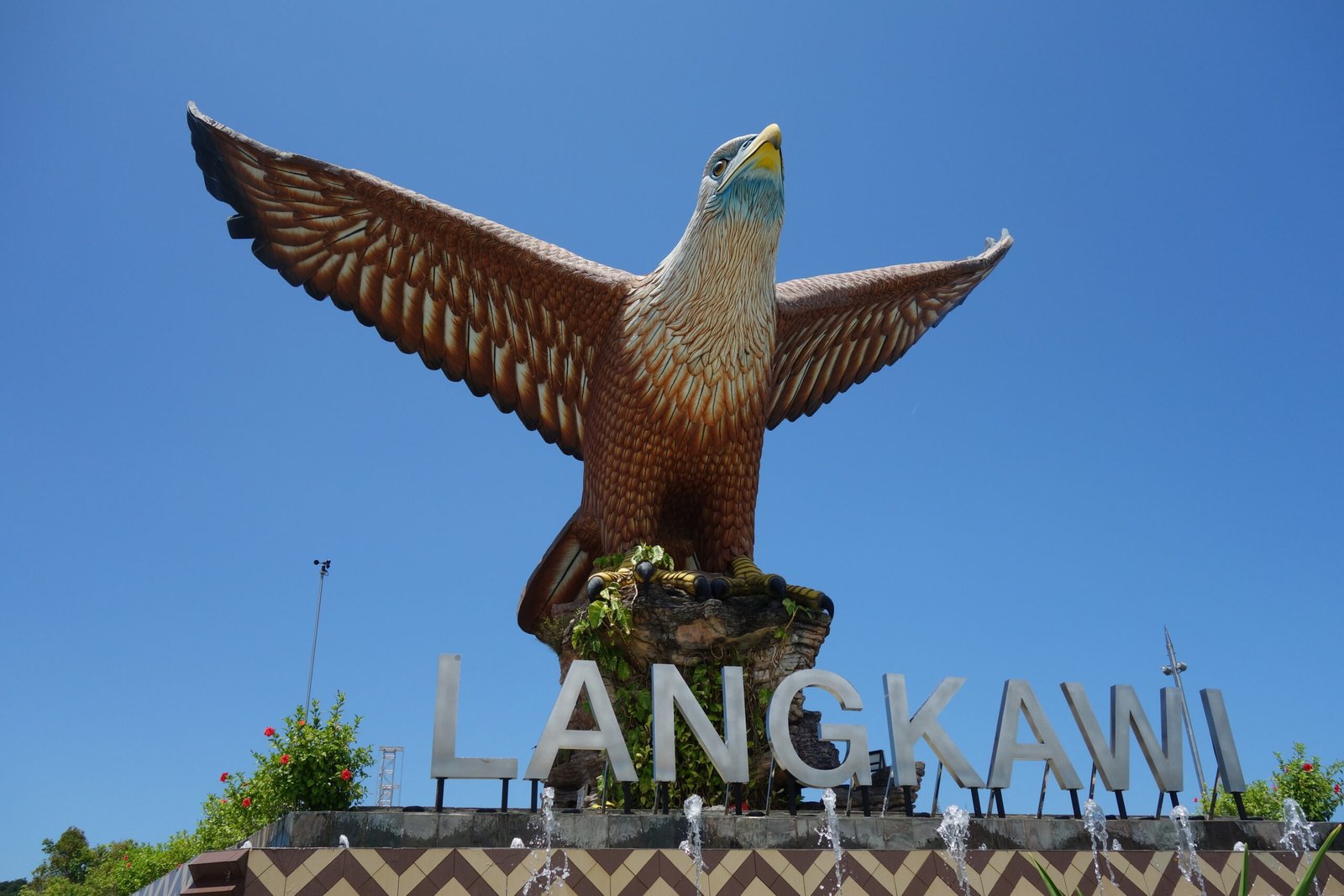
Eagle Square, or Dataran Lang, is one of Langkawi’s most recognizable landmarks. The massive reddish-brown eagle statue symbolizes the island’s name, as the Malay word “Helang” means eagle and “Kawi” refers to the reddish-brown color of the bird.
Located along the waterfront, the square offers magnificent views of Kuah Bay, yachts, nearby islands, and surrounding mountains. Beautiful fountains, landscaped gardens, and promenades make it a popular destination for photography and evening walks. The landmark has become an enduring symbol of Langkawi’s identity and tourism.
8. Underwater World Langkawi

Underwater World Langkawi is one of Southeast Asia’s largest marine and freshwater aquariums, housing thousands of aquatic animals from ecosystems around the world. Visitors can explore exhibits featuring sharks, rays, tropical fish, penguins, seals, jellyfish, and coral reef species within carefully designed habitats.
The highlight of the attraction is the long underwater tunnel where visitors can observe marine animals swimming overhead. Educational displays explain marine conservation, biodiversity, and the importance of protecting ocean ecosystems, making the attraction both entertaining and informative.
9. Tanjung Rhu Beach

Tanjung Rhu Beach is widely regarded as one of Langkawi’s most beautiful beaches. Located on the island’s northern coast, the beach is famous for its powdery white sand, crystal-clear turquoise waters, dramatic limestone islands, and peaceful atmosphere.
Unlike the busier Pantai Cenang, Tanjung Rhu offers visitors a tranquil environment ideal for relaxation, swimming, kayaking, and photography. Luxury resorts blend harmoniously with the surrounding natural beauty, while spectacular sunsets create unforgettable views across the Andaman Sea.
10. Pulau Payar Marine Park

Pulau Payar Marine Park is one of Malaysia’s premier marine conservation areas and a paradise for snorkeling and scuba diving enthusiasts. Located south of Langkawi, the protected marine park is renowned for its vibrant coral reefs, crystal-clear waters, and extraordinary diversity of marine life. Colorful reef fish, sea turtles, moray eels, reef sharks, and countless coral species thrive within the protected ecosystem.
Visitors can explore the underwater world through guided snorkeling and diving excursions or simply relax on pristine sandy beaches surrounded by tropical scenery. Floating platforms provide easy access to the reefs while educational programs promote marine conservation and environmental awareness. Pulau Payar Marine Park offers an unforgettable opportunity to experience one of Malaysia’s richest underwater ecosystems and serves as a fitting conclusion to any journey through the natural wonders of Langkawi.
Related artical : Best place to visit in Putrajaya