
Now Reading: Best place to visit in Kaunas
-
01
Best place to visit in Kaunas
Best place to visit in Kaunas

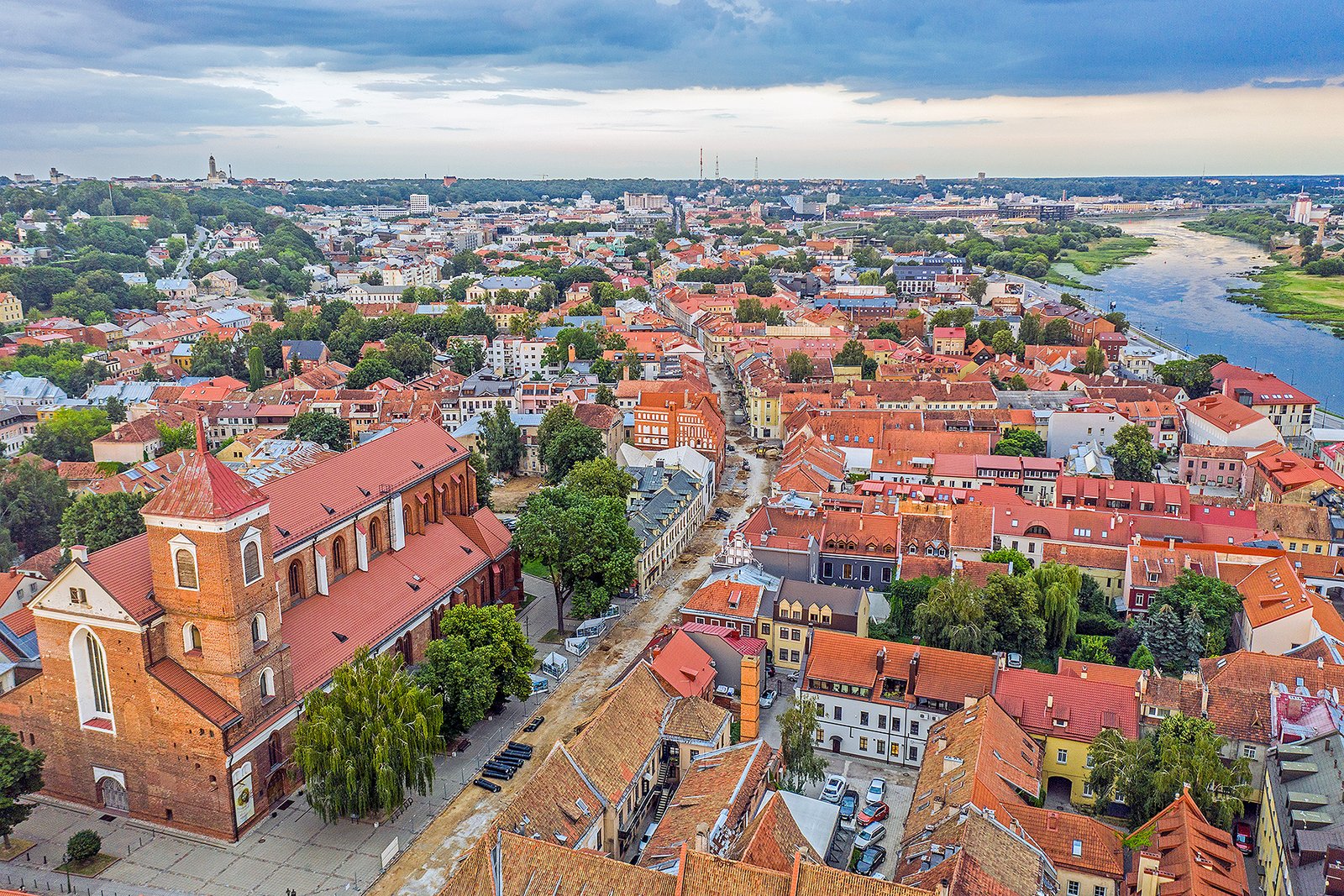
Kaunas is one of the most beautiful and culturally important cities in the Baltic region, famous for its medieval Old Town, Gothic architecture, riverside scenery, interwar modernist heritage, artistic atmosphere, historical landmarks, and vibrant Lithuanian culture. Located at the meeting point of the Nemunas and Neris rivers, Kaunas has served as an important political, commercial, and cultural center for centuries.
As Lithuania’s second-largest city, Kaunas combines deep historical roots with youthful creative energy. During the Middle Ages, the city became major trading center connected to Hanseatic trade routes across northern Europe. Later, during the interwar period, Kaunas served as the temporary capital of Lithuania and experienced extraordinary cultural and architectural development.
Today, Kaunas is known for its unique blend of medieval streets, Gothic churches, Renaissance buildings, modernist architecture, museums, cafes, green spaces, and lively cultural festivals. The city successfully balances historical preservation with modern creativity, making it one of Eastern Europe’s most rewarding destinations.
Visitors to Kaunas can explore castles, churches, historical squares, museums, art galleries, river promenades, and charming cobblestone streets while experiencing authentic Lithuanian culture and hospitality.
Kaunas is a city where history, architecture, art, and riverside beauty come together perfectly.
🏰 1. Kaunas Castle – Symbol of Medieval Lithuania

Kaunas Castle is one of the city’s most famous landmarks and one of the oldest stone castles in Lithuania.
Built during the 14th century, the castle originally served as defensive fortress protecting Lithuania against attacks from the Teutonic Knights during medieval conflicts.
Located beside the confluence of the Nemunas and Neris rivers, the castle occupied strategically important position controlling trade routes and military access.
Its thick brick walls, towers, defensive structures, and Gothic architecture reflect the turbulent history of medieval Lithuania.
Although partially damaged during wars, the castle has been carefully restored and today houses museum exhibitions, cultural events, concerts, and festivals.
Visitors can walk around the fortress grounds, explore historical displays, and enjoy beautiful river views surrounding the castle.
The castle remains proud symbol of Kaunas’ resilience and historical identity.
🏛️ 2. Old Town of Kaunas – Medieval Streets & Historical Charm

Kaunas Old Town is one of the most charming historical districts in the Baltic region.
Cobblestone streets, Gothic churches, colorful merchant houses, Renaissance facades, hidden courtyards, and lively squares create unforgettable atmosphere throughout the district.
The Old Town developed during the Hanseatic era when Kaunas became important center of trade and commerce connecting Eastern and Western Europe.
The Town Hall Square serves as the heart of the district and is surrounded by elegant historical buildings, cafes, museums, and restaurants.
Visitors can slowly wander through narrow medieval streets discovering art galleries, bookstores, traditional Lithuanian shops, and peaceful architectural corners.
Unlike crowded tourist destinations, Kaunas offers relaxed and authentic atmosphere where visitors can truly appreciate local culture and historical beauty.
The Old Town beautifully preserves centuries of Lithuanian heritage and European influence.
⛪ 3. Kaunas Cathedral Basilica – Spiritual Landmark of the City

The Cathedral Basilica of Saints Peter and Paul is the largest Gothic church in Lithuania and one of Kaunas’ most important religious landmarks.
Originally built during the 15th century, the cathedral combines Gothic, Renaissance, and Baroque architectural styles developed through centuries of reconstruction and artistic additions.
Inside, visitors can admire vaulted ceilings, historical chapels, religious paintings, sculptures, stained-glass windows, and peaceful atmosphere.
The cathedral played major role in Lithuania’s religious and cultural history and continues to serve as important spiritual center today.
Its location near the Old Town and riverside makes it one of Kaunas’ most recognizable monuments.
The cathedral beautifully reflects Lithuania’s artistic traditions and historical resilience.
🌊 4. Nemunas & Neris Rivers – Scenic Riverside Beauty

Kaunas is uniquely located at the meeting point of Lithuania’s two most important rivers — the Nemunas and the Neris.
These rivers shaped the city’s development for centuries by supporting trade, transportation, commerce, and cultural exchange.
Today, the riverfront areas provide some of the most beautiful scenery in Kaunas.
Visitors can enjoy riverside promenades, cycling routes, parks, cafes, and panoramic viewpoints overlooking the water.
The confluence area near Kaunas Castle is especially picturesque and historically significant.
Sunsets over the rivers create stunning reflections across the city skyline and historical buildings.
The rivers add peaceful natural beauty to Kaunas’ urban environment and remain central to the city’s identity.
🎨 5. Interwar Modernist Architecture – UNESCO Recognition

Kaunas is internationally recognized for its remarkable interwar modernist architecture.
When Kaunas became Lithuania’s temporary capital between the World Wars, the city experienced rapid modernization and cultural growth.
Architects designed elegant modernist buildings inspired by Art Deco, Functionalism, and Bauhaus movements, creating unique urban landscape unlike anywhere else in Eastern Europe.
Today, Kaunas contains one of Europe’s largest collections of interwar modernist architecture and has gained UNESCO recognition for this heritage.
Visitors can admire government buildings, theaters, apartment houses, museums, and cultural institutions showcasing innovative architectural styles from the early 20th century.
The modernist heritage gives Kaunas distinctive artistic identity that complements its medieval past.
Related artical : Best place to visit in Toruń