
Now Reading: Best place to visit in Hakodate
-
01
Best place to visit in Hakodate
Best place to visit in Hakodate

Hakodate is one of Japan’s most beautiful and historically significant port cities. Located at the southern tip of Hokkaido, Hakodate serves as a gateway between Japan’s northern island and the rest of the country. Known for its spectacular night views, international heritage, fresh seafood, historic districts, and unique blend of Japanese and Western cultures, Hakodate has long been one of Hokkaido’s most important urban centers.
The city’s strategic location along the Tsugaru Strait made it an important center for trade, fishing, and transportation. In 1854, Hakodate became one of the first Japanese ports opened to foreign trade following centuries of national isolation. This historic event brought merchants, diplomats, missionaries, and traders from around the world, leaving a lasting influence on the city’s architecture, culture, and way of life.
Today, Hakodate is celebrated for its rich history, scenic landscapes, vibrant markets, and welcoming atmosphere. Visitors can explore historic churches, former consulates, mountain viewpoints, hot springs, and waterfront districts while experiencing one of Japan’s most unique cultural destinations.
1. Mount Hakodate – One of the World’s Great Night Views

The iconic Mount Hakodate is undoubtedly the city’s most famous attraction and is widely regarded as offering one of the finest night views in the world.
Rising approximately 334 meters above sea level, the mountain overlooks the unique shape of Hakodate, which stretches between two bays on a narrow peninsula. Visitors can reach the summit by ropeway, bus, or hiking trails.
At night, thousands of city lights illuminate the landscape, creating a breathtaking scene often compared to views from Hong Kong and Naples. The panoramic perspective includes Hakodate Harbor, the Tsugaru Strait, surrounding mountains, and the city’s distinctive hourglass shape.
The spectacular night view has become one of Japan’s most photographed and celebrated attractions.
2. Goryokaku – Japan’s Famous Star-Shaped Fortress

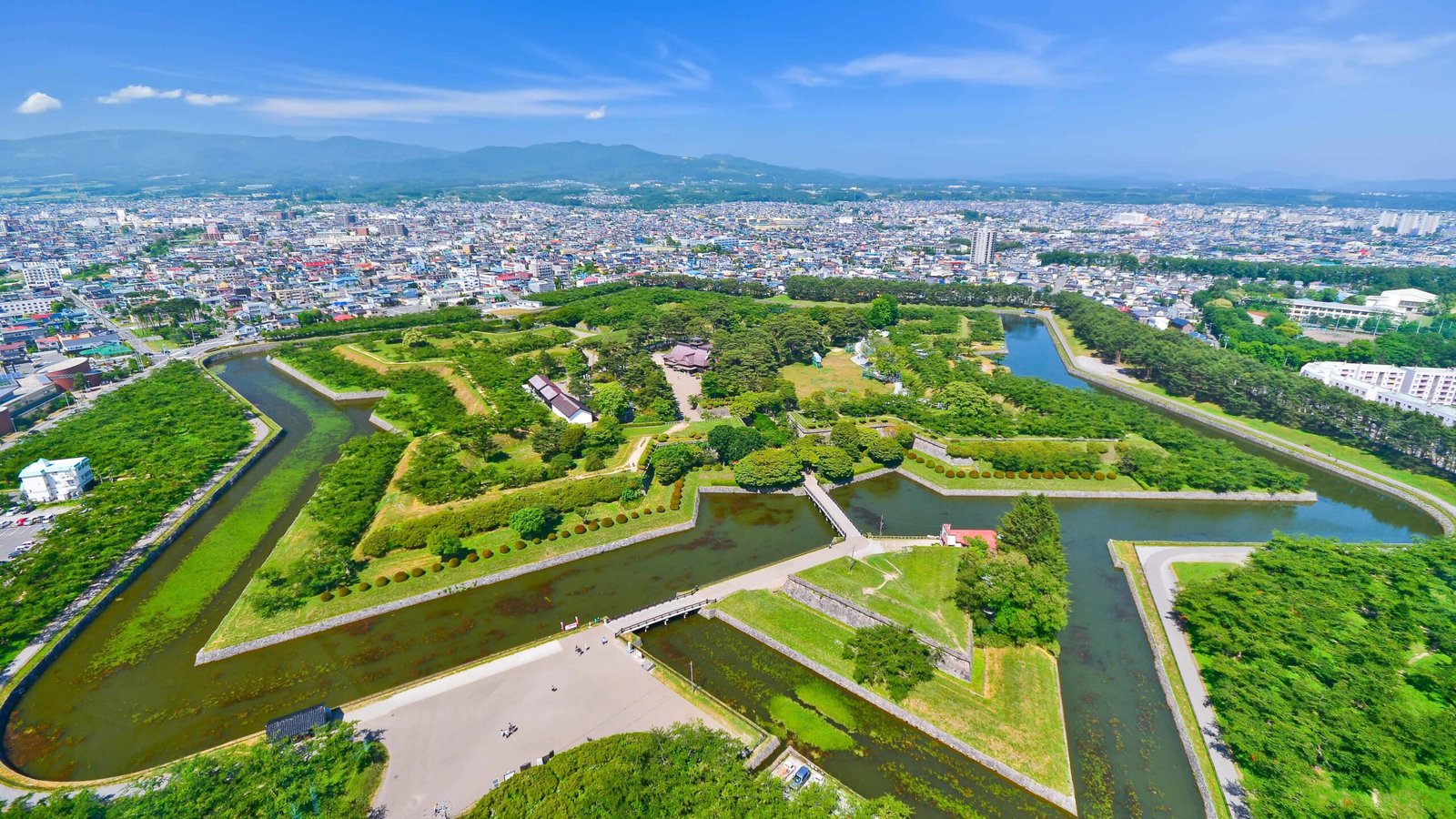
One of Hakodate’s most remarkable historical landmarks is Goryōkaku.
Completed in 1866, Goryokaku was Japan’s first Western-style fortress, designed in the shape of a five-pointed star to improve defensive capabilities. The fort played an important role during the final years of the Tokugawa Shogunate and the Boshin War, one of the most significant conflicts in Japanese history.
Today, the former fortress has been transformed into a public park famous for its seasonal beauty. During spring, thousands of cherry blossom trees bloom throughout the grounds, creating one of Hokkaido’s most stunning floral displays.
The unique star-shaped design remains clearly visible from nearby observation towers.
3. Goryokaku Tower – The Best View of the Fortress

Adjacent to the fortress stands the impressive Goryōkaku Tower.
The modern observation tower provides visitors with spectacular aerial views of the star-shaped fort and the surrounding city. Informative exhibits explain the historical significance of Goryokaku and its role in Japan’s transition from feudal rule to modernization.
The tower also offers excellent opportunities for photography throughout the year, especially during cherry blossom season and winter snowfall.
It remains one of Hakodate’s most visited attractions.
4. Motomachi District – A Blend of East and West

The charming Motomachi District reflects the city’s unique international heritage.
Following the opening of Hakodate Port to foreign trade, diplomats, merchants, and missionaries established communities in this hillside neighborhood. As a result, the area features an unusual combination of Japanese and Western architectural styles.
Visitors can stroll along steep streets lined with historic churches, former consulates, mansions, and public buildings while enjoying scenic views of the harbor.
The district remains one of the most distinctive and picturesque neighborhoods in Japan.
5. Hakodate Orthodox Church – A Symbol of Cultural Exchange

Among the city’s most recognizable landmarks is the beautiful Hakodate Orthodox Church.
Built by Russian missionaries in the nineteenth century, the church played a significant role in introducing Eastern Orthodox Christianity to Japan. Its elegant Byzantine-inspired architecture, green dome, and white exterior stand out among the surrounding buildings.
The church continues to function as a place of worship while serving as an important historical and cultural monument.
Its presence highlights Hakodate’s long-standing international connections.
6. Kanemori Red Brick Warehouses – The Historic Waterfront

The famous Kanemori Red Brick Warehouse complex represents Hakodate’s commercial history and modern revitalization.
Originally constructed during the late nineteenth century to support the city’s thriving maritime trade, the warehouses have been transformed into shopping, dining, and cultural venues.
Visitors can explore boutiques, restaurants, galleries, and event spaces while enjoying views of Hakodate Harbor. The beautifully restored brick buildings create a charming atmosphere that blends history with contemporary entertainment.
The waterfront district remains one of the city’s most popular gathering places.
7. Hakodate Morning Market – Hokkaido’s Seafood Paradise

Few places showcase Hokkaido’s culinary excellence better than the bustling Hakodate Morning Market.
Located near Hakodate Station, the market features hundreds of vendors selling fresh seafood, crab, squid, sea urchin, salmon roe, scallops, and regional specialties. Fishermen and merchants bring their catches directly from surrounding waters, ensuring exceptional freshness and quality.
Visitors can enjoy seafood bowls, sushi, grilled delicacies, and seasonal ingredients while experiencing the lively atmosphere of one of Japan’s finest food markets.
The market remains a central part of Hakodate’s identity and economy.
8. Yunokawa Onsen – A Historic Hot Spring Resort

Located on the eastern side of the city, Yunokawa Onsen is one of Hokkaido’s oldest and most famous hot spring resorts.
The area has welcomed visitors for centuries seeking relaxation and healing in its mineral-rich thermal waters. Traditional inns, modern hotels, public baths, and scenic coastal views create an ideal destination for wellness and leisure.
Many accommodations offer open-air baths where guests can enjoy views of the sea while soaking in natural hot springs.
Yunokawa remains a favorite retreat for travelers exploring southern Hokkaido.
9. The History of the Republic of Ezo

Hakodate played a crucial role in one of the final chapters of Japan’s feudal era.
Following the collapse of the Tokugawa Shogunate, supporters established the short-lived Republic of Ezo, centered in Hakodate and headquartered at Goryokaku Fortress.
This republic represented the last resistance against the newly established Meiji government. The conflict culminated in the Battle of Hakodate, which ultimately ended samurai rule and accelerated Japan’s modernization.
The city preserves numerous historical sites and museums that tell the story of this transformative period.
10. Modern Hakodate – Preserving History While Embracing the Future

Modern Hakodate continues to thrive as a center of tourism, fishing, transportation, education, and culture.
The city has successfully preserved its historical neighborhoods and international heritage while developing modern infrastructure, transportation networks, and cultural facilities. The arrival of the Hokkaido Shinkansen further strengthened connections between Hakodate and the rest of Japan.
Today, visitors can enjoy world-class cuisine, historic attractions, natural beauty, and modern conveniences within a city that remains deeply connected to its past.
Hakodate’s ability to honor its heritage while embracing progress has made it one of Japan’s most beloved travel destinations.
Related artical : Best place to visit in Kanazawa