
Now Reading: Best place to visit in Miyazaki
-
01
Best place to visit in Miyazaki
Best place to visit in Miyazaki

Miyazaki is one of Japan’s most beautiful and unique destinations, located on the southeastern coast of Kyushu Island. Known for its warm climate, palm-lined streets, stunning coastlines, ancient mythology, and relaxed atmosphere, Miyazaki is often called Japan’s tropical paradise. Unlike many of Japan’s major urban centers, Miyazaki offers a slower pace of life where nature, spirituality, history, and culture exist in perfect harmony.
The region occupies a special place in Japanese mythology and is considered one of the birthplaces of Japanese civilization according to ancient legends recorded in the Kojiki and Nihon Shoki. Many sacred sites throughout Miyazaki are associated with stories of gods, emperors, and the origins of Japan itself.
Blessed with abundant sunshine throughout the year, the city attracts visitors seeking beautiful beaches, surfing, golf courses, nature reserves, shrines, and cultural experiences. Modern Miyazaki successfully combines tourism, agriculture, education, and environmental conservation while preserving its deep historical roots.
Today, visitors can explore sacred shrines, dramatic coastlines, tropical gardens, volcanic landscapes, and historic landmarks while discovering one of Japan’s most enchanting regions.
1. Aoshima – Miyazaki’s Sacred Island

The picturesque Aoshima is one of the city’s most iconic attractions and a symbol of Miyazaki’s natural beauty.
Connected to the mainland by a pedestrian bridge, the small island is covered with lush subtropical vegetation rarely seen elsewhere in Japan. At its center stands the historic Aoshima Shrine, a sacred site associated with Japanese mythology and believed to bring blessings related to marriage, relationships, and prosperity.
Surrounding the island is a remarkable geological formation known as the “Devil’s Washboard,” consisting of thousands of parallel rock ridges created by natural erosion over millions of years.
The combination of mythology, natural beauty, and spiritual significance makes Aoshima one of Japan’s most memorable destinations.
2. Udo Shrine – A Sacred Cave Overlooking the Ocean

One of Japan’s most unique religious sites is Udo Shrine.
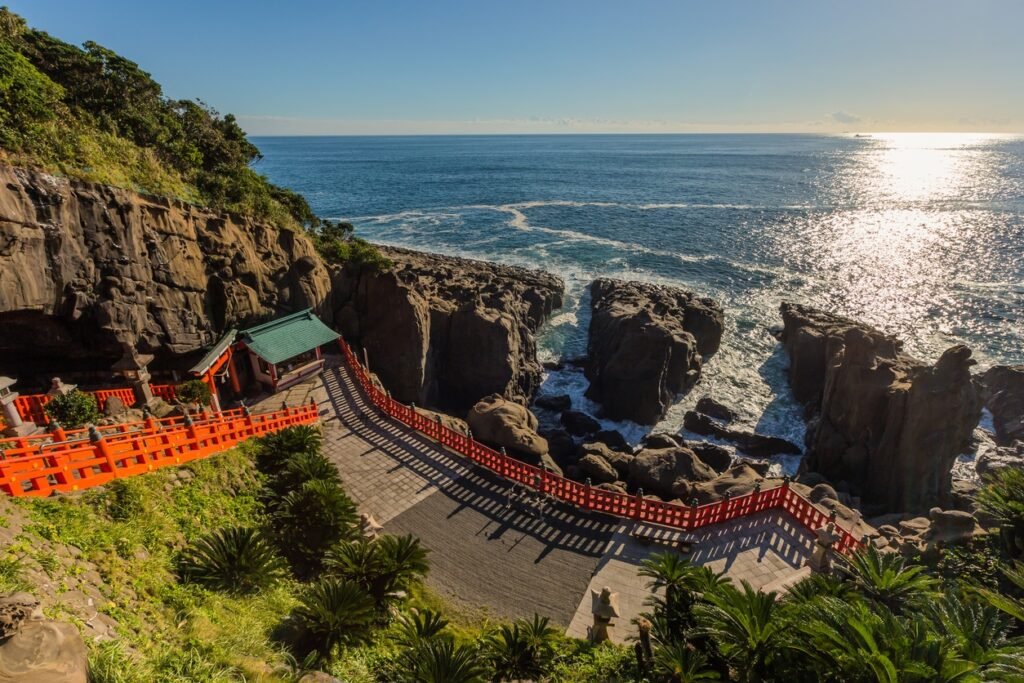
Built inside a sea cave overlooking the Pacific Ocean, the shrine occupies a dramatic setting where waves crash against rocky cliffs below. According to mythology, the site is connected to the ancestors of Japan’s imperial family and plays an important role in ancient legends.
Visitors walk along coastal pathways before descending into the cave where the shrine is located. The combination of natural scenery and spiritual atmosphere creates a truly unforgettable experience.
Udo Shrine remains one of Miyazaki’s most sacred and visually stunning landmarks.
3. The Mythological Origins of Japan

Miyazaki occupies a unique position in Japanese mythology and is often considered the setting for some of the nation’s oldest legends.
Ancient texts describe the region as the place where gods descended from heaven and where many foundational events of Japanese mythology occurred. Numerous shrines, caves, mountains, and sacred sites throughout the prefecture preserve these stories.
The area’s spiritual significance continues to attract pilgrims, historians, and travelers interested in exploring the origins of Japanese culture and religion.
Few places in Japan possess such strong connections to the nation’s mythological heritage.
4. Takachiho Gorge – One of Japan’s Natural Wonders

The breathtaking Takachiho Gorge is widely regarded as one of Japan’s most spectacular natural attractions.
Formed by volcanic activity thousands of years ago, the gorge features dramatic basalt cliffs rising above a crystal-clear river. Visitors can rent boats and paddle beneath towering rock formations while admiring the beautiful Manai Falls cascading from above.
The gorge is closely associated with Japanese mythology and is considered one of the country’s most sacred landscapes.
Its extraordinary beauty attracts visitors from around the world.
5. Sun Messe Nichinan – The Moai Statues of Japan

One of Miyazaki’s most unusual attractions is Sun Messe Nichinan.
Situated on a hillside overlooking the Pacific Ocean, the site features officially authorized replicas of the famous Moai statues from Easter Island. The statues stand dramatically against the backdrop of the sea, creating one of Japan’s most distinctive landscapes.
The attraction also includes gardens, observation points, sculptures, and cultural exhibits celebrating international friendship and artistic expression.
Visitors often consider it one of the most surprising destinations in the region.
6. Heiwadai Park – A Monument to Peace

The expansive Heiwadai Park serves as one of the city’s most important cultural and recreational spaces.
The park is home to the iconic Peace Tower, originally constructed in 1940 to commemorate the mythical founding of Japan. Surrounded by forests, walking trails, gardens, and historical monuments, the park offers visitors a peaceful environment for relaxation and reflection.
The combination of natural beauty and cultural significance makes Heiwadai Park a popular destination for residents and tourists alike.
7. Miyazaki’s Beautiful Coastline

Miyazaki’s coastline stretches for hundreds of kilometers along the Pacific Ocean and is considered one of the most beautiful in Japan.
Dramatic cliffs, sandy beaches, coastal forests, and scenic highways create breathtaking views throughout the region. The famous Nichinan Coast offers some of the most spectacular ocean scenery in the country.
The mild climate allows visitors to enjoy outdoor activities year-round, including surfing, fishing, cycling, hiking, and sightseeing.
The coastline remains one of Miyazaki’s greatest natural treasures.
8. Surfing and Outdoor Adventure

Miyazaki is often considered the surfing capital of Japan due to its consistent waves, warm weather, and extensive beaches.
Professional competitions and international events regularly attract athletes from around the world. The city’s outdoor culture extends beyond surfing and includes golf, hiking, kayaking, diving, and mountain exploration.
The abundance of recreational opportunities contributes significantly to Miyazaki’s popularity among active travelers.
Its relaxed lifestyle and natural environment make it an ideal destination for outdoor enthusiasts.
9. Miyazaki’s Agricultural Excellence

Miyazaki is renowned throughout Japan for its agricultural products and culinary traditions.
The region produces premium fruits, vegetables, seafood, and livestock. Particularly famous is Miyazaki Beef, regarded as some of the finest wagyu beef in the country. The prefecture is also known for its high-quality mangoes, citrus fruits, and poultry products.
The combination of fertile land, abundant sunshine, and favorable climate supports a thriving agricultural industry.
Food culture remains an important aspect of Miyazaki’s identity and economy.
10. Modern Miyazaki – Preserving Nature and Tradition

Modern Miyazaki has successfully balanced economic development with environmental preservation and cultural conservation.
The city features modern transportation systems, educational institutions, healthcare facilities, and tourism infrastructure while maintaining strong connections to nature and tradition. Sustainable development initiatives help protect the region’s coastlines, forests, rivers, and historical sites for future generations.
Visitors today can enjoy modern conveniences while experiencing some of Japan’s most authentic natural and cultural landscapes.
Miyazaki’s commitment to preserving its heritage ensures that its unique character remains intact.
Related artical : Best place to visit in Takamatsu