
Now Reading: Best place to visit in Takamatsu
-
01
Best place to visit in Takamatsu
Best place to visit in Takamatsu

Takamatsu is the largest city in Kagawa Prefecture and serves as the cultural, economic, and transportation center of Shikoku Island. Located along the picturesque coast of the Seto Inland Sea, Takamatsu has long been an important gateway connecting Shikoku with the rest of Japan. Known for its magnificent gardens, historic castles, vibrant art scene, scenic islands, and world-famous udon noodles, Takamatsu offers visitors a unique blend of history, culture, nature, and modern urban life.
Throughout its history, Takamatsu flourished as a castle town under the rule of the Matsudaira Clan, relatives of the Tokugawa Shogunate. Its strategic coastal location made it an important center for trade, transportation, and regional administration. Over the centuries, the city developed a rich cultural identity that continues to influence daily life today.
Modern Takamatsu combines historical preservation with contemporary development. Visitors can stroll through centuries-old gardens, explore coastal parks, visit internationally acclaimed art installations, and enjoy some of Japan’s finest culinary traditions while experiencing one of Shikoku’s most welcoming cities.
1. Ritsurin Garden – One of Japan’s Finest Landscape Gardens

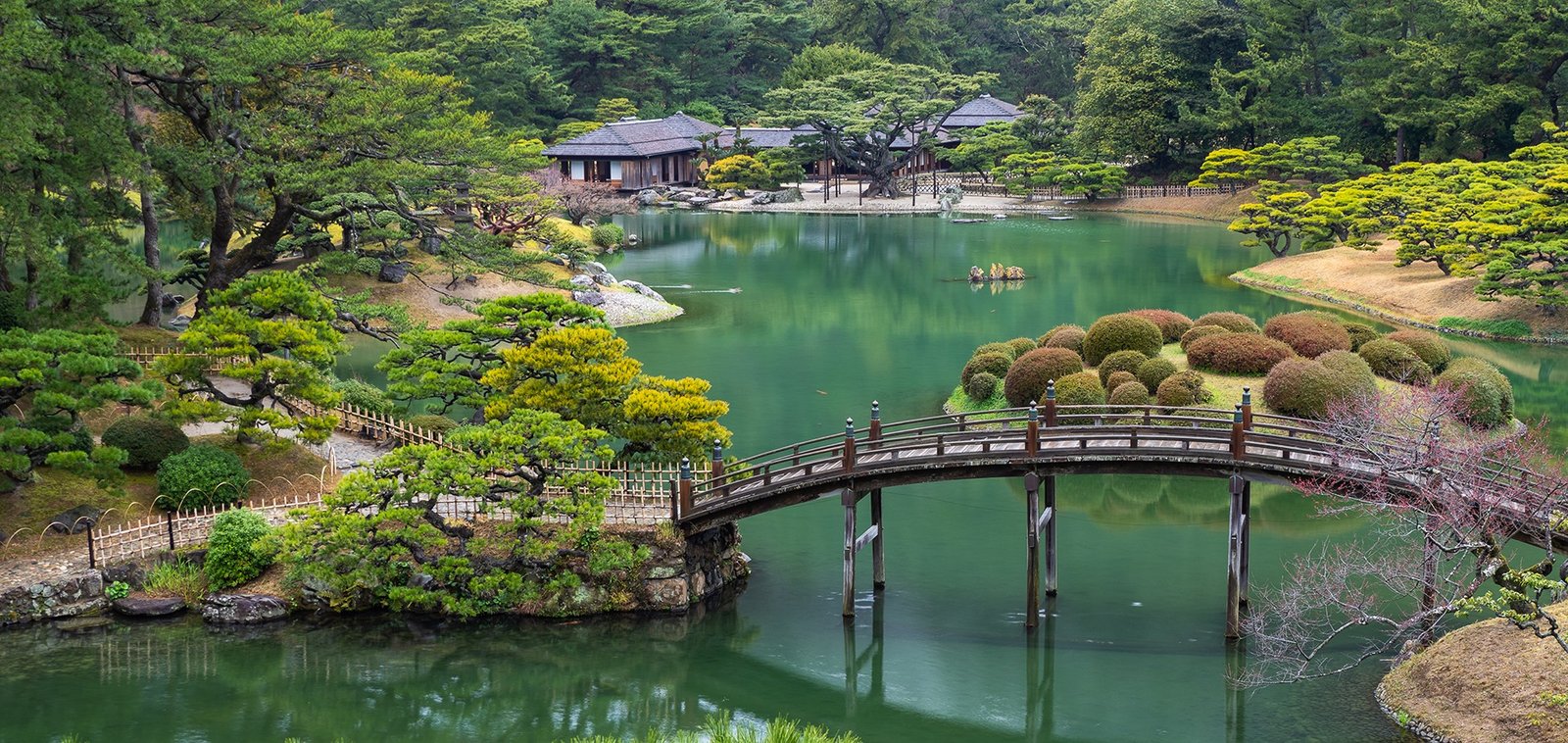
The world-famous Ritsurin Garden is widely considered one of Japan’s most beautiful landscape gardens.
Developed over more than a century by feudal lords during the Edo Period, the garden covers approximately 75 hectares and features meticulously designed ponds, bridges, tea houses, hills, pine trees, and walking paths. The garden was created to provide visitors with constantly changing scenic views as they move through the landscape.
Unlike many traditional gardens, Ritsurin incorporates the surrounding Mount Shiun into its design, creating a harmonious blend between human craftsmanship and natural beauty.
Every season offers unique scenery, from cherry blossoms in spring to vibrant autumn foliage and peaceful winter landscapes. Visitors often spend several hours exploring the garden’s many viewpoints and cultural attractions.
Ritsurin Garden remains the crown jewel of Takamatsu and one of Japan’s greatest cultural treasures.
2. Takamatsu Castle – The Castle by the Sea

The historic Takamatsu Castle, also known as Tamamo Castle, is one of Japan’s most unusual castles.
Built in 1588 by Ikoma Chikamasa, the castle was strategically positioned along the coast of the Seto Inland Sea. Unlike most Japanese castles that relied on freshwater moats, Takamatsu Castle utilized seawater-filled moats connected directly to the ocean.
Today, the castle grounds are preserved as Tamamo Park, where visitors can explore restored gates, defensive walls, gardens, and historical exhibits. Although much of the original structure no longer exists, the site remains one of the city’s most important historical landmarks.
The castle’s maritime design reflects Takamatsu’s long-standing relationship with the sea.
3. The Seto Inland Sea – A Landscape of Extraordinary Beauty

Takamatsu’s location along the beautiful Seto Inland Sea has shaped its history, economy, and culture for centuries.
The calm waters, scattered islands, and scenic coastlines create one of Japan’s most picturesque environments. Historically, maritime trade routes passing through the Inland Sea connected Takamatsu with major cities throughout western Japan.
Today, ferries departing from Takamatsu provide access to numerous islands known for their art, history, and natural beauty. Coastal parks and observation points offer spectacular views of the surrounding seascape.
The Seto Inland Sea remains one of the city’s greatest natural assets.
4. Naoshima – Japan’s World-Famous Art Island

A short ferry ride from Takamatsu brings visitors to Naoshima, one of the most celebrated art destinations in the world.
Once a quiet fishing island, Naoshima has been transformed into a center of contemporary art featuring museums, outdoor installations, architectural masterpieces, and cultural projects. The island is famous for works by renowned artists and architects, including Yayoi Kusama and Tadao Ando.
Visitors can explore world-class museums while enjoying stunning coastal scenery and a peaceful atmosphere.
Naoshima has become one of Japan’s most internationally recognized cultural attractions.
5. Yashima – The Mountain of Legends

Overlooking the city, Yashima is a flat-topped mountain rich in history and natural beauty.
Yashima was the site of the famous Battle of Yashima in 1185, one of the decisive conflicts during the Genpei War between the Taira and Minamoto clans. The battle played a significant role in shaping Japan’s medieval history.
Today, visitors can enjoy panoramic views of Takamatsu, the Seto Inland Sea, and surrounding islands while exploring temples, monuments, and historical sites associated with the battle.
The mountain remains one of the city’s most important cultural and scenic destinations.
6. Takamatsu’s Udon Culture – The Home of Sanuki Udon

Takamatsu is internationally famous as the home of Sanuki Udon.
Kagawa Prefecture is often called Japan’s “Udon Kingdom” because of its long-standing tradition of producing thick, chewy wheat noodles known for their exceptional texture and flavor. Hundreds of udon restaurants operate throughout the city, each offering unique variations of this beloved dish.
Many visitors travel specifically to Takamatsu to experience authentic Sanuki Udon prepared according to traditional methods. Some establishments even allow guests to observe or participate in the noodle-making process.
Udon culture has become an essential part of Takamatsu’s identity and tourism appeal.
7. Megijima and Ogijima – Islands of Myth and Art

The nearby islands of Megijima and Ogijima offer unique cultural and natural experiences.
Megijima is associated with the legend of the demon island from the Momotaro folk tale and features caves, beaches, and scenic viewpoints. Ogijima is known for its charming fishing village, artistic projects, and stunning coastal landscapes.
Both islands participate in the Setouchi Triennale, one of the world’s most important contemporary art festivals.
Their accessibility from Takamatsu makes them popular day-trip destinations.
8. Takamatsu Symbol Tower – A Modern Landmark

The impressive Takamatsu Symbol Tower represents the city’s modern development and economic vitality.
As one of the tallest buildings in Shikoku, the tower contains offices, restaurants, cultural facilities, and observation areas offering panoramic views of the city and sea.
The structure serves as a symbol of Takamatsu’s role as the commercial and transportation hub of the region.
Visitors often enjoy the contrast between the modern skyline and the surrounding natural landscapes.
9. Shikoku Pilgrimage Heritage

Takamatsu occupies an important position along the historic Shikoku Pilgrimage, one of the world’s most famous religious journeys.
The pilgrimage connects 88 temples associated with the Buddhist monk Kūkai and attracts thousands of pilgrims each year. Several pilgrimage temples are located within or near Takamatsu, contributing to the city’s spiritual significance.
Visitors can learn about Buddhist traditions, pilgrimage customs, and the cultural history that continues to shape Shikoku.
The pilgrimage remains an important aspect of the region’s identity.
10. Modern Takamatsu – Tradition and Innovation in Harmony

Modern Takamatsu has successfully balanced historical preservation with contemporary development.
The city features excellent transportation infrastructure, educational institutions, cultural organizations, shopping districts, and business centers while maintaining its strong connection to history and tradition. Urban planning initiatives emphasize sustainability, accessibility, and quality of life.
Visitors today can enjoy modern conveniences while exploring centuries-old gardens, castles, temples, and cultural landmarks.
This harmonious blend of past and present makes Takamatsu one of Japan’s most attractive regional cities.
Related artical : Best place to visit in Himeji