Now Reading: Best place to visit in Atyrau
-
01
Best place to visit in Atyrau
Best place to visit in Atyrau

Atyrau is one of Kazakhstan’s most strategically important and economically powerful cities. Located on the banks of the Ural River near the northern shores of the Caspian Sea, Atyrau occupies a unique geographical position as one of the few cities in the world situated on two continents—Europe and Asia. This distinctive location, combined with its vast oil and gas resources, has transformed Atyrau into a major center of industry, energy production, commerce, and international investment.
Historically known as Guryev, the city has evolved from a small fishing settlement into a modern metropolis that plays a critical role in Kazakhstan’s economy. Today, Atyrau is widely recognized as the country’s oil capital and serves as a gateway connecting Kazakhstan with Europe, the Caucasus, and the Caspian region.
Visitors to Atyrau discover a fascinating blend of history, culture, modern development, and natural beauty shaped by its unique location and economic significance.
1. The Historical Origins of Atyrau

The history of Atyrau dates back to the seventeenth century when Russian merchant Mikhail Guryev established a settlement near the mouth of the Ural River. The community became known as Guryev and quickly developed into an important fishing and trading center.
Its location near the Caspian Sea allowed merchants to transport goods across regional trade routes connecting Central Asia, Russia, Persia, and the Caucasus. Fishing, salt production, and commerce formed the foundation of the local economy for centuries.
During the Soviet era, the discovery of significant oil reserves dramatically transformed the city’s economic importance. Industrial development accelerated, attracting workers, engineers, and specialists from across the Soviet Union.
In 1991, the city was officially renamed Atyrau, reflecting Kazakhstan’s national identity following independence.
2. A City Between Europe and Asia

One of Atyrau’s most fascinating features is its location on the traditional boundary between Europe and Asia.
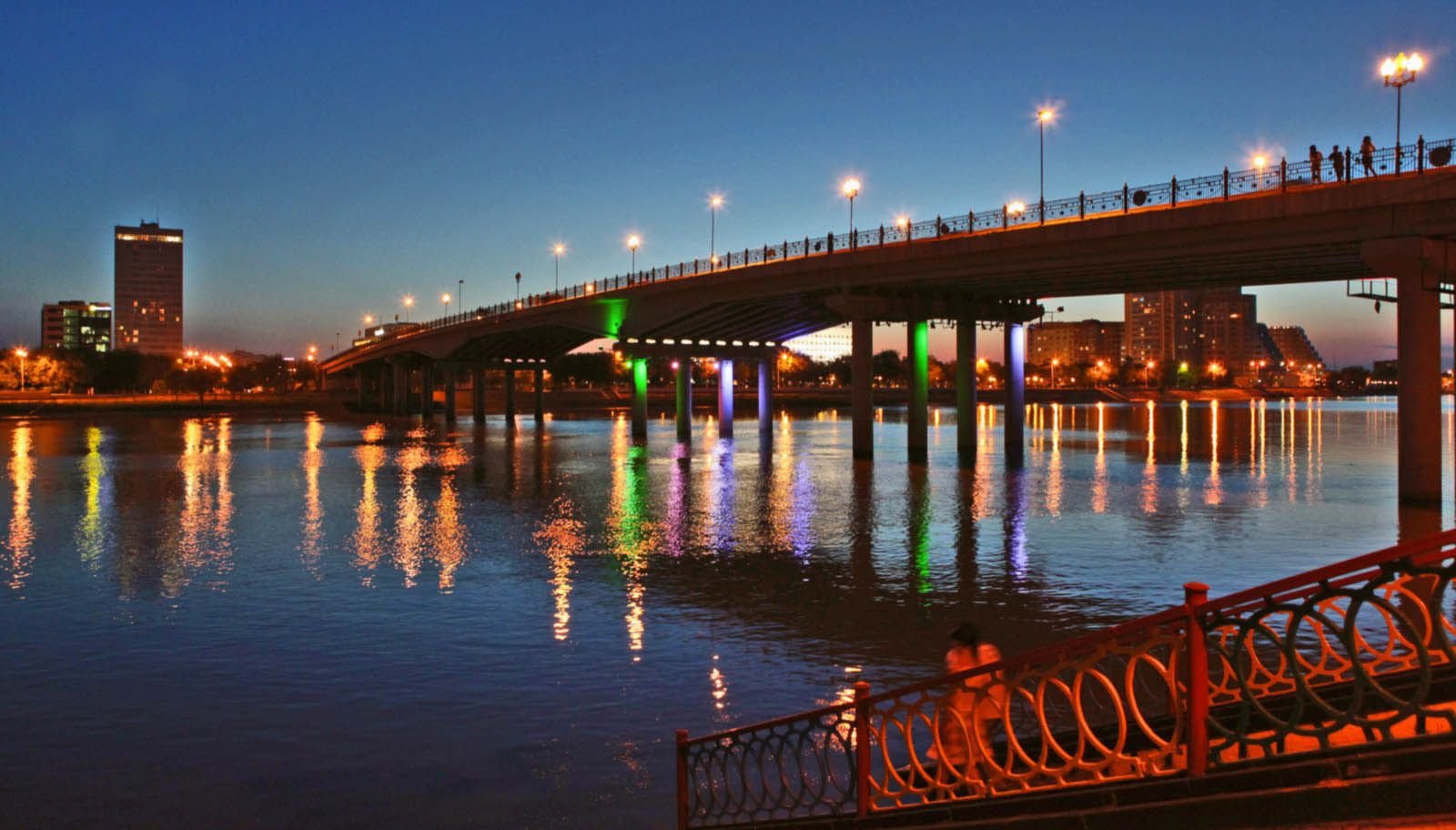
The Ural River flows through the city and is widely recognized as part of the continental divide. As a result, residents and visitors can literally cross from one continent to another by walking across one of Atyrau’s bridges.
Special monuments and markers celebrate this unique geographical distinction, making Atyrau one of the few cities in the world that spans two continents.
This remarkable location contributes to the city’s international character and cultural diversity.
3. Kazakhstan’s Oil Capital

Atyrau is widely known as the oil capital of Kazakhstan.
The city serves as the operational center for many of the country’s largest oil and gas projects, including developments in the Caspian region. Vast reserves of petroleum beneath the surrounding landscape have transformed Atyrau into one of Central Asia’s most important energy hubs.
Major international energy companies maintain offices and operations in the city, contributing to economic growth and technological development. Oil exports generated from the region play a vital role in Kazakhstan’s national economy.
The energy industry continues to shape Atyrau’s modern identity and global significance.
4. The Caspian Sea Connection

Although Atyrau is located slightly inland, its close connection to the Caspian Sea has influenced its development for centuries.
The Caspian Sea is the world’s largest inland body of water and serves as an important route for trade, energy transportation, fishing, and regional cooperation. Atyrau benefits from its strategic position within the Caspian basin, connecting Kazakhstan to neighboring countries and international markets.
The sea also supports important ecosystems and wildlife populations that contribute to the region’s environmental significance.
Atyrau’s relationship with the Caspian remains central to its economy and culture.
5. The Ural River – Lifeline of the City

The Ural River has shaped Atyrau’s history, economy, and landscape for centuries.
Historically, the river supported fishing, transportation, agriculture, and trade. Today, it remains one of the city’s most important natural landmarks and a popular destination for recreation and tourism.
Modern promenades, parks, observation points, and bridges line the riverbanks, providing attractive public spaces for residents and visitors.
The river also symbolizes Atyrau’s role as a meeting point between continents, cultures, and economic regions.
6. Cultural Heritage and Local Traditions

Despite its modern industrial character, Atyrau maintains strong cultural traditions rooted in Kazakh heritage.
Traditional music, poetry, cuisine, festivals, and community celebrations remain important aspects of local life. The city hosts cultural events throughout the year that showcase regional customs and artistic achievements.
Museums and cultural institutions preserve the history of the region while educating visitors about the development of western Kazakhstan.
These traditions help maintain a strong sense of identity amid rapid modernization.
7. Modern Architecture and Urban Development

In recent decades, Atyrau has experienced remarkable urban growth.
Modern office towers, luxury hotels, residential developments, shopping centers, and business districts have transformed the city’s skyline. Infrastructure improvements have enhanced transportation, healthcare, education, and public services.
International investment associated with the energy sector has contributed significantly to modernization efforts.
Today, Atyrau is one of Kazakhstan’s most modern and economically vibrant cities.
8. Education and Economic Innovation

Education plays an increasingly important role in Atyrau’s future.
Universities, technical institutes, and training centers prepare students for careers in engineering, energy, business, information technology, and environmental science. These institutions support workforce development and innovation within Kazakhstan’s growing economy.
Research programs focus on improving industrial efficiency, sustainability, and technological advancement.
The city’s commitment to education helps ensure long-term economic competitiveness.
9. Nature, Wildlife, and Environmental Importance

The region surrounding Atyrau contains important ecosystems that support diverse wildlife and bird populations.
Wetlands, river deltas, and coastal habitats provide breeding and migration areas for numerous species. Conservation efforts aim to protect these environments while balancing industrial development and economic growth.
The Caspian region is particularly famous for its sturgeon populations, which historically supported a valuable fishing industry.
Environmental stewardship remains an important priority for the future of the region.
10. Atyrau Today – Kazakhstan’s Energy Gateway to the World

Today, Atyrau stands as one of Kazakhstan’s most influential and prosperous cities. Its unique location between Europe and Asia, combined with its role as the nation’s oil capital, has made it a center of international business, economic growth, and regional cooperation.
From the historic banks of the Ural River and the vast waters of the Caspian Sea to its modern skyline and thriving energy sector, Atyrau reflects the dynamic transformation of modern Kazakhstan. Visitors encounter a city where history, geography, culture, and industry come together in a remarkable way.
As Kazakhstan continues to strengthen its position in the global economy, Atyrau remains at the forefront of development and innovation. It is a city that connects continents, powers industries, and represents the ambition and potential of a rapidly evolving nation.
Related artical : Best place to visit in Semey