
Now Reading: Best place to visit in Muang Khoun
-
01
Best place to visit in Muang Khoun
Best place to visit in Muang Khoun
Muang Khoun is one of the oldest and most historically significant towns in Laos. Located in the heart of Xieng Khouang Province, the town once served as the royal capital of the ancient Kingdom of Xieng Khouang and played a vital role in the political, cultural, and religious development of the region.
For centuries, Muang Khoun flourished as a center of commerce and Buddhism, attracting traders, monks, and travelers from across the Mekong region. The town was known for its magnificent temples, royal residences, and thriving communities. However, during the conflicts of the twentieth century, many of its historic structures were severely damaged, leaving behind a landscape filled with ruins, memorials, and reminders of its remarkable past.
Today, Muang Khoun remains one of Laos’ most fascinating historical destinations. Visitors come to explore ancient temples, colonial-era remains, traditional villages, and cultural landmarks that tell the story of a city that once stood among the most important settlements in northern Laos.
The following attractions represent the best places to visit in Muang Khoun.
1. Wat Phia Wat – The Temple That Survived History

History
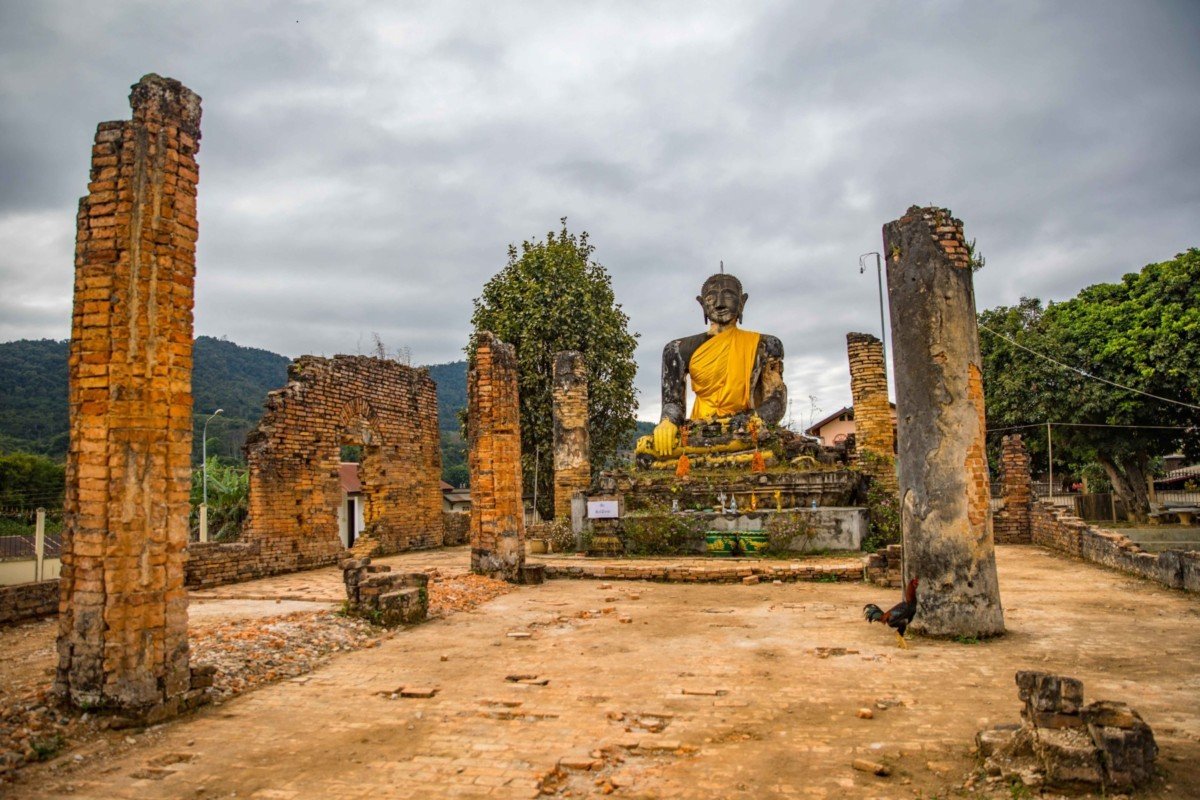
Wat Phia Wat is the most famous landmark in Muang Khoun and one of the most important historical sites in Xieng Khouang Province.
Originally built centuries ago, the temple served as a major religious center for the kingdom. During wartime conflicts, much of the structure was destroyed, but its large Buddha statue survived and remains standing today.
The surviving Buddha has become a symbol of resilience and hope for the local community.
Visitor Experience
Visitors can explore:
- Historic temple ruins
- Giant Buddha statue
- Religious heritage
- Ancient architecture
- Photography opportunities
The site provides a powerful connection to the region’s past.
2. That Foun Stupa – The Sacred Monument of Xieng Khouang

History
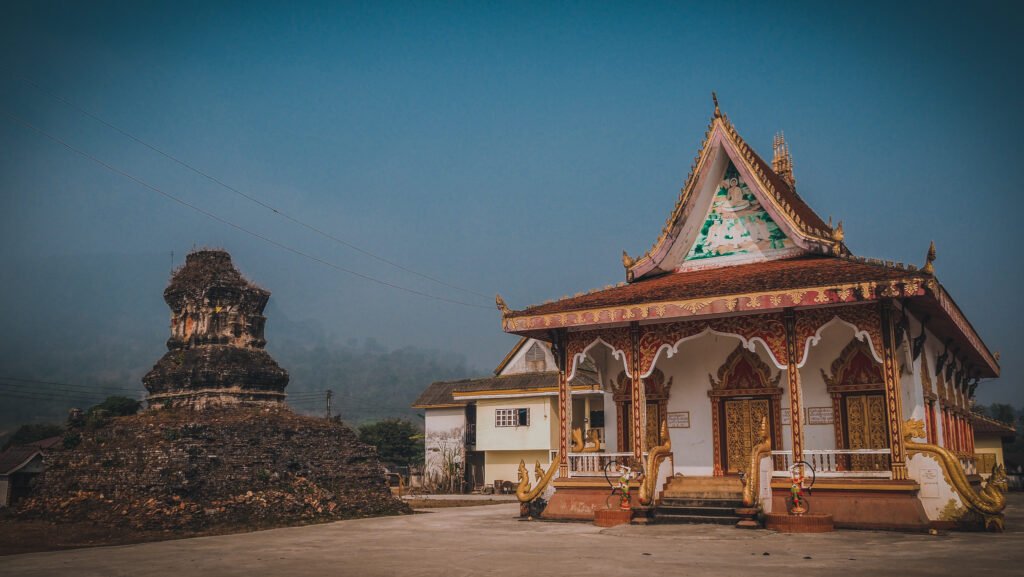
That Foun is one of the oldest and most revered Buddhist monuments in the province.
Built several centuries ago, the stupa served as an important pilgrimage destination for monks and devotees throughout the region.
Although damaged during periods of conflict, restoration efforts have helped preserve this important religious landmark.
Visitor Experience
Visitors can admire:
- Traditional Buddhist architecture
- Religious ceremonies
- Sacred grounds
- Historic structures
- Cultural heritage
The stupa remains an active center of worship.
3. Muang Khoun Old Town – Former Royal Capital of Xieng Khouang

History
Muang Khoun served as the capital of the Kingdom of Xieng Khouang for centuries.
The city became a center of administration, religion, and trade, attracting merchants from neighboring regions.
Royal residences, temples, and public buildings once filled the town, creating a prosperous urban center that played an important role in northern Lao history.
Visitor Experience
Visitors can discover:
- Historical landmarks
- Ancient foundations
- Traditional communities
- Cultural heritage sites
- Scenic town landscapes
The old town offers insight into the region’s royal past.
4. French Colonial Buildings – Echoes of the Colonial Era
History
During the French colonial period, Muang Khoun became an important administrative center within French Indochina.
Several government buildings and residences were constructed, introducing European architectural influences to the town.
Although many structures were later damaged, surviving examples continue to reflect this period of history.
Visitor Experience
Visitors can admire:
- Colonial architecture
- Historic ruins
- Cultural heritage
- Architectural details
- Photography opportunities
These landmarks provide a glimpse into the colonial past.
5. Traditional Hmong Villages – Preserving Mountain Heritage

History
The Hmong people have lived in the mountains surrounding Muang Khoun for generations.
Their communities developed unique customs, agricultural systems, and cultural traditions adapted to the highland environment.
Today, many villages continue to preserve these traditions.
Visitor Experience
Visitors can experience:
- Traditional lifestyles
- Handcrafted textiles
- Cultural customs
- Village life
- Local hospitality
The villages offer authentic cultural encounters.
6. Plain of Jars Nearby Sites – The Ancient Mystery

History
The mysterious Plain of Jars is one of the world’s most intriguing archaeological landscapes.
Thousands of massive stone jars were placed across the Xieng Khouang Plateau more than two thousand years ago.
Although their exact purpose remains unknown, researchers believe they were connected to ancient burial practices.
Visitor Experience
Visitors can explore:
- Megalithic stone jars
- Archaeological sites
- Historic landscapes
- UNESCO heritage locations
- Educational exhibits
The sites remain among Laos’ greatest historical mysteries.
7. Xieng Khouang War Memorials – Remembering the Past

History
Xieng Khouang Province was heavily affected by twentieth-century conflicts.
Memorial sites throughout the region honor local communities and preserve the memory of those who experienced these difficult periods.
These landmarks serve as important reminders of resilience and recovery.
Visitor Experience
Visitors can learn about:
- Regional history
- Wartime experiences
- Community resilience
- Educational exhibits
- Historical remembrance
The memorials provide important historical context.
8. Nam Ngum Valley Landscapes – The Agricultural Heartland

History
The fertile valleys surrounding Muang Khoun have supported farming communities for centuries.
Rice cultivation and livestock farming formed the foundation of the local economy and contributed to the prosperity of the kingdom.
Traditional agricultural practices continue today.
Visitor Experience
Visitors can admire:
- Rice fields
- Mountain scenery
- Traditional farms
- Rural villages
- Photography opportunities
The landscapes reveal the natural beauty of the province.
9. Local Markets of Muang Khoun – The Center of Community Life

History
Markets have served as gathering places for communities in Muang Khoun for generations.
Farmers, traders, and artisans gather daily to exchange goods and maintain social and economic connections.
The market remains an important cultural institution.
Visitor Experience
Visitors can browse:
- Fresh produce
- Traditional foods
- Handcrafted products
- Textiles
- Everyday goods
The market offers an authentic glimpse into daily life.
10. Mountain Viewpoints of Xieng Khouang – Spectacular Highland Scenery

History
The mountains surrounding Muang Khoun have shaped the region’s history, defense, agriculture, and settlement patterns for centuries.
These elevated locations served as strategic observation points and continue to offer breathtaking views of the plateau.
Visitor Experience
Visitors can enjoy:
- Panoramic landscapes
- Sunrise photography
- Sunset photography
- Scenic hiking
- Mountain views
The viewpoints provide some of the most beautiful scenery in northern Laos.
Related artical : Best place to visit in Nong Khiaw