
Now Reading: Best place to visit in Laos
-
01
Best place to visit in Laos
Best place to visit in Laos
1. Luang Prabang – The Timeless Cultural Capital of Laos

Introduction
Nestled between the Mekong and Nam Khan Rivers, Luang Prabang is widely regarded as the cultural and spiritual heart of Laos. Recognized as a UNESCO World Heritage Site in 1995, the city represents a remarkable blend of traditional Lao architecture, Buddhist heritage, French colonial influences, and breathtaking natural landscapes.
For centuries, Luang Prabang served as the royal capital of the Kingdom of Lan Xang and later the Kingdom of Laos. Its temples, monasteries, palaces, and historic streets preserve a rich legacy that has shaped the nation’s identity.
Today, Luang Prabang attracts travelers from around the world who seek authentic cultural experiences, ancient history, spiritual traditions, and stunning scenery.
History
The history of Luang Prabang dates back more than a thousand years. Originally known as Muang Sua, it became the capital of the powerful Lan Xang Kingdom in the 14th century under King Fa Ngum.
The city flourished as a center of Buddhism, education, and royal governance. Monasteries were built throughout the city, attracting scholars and monks from across Southeast Asia.
During the French colonial period, Luang Prabang retained its status as the royal capital, and many colonial buildings were constructed alongside traditional Lao architecture.
Even after political changes in the twentieth century, the city remained one of the country’s most important cultural landmarks.
Visitor Experience
Visitors can explore:
- Ancient Buddhist temples
- Royal Palace Museum
- Traditional monasteries
- Mekong River cruises
- Night markets
- Colonial architecture
- Cultural festivals
Luang Prabang offers one of Southeast Asia’s most rewarding cultural experiences.
2. Kuang Si Falls – The Natural Wonder of Laos

Introduction
Kuang Si Falls is one of the most spectacular waterfalls in Southeast Asia. Located approximately 30 kilometers south of Luang Prabang, the falls are famous for their turquoise pools, limestone formations, and lush tropical surroundings.
The waterfall has become one of Laos’ most photographed natural attractions.
History
For generations, local communities considered the waterfall a sacred part of the surrounding forest ecosystem.
According to local legends, a wise old man uncovered the waters by digging deep into the earth, allowing the spring to emerge and create the magnificent falls seen today.
The area remained relatively unknown internationally until tourism began developing in Luang Prabang.
Visitor Experience
Visitors can enjoy:
- Multi-level waterfalls
- Turquoise swimming pools
- Forest trails
- Nature photography
- Scenic viewpoints
- Wildlife observation
Kuang Si Falls remains one of the most beautiful natural destinations in Laos.
3. Mount Phousi – The Sacred Hill of Luang Prabang

Introduction
Rising above the center of Luang Prabang, Mount Phousi provides the most famous panoramic views in the city.
The hill stands approximately 150 meters high and offers breathtaking scenery overlooking rivers, temples, mountains, and the historic city center.
History
Mount Phousi has held spiritual significance for centuries.
Several Buddhist shrines and religious monuments were constructed on the hill, transforming it into an important pilgrimage destination.
The hill became a symbol of Luang Prabang’s religious and cultural identity.
Visitor Experience
Visitors can discover:
- Panoramic city views
- Sunset photography
- Sacred shrines
- Buddhist temples
- Historic landmarks
- Scenic hiking paths
The summit provides one of the most memorable viewpoints in Laos.
4. Vang Vieng – The Adventure Capital of Laos

Introduction
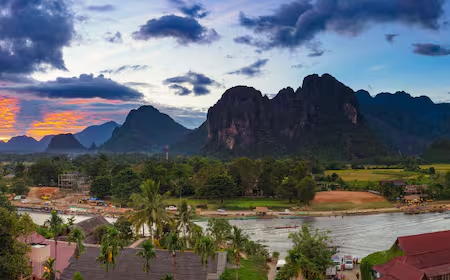
Vang Vieng is one of the country’s most famous adventure destinations.
Surrounded by towering limestone mountains, rivers, caves, and forests, the town attracts travelers seeking outdoor activities and spectacular scenery.
History
Historically, Vang Vieng was a quiet agricultural settlement situated along the Nam Song River.
Its dramatic landscapes eventually gained international recognition, transforming the town into one of Laos’ leading tourism destinations.
Today, Vang Vieng balances adventure tourism with environmental conservation and cultural preservation.
Visitor Experience
Visitors can enjoy:
- Mountain trekking
- Kayaking
- Hot air balloon rides
- River adventures
- Cave exploration
- Cycling tours
- Scenic photography
The region offers some of the most dramatic landscapes in Southeast Asia.
5. Blue Lagoon – Vang Vieng’s Turquoise Paradise

Introduction
Blue Lagoon is one of the most popular attractions in Laos.
Known for its crystal-clear turquoise waters, the lagoon offers a refreshing retreat surrounded by forests and limestone cliffs.
History
The lagoon formed naturally through underground spring systems that continuously supply fresh water.
Local communities have long used the area for recreation and relaxation.
As tourism developed, the Blue Lagoon became one of Vang Vieng’s most iconic attractions.
Visitor Experience
Visitors can enjoy:
- Swimming
- Rope swings
- Natural pools
- Forest scenery
- Photography
- Relaxation
The lagoon remains a favorite destination for visitors of all ages.
6. Tham Chang Cave – The Historic Mountain Cave

Introduction
Tham Chang Cave is one of the oldest and most important caves in central Laos.
The cave combines natural beauty with significant historical value.
History
During the nineteenth century, local villagers used the cave as a refuge during periods of invasion and conflict.
Its elevated location and secure entrance provided protection for communities living in the valley below.
Today, the cave serves as an important cultural and natural attraction.
Visitor Experience
Visitors can explore:
- Limestone formations
- Underground chambers
- Historic pathways
- Scenic viewpoints
- Natural cave systems
The cave offers a fascinating blend of history and geology.
7. Patuxai – The Victory Monument of Laos

Introduction
Patuxai is one of the most recognizable landmarks in Laos.
Often compared to Paris’ Arc de Triomphe, the monument commemorates those who fought for the nation’s independence.
History
Construction began in 1957 and was completed in 1968.
The monument combines traditional Lao design elements with European architectural influences.
Patuxai symbolizes national pride and independence.
Visitor Experience
Visitors can enjoy:
- Historical exhibits
- City panoramas
- Architectural photography
- Cultural heritage
- Scenic viewpoints
The monument is among the most visited attractions in Vientiane.
8. Pha That Luang – The National Symbol of Laos

Introduction
Pha That Luang is the most important religious monument in Laos and serves as the country’s national symbol.
Its magnificent golden structure dominates the skyline of Vientiane.
History
The stupa’s origins date back many centuries and it has undergone several reconstructions throughout its history.
It became the spiritual center of Lao Buddhism and remains one of the most sacred sites in the country.
Every year, thousands of pilgrims participate in religious festivals held at the monument.
Visitor Experience
Visitors can admire:
- Golden architecture
- Religious ceremonies
- Sacred shrines
- Buddhist traditions
- Cultural heritage
Pha That Luang represents the spiritual heart of Laos.
9. Buddha Park – A Garden of Mythology and Art

Introduction
Buddha Park, also known as Xieng Khuan, is one of the most unusual attractions in Laos.
The park contains hundreds of sculptures representing Buddhist and Hindu mythology.
History
The park was created in 1958 by a visionary artist and spiritual leader who sought to blend religious symbolism with artistic expression.
Over time, the park became one of Laos’ most distinctive cultural landmarks.
Visitor Experience
Visitors can explore:
- Giant Buddha statues
- Mythological sculptures
- Artistic monuments
- Religious symbolism
- Scenic gardens
The park offers a unique cultural experience unlike anywhere else in Laos.
10. Wat Si Saket – The Oldest Surviving Temple in Vientiane

Introduction
Wat Si Saket is the oldest surviving temple in the capital city and one of Laos’ most treasured religious sites.
The temple is famous for its thousands of Buddha images and remarkable architecture.
History
Built in 1818 during the reign of King Anouvong, Wat Si Saket survived the destruction that affected much of Vientiane during nineteenth-century conflicts.
Its unique architectural style reflects both Lao and Siamese influences.
The temple has remained an important religious and cultural center for over two centuries.
Visitor Experience
Visitors can admire:
- Thousands of Buddha statues
- Historic architecture
- Religious artwork
- Sacred courtyards
- Cultural heritage
Wat Si Saket stands as one of the finest examples of traditional Lao Buddhism and architecture.
11. Plain of Jars – The Greatest Archaeological Mystery of Laos

Introduction
The Plain of Jars is one of the most mysterious archaeological sites in Southeast Asia and one of Laos’ most important historical landmarks. Spread across the Xieng Khouang Plateau, thousands of giant stone jars are scattered throughout the landscape, creating one of the world’s most fascinating ancient mysteries.
Recognized as a UNESCO World Heritage Site, the Plain of Jars attracts archaeologists, historians, and travelers from around the globe. Despite decades of research, the exact purpose of these massive stone vessels remains uncertain, adding to their intrigue and significance.
History
Archaeologists believe the jars were created between 500 BCE and 500 CE by an ancient civilization that once inhabited the region. Some jars weigh several tons and were carved from solid stone transported over long distances.
Researchers have proposed various theories regarding their purpose. The most widely accepted explanation suggests they were used in ancient burial rituals. Excavations have uncovered human remains, pottery, and artifacts near several jar sites, supporting this theory.
Over centuries, the jars survived wars, invasions, and natural disasters, becoming one of Laos’ most treasured historical sites.
Visitor Experience
Visitors can explore:
- Massive stone jars
- Ancient archaeological sites
- Historic landscapes
- UNESCO heritage areas
- Educational exhibits
- Scenic mountain views
The Plain of Jars remains one of Asia’s greatest archaeological mysteries.
12. Wat Phou – The Ancient Khmer Temple of Laos

Introduction
Wat Phou is one of the oldest and most significant temple complexes in Southeast Asia. Located at the foot of Phou Kao Mountain in southern Laos, the site represents the country’s most important example of Khmer architecture.
As a UNESCO World Heritage Site, Wat Phou reflects centuries of religious devotion, architectural excellence, and cultural exchange between ancient civilizations.
History
The origins of Wat Phou date back to the 5th century, although much of the existing structure was built during the height of the Khmer Empire between the 11th and 13th centuries.
Dedicated initially to Hindu worship, particularly the god Shiva, the temple later became an important Buddhist pilgrimage destination. Its strategic location beneath a sacred mountain enhanced its religious significance.
For centuries, pilgrims traveled from across the region to worship at the temple and participate in religious ceremonies.
Visitor Experience
Visitors can admire:
- Ancient Khmer architecture
- Stone carvings
- Sacred shrines
- Historic stairways
- Archaeological ruins
- Panoramic mountain views
Wat Phou is one of the most remarkable historical attractions in Laos.
13. Si Phan Don – The Four Thousand Islands of the Mekong

Introduction
Si Phan Don, meaning “Four Thousand Islands,” is one of the most beautiful river landscapes in Southeast Asia. Located along the Mekong River near the Cambodian border, the region consists of countless islands, waterfalls, fishing villages, and tropical scenery.
Si Phan Don offers a peaceful atmosphere that contrasts with the fast pace of modern life, making it one of Laos’ most beloved destinations.
History
For centuries, communities settled on these islands, relying on fishing, agriculture, and river trade. The Mekong River provided food, transportation, and economic opportunities that sustained generations of families.
During the French colonial period, railway infrastructure was briefly introduced to bypass nearby waterfalls, leaving behind historical remnants that can still be explored today.
Visitor Experience
Visitors can enjoy:
- Island exploration
- Cycling routes
- Mekong River scenery
- Traditional villages
- Sunset photography
- Boat excursions
Si Phan Don offers one of the most relaxing travel experiences in Laos.
14. Khone Phapheng Falls – The Niagara of Southeast Asia

Introduction
Khone Phapheng Falls is the largest waterfall in Southeast Asia by volume and one of the most powerful waterfalls in the world.
Located on the Mekong River, the falls create a dramatic natural barrier that prevents navigation between Laos and Cambodia.
History
For thousands of years, the falls have shaped the geography and economy of the region.
Their immense power influenced trade routes and transportation networks throughout history. During the colonial period, the French attempted to bypass the falls by constructing railway systems around them.
Today, the falls remain one of the country’s most important natural landmarks.
Visitor Experience
Visitors can witness:
- Powerful rapids
- Massive waterfalls
- Scenic viewpoints
- River landscapes
- Wildlife observation
- Nature photography
The falls demonstrate the incredible power of the Mekong River.
15. Tad Fane Waterfall – The Twin Falls of the Bolaven Plateau

Introduction
Tad Fane Waterfall is one of the most spectacular waterfalls in Laos.
Two powerful streams plunge more than 120 meters into a deep jungle gorge, creating one of the country’s most dramatic natural scenes.
History
The waterfall was formed through volcanic and geological processes that shaped the Bolaven Plateau millions of years ago.
Its remote location helped preserve the surrounding rainforest ecosystem and biodiversity.
Today, Tad Fane serves as a symbol of the natural beauty of southern Laos.
Visitor Experience
Visitors can enjoy:
- Twin waterfalls
- Forest scenery
- Scenic viewpoints
- Adventure activities
- Photography opportunities
The waterfall is among the most impressive natural attractions in Laos.
16. Bolaven Plateau – The Coffee Highlands of Laos

Introduction
Bolaven Plateau is a vast highland region famous for waterfalls, coffee plantations, fertile volcanic soil, and cool mountain climates.
The plateau is considered one of the most beautiful and agriculturally important regions in Laos.
History
Ancient volcanic activity created the plateau’s fertile soil, making it ideal for agriculture.
During the French colonial era, coffee cultivation was introduced and quickly became one of the region’s most important industries. Today, Bolaven coffee is internationally recognized for its quality.
Visitor Experience
Visitors can explore:
- Coffee farms
- Waterfalls
- Mountain landscapes
- Traditional villages
- Scenic road trips
- Agricultural tours
The plateau offers a perfect combination of nature and culture.
17. Nong Khiaw – The Mountain Paradise of Northern Laos

Introduction
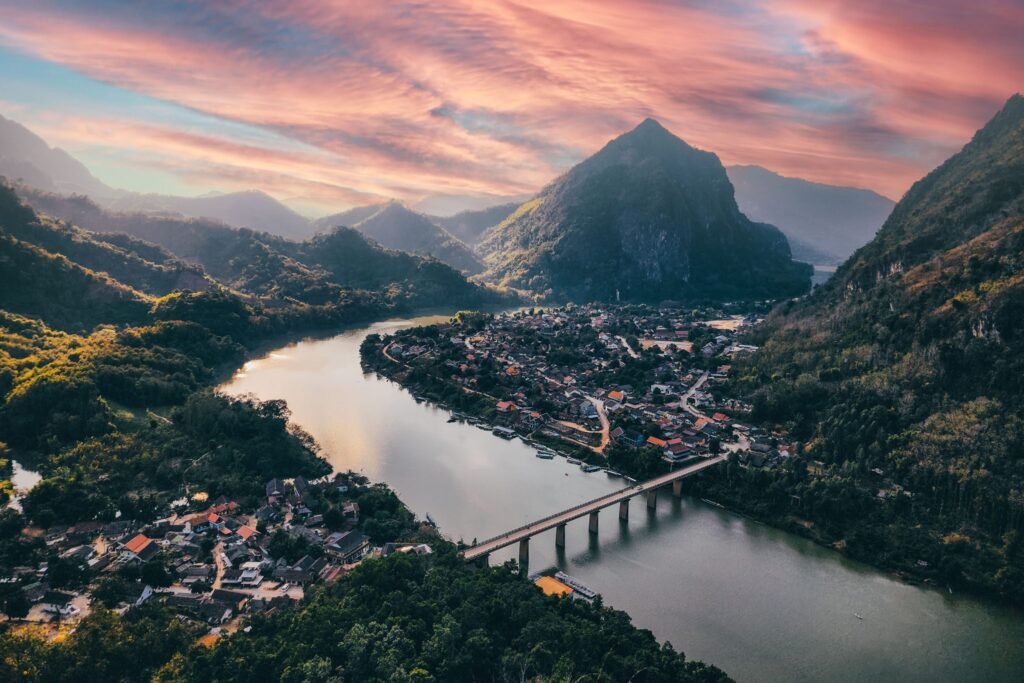
Nong Khiaw is one of the most scenic destinations in Laos.
Nestled between towering limestone mountains and the Nam Ou River, the town offers spectacular landscapes, cultural experiences, and outdoor adventures.
History
For centuries, Nong Khiaw served as a river settlement connecting mountain communities throughout northern Laos.
The region’s caves and mountains also played an important role during periods of conflict in the twentieth century.
Today, Nong Khiaw is one of Laos’ premier eco-tourism destinations.
Visitor Experience
Visitors can enjoy:
- Mountain viewpoints
- River cruises
- Hiking trails
- Cave exploration
- Traditional villages
- Scenic photography
The town offers unforgettable natural beauty.
18. Nam Ou River – The Historic Waterway of Northern Laos

Introduction
The Nam Ou River is one of the most important rivers in Laos and a major tributary of the Mekong.
Flowing through mountains, forests, and traditional villages, the river provides some of the country’s most beautiful scenery.
History
For generations, the Nam Ou River served as a transportation route connecting isolated communities.
Trade, fishing, agriculture, and cultural exchange developed along its banks, shaping the history of northern Laos.
The river continues to support local communities today.
Visitor Experience
Visitors can enjoy:
- Boat journeys
- Riverside villages
- Mountain landscapes
- Cultural encounters
- Wildlife observation
- Photography opportunities
The river offers one of Laos’ most memorable travel experiences.
19. Bokeo Nature Reserve – Home of the Gibbons

Introduction
Bokeo Nature Reserve protects one of Laos’ most important rainforest ecosystems.
The reserve gained international recognition through the famous Gibbon Experience eco-tourism project.
History
The reserve was established to protect endangered wildlife and preserve important rainforest habitats.
Conservation efforts helped save rare species, including the black-crested gibbon, which was once feared extinct.
Today, the reserve is considered a model of sustainable tourism and environmental protection.
Visitor Experience
Visitors can discover:
- Rainforest ecosystems
- Wildlife observation
- Giant treehouses
- Zipline adventures
- Eco-tourism experiences
The reserve offers one of the most unique adventures in Southeast Asia.
20. That Ing Hang Stupa – The Sacred Monument of Southern Laos

Introduction
That Ing Hang Stupa is one of the most revered Buddhist monuments in Laos and an important pilgrimage destination for devotees throughout the Mekong region.
Its magnificent golden structure reflects centuries of religious devotion and cultural heritage.
History
According to local tradition, the stupa was originally established more than two thousand years ago and is believed to contain sacred relics connected to the Buddha.
Throughout history, kings, monks, and pilgrims traveled great distances to visit the monument and participate in religious ceremonies.
The stupa became one of the most important symbols of Buddhism in southern Laos.
Visitor Experience
Visitors can admire:
- Golden Buddhist architecture
- Religious ceremonies
- Sacred shrines
- Historic monuments
- Cultural traditions
- Pilgrimage activities
That Ing Hang remains one of the most important spiritual landmarks in Laos and a symbol of the country’s rich Buddhist heritage.
Related artical : Best place to visit in Muang Khoun