
Now Reading: Best place to visit in Braunschweig
-
01
Best place to visit in Braunschweig
Best place to visit in Braunschweig
⛪ 1. Brunswick Cathedral – Spiritual Heart of the City

Brunswick Cathedral, officially known as St. Blasius Cathedral, is one of the city’s most important landmarks and a masterpiece of Romanesque architecture.
Built during the 12th century by Henry the Lion, the cathedral served as both a religious center and royal burial site for medieval rulers.
The cathedral’s massive stone structure, elegant arches, historical tombs, stained glass windows, and peaceful interior create a powerful spiritual atmosphere.
Inside, visitors can admire medieval artwork, ancient sculptures, religious artifacts, and the tomb of Henry the Lion and his wife Matilda.
The cathedral survived wars and historical upheavals and remains one of Germany’s most significant medieval churches today.
The building perfectly reflects Braunschweig’s royal and religious heritage.
🦁 2. Brunswick Lion Statue – Symbol of Braunschweig

The Brunswick Lion is the most famous symbol of Braunschweig and one of Germany’s oldest monumental sculptures.
Created during the 12th century under Henry the Lion’s rule, the bronze lion statue stands proudly in Burgplatz Square beside the cathedral and castle.
The lion represents power, courage, and royal authority and became the emblem of the city throughout history.
Visitors from around the world come to photograph this historic monument and learn about its medieval significance.
The surrounding square creates a beautiful historical setting filled with Gothic and Romanesque architecture.
The Brunswick Lion remains one of the greatest treasures of medieval German art.
🏰 3. Dankwarderode Castle – Medieval Royal Residence

Dankwarderode Castle was originally built during the Middle Ages as the residence of Henry the Lion and the ruling dukes of Brunswick.
Although parts of the original structure were damaged over centuries, the reconstructed castle still preserves its medieval character and historical importance.
Today, the castle houses exhibitions displaying medieval weapons, royal artifacts, sculptures, and historical treasures connected to Braunschweig’s royal history.
Visitors can explore grand halls, stone architecture, and exhibits that reveal the city’s importance during medieval Germany.
The castle complex beside Burgplatz creates one of the most beautiful historical areas in northern Germany.
Dankwarderode remains a powerful reminder of Braunschweig’s royal past.
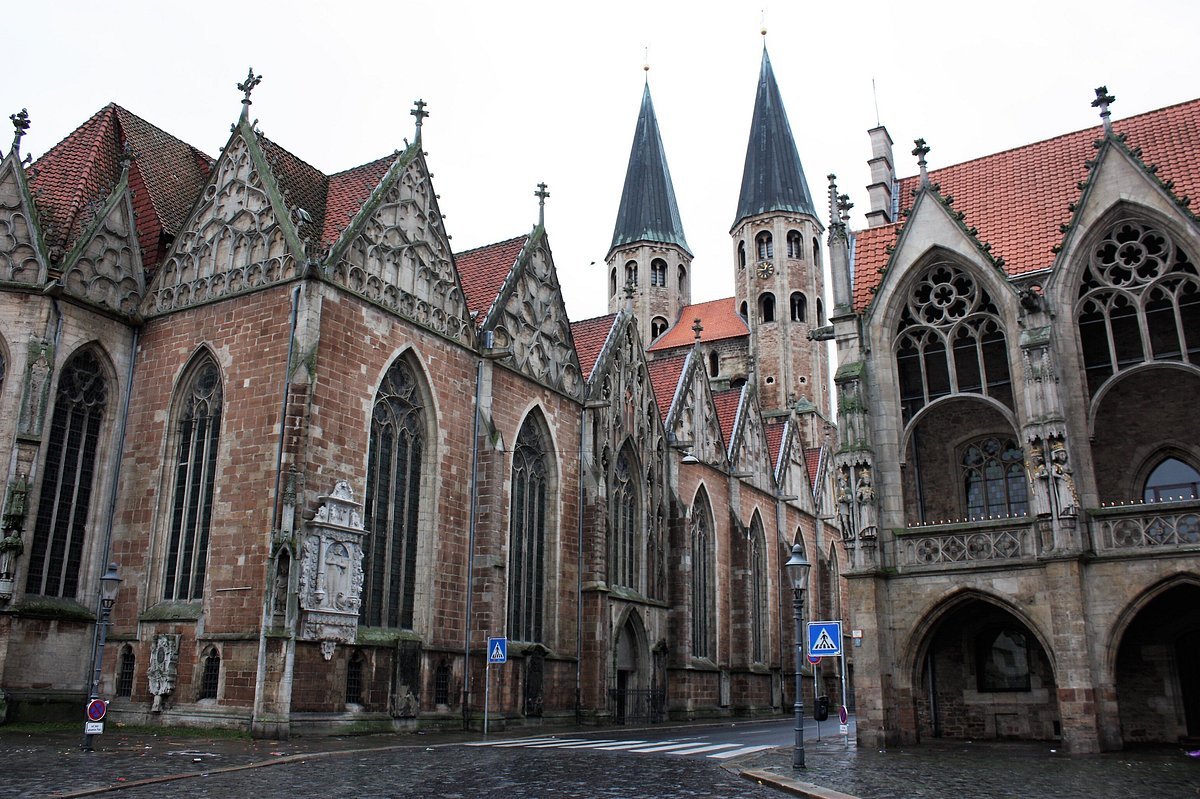
🏛️ 4. Burgplatz – Historic Center of Braunschwei

Burgplatz is the historical heart of Braunschweig and one of the city’s most beautiful public squares.
Surrounded by the cathedral, castle, half-timbered houses, museums, and the famous lion statue, the square perfectly reflects the city’s medieval atmosphere.
Walking through Burgplatz feels like traveling back to the Middle Ages.
Street cafes, cultural events, Christmas markets, and festivals frequently take place here, bringing life and energy to the historic surroundings.
The architectural harmony between Romanesque, Gothic, and Renaissance buildings makes Burgplatz especially attractive for photographers and history lovers.
The square remains the cultural and symbolic center of Braunschweig.
🌉 5. Magniviertel – Charming Old Quarter

Magniviertel is one of Braunschweig’s most charming historical districts, famous for its narrow cobblestone streets, half-timbered houses, boutiques, cafes, and medieval atmosphere.
The district survived much of the destruction caused during World War II and still preserves traditional German architecture.
Visitors enjoy wandering through peaceful alleyways lined with colorful buildings, artisan shops, restaurants, and historic churches.
The area becomes especially beautiful during evening hours when lights illuminate the old streets and timber-framed houses.
Magniviertel perfectly captures the romantic charm of old Germany.
The district is also popular for dining, local culture, and relaxing walks.
🖼️ 6. Herzog Anton Ulrich Museum – Art & Cultural Heritage

The Herzog Anton Ulrich Museum is one of Germany’s oldest and most respected art museums.
The museum contains an extraordinary collection of European paintings, sculptures, drawings, ceramics, and decorative arts spanning several centuries.
Visitors can admire works from Renaissance, Baroque, Dutch, Flemish, and German artistic traditions.
The elegant museum building itself is architecturally impressive and creates a peaceful environment for art appreciation.
Art lovers especially enjoy the museum’s rich historical atmosphere and world-class collections.
The museum highlights Braunschweig’s long-standing connection to education, culture, and intellectual life.
🌳 7. Bürgerpark – Green Escape in the City

Bürgerpark is one of Braunschweig’s largest and most beautiful parks, offering peaceful natural scenery within the city.
The park contains lakes, walking trails, gardens, bridges, playgrounds, cycling routes, and open green spaces ideal for relaxation.
Locals and tourists enjoy picnics, jogging, photography, and outdoor activities throughout the year.
During spring and summer, colorful flowers and trees create beautiful landscapes across the park.
The peaceful environment provides a refreshing contrast to the city’s historical architecture and busy streets.
Bürgerpark demonstrates Braunschweig’s balance between urban development and nature.
Related artical : Best place to visit in Kraków