
Now Reading: Best place to visit in Jerash
-
01
Best place to visit in Jerash
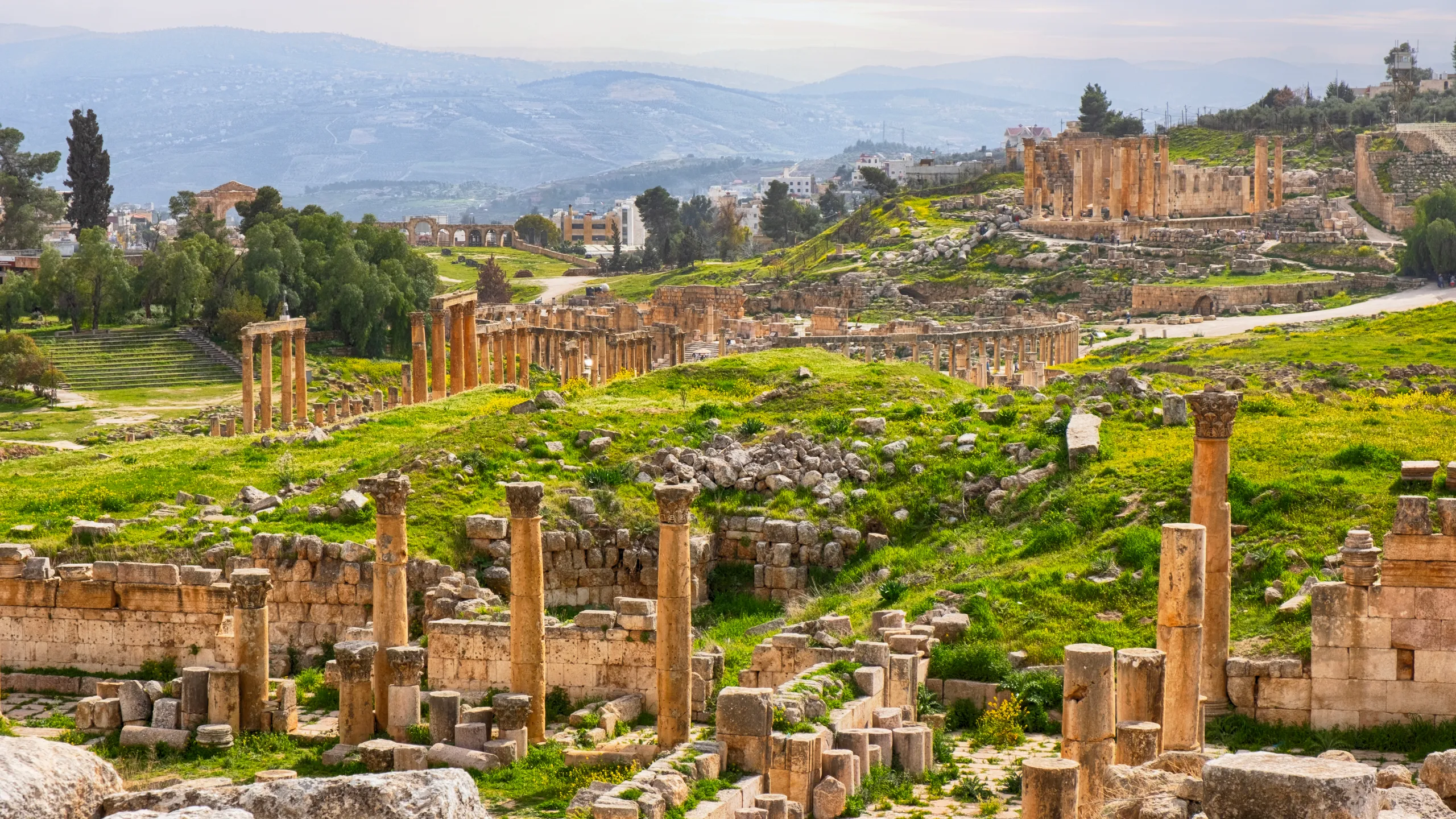
Best place to visit in Jerash

Jerash is one of the most remarkable archaeological destinations in the world and is often referred to as the “Pompeii of the East.” Located approximately 50 kilometers north of Amman, Jerash contains some of the best-preserved Roman ruins outside Italy and offers visitors a unique opportunity to step back nearly two thousand years into the height of the Roman Empire.
Originally inhabited during the Neolithic period, Jerash flourished under Greek and Roman rule and became one of the wealthiest cities of the ancient world. Known as Gerasa during Roman times, the city formed part of the famous Decapolis, a group of ten important cities that served as centers of commerce, culture, and administration throughout the eastern Roman Empire.
Today, Jerash attracts visitors from around the globe who come to admire its grand avenues, towering temples, theaters, arches, plazas, and remarkably preserved public buildings. The city’s combination of history, architecture, and cultural significance makes it one of Jordan’s most important tourist destinations and one of the finest examples of Roman urban planning anywhere in the world.
1. The Ancient History of Jerash

The history of Jerash stretches back more than 6,500 years. Archaeological evidence indicates that the area was inhabited during the Bronze Age and continued to develop under various civilizations including the Greeks, Romans, Byzantines, and early Islamic dynasties.
Jerash reached its greatest prosperity during the Roman period when it became one of the most important cities in the Decapolis. Its strategic location along major trade routes connected it to Arabia, Egypt, Syria, and the Mediterranean world.
Merchants, craftsmen, scholars, and travelers contributed to the city’s growth and cultural diversity. The wealth generated through trade financed the construction of magnificent public buildings, temples, and infrastructure that continue to impress visitors today.
The city’s decline began after a series of earthquakes and changing trade patterns, eventually leaving many of its structures buried beneath sand and soil for centuries before their rediscovery.
2. Hadrian’s Arch – The Monumental Gateway

One of the first landmarks visitors encounter is the impressive Hadrian’s Arch.
Constructed in 129 CE to commemorate the visit of Roman Emperor Hadrian, the arch stands as a symbol of the city’s importance within the Roman Empire.
The structure rises more than 13 meters high and features elaborate carvings, decorative elements, and architectural details typical of Roman triumphal monuments. Despite centuries of weathering, much of the arch remains remarkably intact.
Hadrian’s Arch continues to serve as a dramatic introduction to the archaeological wonders that await inside ancient Jerash.
3. The Oval Plaza – A Masterpiece of Urban Design

The magnificent Oval Plaza is one of the city’s most distinctive and photographed landmarks.
Unlike the rectangular forums common in many Roman cities, Jerash’s plaza features an unusual oval shape surrounded by elegant columns. The plaza served as a major gathering place where citizens met for ceremonies, celebrations, commerce, and public events.
Its carefully planned design reflects the sophistication of Roman engineering and urban planning. The spacious open area creates a dramatic visual impression that highlights the grandeur of the ancient city.
Today, the Oval Plaza remains one of the most iconic features of Jerash and a favorite location for visitors and photographers.
4. The Cardo Maximus – The City’s Main Street

The Cardo Maximus was the main street of ancient Jerash and remains one of the best-preserved Roman roads in existence.
Stretching for hundreds of meters through the heart of the city, the avenue is lined with towering columns that once supported covered walkways and commercial buildings. The original stone paving remains visible, including wheel ruts left by carts that traveled along the street centuries ago.
The Cardo connected important public buildings, markets, temples, and residential districts, serving as the city’s commercial and social center.
Walking along this ancient avenue provides visitors with an extraordinary glimpse into daily life during the Roman era.
5. The Temple of Artemis

The majestic Temple of Artemis was dedicated to the city’s patron goddess and stands among the most impressive structures in Jerash.
Built during the second century CE, the temple occupied a commanding position overlooking the city. Massive columns, grand staircases, and elaborate architectural details demonstrate the wealth and religious devotion of ancient Jerash.
Although parts of the structure have been lost over time, several towering columns remain standing and continue to dominate the skyline.
The temple serves as a powerful reminder of the city’s importance as a religious and cultural center during Roman rule.
6. The South Theater – Entertainment in Ancient Rome

The spectacular South Theater is one of the best-preserved Roman theaters in the Middle East.
Capable of seating thousands of spectators, the theater hosted performances, speeches, ceremonies, and public gatherings. Its design demonstrates the remarkable understanding of acoustics possessed by Roman engineers.
Even today, sounds spoken on stage can often be heard clearly from the highest rows of seating. Visitors frequently test the theater’s acoustics while exploring the structure.
The theater remains a highlight of the archaeological site and occasionally hosts cultural performances and festivals.
7. Byzantine Churches and Christian Heritage

Following the Roman period, Jerash became an important Christian center during the Byzantine era.
Numerous churches were constructed throughout the city, many featuring beautifully preserved mosaic floors depicting religious scenes, animals, plants, and geometric designs. These mosaics are among the finest examples of Byzantine art in Jordan.
The churches illustrate the city’s continued prosperity and cultural significance during late antiquity.
Visitors exploring these sites gain valuable insight into the religious transformation of the region over time.
8. Jerash Festival of Culture and Arts

Modern Jerash is also famous for the Jerash Festival of Culture and Arts, one of the Middle East’s most important cultural events.
Held annually among the ancient ruins, the festival features music, dance, theater, poetry, visual arts, and international performances. The historic setting creates a unique atmosphere where contemporary culture meets ancient history.
Artists and performers from around the world participate in the festival, attracting thousands of visitors each year.
The event highlights Jordan’s cultural vitality while celebrating the enduring legacy of Jerash.
9. Archaeological Preservation and Global Importance

Jerash is widely regarded as one of the world’s most important archaeological sites due to its exceptional state of preservation.
Extensive excavation and conservation efforts have uncovered temples, theaters, baths, churches, streets, fountains, and residential areas that provide a comprehensive picture of life in a Roman provincial city.
Researchers continue to make new discoveries that enhance understanding of ancient urban development, architecture, religion, and commerce.
The site’s significance extends far beyond Jordan, contributing to global knowledge of classical civilization.
10. Jerash Today – A Living Connection to the Ancient World

Today, Jerash stands as one of the greatest archaeological treasures of the Middle East and one of Jordan’s most visited attractions. Its extraordinary ruins offer a rare opportunity to experience the scale, sophistication, and beauty of an ancient Roman city largely intact after nearly two millennia.
From the grandeur of Hadrian’s Arch and the elegance of the Oval Plaza to the towering Temple of Artemis and the impressive South Theater, every corner of Jerash tells a story of human achievement, cultural exchange, and historical transformation.
As a city where ancient streets, temples, churches, and monuments continue to stand against the passage of time, Jerash remains a remarkable destination that connects modern visitors with one of the most fascinating chapters of human history. It is not only a symbol of Jordan’s rich heritage but also one of the world’s finest windows into the civilization of ancient Rome.
Related artical : Best place to visit in Madaba