
Now Reading: Best place to visit in Kyrgyzstan
-
01
Best place to visit in Kyrgyzstan
Best place to visit in Kyrgyzstan
1. Issyk-Kul Lake – The Pearl of Central Asia

Introduction
Nestled between the towering ranges of the Tian Shan Mountains, Issyk-Kul Lake is one of the largest alpine lakes in the world and the most famous natural attraction in Kyrgyzstan. Stretching over 180 kilometers in length, the lake has played a crucial role in the region’s history, culture, and economy for thousands of years.
Its name means “Warm Lake” in the Kyrgyz language because it rarely freezes despite its high altitude. Throughout history, Issyk-Kul served as a key stop along the Silk Road, attracting traders, explorers, pilgrims, and conquerors traveling between China, Persia, and Europe.
Historical Background
Archaeological evidence suggests that human settlements existed around Issyk-Kul more than 2,500 years ago. Ancient tribes such as the Scythians and Saka peoples lived along its shores, benefiting from its fertile lands and strategic location.
During the Silk Road era, numerous trading towns flourished around the lake. Merchants transported silk, spices, precious stones, and cultural ideas through the region. Some historians believe that several medieval cities now lie submerged beneath the lake’s waters due to changing water levels and earthquakes.
In the 19th century, Russian explorers began mapping the area, leading to increased settlement and scientific study.
Cultural Significance
Issyk-Kul remains deeply important to Kyrgyz identity. The lake appears in countless legends, poems, songs, and traditional stories. Many local myths describe hidden treasures, ancient cities, and sacred spirits residing beneath its waters.
Today, the lake continues to serve as a center for tourism, recreation, and cultural festivals while preserving its historical legacy.
2. Ala-Archa National Park – Kyrgyzstan’s Mountain Sanctuary

Introduction
Located just south of Bishkek, Ala-Archa National Park is one of the country’s most treasured protected areas. The park encompasses dramatic mountain landscapes, glaciers, waterfalls, rivers, and forests within the northern Tian Shan Mountains.
Historical Background
For centuries, nomadic Kyrgyz communities used the valley as seasonal grazing land. The area’s abundant water sources and alpine meadows supported livestock herding traditions that continue today.
Recognizing its ecological importance, the Soviet government established the national park in 1976 to protect its unique mountain ecosystems and promote conservation.
Cultural Importance
The park has become a symbol of Kyrgyzstan’s natural beauty and outdoor culture. It attracts climbers, hikers, and nature enthusiasts from around the world while preserving traditional connections between local communities and the mountain environment.
3. Song-Kul Lake – The Heart of Nomadic Kyrgyzstan

Introduction
Song-Kul Lake is one of Kyrgyzstan’s most iconic alpine lakes, situated at more than 3,000 meters above sea level. Surrounded by endless grasslands and mountain ranges, it offers visitors a glimpse into the traditional nomadic lifestyle that has defined Kyrgyz culture for centuries.
Historical Background
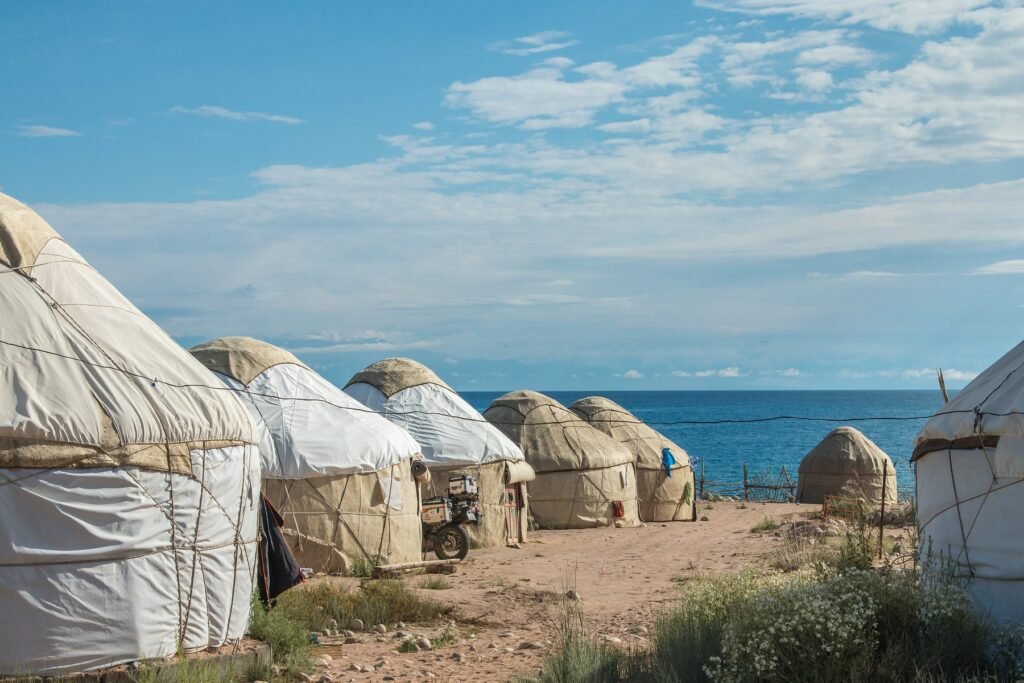
For hundreds of years, Song-Kul served as a summer pasture for nomadic herders. Families moved their livestock to the fertile high-altitude meadows during warmer months, living in portable yurts and following ancient migration routes.
These seasonal migrations formed the foundation of Kyrgyz society and remain an important tradition today.
Cultural Legacy
Song-Kul is considered one of the best places to experience authentic nomadic culture. Visitors can witness horse games, traditional music, yurt hospitality, and herding practices that have changed little over generations.
4. Jeti-Oguz – The Valley of Seven Bulls

Introduction
Jeti-Oguz is one of the country’s most famous natural landmarks, known for its striking red sandstone formations and scenic mountain valleys.
Historical Background
The name Jeti-Oguz means “Seven Bulls”, inspired by seven giant rock formations that resemble a herd of bulls standing side by side.
Local legends tell stories of rival khans, tragic romances, and ancient battles that transformed the rocks into their present shapes. These stories have been passed down through generations and remain an important part of Kyrgyz folklore.
Cultural Importance
The valley became a popular destination during the Soviet period and continues to attract visitors seeking natural beauty and cultural heritage.
5. Skazka Canyon – Kyrgyzstan’s Fairy Tale Landscape

Introduction
Skazka Canyon is a colorful geological wonder located along the southern shore of Issyk-Kul Lake.
Historical Background
Over millions of years, wind, rain, and erosion sculpted the sandstone into shapes resembling castles, dragons, animals, and mythical creatures.
The canyon earned its name because local residents believed its unusual formations resembled scenes from a fairy tale.
Geological Significance
The vibrant colors and dramatic shapes make Skazka one of Kyrgyzstan’s most unique natural attractions and an important site for geological study.
6. Burana Tower – The Last Witness of Balasagun

Introduction
Burana Tower is one of the country’s most important historical monuments and a surviving remnant of the medieval city of Balasagun.
Historical Background
Built during the 10th and 11th centuries, the tower served as a minaret for one of the most prosperous cities of the Karakhanid Empire.
Balasagun was a major center of trade and culture along the Silk Road. Although earthquakes and invasions eventually destroyed much of the city, Burana Tower survived as a symbol of the region’s rich history.
Legacy
Today, the site preserves archaeological remains, ancient stone statues, and artifacts that tell the story of medieval Central Asia.
7. Tash Rabat – The Stone Caravanserai of the Silk Road

Introduction
Hidden within the mountains of the Naryn region, Tash Rabat is one of the most remarkable Silk Road monuments in Central Asia.
Historical Background
Built primarily of stone during the medieval period, Tash Rabat served as a caravanserai where merchants, pilgrims, and travelers rested while crossing the rugged mountains.
The structure provided shelter, security, and supplies for travelers undertaking dangerous journeys between East and West.
Historical Importance
Its remote location and excellent preservation make Tash Rabat one of the finest surviving examples of Silk Road architecture.
8. Sary-Chelek Biosphere Reserve – A Protected Natural Treasure

Introduction
Sary-Chelek Biosphere Reserve is one of Central Asia’s most important ecological reserves, famous for its mountain lakes, forests, and wildlife.
Historical Background
The area remained relatively untouched for centuries due to its remote location. Local communities relied on the forests and valleys for seasonal grazing and agriculture.
In 1959, the reserve was established to protect its unique biodiversity, and it later gained international recognition as a UNESCO Biosphere Reserve.
Environmental Importance
The reserve safeguards rare plant species, wildlife habitats, and some of the world’s largest natural walnut forests.
9. Arslanbob – Home of the World’s Largest Walnut Forest

Introduction
Arslanbob is one of Kyrgyzstan’s most beautiful mountain villages and is internationally known for its vast walnut forests.
Historical Background
According to local legends, the forests were planted centuries ago by traders traveling along the Silk Road. Scientific studies suggest the walnut forests have existed naturally for thousands of years.
The region became an important center for agriculture, fruit cultivation, and forestry.
Cultural Significance
Arslanbob remains a living example of rural Kyrgyz culture, where traditional farming practices coexist with breathtaking natural landscapes.
10. Ala-Kul Lake – The Crown Jewel of the Tian Shan

Introduction
Ala-Kul Lake is one of the most spectacular alpine lakes in Central Asia. Situated at an altitude of over 3,500 meters in the Tian Shan Mountains, the lake is famous for its vibrant turquoise waters and dramatic mountain scenery.
Historical Background
Formed by glacial activity thousands of years ago, Ala-Kul has long been known to local herders and travelers crossing the mountain ranges.
Historically, the surrounding valleys served as seasonal grazing areas and travel corridors connecting different regions of eastern Kyrgyzstan.
Modern Importance
Today, Ala-Kul is one of Kyrgyzstan’s premier trekking destinations, attracting adventurers from around the world while preserving its pristine alpine environment.
The lake stands as a symbol of the country’s extraordinary mountain landscapes and enduring connection to nature.
11. Kel-Suu Lake – Kyrgyzstan’s Hidden Mountain Wonder

Introduction
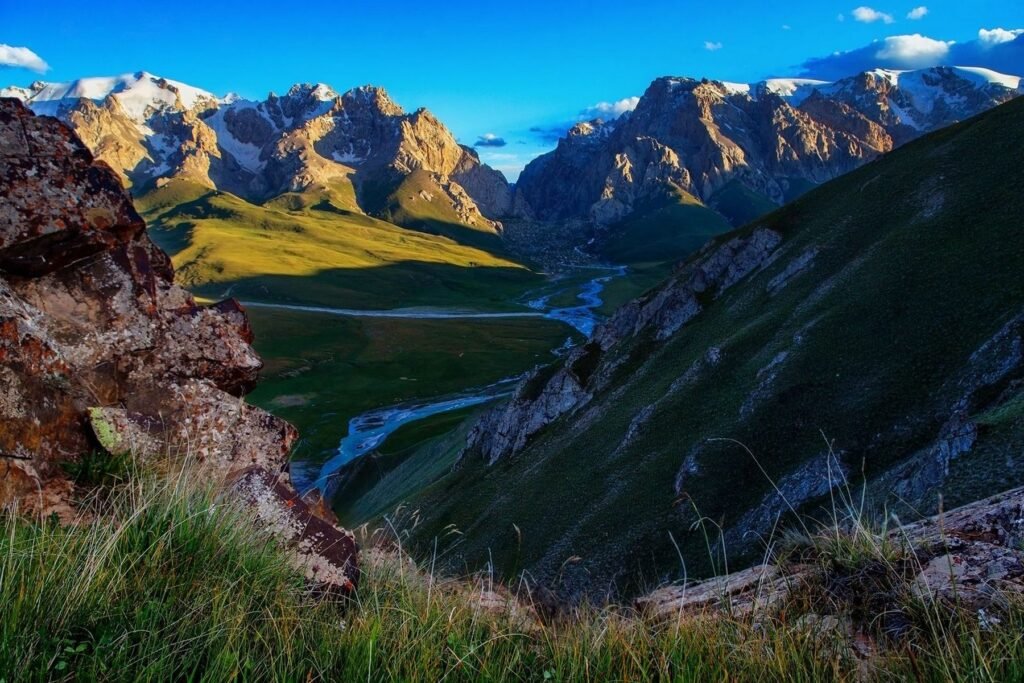
Kel-Suu Lake is one of the most remote and breathtaking natural attractions in Kyrgyzstan. Hidden deep within the mountains of the Naryn region near the Chinese border, the lake is surrounded by towering cliffs, dramatic canyons, and untouched wilderness.
Located at an elevation of approximately 3,500 meters, Kel-Suu remains one of Central Asia’s least explored alpine lakes and is often considered a hidden gem among adventure travelers.
Historical Background
For centuries, the region around Kel-Suu was used by Kyrgyz nomads as seasonal grazing land. Due to its remote location and harsh climate, permanent settlements never developed around the lake.
The lake itself was formed by a massive landslide that blocked a mountain valley, creating a long and narrow body of water enclosed by steep rock walls.
Historically, only local herders and experienced travelers knew of the lake’s existence.
Cultural Importance
Today, Kel-Suu symbolizes the untouched wilderness of Kyrgyzstan and attracts photographers, trekkers, and explorers seeking remote landscapes rarely seen elsewhere in the world.
12. Lenin Peak – The Giant of the Pamir Mountains

Introduction
Lenin Peak is one of the highest mountains in Central Asia, rising to an elevation of 7,134 meters above sea level. Located in the Pamir Mountains near the border with Tajikistan, it is among the most famous mountaineering destinations in the world.
The mountain dominates the landscape of southern Kyrgyzstan and has become a symbol of high-altitude adventure.
Historical Background
The peak was first explored extensively during the Russian Empire and later became a major destination for Soviet mountaineering expeditions.
In 1928, the first successful ascent was completed, establishing Lenin Peak as one of the most important climbing objectives in Central Asia.
Throughout the Soviet era, thousands of climbers traveled to the region to test their skills on its glaciers and snow-covered slopes.
Historical Significance
Lenin Peak played an important role in the development of Soviet mountaineering and remains one of the most climbed peaks above 7,000 meters in the world.
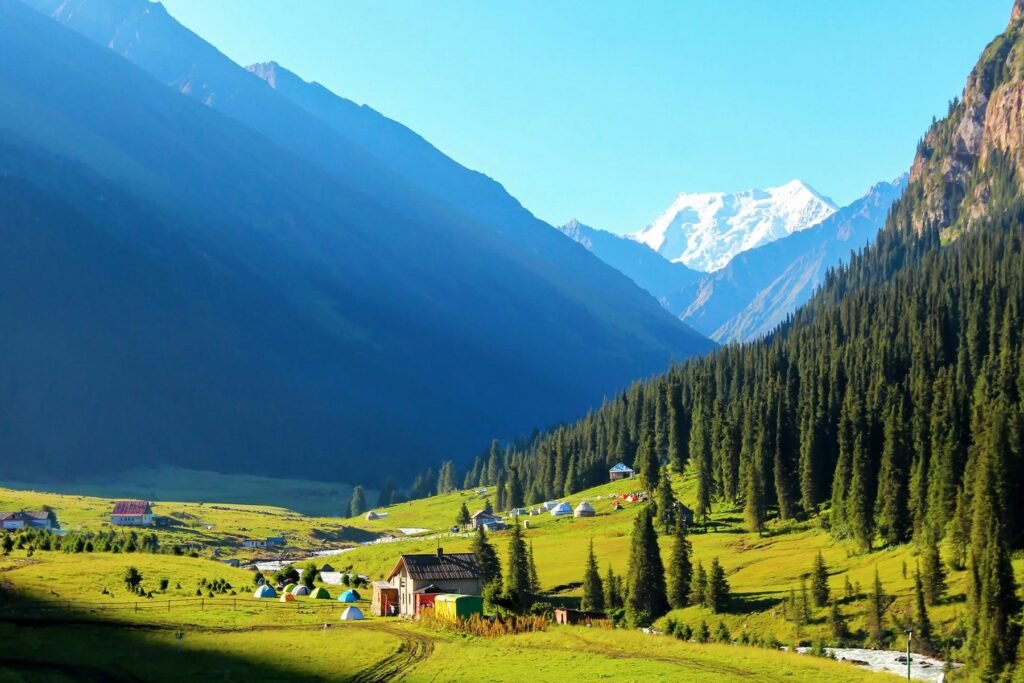
13. Altyn Arashan – The Golden Valley of the Tian Shan

Introduction
Altyn Arashan is one of the most beautiful alpine valleys in Kyrgyzstan, located within the Tian Shan Mountains near Karakol.
The name means “Golden Spa”, referring to the valley’s famous hot springs that have attracted visitors for generations.
Historical Background
For centuries, local nomadic communities used the valley as a seasonal grazing area. Travelers crossing the mountains often stopped to rest and enjoy the therapeutic mineral waters.
The valley remained relatively isolated until trekking tourism began expanding in the late 20th century.
Cultural Importance
Today, Altyn Arashan is one of Kyrgyzstan’s most famous trekking destinations and represents the country’s rich tradition of living in harmony with mountain landscapes.
14. Chon-Kemin National Park – The Valley of Diversity

Introduction
Chon-Kemin National Park is one of Kyrgyzstan’s most diverse protected areas, encompassing forests, rivers, alpine meadows, glaciers, and mountain peaks.
Located east of Bishkek, the park protects a unique ecosystem within the northern Tian Shan range.
Historical Background
For hundreds of years, the valley served as a vital grazing area for nomadic herders. The abundance of water and fertile land supported both livestock and wildlife.
In 1997, the national park was officially established to preserve the region’s biodiversity and natural heritage.
Historical Importance
The park reflects Kyrgyzstan’s commitment to environmental conservation while preserving landscapes that have shaped local culture for generations.
15. Sulaiman-Too – The Sacred Mountain of Osh

Introduction
Sulaiman-Too is the most sacred mountain in Kyrgyzstan and one of Central Asia’s most important spiritual landmarks.
Rising above the city of Osh, the mountain has attracted pilgrims for over a thousand years.
Historical Background
Long before the arrival of Islam, local communities regarded the mountain as a sacred place. Over time, it became an important center of pilgrimage for Muslims traveling throughout Central Asia.
Its strategic location along Silk Road routes increased its religious and cultural significance.
UNESCO Recognition
In 2009, Sulaiman-Too became Kyrgyzstan’s first UNESCO World Heritage Site due to its exceptional cultural and historical value.
16. Karakol – The Cultural Gateway to Eastern Kyrgyzstan

Introduction
Karakol is one of Kyrgyzstan’s most historically significant cities and serves as the gateway to many of the country’s most famous mountain destinations.
Situated near the eastern shore of Issyk-Kul Lake, Karakol combines Russian, Dungan, Uyghur, and Kyrgyz cultural influences.
Historical Background
Founded in 1869 as a Russian military outpost, Karakol quickly developed into an important trading center connecting Central Asia and China.
Explorers, merchants, and scientists frequently used the city as a base for expeditions into the Tian Shan Mountains.
Cultural Legacy
Today, Karakol remains one of the most multicultural cities in Kyrgyzstan and preserves a fascinating blend of architectural and cultural traditions.
17. Bokonbayevo – Home of the Eagle Hunters

Introduction
Bokonbayevo is a traditional village on the southern shore of Issyk-Kul Lake, renowned for preserving the ancient art of eagle hunting.
The village offers visitors an authentic glimpse into Kyrgyz nomadic culture.
Historical Background
For generations, local families relied on livestock herding and eagle hunting as essential parts of daily life.
The practice of training golden eagles for hunting dates back centuries and remains one of the region’s most treasured traditions.
Cultural Significance
Bokonbayevo has become a leading destination for cultural tourism and traditional heritage preservation.
18. Kok-Kiya Valley – Gateway to the High Mountains

Introduction
Kok-Kiya Valley is one of the most remote high-altitude valleys in Kyrgyzstan and serves as the gateway to Kel-Suu Lake.
Its vast grasslands, mountain scenery, and nomadic traditions create one of the country’s most authentic wilderness experiences.
Historical Background
The valley has supported seasonal migration and livestock grazing for centuries.
Local herders continue to move their animals through the region using traditional routes established long ago.
Historical Importance
Kok-Kiya represents one of the last places where the traditional nomadic lifestyle remains largely unchanged.
19. Chatyr-Kul Lake – The Celestial Lake of the Silk Road

Introduction
Chatyr-Kul Lake is one of the highest and most remote lakes in Central Asia, located near the Chinese border at an elevation of more than 3,500 meters.
The lake is surrounded by vast mountain ranges and protected wilderness.
Historical Background
Throughout history, nearby mountain passes formed part of important Silk Road routes linking China with Central Asia.
Nomadic communities used the surrounding grasslands as seasonal pastures while merchants crossed the nearby Torugart Pass.
Cultural Importance
Today, Chatyr-Kul remains one of Kyrgyzstan’s least-visited natural wonders and a symbol of the country’s vast high-altitude landscapes.
20. Bishkek – The Modern Heart of Kyrgyzstan

Introduction
Bishkek is the capital and largest city of Kyrgyzstan, serving as the political, economic, and cultural center of the country.
Located at the foot of the Tian Shan Mountains, Bishkek combines Soviet-era architecture, modern development, and traditional Kyrgyz culture.
Historical Background
The area was originally a stop along ancient Silk Road routes. In the 19th century, the Kokand Khanate established a fortress on the site, which was later captured by Russian forces.
During the Soviet period, the city was known as Frunze, named after military leader Mikhail Frunze. Following Kyrgyzstan’s independence in 1991, the city regained its historical name, Bishkek.
Modern Significance
Today, Bishkek serves as the gateway to Kyrgyzstan’s mountains, lakes, and cultural attractions while remaining the country’s center for education, government, and business.
The city reflects both the ancient history of Central Asia and the modern aspirations of an independent nation.
Related artical : Best place to visit in Chatyr-Kul Lake